

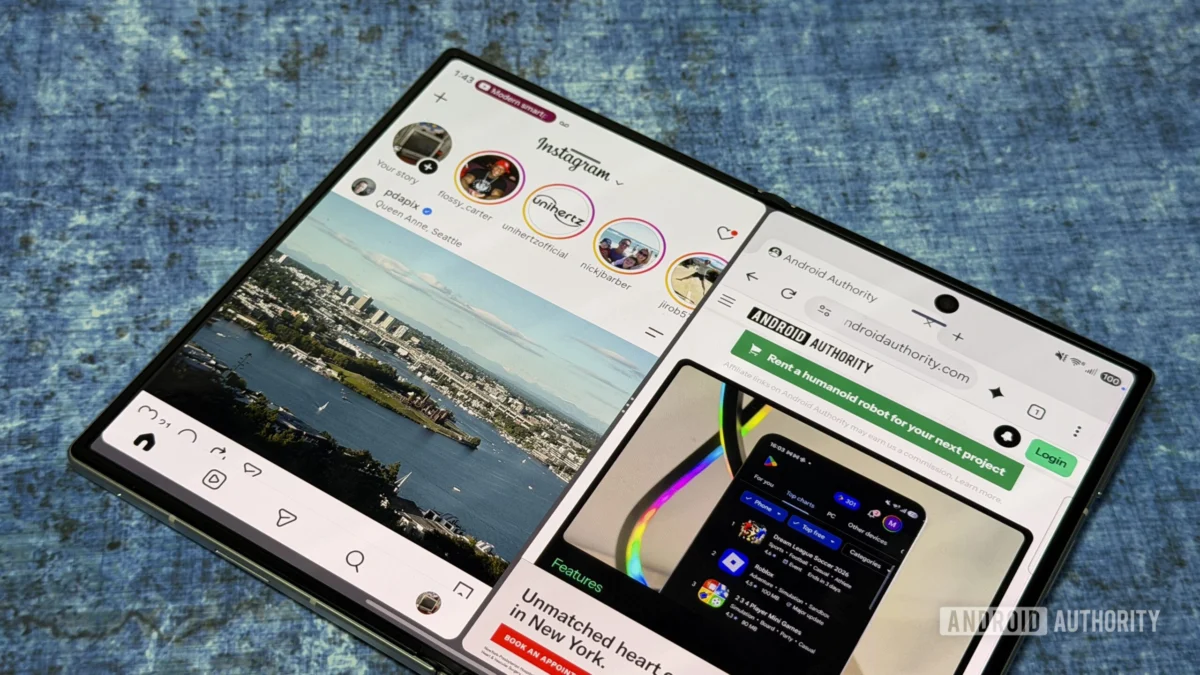
It has been nearly a fortnight since I first slipped my primary nano-SIM into the chassis of the Samsung Galaxy Z Fold 8. Having spent considerable hands-on time with pre-production hardware prior to its official retail rollout, I thought I had a comprehensive grasp of what to expect. Yet, what caught me completely off guard was my absolute reluctance to return to any other mobile device. As a professional technology journalist who evaluates upwards of forty smartphones annually, I operate under a relentless cycle of switching devices. I desperately need to rotate my hardware portfolio to test competing ecosystems, but I simply cannot put the Galaxy Z Fold 8 down.
When a gadget commands this level of loyalty, the feeling quickly transcends the initial honeymoon phase typical of review units. The device is far from infallible, and pointing out its mechanical and architectural compromises requires very little effort. However, the true hallmark of an elite piece of consumer technology is its ability to eclipse its own shortcomings through sheer experiential brilliance. The Galaxy Z Fold 8 has cemented a permanent place in my daily carry, and within the shifting landscape of modern mobile computing, it is a hardware investment that demands serious consideration.
The Evolution of Foldable Ergonomics and Form Factor Supremacy
Tracing the trajectory of foldable displays reveals a distinct trajectory. Having used book-style and clamshell foldables religiously since the debut of the Galaxy Z Fold 2, my personal preference historically skewed heavily toward flip-style devices. While marveling at the sprawling internal canvases of contemporary competitors like the Pixel 10 Pro Fold or Samsung’s own previous-generation Z Fold 7, that intangible spark always seemed missing. Even brilliant hardware releases like the Motorola Razr Fold struggled to bridge the chasm separating a niche, exorbitantly priced enthusiast toy from a mainstream daily driver suitable for everyday consumers.
Clamshell foldables naturally enjoy an advantage: they are intuitive, more economically accessible, and fundamentally align with decades of muscle memory built around traditional monolithic smartphones. For years, industry watchers waited for book-style foldables to cross that same threshold of mainstream ergonomics. With the Galaxy Z Fold 8, that inflection point has finally arrived.
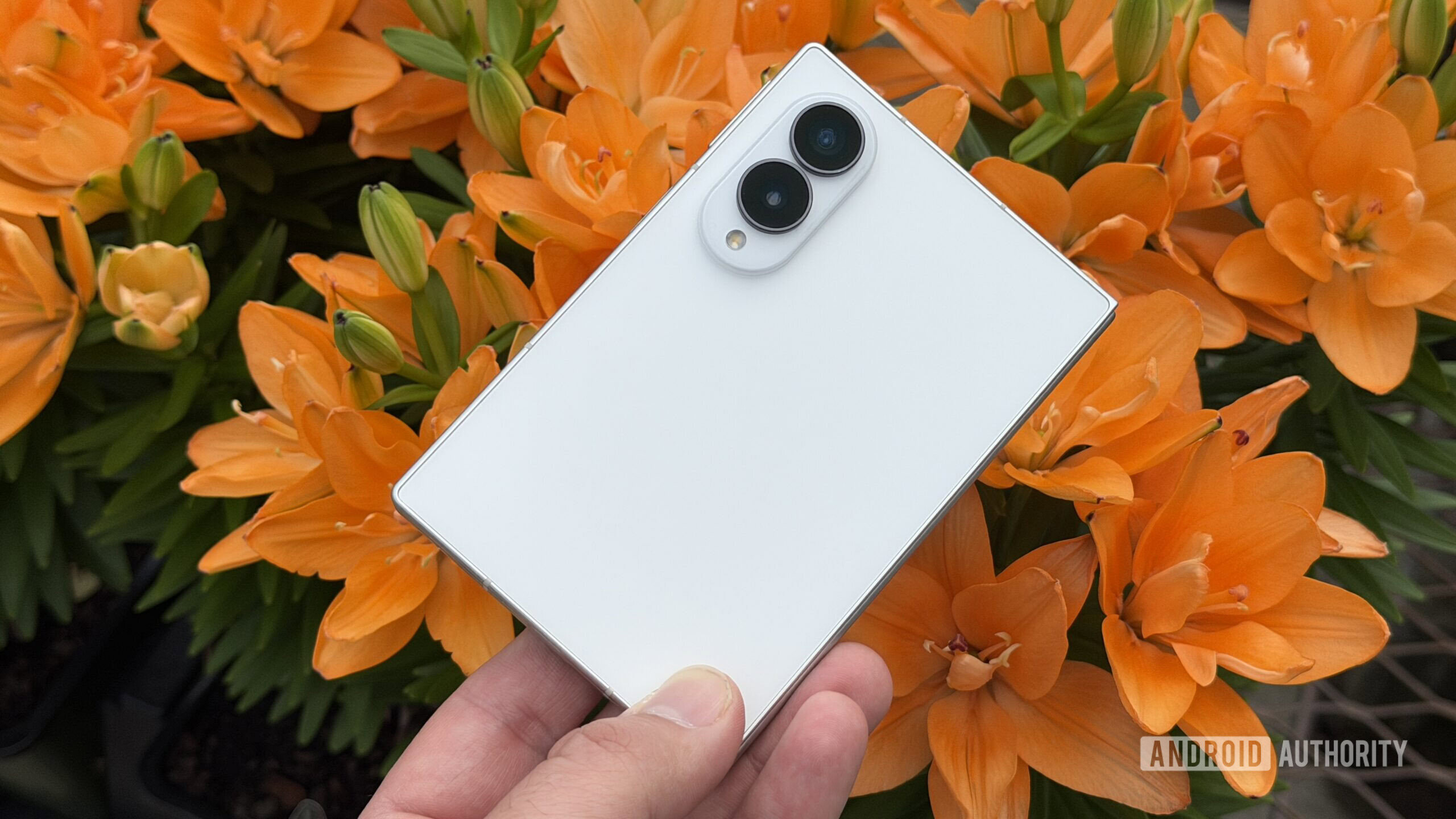
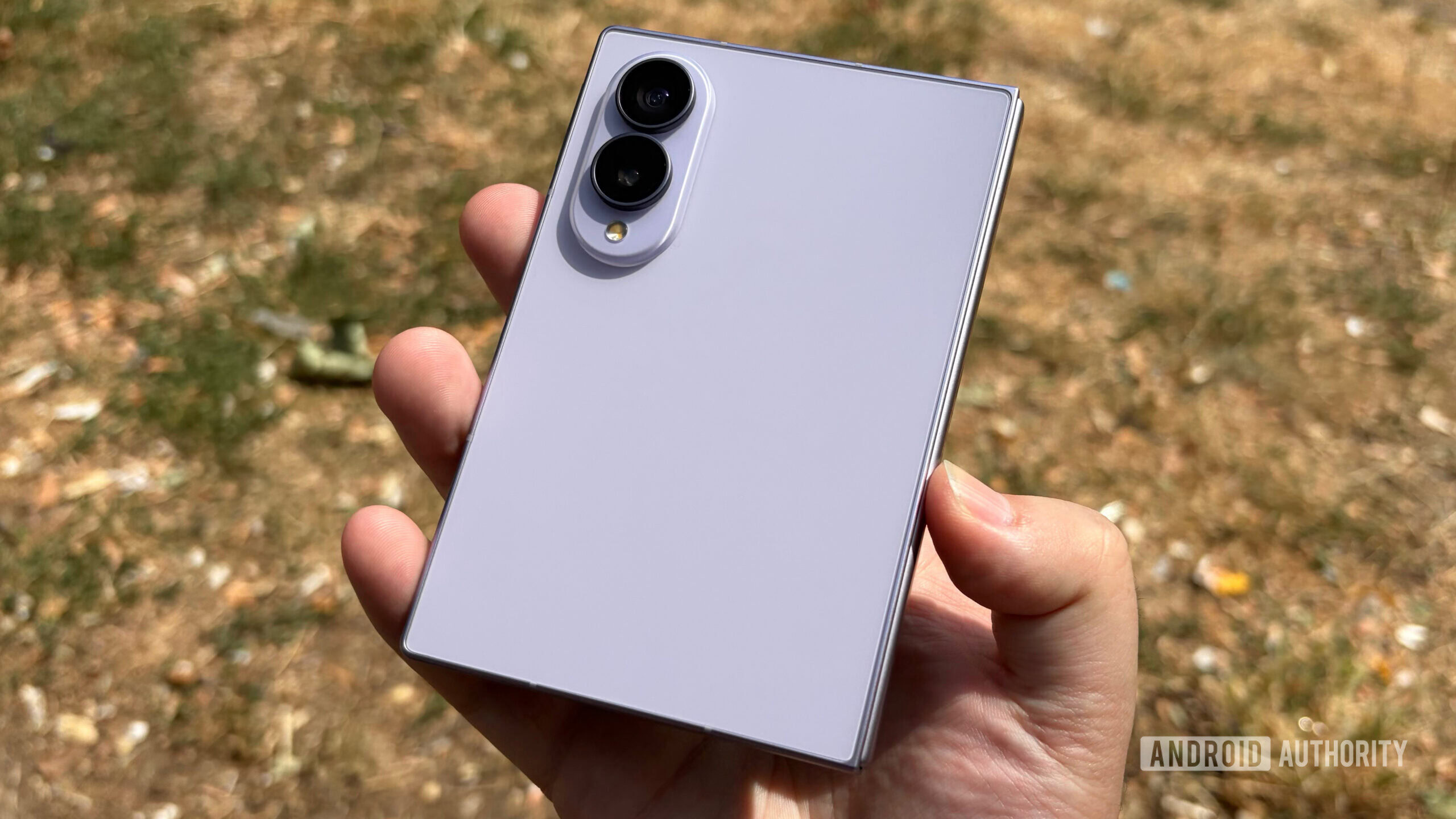
Where early market entrants—such as Google’s inaugural Pixel Fold—misinterpreted user feedback by prioritizing overly wide outer canvases that hampered one-handed use, Samsung has course-corrected brilliantly. The physical proportions of the Galaxy Z Fold 8 are nothing short of a masterclass in industrial design. It manages to feel astonishingly featherlight and remarkably compact. Even for users blessed with larger hands, the daily pocketability is exceptional, sliding seamlessly into denim pockets and tailored suit jackets alike without generating awkward, heavy bulges.
Bridging Two Distinct Realities Into a Unified Experience
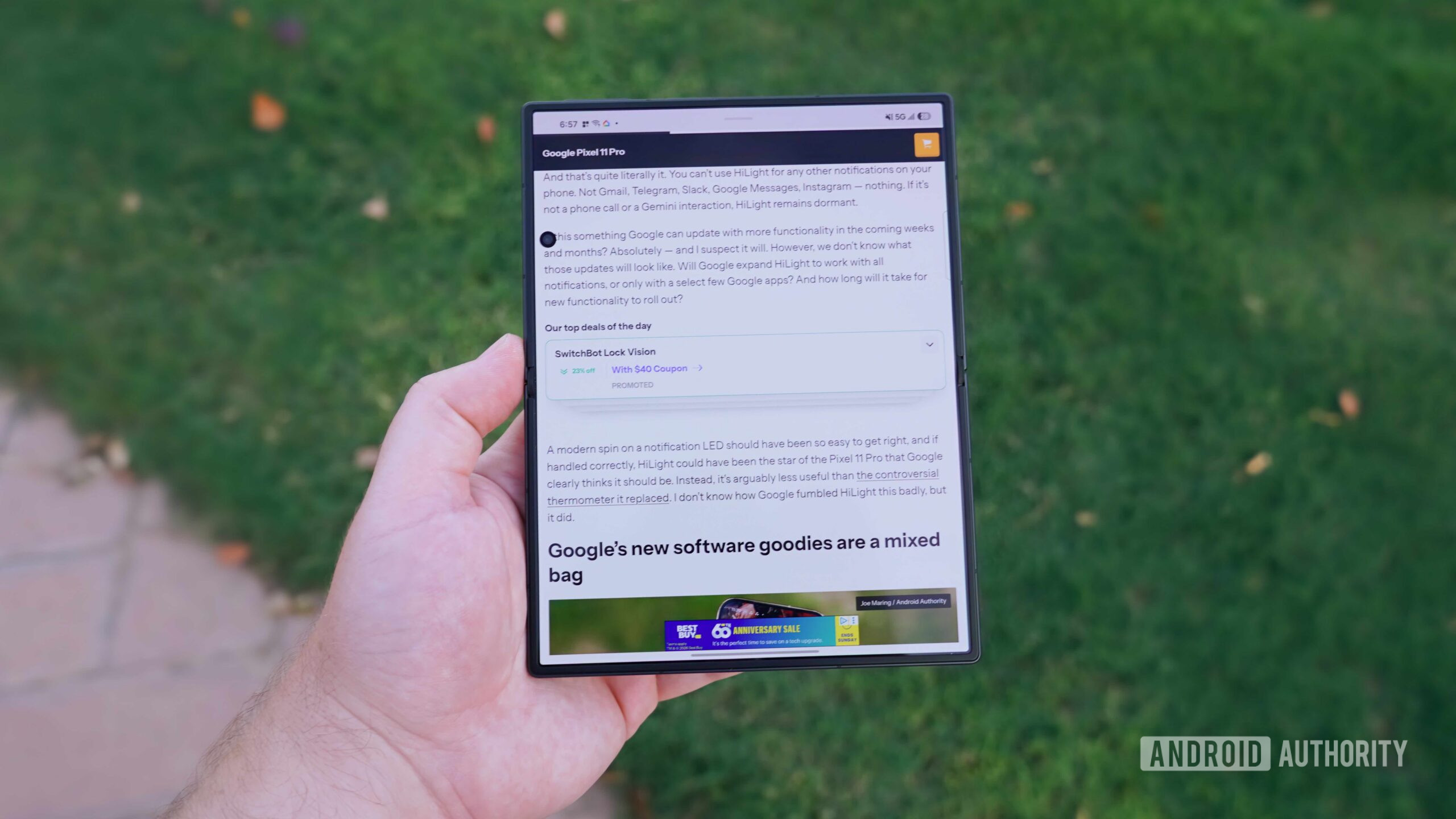
The engineering triumphs of the exterior engineering become even more apparent upon daily interaction. The 5.5-inch cover display hits the absolute bullseye of modern utility. It offers enough workspace and typographic breathing room to execute quick tasks—such as replying to Slack messages, checking transit maps, or clearing out junk emails—without inducing the exhausting compulsion to unfold the device for every minor interaction. Eschewing an overly tall, narrow aspect ratio in favor of a wider 16:10 footprint makes standard applications look remarkably natural.
When the device is unfurled, the inner display delivers a masterclass in dual-purpose utility. Devices categorized under experimental ultra-foldables frequently demand agonizing compromises; their cover screens often feel cramped, while their fully opened inner canvases stretch applications into awkward, unoptimized near-square ratios that look comically out of place. Rotating those massive screens sideways rarely yields a satisfactory landscape viewing experience without inducing user fatigue.
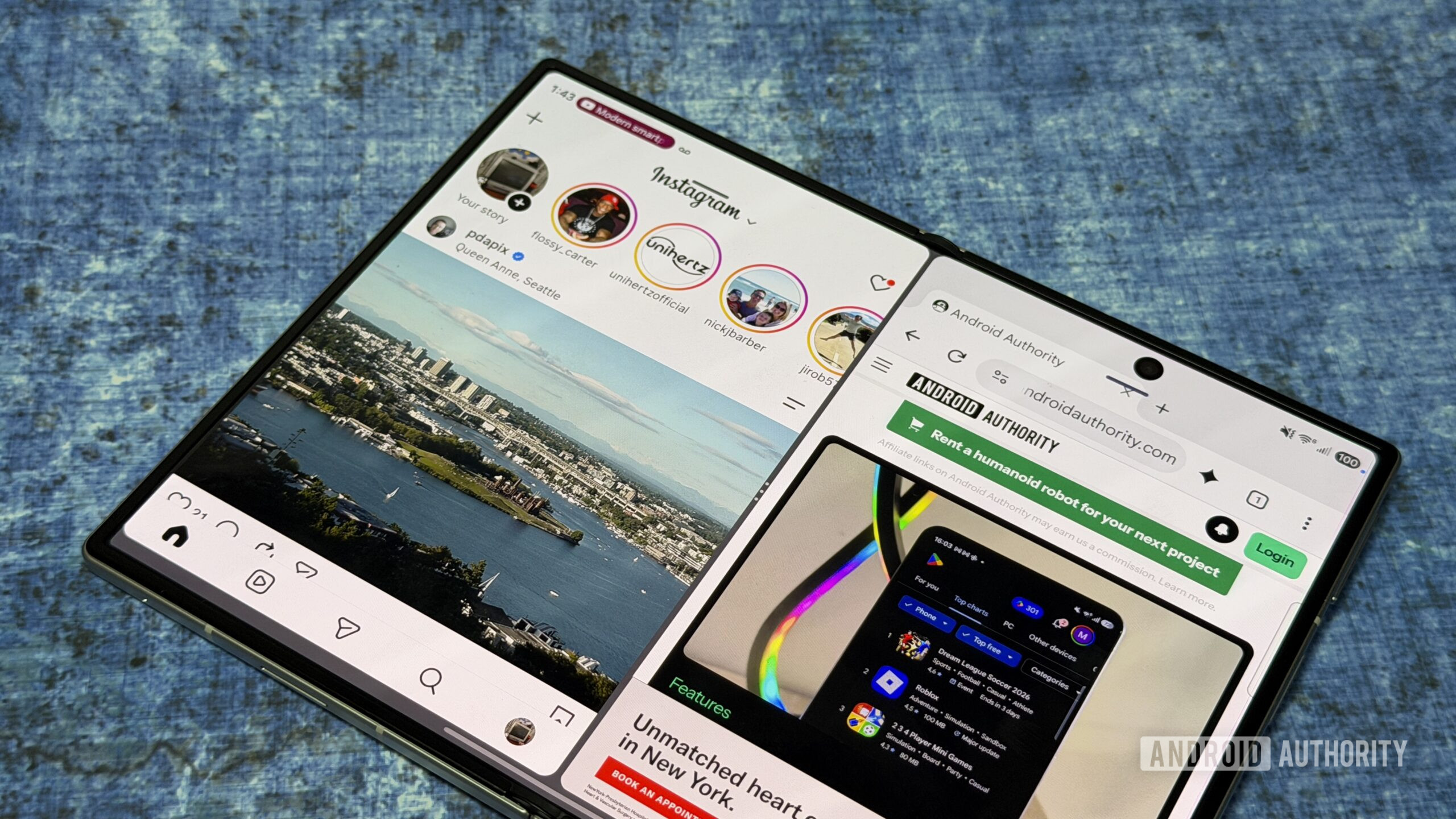
The Galaxy Z Fold 8 sidesteps these pitfalls entirely. Web surfing, multitasking split-screen workspaces, and streaming media consumption feel entirely native on the inner display. If an application occasionally refuses to scale cleanly into landscape mode, a quick gesture snaps the phone back into a vertical orientation, instantly restoring a familiar, traditional smartphone layout without friction.
A Cohesive Software Ecosystem That Elevates the Hardware
Hardware brilliance remains inert silicon and glass without an equally refined software framework to animate it. Fortunately, Samsung’s One UI software suite on the Galaxy Z Fold 8 hits a sophisticated stride. Configuring custom app pairs takes mere seconds, and the operating system demonstrates an impressive memory for window sizing, grid spacing, and layout configurations. While it does not quite replicate the instantaneous multi-window modularity found on legacy dual-screen devices like the Microsoft Surface Duo, achieving similar multitasking versatility takes only a couple of intuitive taps.
App continuity functions with butter-smooth reliability. Transitioning a demanding workflow from the cover screen to the expansive internal display happens instantly; the application scales up dynamically without requiring an annoying cold restart. While seamless continuity is no longer entirely unique to Samsung’s ecosystem, witnessing it execute flawlessly under heavy multitasking loads serves as a testament to mature software optimization.
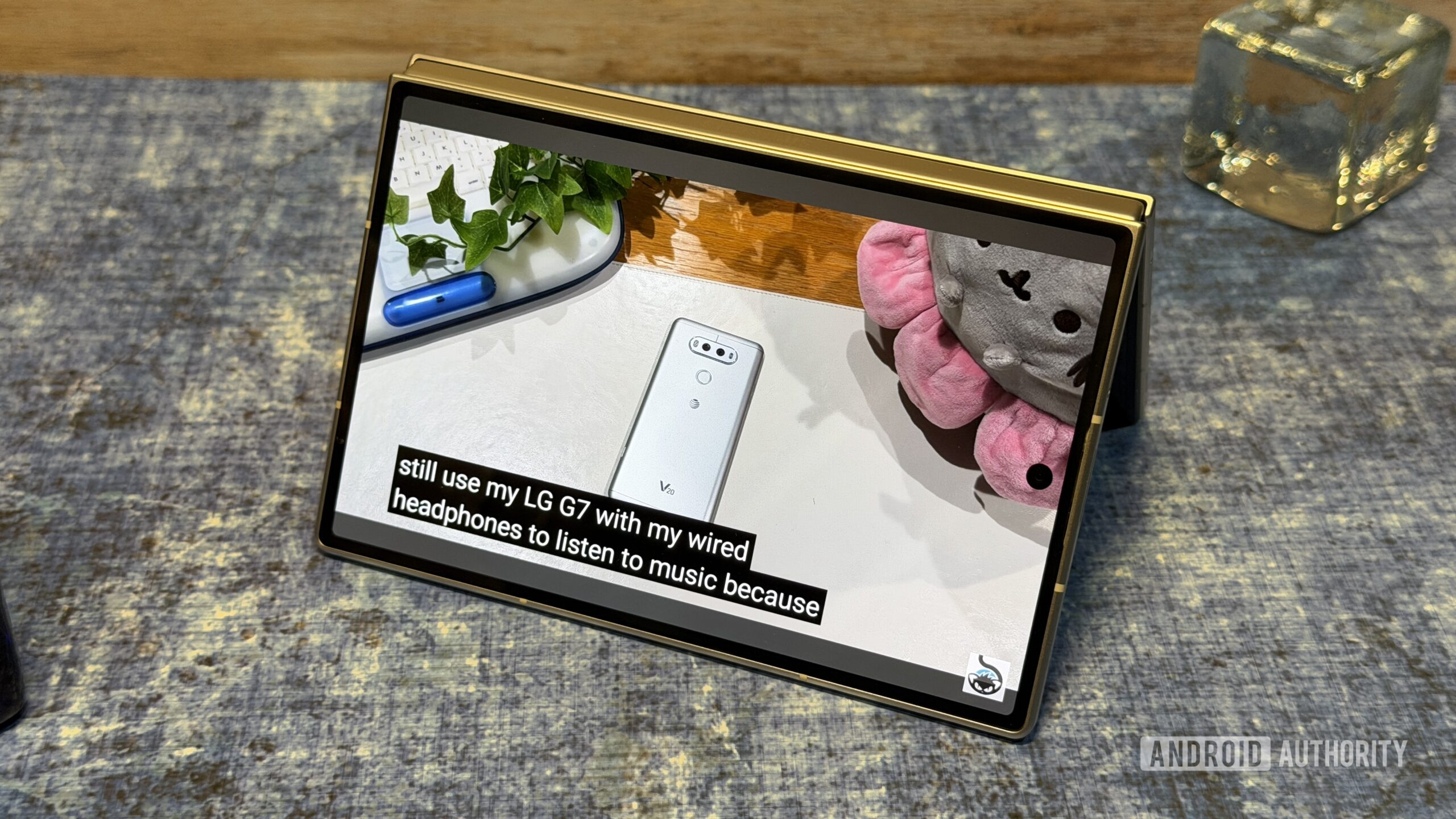
Furthermore, while tech enthusiasts frequently voice disappointment over the quiet retirement of traditional Flex Mode features on this iteration, the newly refined Tent Mode more than compensates for it. Propving the device up on a desk or airplane tray table in landscape mode transforms the 16:10 cover display into an ideal media-consumption monitor, offering a viewing immersion that flat slab phones simply cannot replicate.
Acknowledging the Compromises Without Losing the Magic
Objectively speaking, no piece of consumer hardware is without fault, and the Galaxy Z Fold 8 is no exception. Skeptics are entirely justified in scrutinizing its limitations, particularly in the imaging department. Mobile photographers relying heavily on high-end periscope telephoto lenses will find the folding camera array somewhat restrictive. Direct comparisons between the Fold 8’s primary 50-megapixel sensor and the colossal 200-megapixel shooters found on traditional flagship candy-bar phones—or ultra-tier foldables—reveal a noticeable step down in extreme low-light fidelity and deep optical zoom clarity. Expecting uncompromising camera prowess at a nearly $1,900 price point is entirely fair. Yet, in daily practical usage, those technical regressions quickly fade into the background.
Acoustic performance presents another minor friction point. The internal speaker tuning leans slightly hollow, lacking the rich, booming bass resonance expected from a premium multimedia device. Given the wafer-thin structural profile of the chassis, acoustic chamber limitations are understandable, but audio engineers could arguably extract a bit more warmth. In practice, however, personal listening habits—such as wearing wireless earbuds during media consumption—render this critique largely academic.
The Future Implications of Mainstream Foldable Maturity
The release of the Galaxy Z Fold 8 signals a critical maturation phase for the broader mobile industry. For years, foldable technology struggled against the perception of being an expensive, fragile proof-of-concept meant solely for early adopters willing to endure severe software and ergonomic penalties. By refining the form factor into something as approachable, durable, and comfortable as a standard flagship, Samsung has established a new baseline expectation for the category.
As component suppliers continue to refine ultra-thin hinge mechanisms, improve display panel durability, and optimize silicon power efficiency, form-factor flexibility will inevitably transition from an expensive luxury to a standard market expectation. Competitors across the Android ecosystem will be forced to respond to the refined ergonomics and seamless software continuity demonstrated here, accelerating the evolution of mobile computing architectures.
Ultimately, evaluating a device costing nearly two thousand dollars requires balancing objective technical metrics against subjective user joy. While the compromises are undeniable, the daily experience of wielding the Galaxy Z Fold 8 is so fundamentally satisfying that its flaws become remarkably easy to forgive. It proves definitively that the future of pocket technology is not constrained by rigid glass rectangles, and for the first time in years, I am more than happy to let one exceptional device monopolize my pocket space indefinitely.
