

The convergence of generative artificial intelligence and traditional filmmaking has moved beyond the realm of experimental short films and entered the high-stakes arena of commercial production. In a move that signals a paradigm shift for Hollywood, AI video generation pioneer Luma Labs has officially transitioned from a software provider to a full-scale production partner. The company recently announced the launch of Innovative Dreams, a dedicated production services arm designed to integrate advanced generative models directly into the professional filmmaking pipeline. This new venture is debuting through a high-profile partnership with The Wonder Project, a streaming and production house focused on faith-based and values-driven content, marking a significant milestone in the institutional adoption of synthetic media.
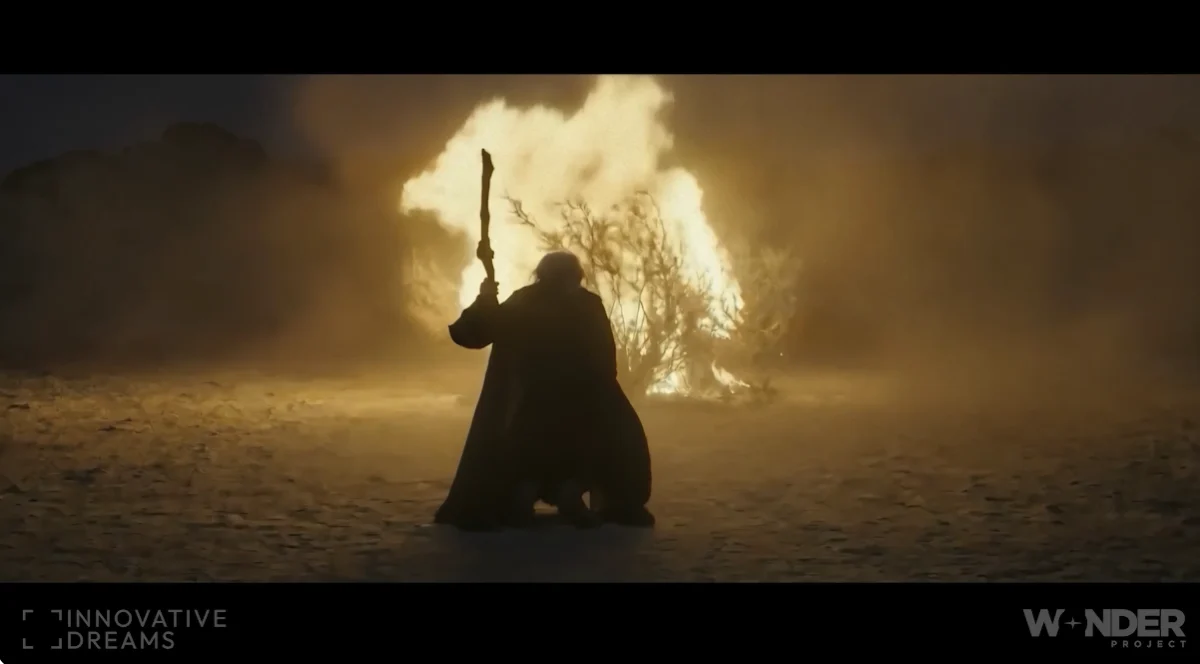
Innovative Dreams represents more than just a new business unit; it is a manifestation of Luma’s ambition to bridge the gap between "prompt-to-video" experimentation and the rigorous demands of a professional film set. The partnership’s flagship project, an epic series titled "The Old Stories: Moses," is already in development. Featuring Academy Award winner Ben Kingsley, the series is slated for a spring release on Amazon Prime Video. The involvement of a talent as distinguished as Kingsley suggests that the industry’s initial skepticism regarding AI-generated content is being replaced by a pragmatic interest in how these tools can enhance, rather than replace, traditional performance.
The Architecture of Innovative Dreams
At its core, Innovative Dreams is structured as a collaborative service that pairs Luma’s "creative technologists" with veteran filmmakers. The goal is to provide a hybrid environment where the boundaries between physical sets and digital environments disappear. This is facilitated by Luma’s recently unveiled "Luma Agents," a suite of unified intelligence models capable of managing end-to-end creative tasks across text, image, video, and audio.
Unlike previous iterations of AI tools that functioned as isolated plug-ins for post-production, Luma Agents are designed for real-time interaction. In the Innovative Dreams workflow, a director can theoretically adjust the lighting of a digital vista, move props within a virtual space, or alter the atmospheric conditions of a scene while the actors are still on stage. This "real-time hybrid filmmaking" approach seeks to solve one of the most persistent bottlenecks in modern VFX: the delay between capturing a performance and seeing the final result.
By integrating AI agents into the live production process, Luma aims to democratize the "Virtual Production" techniques popularized by high-budget series like The Mandalorian. While virtual production usually requires massive LED "Volumes" and expensive game-engine rendering, Luma’s generative approach promises to achieve similar photorealistic results with a fraction of the hardware and overhead.
The Strategic Partnership: Why Faith and Values?
The choice of The Wonder Project as a launch partner is a calculated strategic move. Founded in 2023 by director Jon Erwin and former Netflix executive Kelly Hoogstraten, The Wonder Project caters to a massive, global "faith and values" audience that has historically been underserved by major Hollywood studios. This demographic often seeks epic, historical, and Biblical narratives—genres that traditionally require massive budgets for period-accurate sets, costumes, and thousands of extras.
For a startup like Luma, this presents the perfect use case. Generative AI excels at creating vast, photorealistic landscapes and complex crowd simulations that would otherwise cost tens of millions of dollars. By applying these tools to the story of Moses, Luma and The Wonder Project can deliver the visual scale of a Cecil B. DeMille epic on a streaming-series budget. Jon Erwin, whose previous credits include the successful Biblical drama "House of David," has noted that this technology allows independent and mid-tier studios to compete with the spectacle of major blockbusters.
Furthermore, the faith-based market offers a loyal and engaged audience, providing a stable testing ground for AI-augmented storytelling. If Innovative Dreams can prove that AI can handle the gravitas and visual complexity of a Ben Kingsley-led historical drama, it will have a powerful case study to present to the rest of the industry.
Technical Evolution: From Green Screens to Generative Latent Spaces
To understand the impact of Innovative Dreams, one must look at the evolution of performance capture and virtual production. Traditional performance capture, used extensively in films like Avatar, requires actors to wear specialized suits and facial markers, with the data being processed months later in post-production. Virtual production, on the other hand, uses real-time rendering to display digital backgrounds on LED screens, allowing actors to see their environment while they perform.
Innovative Dreams is attempting to synthesize these two workflows into a single, AI-driven process. According to Erwin, the new system allows filmmakers to capture a human actor in almost any environment and then "transport" them into a photorealistic, AI-generated scene. More provocatively, the technology can map a new, AI-generated face onto an actor’s physical performance, maintaining the nuances of their expressions while completely transforming their on-screen identity.
This capability touches on one of the most sensitive topics in modern cinema: the digital alteration of human likeness. However, Luma’s approach emphasizes the "leverage" of AI to improve the creative process rather than simply cutting costs. By allowing changes to be made "in the moment" rather than weeks later in a VFX house, the director regains creative agency, making decisions based on what they see in the viewfinder in real time.
The Macroeconomic Shift in Filmmaking
The launch of Innovative Dreams comes at a time of significant economic anxiety in Hollywood. Production costs for tentpole films have skyrocketed, often exceeding $200 million before marketing expenses are even considered. This has led to a risk-averse culture dominated by sequels and established franchises.
Luma’s CEO, Amit Jain, has frequently argued that the current trajectory of filmmaking is unsustainable. He posits that generative AI offers a "deflationary" force for high-end content creation. This sentiment is echoed by others in the space, such as Runway co-CEO Cristóbal Valenzuela, who recently suggested that instead of spending $100 million on a single high-risk blockbuster, studios could use AI to produce 50 films at $2 million each. This "long-tail" approach to cinema would allow for more experimentation and a higher statistical probability of discovering a breakout hit.
Innovative Dreams is the practical application of this theory. By reducing the "cost of spectacle," Luma is betting that more stories can be told with high production values. This isn’t just about making films faster or cheaper; it’s about shifting the barrier to entry for cinematic quality. If a mid-sized production company can produce a series that looks like a $150 million Marvel movie for a tenth of the price, the entire power structure of the entertainment industry begins to tilt.
The Competitive Landscape and the Move to "Originals"
Luma is not alone in its quest to move from "tool maker" to "content creator." The broader AI landscape is seeing a surge of startups entering the production space. Higgsfield recently launched its own original sci-fi series, and Wonder Studios (backed by OpenAI) is moving into documentary production.
This trend suggests that the most successful AI companies of the next decade may not be those that simply sell API access, but those that build their own creative ecosystems. By owning the production process, Luma can ensure that its models are being used to their full potential, while also capturing the intellectual property value of the content produced. It allows for a feedback loop where the needs of the film set directly inform the development of the next generation of AI models.
Future Implications and Ethical Considerations
As Innovative Dreams scales, it will undoubtedly face questions regarding labor and the future of traditional film crafts. The ability to generate sets, lighting, and even background characters via AI agents poses a direct challenge to traditional roles in production design and cinematography. However, Luma frames this not as a replacement of talent, but as an expansion of what a small team can accomplish. In their view, the "seasoned filmmakers" from Erwin’s team are essential to guiding the AI; the machine provides the "leverage," but the humans provide the "intent."
Looking forward, the success of "The Old Stories: Moses" will be a bellwether for the industry. If the series achieves high viewership and critical acclaim, it will validate the "real-time hybrid" model and likely lead to a flood of similar partnerships. We may be entering an era where the "studio" is no longer a physical lot in Burbank, but a distributed network of AI models and creative agents capable of summoning any world imaginable from a few lines of code and a captured performance.
The launch of Innovative Dreams marks the end of the "toy phase" for generative video. It is a serious, well-funded, and star-studded attempt to integrate artificial intelligence into the very fabric of storytelling. Whether it leads to a new golden age of cinema or a fragmented landscape of synthetic media remains to be seen, but one thing is certain: the process of making a movie will never be the same. Through this partnership, Luma is not just generating video; they are attempting to generate the future of the film industry itself.
