

The quest for a clean, virtually limitless energy source has long been the "holy grail" of applied physics, a pursuit characterized by decades of incremental progress and daunting engineering hurdles. However, the transition from theoretical physics to viable commercial infrastructure reached a significant milestone this week as Inertia Enterprises, a prominent fusion energy startup, announced a trio of strategic agreements with the Lawrence Livermore National Laboratory (LLNL). These deals aim to bridge the gap between the historic scientific breakthroughs achieved at the California-based National Ignition Facility (NIF) and the rigorous demands of the global energy market.
By securing two strategic partnership projects and a cooperative research and development agreement (CRADA), Inertia is positioning itself as the primary commercial heir to the most successful fusion experiment in human history. The partnership is not merely a collaborative gesture; it includes the licensing of nearly 200 patents from the laboratory, effectively transferring decades of federally funded intellectual property into the hands of a private entity designed for rapid scaling. This move signals a shift in the fusion sector from a period of fundamental discovery to one of industrial application.
The Scientific Foundation: From Breakeven to Commercial Viability
To understand the magnitude of Inertia’s strategy, one must look at the specific pedigree of the technology involved. In December 2022, the NIF made global headlines by achieving "scientific breakeven"—a state where the energy produced by a fusion reaction exceeds the laser energy used to drive it. This was the first time "ignition" had been achieved in a controlled setting, proving that the sun’s power source could, in theory, be replicated on Earth.
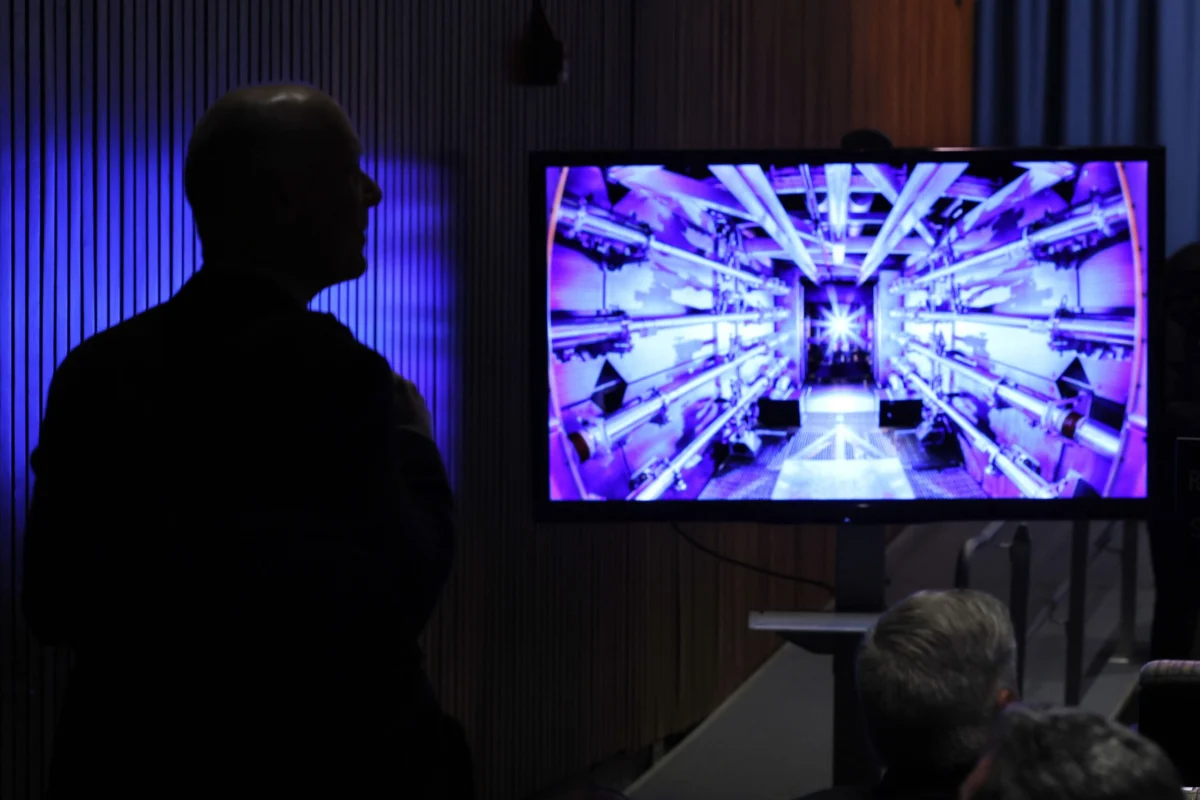
While other fusion startups have pursued magnetic confinement—using massive superconducting magnets to trap a hot plasma "soup" inside a doughnut-shaped tokamak—Inertia and LLNL utilize inertial confinement fusion (ICF). This method relies on precision and speed rather than sustained magnetic fields. At the NIF, 192 of the world’s most powerful lasers are focused onto a target the size of a peppercorn. The goal is to compress a fuel pellet of deuterium and tritium (isotopes of hydrogen) to densities and temperatures greater than those found at the center of the sun.
The process is a marvel of extreme engineering. The lasers do not strike the fuel directly; instead, they enter a small gold cylinder known as a hohlraum. The resulting interaction vaporizes the gold, creating a "bath" of high-energy X-rays that blast the outer diamond coating of the fuel pellet. As this coating vaporizes and expands outward, the resulting rocket-like reaction forces the fuel inward, compressing it until the hydrogen atoms fuse into helium, releasing a massive burst of energy.
The "Kritcher" Connection and the New Fusion Economy
The lineage of Inertia Enterprises is perhaps its greatest competitive advantage. The company was co-founded by Annie Kritcher, who serves as its chief scientist. Kritcher is not just a participant in the field; she was the lead designer of the 2022 experiment at NIF that finally achieved ignition. Her transition from a lead scientist at a national lab to a founder of a venture-backed startup was facilitated by the 2022 CHIPS and Science Act. This legislation was designed specifically to foster such "lab-to-market" transitions, allowing top-tier researchers to maintain their laboratory roles while steering private companies that can attract the capital necessary for commercialization.
And the capital has followed. In February, Inertia burst onto the scene with a $450 million Series A funding round led by heavyweight investors like Bessemer Venture Partners and Alphabet’s GV. This massive injection of cash placed Inertia among the best-capitalized players in the industry, rivaling the war chests of competitors like Helion Energy and Commonwealth Fusion Systems. However, while those competitors are largely focused on magnetic confinement, Inertia’s dominance in the laser-fusion niche is nearly absolute, thanks to its deep ties to the LLNL ecosystem.
The Industrial Challenge: From Once-a-Day to Ten-a-Second
Despite the scientific success at NIF, the path to a profitable power plant is fraught with engineering obstacles that the new partnership aims to solve. The NIF was designed as a scientific instrument, not a power generator. Its current laser architecture is based on technology from the 1980s and 1990s, utilizing flashlamp-pumped neodymium-doped glass. These lasers are inefficient and generate so much heat that the facility can only fire about three times a day.
For a commercial plant to be viable, it must operate like an internal combustion engine, firing several times per second. This requires a radical redesign of the laser systems, moving toward high-efficiency, diode-pumped solid-state lasers (DPSSLs). These new systems must not only be more efficient—converting more electricity from the grid into light—but they must also be durable enough to withstand millions of shots without degradation.
The second major hurdle is target manufacturing. At the NIF, each hohlraum and diamond-coated fuel pellet is a bespoke piece of high-precision jewelry, costing tens of thousands of dollars to manufacture. A commercial plant would consume hundreds of thousands of these targets every day. The agreements between Inertia and LLNL specifically target the development of advanced manufacturing techniques to mass-produce these components at a fraction of their current cost, while maintaining the atomic-level precision required for ignition.
A Crowded Field and the Competitive Landscape
Inertia is not the only player betting on photons. Startups such as Xcimer, Focused Energy, and First Light Fusion are also exploring various iterations of inertial confinement. Xcimer, for instance, is looking at using much larger, simpler laser architectures to reduce costs, while First Light Fusion uses a high-velocity projectile rather than lasers to create the necessary compression.
However, Inertia’s licensing of 200 LLNL patents gives it a significant "moat." These patents cover everything from the geometry of the hohlraum to the specific pulse-shaping of the laser beams. In the world of high-stakes technology, intellectual property is often the difference between a successful exit and a costly failure. By aligning itself so closely with the NIF’s proven results, Inertia is effectively de-risking its approach in the eyes of institutional investors and future utility partners.
The Broader Implications for Energy Security and Climate
The push for fusion comes at a critical juncture for the global energy transition. As nations strive to reach "net-zero" carbon emissions, the limitations of intermittent renewables like wind and solar become more apparent. Fusion offers the promise of "baseload" power—steady, reliable energy that can run 24/7 without the radioactive waste profile of traditional fission or the carbon footprint of fossil fuels.
Furthermore, the fuel for fusion is essentially inexhaustible. Deuterium can be extracted from seawater, and tritium can be "bred" from lithium during the fusion process itself. For a world increasingly concerned with energy sovereignty and the geopolitical risks of fuel supply chains, a technology that requires only a small amount of seawater and lithium to power a city is an existential game-changer.
Analyzing the Future: The Decadal Timeline
While the partnership between Inertia and LLNL accelerates the timeline, experts caution that a commercial fusion reactor is still likely a decade or more away. The "pilot plant" phase, which Inertia aims to reach in the 2030s, will need to prove not just that fusion can work repeatedly, but that it can be integrated into the existing electrical grid.
The agreements signed this week focus on the "Strategic Partnership Projects," which will likely involve building prototype components that can handle the thermal loads of a continuous-fire reactor. The collaboration will also delve into the "balance of plant"—the steam turbines and heat exchangers that will turn the heat from fusion into the electricity that powers homes.
As Inertia Enterprises moves forward, it carries the weight of 60 years of fusion research on its shoulders. The transition from the pristine, controlled environment of a national laboratory to the gritty, cost-sensitive world of industrial energy is the ultimate test for laser fusion. If Kritcher and her team can successfully modernize the NIF’s "exotic" physics into a repeatable, automated industrial process, they will not just have built a successful company—they will have fundamentally altered the trajectory of human civilization.
The collaboration between Inertia and LLNL represents a new chapter in the American "Big Science" tradition. It is a recognition that while the government can prove what is possible, it is the private sector that must determine what is practical. With $450 million in the bank, 200 patents in the portfolio, and the primary architect of ignition at the helm, Inertia Enterprises is no longer just watching the future of energy; it is actively attempting to manufacture it.
