

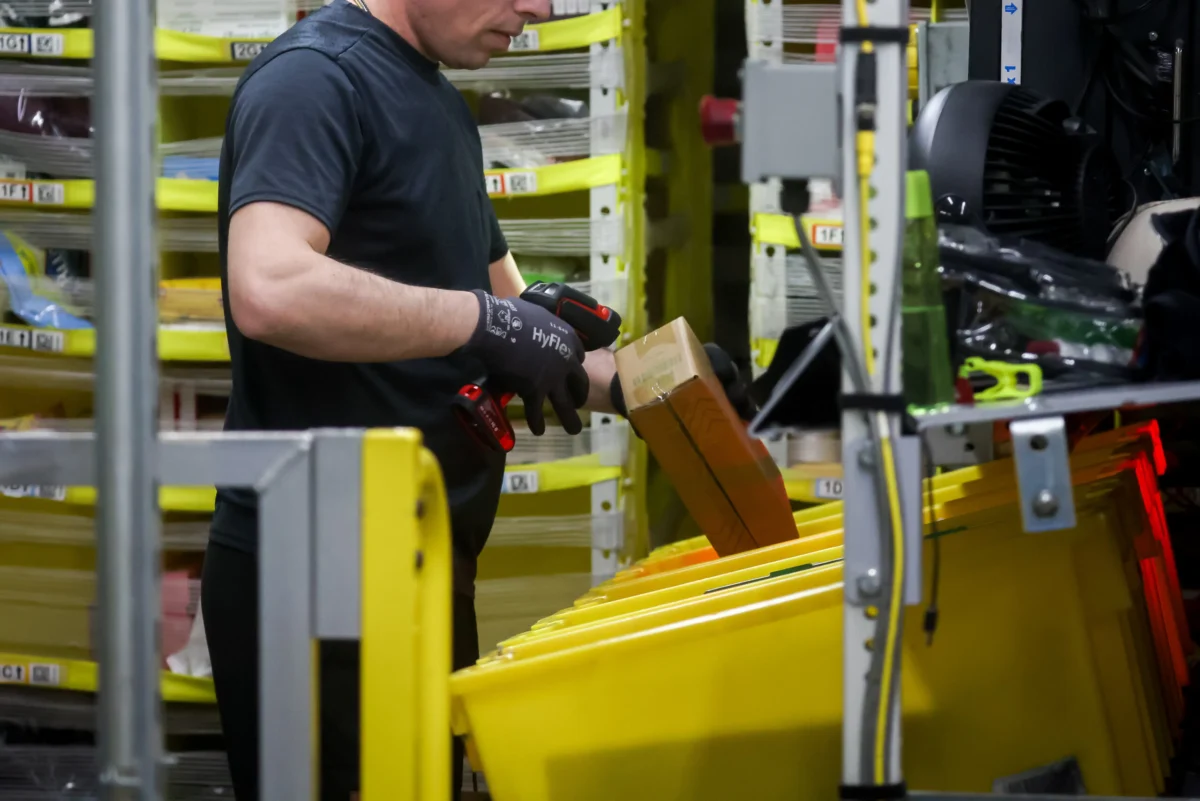
The rhythmic, high-velocity operations at Amazon’s PDX9 fulfillment center in Troutdale, Oregon, were abruptly halted last week following the sudden death of a floor employee. While the incident is being categorized by the company as a non-work-related medical event, the tragedy has sparked a firestorm of criticism regarding the environmental conditions within the massive sorting facility and the broader culture of productivity that defines the modern logistics industry.
Witness accounts emerging from the facility paint a harrowing picture of the moments following the worker’s collapse. Reports suggest that as the individual lay unresponsive on the warehouse floor, the machinery of global commerce continued to churn around them, with some employees allegedly instructed to maintain their stations until a formal stoppage was coordinated. This juxtaposition—of a human tragedy occurring amidst the automated efficiency of a trillion-dollar enterprise—has become a flashpoint for labor advocates who argue that the "Amazon model" prioritizes throughput over the dignity and safety of its workforce.
In an official statement addressing the loss, Amazon expressed deep sadness and extended sympathies to the worker’s family, noting that the company has been in direct contact with the bereaved to provide support resources. At the Troutdale site, management reportedly deployed onsite grief counselors and provided additional mental health support to those who witnessed the event. The company also expressed gratitude toward the Multnomah County Sheriff’s Department and local emergency medical services for their rapid response. Following the incident, the facility was eventually cleared; workers were sent home with pay for the remainder of their shifts, and the subsequent night shift was canceled to allow for an initial investigation.
Despite the company’s focus on the medical nature of the event, internal chatter among the PDX9 workforce suggests a more complex set of contributing factors. On digital forums frequented by fulfillment center staff, employees have pointed toward recent structural changes within the warehouse as a potential source of environmental stress. Specifically, the installation of soundproof curtains—intended to dampen the deafening roar of conveyor systems and heavy machinery—has been criticized for severely restricting airflow in already stifling sections of the building.
During the week of the fatality, several workers reported that the facility felt unseasonably hot, speculating that the combination of high physical exertion and stagnant air created a "pressure cooker" environment. While Amazon maintains that Oregon’s Occupational Safety and Health Administration (OSHA) has already deemed the death to be unrelated to workplace hazards, the perception among the rank-and-file remains one of skepticism. Some staff members noted that the climate control within the building seemed significantly more effective when they returned to work the following day, leading to further speculation regarding the facility’s baseline operational standards.
The PDX9 warehouse is no stranger to scrutiny. Since its opening, the Troutdale facility has developed a reputation as one of the more grueling nodes in Amazon’s domestic network. Investigative data from as far back as 2018 indicated that the warehouse suffered from a staggering 26% injury rate, a figure that significantly outpaced both the industry average and the rates of comparable facilities. More recent analysis of 2024 OSHA data corroborates this trend, suggesting that Amazon’s fulfillment centers nationwide report serious injuries at a rate more than double that of the broader warehousing sector.
This disparity in safety outcomes has drawn the attention of the highest levels of the American legal and regulatory systems. The United States Attorney’s Office for the Southern District of New York is currently spearheading an expansive, ongoing investigation into workplace safety at Amazon warehouses. Federal prosecutors are looking into allegations that the company has engaged in a systematic effort to manipulate safety data, underreporting injuries to maintain a favorable public image and avoid regulatory penalties. Parallel investigations by the Department of Labor and various Senate committees have raised similar concerns, with investigators alleging that the company’s reliance on algorithmic management and "Time off Task" (TOT) tracking creates a psychological and physical burden that inevitably leads to burnout and injury.
From a broader industry perspective, the death in Troutdale serves as a grim reminder of the "last mile" tensions inherent in the digital economy. As consumers increasingly demand same-day or next-day delivery, the physical infrastructure required to meet those expectations is pushed to its absolute limit. In the logistics world, every second of a worker’s shift is optimized by software. This hyper-efficiency leaves little margin for human error or physical frailty. When a worker collapses in such an environment, the friction between the biological needs of the human body and the mechanical needs of the supply chain becomes painfully visible.
Amazon, for its part, has aggressively defended its safety record and its investments in employee well-being. The company highlights a reported 43% reduction in its global recordable incident rate since 2019—a metric that tracks any injury requiring more than basic first aid. According to corporate filings and public statements, the tech giant has funneled more than $2.5 billion into safety improvements over the last five years. These investments include the development of ergonomic workstations, the deployment of "safety huddles," and the integration of sophisticated robotics designed to handle the most repetitive and physically taxing roles. In 2026 alone, the company claims to have allocated hundreds of millions of dollars toward refining these protocols.
However, labor experts argue that technology alone cannot solve a problem rooted in corporate culture. The "Amazonian" philosophy of "Day 1" thinking—which emphasizes constant innovation and relentless pace—often clashes with the traditional tenets of industrial safety. Critics suggest that as long as worker performance is tied to rigid, algorithmically-generated quotas, the risk of heat exhaustion, musculoskeletal disorders, and cardiovascular stress will remain elevated. The Troutdale incident highlights a specific vulnerability: heat. As climate change increases the frequency of extreme temperature events, large-scale industrial spaces that were not originally designed for such conditions are becoming increasingly hazardous. While some states, including Oregon, have moved to implement stricter heat-stress standards, enforcement remains a challenge in facilities that span millions of square feet.
The future impact of the PDX9 tragedy is likely to be felt in the ongoing push for warehouse labor reform. In several states, "Warehouse Worker Protection Acts" are being introduced or expanded, aiming to limit the use of quotas that prevent workers from taking necessary bathroom or cooling breaks. These legislative efforts are often directly inspired by the conditions reported within Amazon’s network. Furthermore, the incident may galvanize unionization efforts, which have seen a resurgence at various Amazon hubs across the country. Organizers often point to safety and "the right to a humane pace of work" as their primary rallying cries, rather than just wage increases.
As federal investigators continue to pore over Amazon’s safety logs and internal communications, the company finds itself at a critical crossroads. It must reconcile its identity as a cutting-edge technology leader with its reality as one of the world’s largest physical employers. The death of a team member in Oregon is not merely an isolated medical event in the eyes of the public; it is a data point in a much larger conversation about the ethics of the modern workplace.
In the coming months, the results of the Southern District of New York’s investigation could prove pivotal. If prosecutors find evidence of systemic data manipulation, it could lead to massive fines and court-mandated changes to how Amazon manages its floor staff. For now, the employees at PDX9 return to their stations, navigating the aisles of the Troutdale facility under the shadow of a lost colleague. The soundproof curtains remain, the conveyor belts continue to hum, and the global demand for instant gratification remains unsated. The question that lingers is whether the cost of that convenience is becoming too high for the people who make it possible.
Ultimately, the resolution of these issues will require a fundamental shift in how the tech industry views its "blue-collar" foundation. While drones and fully autonomous warehouses may be the long-term vision, the current reality of e-commerce still relies on millions of human hearts and hands. Protecting those individuals from the physical toll of their environment is no longer just a regulatory requirement; it is a moral imperative that will define the legacy of the digital retail revolution. As the industry watches the fallout from the Troutdale fatality, the pressure is mounting on Amazon to prove that its multi-billion-dollar safety investments are yielding real-world protection, not just statistical improvements.
