

For decades, the relationship between Earth and its satellites was defined by a relatively simple "bent-pipe" architecture. Data was captured in space, beamed down to terrestrial ground stations, and processed in massive, energy-hungry data centers located in places like Northern Virginia or the Dublin suburbs. However, as the volume of data generated by orbital sensors—ranging from high-resolution hyperspectral imagery to synthetic aperture radar (SAR)—reaches petabyte scales, the traditional model of "collect in space, process on Earth" is hitting a physical and economic wall. The latency inherent in downlinking massive datasets and the limited bandwidth of radio-frequency links have created a bottleneck that threatens to stifle the next generation of space-based applications.
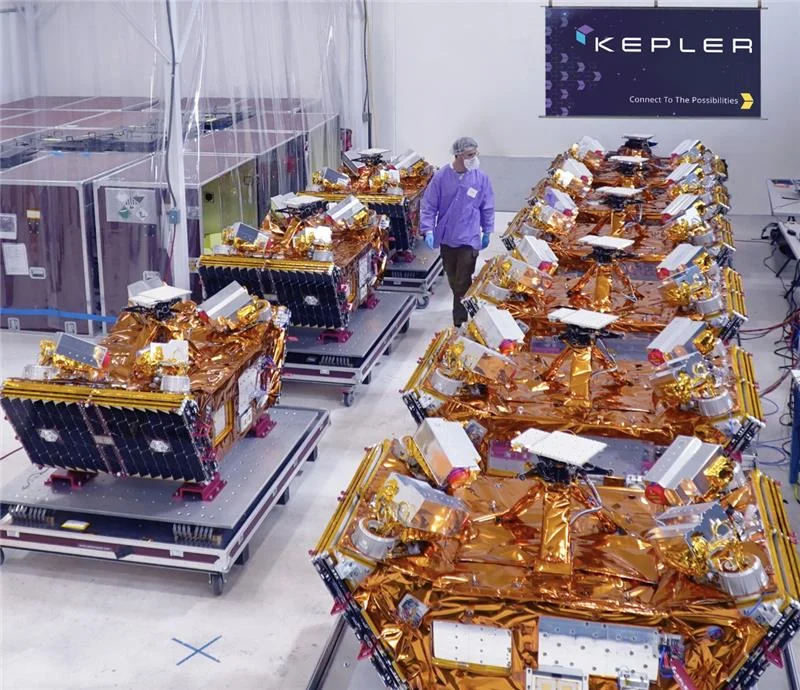
Enter the era of orbital edge computing. The recent operational launch of the largest compute cluster currently in orbit, managed by Canada’s Kepler Communications, marks a pivotal shift in this paradigm. By deploying a network of 40 Nvidia Orin edge processors across 10 operational satellites, all interconnected via high-speed laser communication links, Kepler is not just launching hardware; it is establishing the foundational infrastructure for a decentralized, space-based cloud. This development signals that the long-promised "data center in space" is moving out of the realm of venture capital slide decks and into the reality of commercial operations.
The Architecture of an Orbital Mesh
The technical achievement of the Kepler constellation lies in its move away from isolated silos of hardware. In traditional satellite deployments, a single spacecraft might carry a processor to handle its own telemetry or basic image compression. Kepler’s approach is fundamentally different: it treats its satellites as nodes in a distributed network. The use of Nvidia’s Orin platform is a strategic choice. Originally designed for autonomous vehicles and robotics, the Orin is an "edge" processor, optimized for high-performance AI inference with a relatively low power envelope.
By linking these processors via optical (laser) cross-links, Kepler creates a "mesh" that allows data to be moved and processed across multiple spacecraft before it ever touches a ground station. This is the orbital equivalent of a terrestrial local area network (LAN), where compute resources can be pooled to handle complex workloads. For the 18 customers already signed onto the platform, this represents a massive leap in capability. It allows for real-time decision-making in orbit—identifying a specific vessel in the middle of the ocean or detecting a wildfire start-point—and sending only the relevant "insight" back to Earth, rather than the raw, multi-gigabyte image file.
The Sophia Space Partnership: Testing the Orbital OS
The complexity of managing a distributed computer in the harsh environment of space cannot be overstated. This is the focus of Kepler’s newest partnership with Sophia Space, a startup dedicated to developing the software fabric for the next generation of orbital computers. In a landmark experiment, Sophia Space will attempt to upload its proprietary operating system to Kepler’s satellites, aiming to configure and manage a workload across six GPUs distributed over two separate spacecraft.
In a terrestrial data center, spinning up a virtual machine across different racks of servers is a routine task handled by orchestration layers like Kubernetes. In orbit, it is a high-wire act. The software must account for fluctuating power availability, the rigors of cosmic radiation which can cause "bit-flips" in memory, and the physical movement of the satellites themselves. If Sophia Space can successfully demonstrate that its OS can treat multiple satellites as a single, cohesive compute resource, it will have "de-risked" one of the most significant barriers to space-based AI. This test is a critical precursor to Sophia’s own planned satellite launch in 2027, which aims to debut a new generation of hardware specifically designed for the vacuum of space.
The Thermodynamics of Innovation
One of the most persistent challenges in orbital computing is not the silicon itself, but the physics of heat. On Earth, data centers are cooled by massive fans and liquid cooling systems that reject heat into the atmosphere or water sources. In the vacuum of space, there is no air to move. Heat can only be dissipated through radiation, which is a far less efficient process. This creates a "thermal ceiling" for high-performance computing; if a processor runs too hot for too long, it will simply melt or shut down.
Sophia Space is tackling this through the development of passively-cooled space computers. By eliminating the need for heavy, power-hungry active cooling systems—which add significant mass and cost to a launch—they hope to make large-scale orbital compute economically viable. The goal is to create a system where powerful GPUs can run at high utilization rates without requiring the satellite to carry a massive radiator. This focus on thermal efficiency is what will eventually allow the industry to move from the current "edge" processors like the Nvidia Orin to the "heavy iron" GPUs used for large-scale AI model training.
Inference vs. Training: The Strategic Choice
A clear philosophical divide is emerging in the nascent space data center industry. Companies like SpaceX, Blue Origin, and well-funded startups like Starcloud and Aetherflux are looking toward the 2030s, envisioning massive orbital hubs that could eventually rival terrestrial data centers in sheer flops. These visions often involve "training" workloads—the massive computational tasks required to build AI models like GPT-4.
However, leaders at companies like Kepler argue that the near-term value of space compute lies in "inference"—the application of an existing model to new data. The logic is simple: why send a "superpower" GPU into orbit that consumes kilowatts of power but only runs 10% of the time due to thermal or power constraints? Instead, a distributed network of smaller, more efficient GPUs can run at 100% utilization, processing sensor data in real-time.
For the U.S. military and intelligence agencies, this inference-first model is highly attractive. The Department of Defense is currently investing heavily in new missile defense architectures that rely on constellations of satellites to detect and track hypersonic threats. In these scenarios, every millisecond of latency counts. If a satellite can process radar data onboard and identify a threat instantly, it bypasses the "downlink-process-uplink" cycle that could take several minutes—a lifetime in the context of modern warfare.
Terrestrial Push Factors: Why Space is the New "Green" Data Center
While the technological "pull" of space is clear, there are also significant "push" factors from Earth that are making orbital alternatives more attractive. Across the globe, terrestrial data centers are facing an existential crisis of resources. They consume vast amounts of land, require billions of gallons of water for cooling, and place an immense strain on local power grids.
In the United States, we are beginning to see the first signs of a regulatory backlash. From local bans on data center construction in states like Wisconsin to growing congressional scrutiny over the energy consumption of AI, the "Not In My Backyard" (NIMBY) sentiment is reaching the tech sector. If terrestrial expansion becomes too politically or economically expensive, the infinite "land" and solar energy available in orbit become a compelling business case. In space, the sun shines 24/7 (in certain orbits), and there are no local zoning boards to contend with.
The Roadmap to 2030
As the partnership between Kepler and Sophia Space moves forward, the industry is watching closely. The successful demonstration of a multi-satellite compute cluster would prove that the "network" is just as important as the "computer." By 2027, as Sophia Space launches its dedicated hardware and Kepler continues to expand its laser-linked constellation, we will likely see the first true "Cloud-in-the-Sky" services.
The transition will happen in phases. We are currently in Phase 1: Edge processing of space-collected data to reduce downlink costs. Phase 2, expected in the late 2020s, will involve satellites providing compute services for other "dumb" satellites, effectively acting as an orbital utility. Phase 3, the 2030s vision of companies like Blue Origin, could see the migration of terrestrial workloads to space, driven by energy costs and environmental regulations on Earth.
The "weirdness" of the future, as some industry veterans have noted, is just beginning. As we hit the limits of what our planet can sustain in terms of digital infrastructure, the logical next step is to move our most power-intensive and data-heavy industries into the environment that has an abundance of space and energy. The opening of the largest orbital compute cluster today is not just a milestone for Canada or for Kepler; it is the first chapter in a new history of how humanity processes information. The silicon has reached the stars, and it’s not coming back down.
