

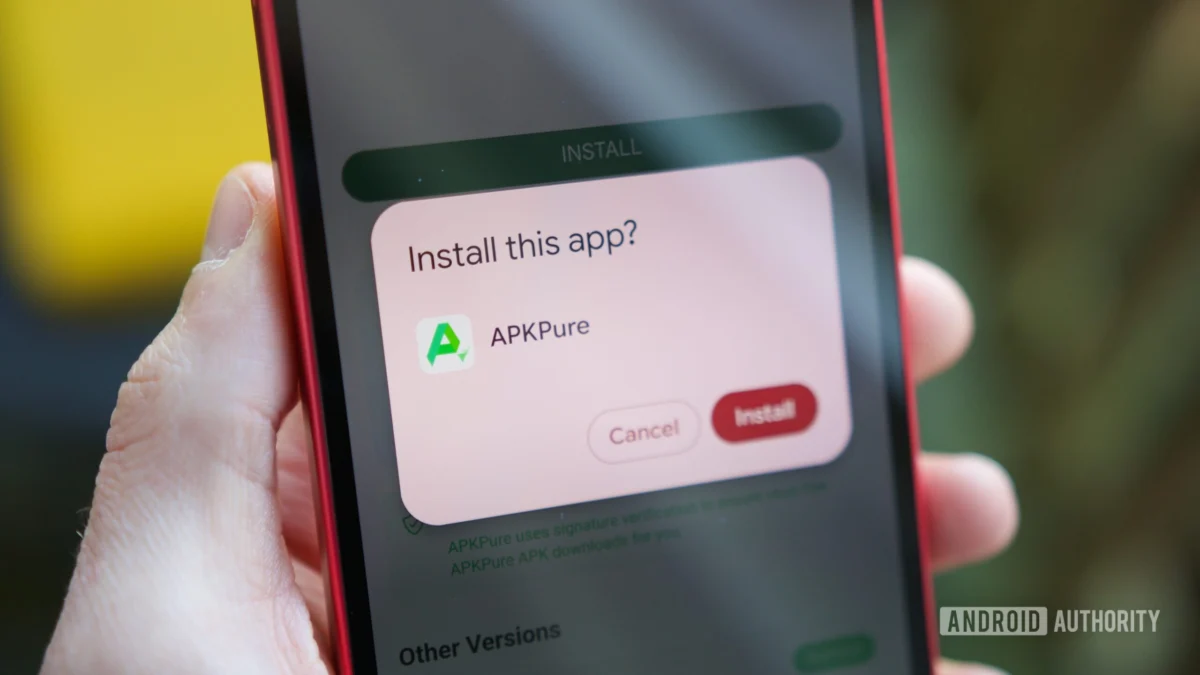
The technological ecosystem surrounding Android has been noticeably unsettled by recent directives from Google concerning the installation of applications sourced outside the official Google Play Store. Last week, the platform’s custodian announced a significant overhaul to the sideloading process, a feature long cherished by developers, enthusiasts, and power users for its flexibility and open nature. This new protocol, slated for implementation later this year, mandates that any user wishing to install an application package (APK) from an unverified source must first navigate a series of enhanced security warnings. However, the most polarizing element—and the one drawing the sharpest critique—is the imposition of a mandatory 24-hour cooling-off period between the user’s explicit consent to enable sideloading and the actual availability of that function.
This policy shift is framed by Google as a necessary fortification of user security, designed to mitigate the risks associated with malware and malicious software frequently distributed through unofficial channels. In an era where digital security breaches are increasingly sophisticated, bolstering defenses against user error or exploitation is a perennial concern for platform stewards. Yet, the reaction from the engaged segment of the Android community suggests a deep-seated apprehension regarding the balance struck between security theater and functional utility.
To gauge the immediate pulse of its readership, a comprehensive poll was deployed, capturing nearly 8,000 individual votes on the proposed workflow adjustments. The results paint a clear picture of user dissatisfaction, underscoring a perceived encroachment on the fundamental openness that has historically defined the Android operating system.
The data reveals a substantial cohort, accounting for 47.8% of respondents, who are unequivocally opposed to the mandated friction. This group articulated their disapproval with the assessment that the new structure fundamentally "makes Android less open and hurts power users." This segment represents the core constituency that utilizes sideloading not merely for niche experimentation, but often for accessing beta software, region-locked applications, or open-source tools not hosted on the primary marketplace. For these users, the mandatory delay is viewed not as a safeguard, but as a direct administrative obstacle to productivity and digital autonomy.
Following closely, a significant contingent—31.2% of voters—expressed a more nuanced, though still critical, perspective. These users acknowledge the underlying rationale, stating they "get what Google is doing" regarding security imperatives. However, their agreement stops short of endorsement, as they simultaneously conclude that the imposed measures "feel like overkill." This middle ground highlights a key tension: the perceived security gain does not justify the significant administrative imposition on the majority of experienced users who rarely, if ever, fall prey to common sideloading scams.
Conversely, the segment actively supportive of the changes remains a distinct minority. Approximately 18.2% of surveyed participants indicated they "like the change," accepting the added hassle as a worthwhile trade-off for enhanced baseline security. This suggests a segment of the user base prioritizes maximal platform safety above all else, even if it means sacrificing immediate access to unofficial sources. Finally, a negligible 2.8% indicated indifference, citing a lack of personal engagement with the sideloading feature altogether, reinforcing that the debate primarily impacts the technically inclined segment of the user base.
The Philosophical Divide: Openness Versus Centralized Control
The debate surrounding these restrictions touches upon the foundational philosophy of Android itself. Unlike its primary competitor, iOS, Android’s architecture has always offered a degree of inherent flexibility, allowing users to choose their digital supply chain. This characteristic has been instrumental in fostering a vibrant third-party development community and enabling rapid innovation outside the sometimes-restrictive confines of the official app store vetting process.
The introduction of a mandatory 24-hour barrier fundamentally alters the user experience calculus. For a developer testing a pre-release build, or an enthusiast needing an immediate update to an application pulled from an independent repository, this delay transforms a multi-second action into a frustrating, multi-day commitment. From an expert analysis standpoint, this specific delay mechanism—24 hours—suggests a deliberate, almost punitive, measure designed to deter casual or impulsive actions, rather than a finely tuned security threshold. If the goal were purely mitigating impulse clicks, a shorter, more context-sensitive friction point might have been employed. The 24-hour window feels engineered to maximize user abandonment of the action.
Industry Implications: The Developer Ecosystem Under Scrutiny
The repercussions of this policy extend beyond the end-user experience and ripple through the developer ecosystem, particularly for independent software vendors (ISVs) and those specializing in niche applications. Developers who rely on direct-to-user distribution for specific geographic markets or specialized hardware often bypass the Play Store due to high commission rates, stringent content policies, or the complexity of layered regional approvals.
For these entities, the friction imposed on their user base translates directly into higher customer acquisition costs and increased churn rates. If a critical security patch is released outside the Play Store, users relying on the traditional sideloading mechanism now face an enforced wait, potentially leaving them vulnerable to exploits that the patch was intended to fix. This paradox—where a security measure inadvertently delays the deployment of a security fix—is a significant flaw in the logic of the new mandate.
Furthermore, this move aligns with a broader trend seen across major technology platforms: the tightening of control over application distribution channels. While Apple has long maintained near-absolute control over iOS distribution, Google’s gradual centralization efforts on Android are met with greater resistance precisely because the platform historically promised more latitude. Competitors, including alternative Android distribution platforms or operating systems built upon the Android Open Source Project (AOSP), may seize upon this user frustration as a marketing differentiator, positioning themselves as the true sanctuary for digital freedom.
Expert Analysis: Security Theater vs. Measurable Risk Reduction
The effectiveness of the 24-hour delay as a security intervention warrants critical examination. Security experts often distinguish between tangible security enhancements and "security theater"—measures that look reassuring to the general public but offer negligible protection against determined threats.
The most common threat model circumvented by this feature involves users being tricked into downloading malware disguised as legitimate software. The required warnings address the informational component of this threat. The 24-hour delay addresses the temporal component—preventing immediate gratification. A sophisticated attacker, however, is unlikely to be deterred by a 24-hour wait. If the malicious APK is successfully delivered through social engineering (e.g., phishing, fake websites), the victim, once convinced, is equally likely to re-engage after the waiting period as they were immediately prior to it.
Conversely, the policy successfully impedes the workflow of the technically proficient user who is aware of the risks but chooses to accept them. This suggests the primary beneficiaries are users who are impulsive or lack digital literacy, while the primary victims are those who are knowledgeable enough to sideload but are now subject to arbitrary constraints.
A more effective security measure, arguably, would involve deeper, continuous system-level integrity checks on sideloaded applications, perhaps involving a short, automated background scan upon installation initiation, rather than a blanket, time-based lockout based solely on the source’s verification status.
Future Trends: The ADB Workaround and Platform Divergence
The presence of the acknowledged workaround—utilizing the Android Debug Bridge (ADB) command-line tool—is a crucial element in understanding the user reaction. The fact that experienced users can bypass the entire friction-laden process using a developer-centric tool demonstrates that the security barrier is strictly applied to the graphical user interface (GUI) method of installation.
This distinction creates a two-tiered system: a cumbersome, heavily policed route for the average consumer, and a direct, unrestricted route for developers and advanced users who are already comfortable navigating system-level commands. This bifurcation may accelerate the trend of advanced users migrating their application management entirely to command-line interfaces or third-party package managers that operate beneath the standard settings layer, further fragmenting the user experience and potentially making system-wide security audits more complex for Google.
Looking ahead, the evolution of Android’s sideloading policy will serve as a key indicator of Google’s long-term commitment to platform openness versus its alignment with regulatory pressures, particularly those emanating from jurisdictions demanding greater control over digital marketplaces, such as the European Union’s Digital Markets Act (DMA). While the DMA focuses heavily on interoperability and alternative app stores, Google’s proactive tightening of individual APK installation suggests a preemptive defensive posture against any external mandates that might erode its gatekeeping function.
The community response, characterized by overwhelming negative sentiment, signals that users value the principle of choice highly. If Google fails to provide a compelling, demonstrable security outcome commensurate with the imposed inconvenience, the platform risks alienating its most technically engaged user base, potentially encouraging fragmentation or the adoption of forks that prioritize user sovereignty over centralized platform management. The conversation is no longer just about installing an app; it is about the operating system’s identity in the age of pervasive digital gatekeeping. The 24-hour delay, intended to secure the casual user, may inadvertently become a rallying point for those who champion a more decentralized digital future on mobile.
