


The cybercriminal underworld has long operated under a commercialized software-as-a-service model, giving rise to sophisticated illicit frameworks known as Phishing-as-a-Service (PhaaS). Among these platforms, the Greatness service has maintained a prominent presence since mid-2022, steadily refining its tactics to bypass contemporary corporate security controls. Initially recognized for straightforward credential harvesting targeting Microsoft 365 environments across major English-speaking economies—including the United States, Canada, the United Kingdom, Australia, and South Africa—the toolkit has undergone a dramatic technological evolution. Today, Greatness represents a multi-platform threat vector capable of compromising iCloud, Yahoo, and Google Workspace accounts, all while lowering the technical barrier to entry for low-skilled threat actors through a subscription model priced at approximately $289 per month distributed via encrypted messaging channels.

Recent telemetry and threat intelligence gathered by email security specialists at ZeroBEC highlight a concerning tactical pivot by operators utilizing the Greatness platform. Rather than relying solely on traditional credential-stealing templates, modern campaigns leverage advanced adversary-in-the-middle (AiTM) architectures and device-code phishing frameworks. These methodologies are specifically engineered to circumvent multi-factor authentication (MFA) protocols, which have historically served as a critical line of defense for enterprise environments. By integrating these sophisticated attack flows into an easily configurable dashboard, the platform enables cybercriminals to mount highly targeted corporate espionage and financial fraud operations with minimal operational overhead.
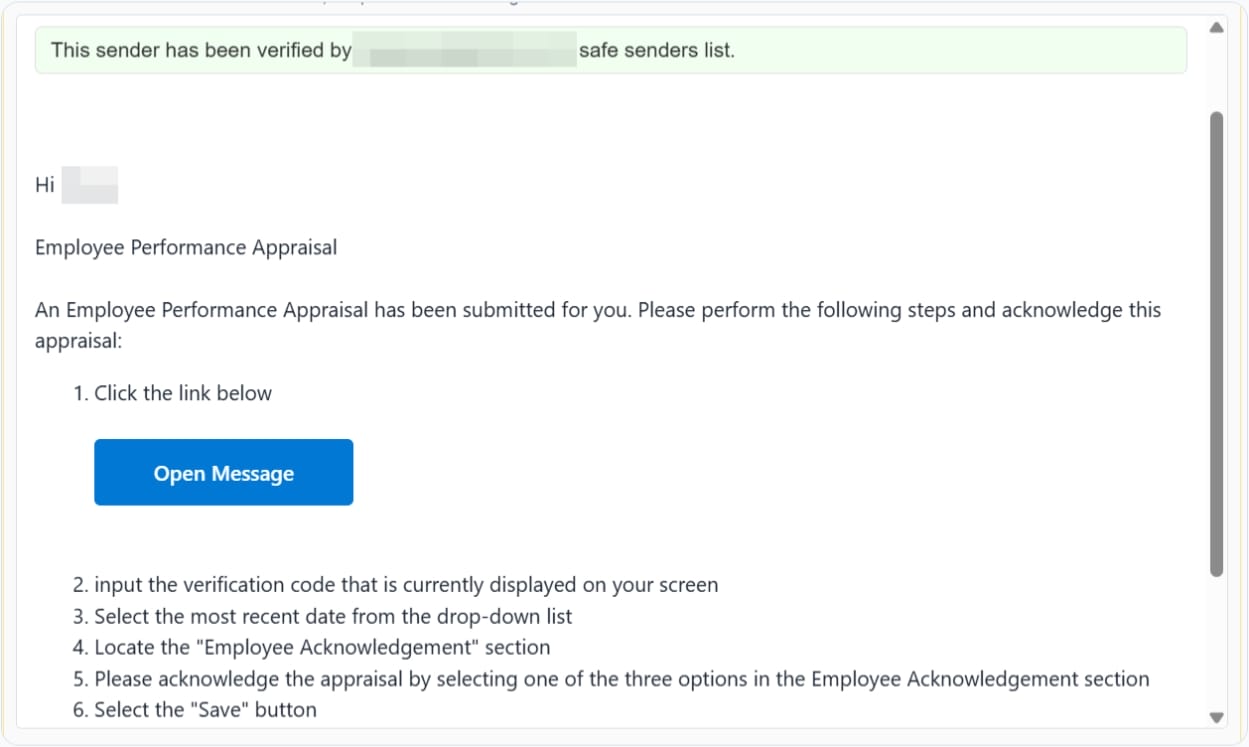
A central element of this recent campaign involves the deliberate impersonation of trusted enterprise infrastructure. Specifically, operators abused the established trust associated with RingCentral, a globally recognized cloud-based communications ecosystem widely deployed by corporations for unified voice, messaging, and virtual meeting capabilities. By crafting deceptive notifications that ostensibly originated from official service domains, the attackers targeted genuine users of the communications platform. These malicious missives utilized carefully engineered social engineering hooks, such as simulated urgent voicemail alerts and pending performance-review notifications, designed to compel busy corporate employees into immediate interaction without exercising appropriate skepticism.
The technical execution of this spoofing campaign underscores a fundamental vulnerability in how corporate email gateways handle trusted corporate tools. Although the fraudulent emails originated from an unassociated IONOS mail server, definitively failed Sender Policy Framework (SPF) and DomainKeys Identified Mail (DKIM) validations, and lacked legitimate Domain-based Message Authentication, Reporting, and Conformance (DMARC) records, they successfully penetrated perimeter defenses. This anomaly occurred because many corporate security teams maintain blanket whitelisting policies for prominent enterprise utilities like RingCentral to prevent operational disruption. Furthermore, the malicious messages incorporated deceptive visual markers designed to trick human recipients into believing the sender had been cleared by internal safety mechanisms, neutralizing psychological barriers to clicking the embedded links.
Consequently, these messages achieved a Spam Confidence Level of -1 within Microsoft Exchange environments, effectively granting them a free pass through standard filtering pipelines. Once a target interacted with the embedded prompt, they were seamlessly redirected to hostile infrastructure controlled by the Greatness platform. Here, the victim was subjected to either a tailored Microsoft AiTM phishing sequence capable of capturing live, MFA-approved session tokens, or a device-code authorization flow that tricked the user into granting persistent third-party access to their enterprise workspace.
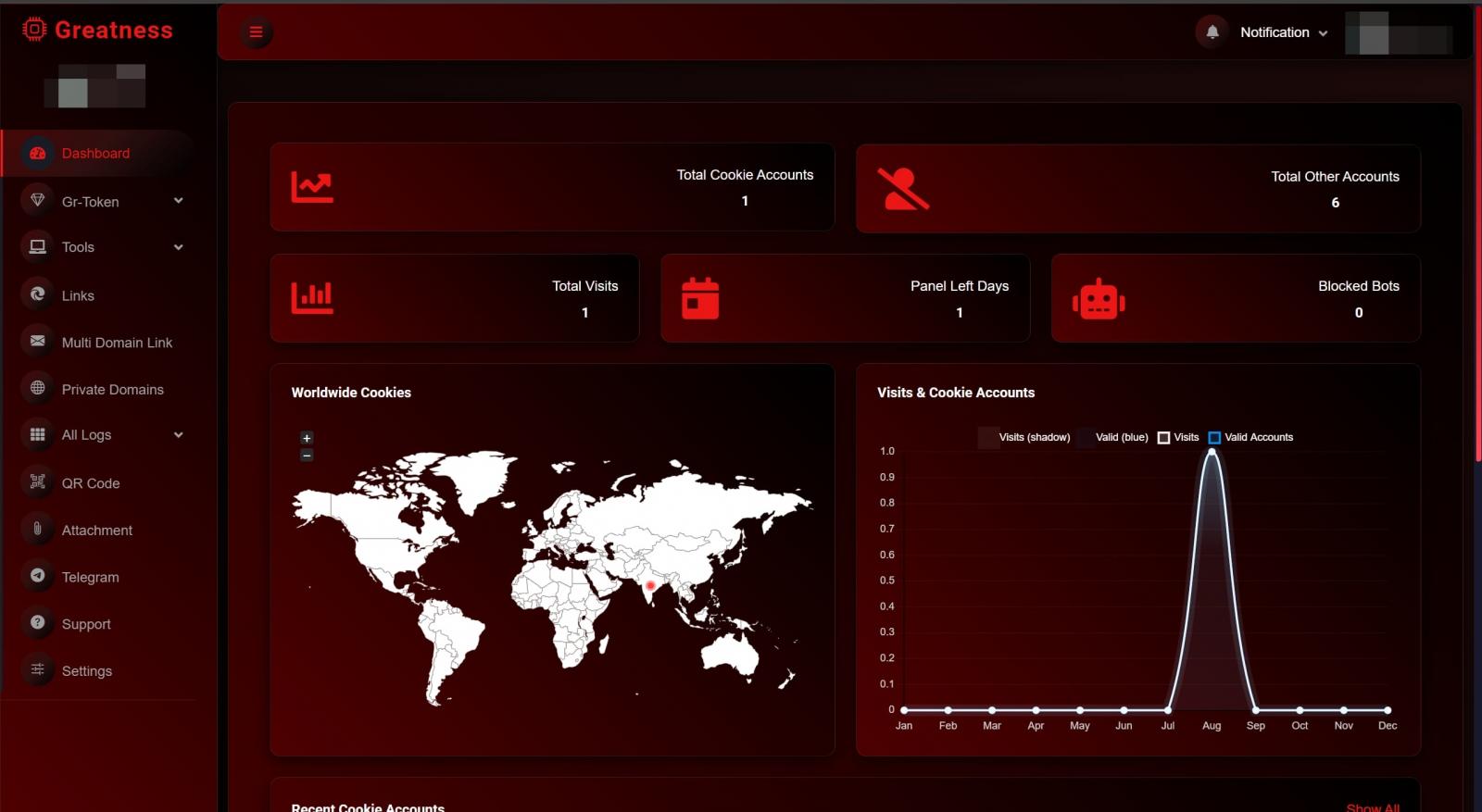
The aftermath of a successful compromise illustrates the stealthy and methodical nature of modern cloud-native attacks. Rather than immediately launching disruptive ransomware payloads or draining financial accounts, threat actors focus on covert reconnaissance and long-term persistence. Leveraging virtual private servers and commercial VPN infrastructure, attackers replay captured authentication tokens to blend seamlessly with legitimate organizational traffic. Using the Microsoft Graph API, unauthorized entities systematically enumerate Outlook mailboxes, monitor Microsoft Teams communications, download sensitive files from SharePoint and OneDrive repositories, and map out global corporate address books and calendars. In numerous instances, this unauthorized access went undetected for over two weeks, granting adversaries deep situational awareness across the victim organization.
Industry analysts have also highlighted a potential intersection between this malicious activity and broader corporate security incidents. RingCentral recently disclosed a cyber security breach impacting a limited segment of its customer base, an incident publicly claimed by the notorious extortion collective known as ShinyHunters. While security researchers emphasize that a definitive causal link cannot be definitively established, it remains highly probable that the threat actors behind the Greatness campaigns obtained targeted contact lists of active RingCentral users through such upstream data exposures. This convergence highlights the compounding risks associated with third-party vendor ecosystems, where a security failure in a communications tool can cascade into direct identity theft and enterprise cloud breaches.
Mitigating threats posed by advanced PhaaS ecosystems requires a fundamental shift in how organizations approach email hygiene and perimeter defense. Security teams are strongly advised to audit existing safe-sender lists and eliminate indiscriminate domain-wide whitelisting. Instead, administrators should enforce rigorous email authentication checks, rejecting any inbound communication that fails SPF, DKIM, or DMARC validation, regardless of the brand being impersonated. Proactive threat-hunting protocols should focus on identifying known Greatness infrastructure patterns, as well as flagging anomalous MFA-approved authentication events originating from known hosting providers or anonymous commercial VPN ranges.
In the event of a suspected or confirmed compromise, immediate containment actions are paramount. System administrators must promptly revoke all active access tokens and refresh tokens associated with affected accounts, audit registered OAuth applications, and scrutinize Microsoft Graph activity logs for signs of unauthorized data exfiltration. As cybercriminal tooling continues to commoditize complex evasion techniques, organizations must adopt a defense-in-depth posture that anticipates the bypass of traditional perimeter controls and assumes that identity is the new enterprise perimeter.
