

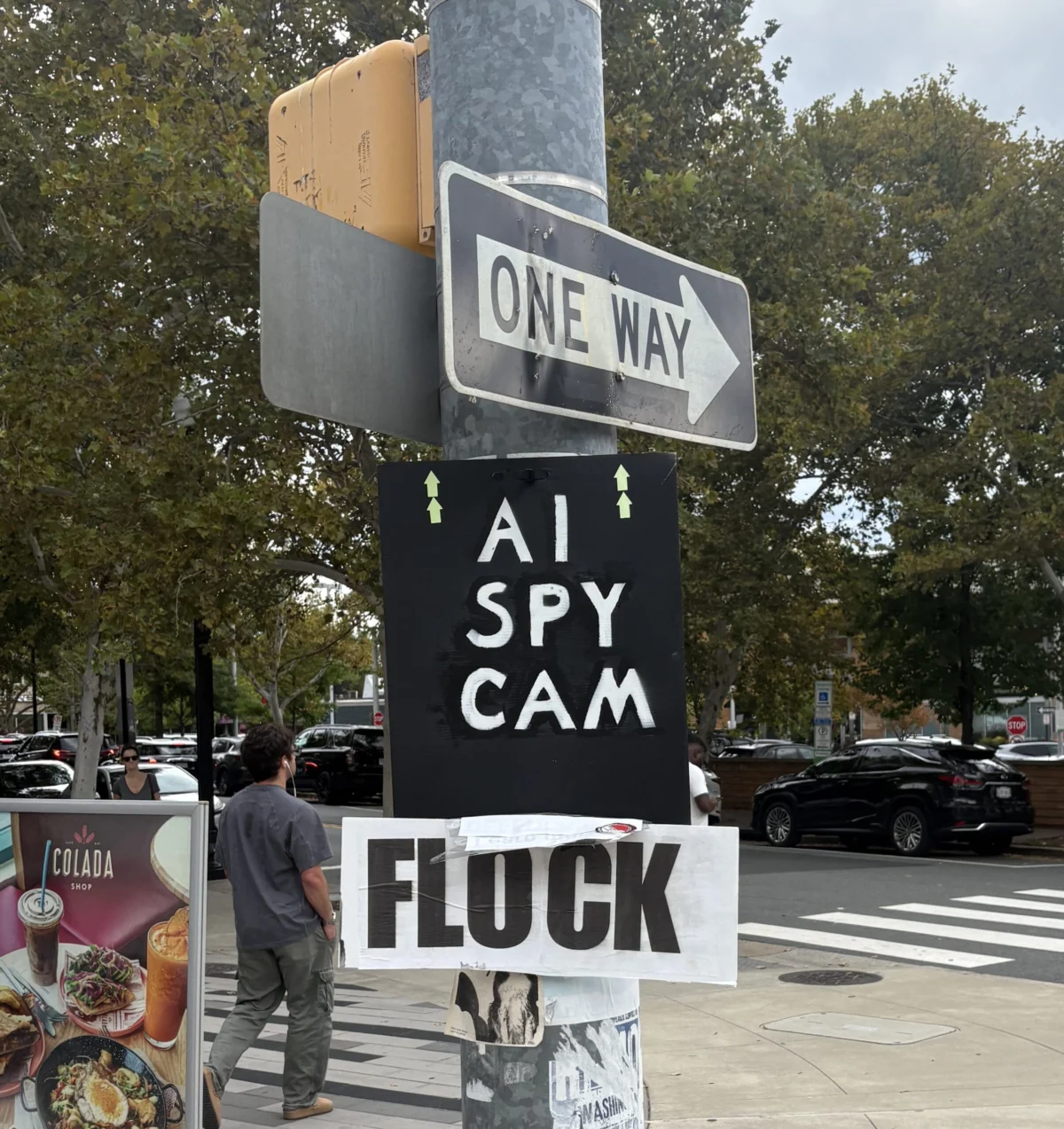
Flock Safety, the high-profile public surveillance startup whose automated license plate recognition cameras have become ubiquitous across thousands of American neighborhoods and roadways, is seeking to dramatically reduce its headcount through an expansive voluntary employee separation initiative. The move comes amid a cascading operational and reputational crisis sparked by intensifying public scrutiny, municipal contract terminations, and alarming reports documenting the abuse of its surveillance apparatus by law enforcement personnel.
The voluntary buyout package, described internally to the company’s roughly 1,500-person workforce as the most lucrative severance offering in its history, is designed to encourage widespread departures across multiple departments. Company leadership reportedly anticipates that a considerable segment of the workforce will apply for the program, indicating plans to approve a majority of those who volunteer to step down. While presented as an amicable avenue for dissatisfied personnel to transition out of the organization, the sweeping offer underscores an acute business reality: without an immediate and voluntary contraction of payroll, compulsory layoffs will almost certainly follow in short order.
The internal workforce downsizing highlights how quickly fortunes can shift for venture-backed "civic tech" enterprises that operate at the intersection of private enterprise, public policing, and constitutional civil liberties. Having raised hundreds of millions of dollars on the premise of virtually eliminating property crime through algorithmic tracking, Flock Safety is now discovering that rapid deployment without ironclad governance carries severe institutional and commercial vulnerabilities.
The Erosion of Internal Trust and Corporate Culture
The decision to offer voluntary departures rather than immediate, unilateral job cuts reflects a deliberate attempt by executive leadership to manage an internal culture in distress. In hyper-growth technology environments, employee sentiment often hinges on the belief that the underlying product serves a fundamentally benevolent civic purpose. Flock pitched its mission around neighborhood defense and collaborative crime clearance, enticing software engineers, sales specialists, and account managers with the prospect of modernizing outdated municipal public safety infrastructure.
However, the reality of building and maintaining a nationwide, real-time vehicular tracking system has increasingly alienated personnel. As revelations mounted regarding how local police departments, private homeowner associations, and commercial entities actually utilized the platform, internal dissent predictably intensified. Chief Executive Officer Garrett Langley acknowledged in recent public forums that while public backlash has caused commercial disruption, the most acute operational casualty has been employee morale.
By initiating voluntary buyouts, management offers a calculated release valve for workers who no longer align with the company’s trajectory or its defense of widespread surveillance. In the enterprise tech space, voluntary buyouts generally provide organizations with several strategic advantages over sudden involuntary terminations. They reduce the immediate risk of wrongful termination claims, soften adverse publicity, allow the organization to gauge exactly which divisions harbor the most operational fatigue, and separate departing staff under mutual nondisclosure agreements. Yet, permitting institutional talent to walk out the door en masse risks gutting essential product, engineering, and customer support divisions at precisely the moment the platform requires extensive technical and policy overhauls.
The Catalyst: Documented Abuse and the Breakdown of Safeguards
The catalyst for Flock’s rapid downward momentum is rooted in mounting evidence of platform misuse that strikes at the core of personal privacy. Investigative findings uncovered dozens of confirmed instances across multiple states where police officers deliberately weaponized the network of cameras to track spouses, romantic partners, and personal acquaintances. These unauthorized searches—spanning dozens of documented cases of unlawful surveillance—exposed a glaring absence of automated, preventative safeguards within the software ecosystem.
The company’s technology relies on solar-powered, high-definition cameras placed along public thoroughfares, suburban intersections, and private neighborhood entrances. These devices continuously photograph passing vehicles, cataloging license plates, vehicle color, make, unique bumper stickers, and travel direction. The data is aggregated into a centralized search interface capable of retrospective query matching, travel-pattern analysis, and instant vehicular alerts.
While marketed as a targeted tool to catch suspects fleeing violent felonies or identify stolen cars, the technical architecture inherently lacked sufficient structural barriers to prevent casual, bad-faith queries by credentialed users. In numerous law enforcement agencies, officers could conduct arbitrary searches across state lines and municipal boundaries without first entering a validated judicial warrant or a verifiable case identification number. The discovery that officers utilized public safety infrastructure to engage in domestic stalking dismantled the narrative that technological tracking could exist purely as an objective, harmless public benefit.

Civil liberties organizations, legal scholars, and privacy advocates have long cautioned that automated license plate readers represent an unconstitutional dragnet that effectively conducts warrantless tracking of law-abiding motorists. The emergence of documented personal abuses converted these long-standing theoretical warnings into undeniable evidence of systemic overreach, irrevocably shifting the debate from hypothetical risk to demonstrated public harm.
Municipal Backlash and the Unraveling of the Growth Engine
The fallout from these disclosures has exerted immense pressure on Flock’s underlying business model, which depends upon subscription software contracts funded by taxpayer revenue or homeowner association dues. Unlike traditional surveillance hardware manufacturers that sell cameras as a one-time capital expense, Flock operates primarily on a Software-as-a-Service (SaaS) model, charging recurring annual fees for hardware leases, cloud hosting, automated data analysis, and network connectivity.
This model produces exceptional revenue multiples during periods of rapid geographic expansion, but it creates profound systemic vulnerability when customer churn accelerates. Contracts with municipal police departments and city councils are inherently subject to public oversight, periodic renewal votes, and community hearings. Over the late summer, municipal disaffection reached an unprecedented cadence. Nearly one hundred cities across the United States canceled their relationships with the company in a single month, representing an exponential acceleration in contract terminations compared to earlier in the year.
At the regional and state levels, resistance has hardened into broad policy repudiation. Heavily populated states including Florida and Texas have moved to curtail, suspend, or outright prohibit the deployment of the surveillance network across major transportation networks and jurisdictional zones, citing unaddressed privacy liabilities and jurisdictional overreach. The loss of critical southern and conservative strongholds—regions historically characterized by strong municipal support for policing investments—signals that skepticism of mass algorithmic tracking transcends standard political divides.
When entire municipal agencies sever relationships, the downstream financial consequences multiply. The company is forced to absorb the labor and logistics costs of recovering installed hardware, write off multi-year software revenues that had been projected to financial backers, and confront an increasingly protracted sales cycle in neighboring jurisdictions that take note of nearby contract cancellations.
The Broader
Gov-Tech Reckoning and Future Surveillance Norms
Flock’s workforce downsizing is a bellwether for the broader government technology sector, which has spent the past decade flooding local governments with artificial intelligence tools, facial recognition systems, predictive dispatch engines, and sensor arrays under the rubric of "smart cities."
The unfolding crisis illustrates the severe structural flaw of deploying decentralized, mass-data collection tools without first establishing federal, state, or municipal regulatory frameworks. When private enterprises build surveillance networks that rival national intelligence capabilities, they routinely outpace the capability—or the political willingness—of local police oversight boards to administer rigorous audits. As local communities mobilize to retain autonomy over their public streets, the frictionless expansion that once defined gov-tech procurement is grinding to a halt.
Moving forward, commercial enterprises operating in the automated intelligence and public safety sectors will inevitably face far higher compliance hurdles:
- Mandatory Third-Party Auditing: Prospective public clients are moving away from accepting internal company audit reports. Municipalities are beginning to condition procurement agreements on open-source audit logs that capture every user query, cross-referencing user identities with open dispatch records in real time.
- Strict Data Retention Ceilings: The business premise of maintaining rolling 30-day databases of millions of innocent citizens’ vehicular movements is facing constitutional challenges under the Fourth Amendment. Legislative proposals in several jurisdictions are attempting to mandate the immediate, cryptographic deletion of non-hit data within 24 to 48 hours.
- Hardware Divestment and Local Self-Determination: As seen in the sudden cluster of municipal terminations, local city councils are increasingly asserting their authority over local surveillance policies, reversing decisions made unilaterally by law enforcement leaders who contracted private tracking services without formal public debate.
For Flock Safety, surviving this critical inflection point will require far more than trimming balance sheets through voluntary departures. The company confronts an existential modernization of its core product and philosophical ethos. If it cannot convince an increasingly skeptical public, critical civil liberties advocates, and institutional customers that its platform is impervious to weaponization and unchecked algorithmic surveillance, the current contraction of its workforce will be remembered not as a routine corporate restructuring, but as the initial retreat of an industry that expanded too far, too fast, without public consent.
