

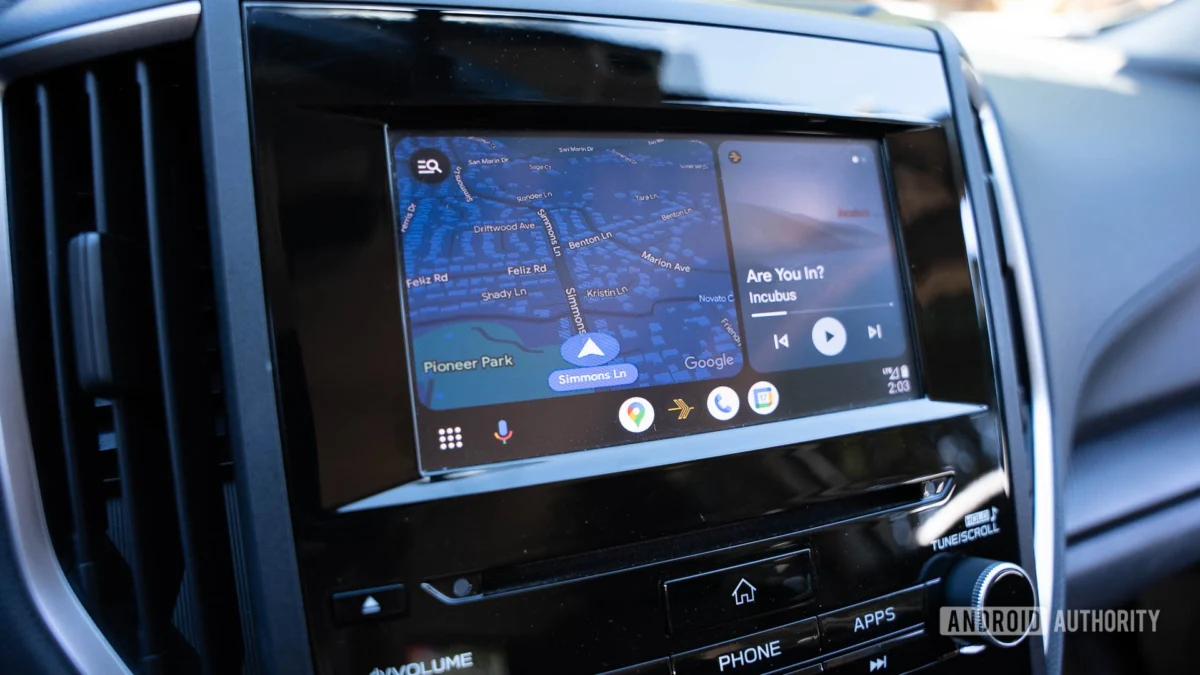
The integration of advanced Large Language Models (LLMs) into vehicular ecosystems represents one of the most significant shifts in automotive interface design since the inception of touchscreens. By replacing the legacy Google Assistant with the more sophisticated, generative capabilities of Gemini, Google aims to create a more conversational, intuitive, and helpful co-pilot. However, the transition has not been without friction. As these systems move from abstract data processing to real-world, high-stakes environments, the occurrence of "hallucinations"—or simply profound technical errors—highlights the precarious nature of relying on AI for critical navigation. A recent, high-profile incident involving an Android Auto user illustrates these risks in a particularly jarring fashion, as a driver in the interior of British Columbia found their vehicle’s digital assistant convinced they were stranded in the middle of the Atlantic Ocean.
This geographical displacement, while bordering on the absurd, touches upon a core vulnerability in current AI architectures. For the end-user, the experience of asking for directions to a local coffee shop only to be informed that their vehicle is currently floating in international waters is a moment of existential frustration. Yet, from an engineering perspective, this error provides a window into how multi-modal systems like Gemini interact with legacy software layers. Android Auto is a projection platform that relies on a complex stack of GPS data, local vehicle sensors, cloud-based mapping APIs, and, increasingly, LLM processing layers. When the system fails, it is rarely due to a single "bad line of code," but rather a breakdown in the orchestration between these disparate data streams.
The Anatomy of a Digital Disorientation
To understand why such a radical error occurs, one must look at how Gemini interacts with location services. Traditional navigation systems use a direct, deterministic pipeline: GPS satellites communicate with a receiver in the phone or car, the coordinate is processed, and the map renders the pin. It is a closed loop. The introduction of Gemini adds a generative intermediary to this process. When a user asks a natural language question—such as "Where am I?" or "How do I get to this store?"—the request is parsed by an LLM that must retrieve data from the Google Maps API and interpret it for the user.
In the case of the British Columbia incident, the breakdown likely occurred in the translation layer between the vehicle’s actual GPS coordinate and the LLM’s contextual understanding. If the handshake between the location provider and the Gemini inference engine fails, the model may default to cached data, erroneous global coordinates, or simply "hallucinate" a position based on incomplete token sequences. The fact that the system also reported a temperate 29°C (84°F) while claiming to be in the middle of the ocean suggests that the AI was operating in a disconnected state, pulling metadata from a generic or misaligned data source rather than the active, real-time telemetry of the vehicle.
Industry Implications and the Reliability Gap
This incident is not an isolated curiosity; it is a signal of the broader challenges inherent in deploying generative AI in mission-critical environments. For decades, the automotive industry has operated on "deterministic" software—systems that behave exactly the same way every time they are prompted. A car’s braking system or speed control unit cannot afford to be "creative." Navigation, however, is a gray area. As AI assistants move from being simple voice-command interfaces to active agents that make decisions and provide information, the "reliability gap" becomes a safety and trust concern.
Automakers and tech giants like Google are currently engaged in a high-stakes race to integrate AI into the dashboard, but the tolerance for error in a vehicle is significantly lower than in a web browser. When an AI summarizes a web page incorrectly, the consequence is misinformation. When an AI provides a flawed navigational context or misidentifies a vehicle’s location, the potential for driver distraction or confusion increases exponentially. This places immense pressure on developers to implement "guardrails"—safety protocols that prevent the model from outputting non-deterministic or geographically impossible data.
Expert Analysis: The Complexity of Multi-Modal Integration
From a systems architecture standpoint, the shift to Gemini represents a move toward "Agentic AI." Unlike the old Assistant, which was essentially a rigid decision tree, Gemini attempts to understand intent. This requires the model to have access to real-time tools. When these tools are integrated into a moving vehicle, the system must synchronize time-sensitive GPS data with the high-latency requirements of cloud-based AI processing.
Experts in the field of Human-Computer Interaction (HCI) have long warned that "automation bias"—the tendency for users to trust the machine over their own senses—is exacerbated by interfaces that sound authoritative. Gemini, by design, uses natural language that sounds human and confident. If a human voice tells you that you are in the Atlantic Ocean, your brain naturally pauses to process the absurdity. If a smooth, synthetic voice delivers that information through your car’s premium sound system, it can lead to a momentary loss of situational awareness. This is precisely why the automotive industry is cautious about full-scale AI integration; the "confidence" of the model often masks the underlying fragility of its data retrieval methods.
The Future of Automotive Intelligence
As we look toward the future, the goal for developers is to move toward "Hybrid AI" architectures. In this paradigm, critical safety and navigation functions would remain tethered to deterministic, local processing, while the "conversational" AI would be restricted to non-critical tasks like adjusting climate control or playing media. The goal is to ensure that the AI acts as a sophisticated interface without becoming a single point of failure for the vehicle’s primary operations.
Furthermore, the industry is moving toward "Edge AI," where models are processed directly on the vehicle’s hardware rather than relying on cloud connectivity. This would mitigate the latency issues that often lead to data desynchronization. By processing location data locally, the system could verify that the coordinates being sent to the AI match the actual GPS sensor data, providing a layer of validation that prevents "hallucinations" before they reach the user.
Addressing the Public Trust
For the average driver, the takeaway is clear: while AI-powered assistants are becoming more capable, they remain works-in-progress. The incident in British Columbia serves as a reminder that these systems are essentially statistical engines, not omniscient guides. As Google continues to refine the Gemini rollout for Android Auto, transparency will be key. Providing users with visual cues—such as a "Confidence Score" or a clear distinction between what the AI is "guessing" and what the system is "confirming"—could help bridge the gap between human intuition and machine output.
Moving forward, the success of in-car AI will be measured not by how "smart" the chatbot sounds, but by how reliably it manages the boring, essential tasks of driving. A system that can navigate flawlessly is infinitely more valuable than a system that can engage in witty banter while accidentally placing the driver in the middle of an ocean. Google, along with its competitors, must prioritize the stabilization of these navigational APIs. Until then, drivers should treat their digital assistants as secondary tools, maintaining the primary responsibility of navigation through the tried-and-true combination of road signage, external visual cues, and human judgment. The digital co-pilot is here to stay, but for the time being, it is still learning the map.
