

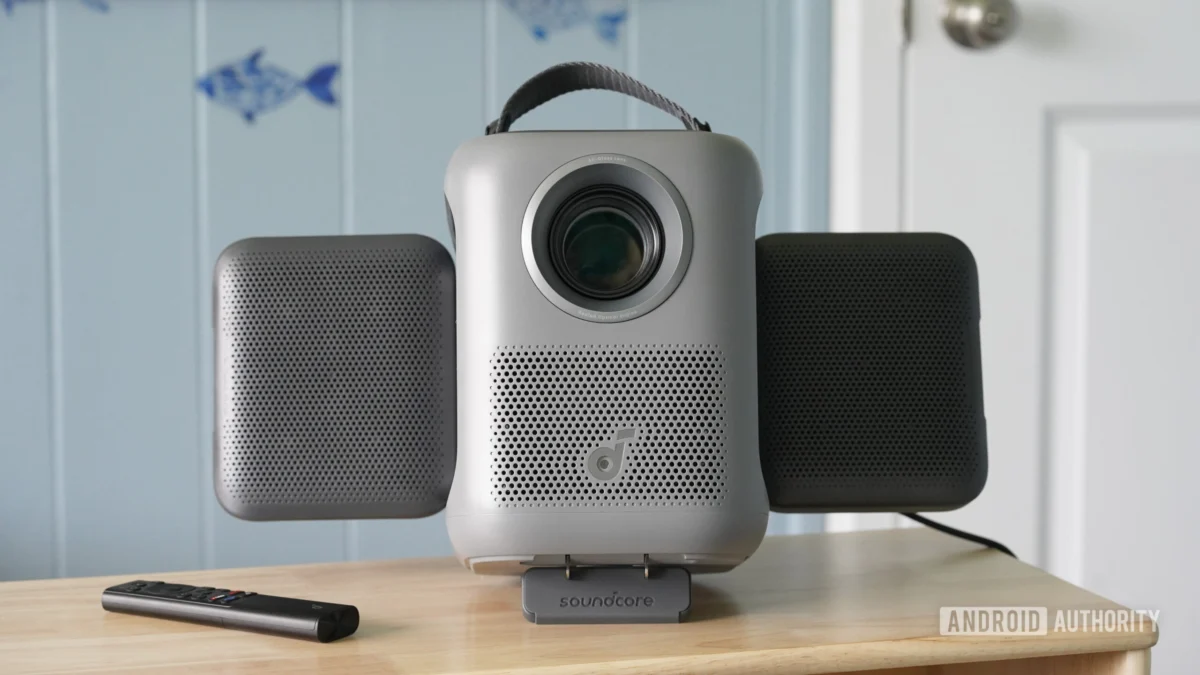
The landscape of home entertainment has undergone a dramatic transformation over the past decade, moving away from bulky, static television sets toward versatile, high-definition projection systems. As consumers increasingly prioritize minimalism and multi-purpose living spaces, the demand for portable, "all-in-one" projectors has surged. Currently, a significant market opportunity has emerged for those looking to upgrade their visual setup, as the highly regarded Soundcore Nebula P1i has plummeted to a record-low price point on Amazon. This limited-time promotion represents a rare intersection of accessibility and high-end audio-visual performance, making it a compelling candidate for anyone considering a leap into portable theater technology.
The Evolution of Portable Projection
Portable projectors were once dismissed as novelty items—dim, low-resolution gadgets suitable only for darkened rooms and specific, non-critical presentations. However, the modern iteration, spearheaded by brands like Anker’s Soundcore sub-brand, has fundamentally shifted this perception. The Nebula P1i stands as a testament to this maturation. It bridges the gap between the portability of a lifestyle device and the technical requirements of a dedicated home cinema.
Measuring approximately 7.20 x 8.04 x 8.99 inches, the P1i is engineered for those who demand mobility without sacrificing substantial screen real estate. It is designed to be tucked into a backpack or stored on a bookshelf, ready to be deployed at a moment’s notice. Whether it is transforming a bedroom wall into a 150-inch theater or setting up a backyard movie night, the device handles the transition between environments with ease.
Visual Fidelity and Technical Specifications
At the core of the Nebula P1i experience is its ability to render content in crisp Full HD. While high-end, dedicated home theater projectors may boast 4K capabilities or laser-light sources that cost thousands of dollars, the P1i hits a "sweet spot" of value. By delivering 380 lumens of brightness, the device provides a vivid, coherent image in controlled lighting conditions. While it may not compete with top-tier laser projectors in high-ambient light, its color accuracy and sharpness are remarkably consistent for its form factor.
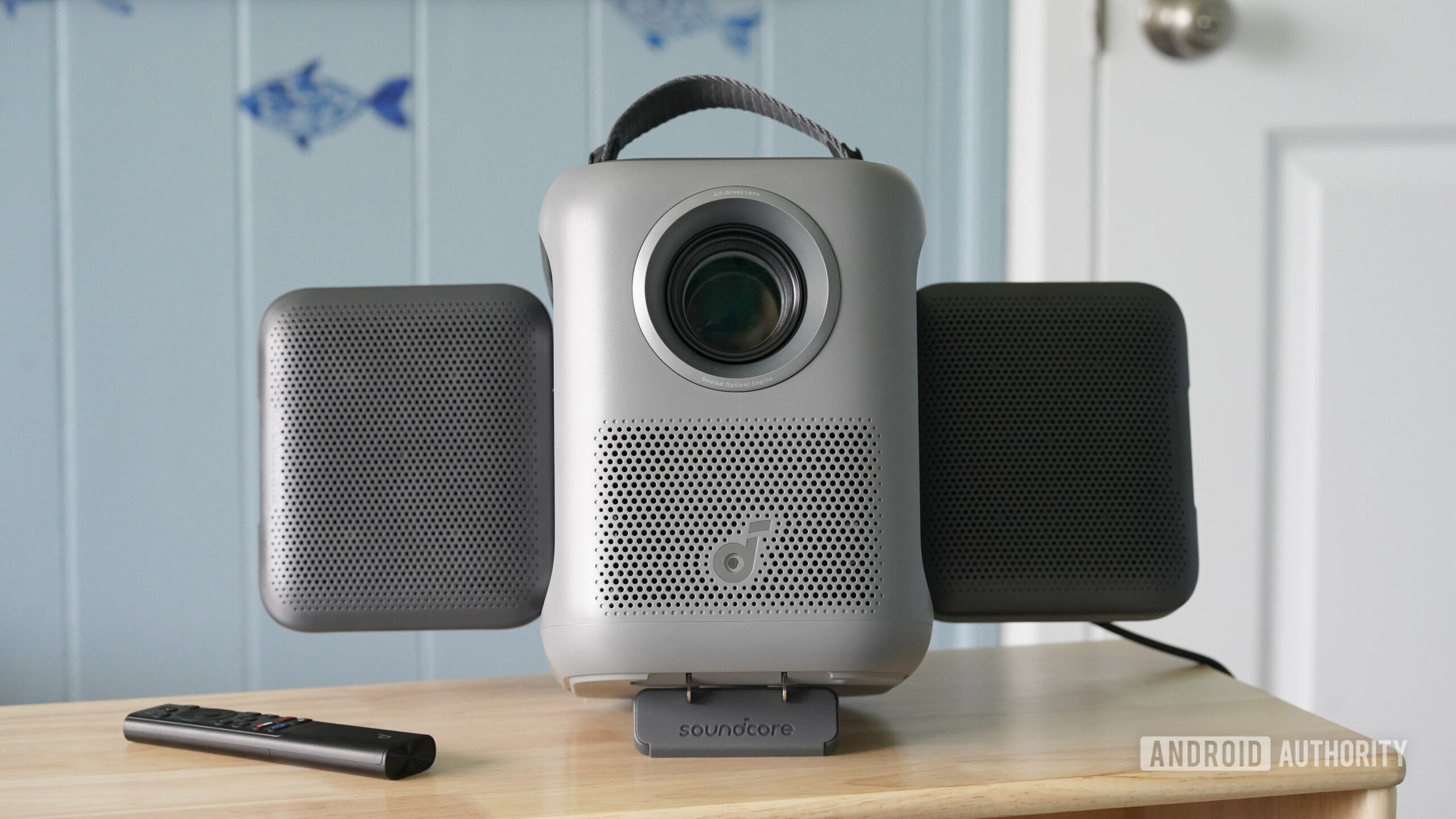
The real innovation here, however, is not just the projection hardware, but the integration of Soundcore’s acoustic pedigree. Historically, one of the primary weaknesses of portable projectors has been lackluster, tinny audio. The P1i directly addresses this by incorporating a unique, physically dynamic speaker design. The unit features side-mounted speakers that can be flipped out and rotated, allowing the user to direct audio output toward the audience. With dual 10W drivers, these speakers punch well above their weight class, providing a soundstage that is both rich and directional. This design choice highlights a shift in the industry: projectors are no longer just visual devices; they are becoming comprehensive multimedia hubs.
A Self-Contained Ecosystem: The Role of Google TV
One of the most significant barriers to entry for casual users has historically been the complexity of cabling—connecting external streaming sticks, laptops, or media players. The Nebula P1i effectively eliminates this friction by running on the Google TV operating system. By integrating the OS directly into the hardware, the device functions as a standalone media player.
Users gain immediate access to an extensive library of streaming applications, including Netflix, YouTube, Disney Plus, and Amazon Prime Video, all managed through a familiar, intuitive interface. Furthermore, the inclusion of Google Cast and Nebula Cast protocols allows for seamless wireless screen mirroring from mobile devices. For power users who still prefer a wired connection, the inclusion of an HDMI port ensures that gaming consoles, Blu-ray players, or high-end PCs can be integrated into the system without compatibility issues.
Industry Implications and Market Positioning
The aggressive pricing of the Nebula P1i reflects a broader trend in the consumer electronics sector. Manufacturers are increasingly focusing on the "lifestyle" segment—products that are aesthetically pleasing, easy to store, and simple to operate. This move away from "prosumer" gear toward "plug-and-play" solutions is driving mass-market adoption. By bundling a high-quality speaker system, a smart OS, and a decent projector into a single chassis, Soundcore is successfully lowering the barrier to entry for home theater enthusiasts.
This pricing strategy also suggests that the competition in the portable projection space is intensifying. As incumbents face pressure from both established brands and up-and-coming tech firms, the primary beneficiary is the consumer. A record-low price on a device with such a feature set indicates that the hardware is now at a point where cost-to-performance ratios are at an all-time high.
Understanding the Trade-offs
To maintain a balanced perspective, it is important to acknowledge the limitations of a device in this category. The most notable constraint of the Nebula P1i is the absence of an internal battery. While this dictates that the projector must remain tethered to a power outlet, it is a design trade-off that allows for more robust internal hardware—specifically the powerful 10W speakers and the processing power required for a fluid Google TV experience.
For the average consumer, this is rarely a dealbreaker. Most home cinema setups, whether indoor or in a backyard, have access to a standard wall socket. By opting for a wired design, the manufacturer has prioritized performance and longevity over the portability offered by smaller, battery-dependent units that often suffer from thermal throttling and diminished brightness levels.
The Future of Portable Media
Looking ahead, the trajectory of devices like the P1i suggests that we are moving toward a future where "display" is decoupled from "hardware." Instead of owning a static, 65-inch screen that dominates a living room, users will increasingly rely on compact, smart projectors that can be hidden away when not in use. As LED and laser technologies continue to become more efficient, we can expect future iterations of these devices to offer even higher brightness levels and better energy efficiency, potentially even approaching the color accuracy of high-end televisions.
The Nebula P1i serves as a bridge to this future. It demonstrates that you do not need to invest a small fortune or dedicate an entire room to a complex audio-visual setup to enjoy a cinematic experience. It is a testament to the idea that entertainment should be flexible, powerful, and accessible.
Final Verdict: Is It Worth the Investment?
For anyone currently operating with a standard, low-cost projector—or perhaps still relying on a small television for their primary entertainment—the Nebula P1i represents a substantial upgrade. It combines the ease of a smart TV with the grand scale of a theater, all while offering a build quality that feels far more premium than its current sale price would suggest.
The "limited time" nature of the current promotion is a factor that should be weighed. As supply chains fluctuate and inventory cycles move, these record-low price points are rarely sustained for long periods. Those who have been sitting on the fence, waiting for a signal to upgrade their home setup, would do well to consider this offer. It is a rare moment where high-fidelity audio, a sophisticated operating system, and versatile projection capabilities converge at a price point that makes the "home cinema dream" a reality for a much wider audience. Whether it is for binge-watching the latest series, hosting an immersive gaming session, or enjoying a film under the stars, the Nebula P1i is currently one of the most compelling value propositions in the tech market.
