

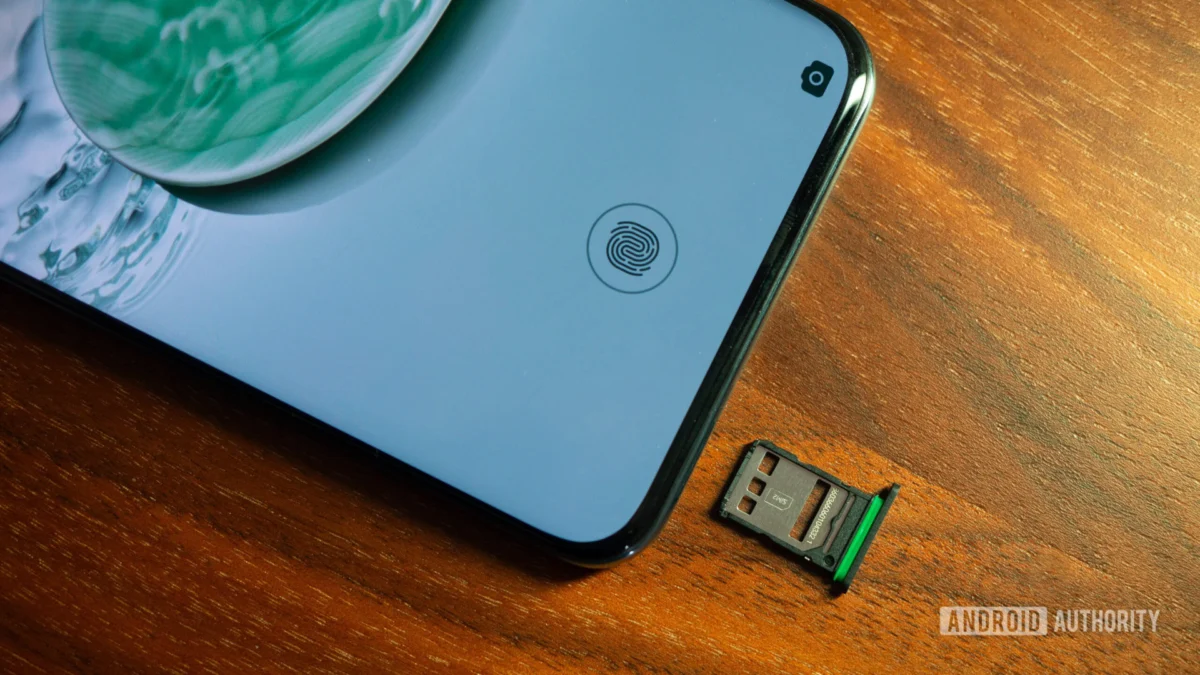
The modern smartphone has become the central hub of both professional and personal life, and for many users, the ability to juggle two different numbers on a single device is no longer a luxury—it is a necessity. Whether you are maintaining a separate line for business and personal calls, roaming internationally, or leveraging specific data plans, dual-SIM capability has become an essential pillar of the mobile experience. Yet, for years, the Android operating system has treated these two distinct channels with a monolithic approach to audio alerts. This long-standing limitation is finally showing signs of evolving, as recent developments suggest Google is laying the groundwork to allow users to assign unique ringtones to individual SIM cards.
The Evolution of the Multi-SIM Landscape
For the better part of a decade, the dual-SIM market was dominated by specialized devices, primarily in regions where infrastructure and carrier pricing models necessitated the use of multiple providers. In those early days, third-party manufacturers—often working within the constraints of custom Android skins—stepped in to fill the gaps left by the core operating system. Companies like Motorola, Xiaomi, and Samsung frequently implemented their own proprietary logic to handle ringtone differentiation.
However, this created a fragmented user experience. When a consumer moved from one brand to another, they often found that their preferred workflows for distinguishing between "Work" and "Personal" calls were either absent or implemented in entirely different, unintuitive ways. Google’s recent shift toward standardizing these experiences, such as the introduction of the split signal bar indicator in recent Android iterations, signals a pivot toward a more cohesive, native management layer for multi-SIM hardware. The move toward per-SIM ringtone assignment is the logical next step in this evolution, bringing Android closer to the seamless, hardware-agnostic experience that power users have been requesting for years.
Deconstructing the Latest Clues
The evidence for this upcoming change emerged from a detailed analysis of the recent Android Canary 2604 build. While the feature is not yet accessible to the general public or even fully functional within the developer environment, the presence of specific resource strings has provided a roadmap for what lies ahead.
The discovery of strings such as sim_ringtone_pref_purpose—which explicitly states the goal of allowing a user to "select and set a unique ringtone for a specific SIM card"—leaves little room for ambiguity. This indicates that the Android team is building a system-level preference menu that will likely reside within the "Network & Internet" or "SIMs" settings panel.
Technically, this is a significant architectural shift. Currently, Android’s sound engine treats the "Ringtone" setting as a global parameter. Decoupling this requires the telephony framework to pass a specific intent or identifier to the audio manager, informing the system not just that a call is incoming, but which hardware or virtual identity is receiving that call. By standardizing this at the Android Open Source Project (AOSP) level, Google ensures that any device manufacturer—whether they are building a flagship handset or a budget-friendly device—can implement this feature without having to reinvent the wheel or write proprietary code that might conflict with future OS updates.
Industry Implications and the "Work-Life Balance" Factor
The implications of this feature extend well beyond mere convenience. In an era where "digital wellbeing" and boundary-setting are increasingly prioritized, the ability to distinguish a call’s origin through audio cues is a major functional upgrade.
Consider the professional user who keeps a secondary SIM active for on-call duties or client communication. Today, when the phone rings, they are forced to glance at the screen to determine if the incoming call is a personal family matter or a high-priority work request. By assigning a distinct, perhaps more urgent or professional, ringtone to their work SIM, the user can instantly triage the importance of the call without ever touching the device. This "glance-free" identification is a hallmark of intelligent mobile design, reducing screen time and allowing users to maintain better control over their environment.
Furthermore, as the industry continues to push toward an eSIM-only future, the distinction between "SIM 1" and "SIM 2" becomes increasingly abstract. Managing multiple digital profiles requires a more sophisticated UI than the current "SIM 1 / SIM 2" naming convention currently suggests. Providing granular control over the audio identity of these profiles is a necessary step in making eSIM technology feel as intuitive as swapping a physical plastic card.
The Road Ahead: Challenges and Implementation
While the discovery of these code strings is a positive development, industry observers caution that there is often a substantial gap between "work-in-progress" code and a stable, public release. Android’s development cycle is notoriously complex, and features that appear in Canary builds are occasionally sidelined, refined, or delayed until a later major version release.
One of the primary challenges for Google will be ensuring backward compatibility and consistency across the diverse hardware landscape. Different manufacturers handle dual-SIM standby—whether it is Dual SIM Dual Standby (DSDS) or Dual SIM Dual Active (DSDA)—in different ways. Ensuring that the ringtone selection menu behaves predictably regardless of the underlying modem firmware or the specific dual-SIM configuration of the handset is a non-trivial engineering task.
Additionally, there is the question of "Ringtone Inheritance." Will the system default to a primary ringtone if the user has not explicitly set a second one? How will this interact with contact-specific ringtones, which currently override the system default? Google will need to carefully architect the hierarchy of audio priorities to ensure that a contact-specific ringtone does not accidentally clash with a SIM-specific ringtone, potentially leading to a confusing or silent experience for the user.
Future Trends in Smartphone Personalization
Looking toward the future, this update aligns with a broader trend in mobile operating systems: the move toward hyper-personalization. As smartphones reach a plateau in terms of raw hardware performance, the battleground for differentiation has shifted to software intelligence and user-centric customization.
We are likely to see this feature evolve beyond just ringtones. If the system can successfully distinguish between SIM profiles at the audio level, it is not a stretch to imagine a future where notification sounds, vibration patterns, and even "Do Not Disturb" profiles are automatically toggled based on the active SIM. For instance, a user could set their phone to automatically suppress all notifications from their "Work" SIM after 6:00 PM, while keeping their "Personal" SIM fully active.
This development is a clear signal that Google is listening to the power-user community. The days of treating multi-SIM support as a niche requirement are over. As global mobile connectivity becomes increasingly fluid and complex, the OS must provide the tools to manage that complexity. While we wait for an official rollout date—possibly in an upcoming version of Android—the mere existence of this code confirms that the era of the one-size-fits-all ringtone on dual-SIM devices is nearing its end. For the professional who lives their life across two lines, this small change represents a significant improvement in the daily rhythm of their digital life.
