

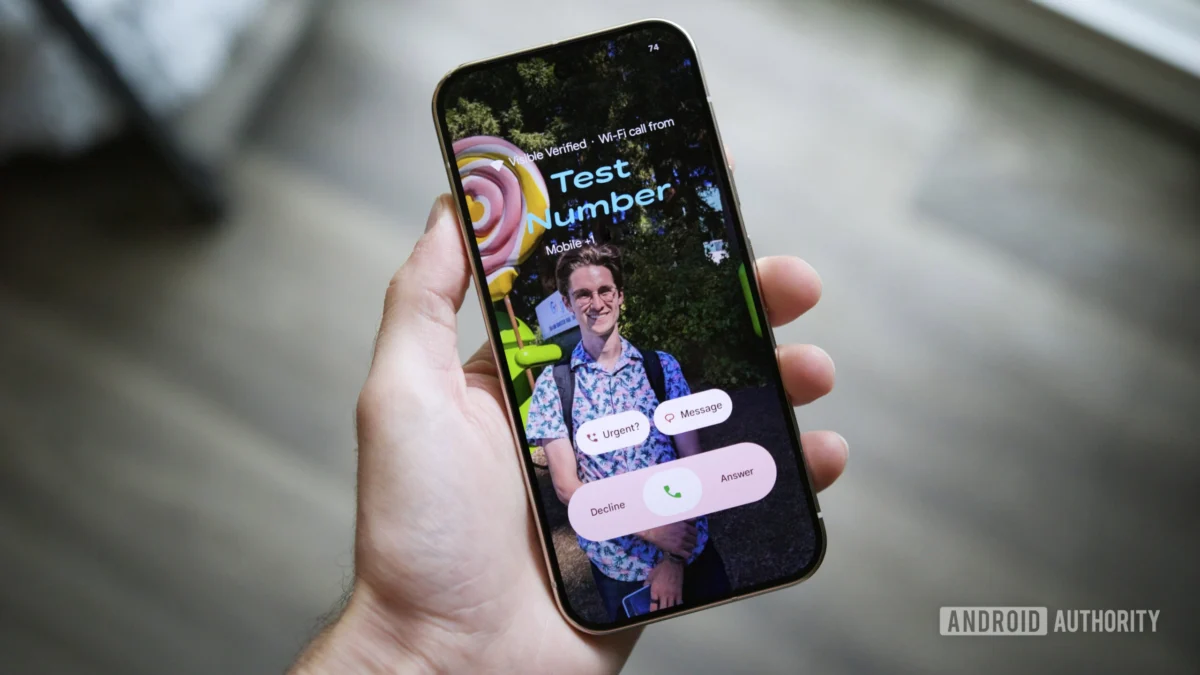
The evolution of telephony on Android devices, particularly within Google’s Pixel ecosystem, continues to prioritize user experience by blending traditional communication methods with sophisticated software intelligence. A key component of this ongoing refinement is the ‘Take a Message’ feature, initially introduced with the Pixel 10 lineup and subsequently backported to devices stretching back to the Pixel 6 series. This tool fundamentally rethinks the answering machine paradigm by transcribing voicemails in real-time. However, the latest investigative deep dives into the Google Phone application code suggest a significant expansion of this functionality is imminent: the ability to assign bespoke, contact-specific outgoing voicemail greetings.
This development signals a strategic move by Google to reclaim control over crucial telephony management features that have long been dictated by Mobile Network Operators (MNOs). Traditionally, customizing voicemail greetings—the audio message a caller hears before leaving a message—has been a carrier-dependent function, often involving cumbersome dial-in menus and frustratingly archaic input methods. Unearthing strings and functional code within the latest beta build of the Google Phone app (version 214.0.888174602-publicbeta-pixel) reveals that this carrier dependency is being systematically dismantled, paving the way for a truly integrated, device-centric solution.
The Context: Reclaiming Telephony Control
For years, the voice call experience on Android has been a bifurcated entity. The device hardware and core operating system features are controlled by Google, but the underlying voice infrastructure—call forwarding, voicemail retrieval, and greeting customization—remained tethered to the carrier contract. This resulted in fragmentation; a user might enjoy cutting-edge AI features on their Pixel, only to be forced back into a decades-old Interactive Voice Response (IVR) system when leaving a message for a business contact or a family member.
‘Take a Message,’ in its initial form, addressed the post-call experience by providing immediate transcription, offering a text-based alternative to listening to audio messages. The next logical, and perhaps most impactful, step is to enhance the pre-call experience for the caller. Allowing a Pixel user to record a unique greeting for, say, their boss ("Please call my mobile, this number is for work inquiries only") versus a friend ("Hey, I’m probably busy, leave a message!") offers a level of contextual communication previously unavailable natively on the device.
The code analysis indicates the emergence of a dedicated "Manage greetings" option within the Phone app settings, a feature that was previously hinted at but appeared rudimentary. Now, the framework supports the actual recording and assignment process. This isn’t merely changing the default greeting; the evidence points toward per-contact customization, an advanced feature usually reserved for dedicated business phone systems or specialized third-party VoIP applications.
Expert Analysis: The Technical Leap Forward
From a software architecture perspective, implementing this requires significant integration between the Phone app’s local contact database, the call routing logic, and the local storage mechanism for these greetings. The critical technical hurdle overcome appears to be the mechanism for triggering the correct greeting based on the incoming caller ID.
When a call is received, the system must:
- Check if the incoming number matches a contact in the user’s address book.
- If a match exists, check the associated metadata for a custom ‘Take a Message’ greeting ID.
- If an ID exists, route the caller to the local recording stored on the device, effectively overriding the carrier’s standard voicemail access point for that specific interaction.
This localized handling is crucial for speed and reliability. If Google were to rely on cloud processing or carrier mediation for every personalized greeting, latency would render the feature unusable. The fact that this functionality is maturing within the Phone app strongly suggests Google is leveraging the Tensor chip’s local processing capabilities, perhaps even using on-device machine learning models to manage the audio files efficiently.
Furthermore, the appearance of introductory messages within the build suggests that Google is preparing user onboarding materials. This is typically the final stage before a feature is rolled out, indicating that the infrastructure is stable and ready for public deployment, barring any last-minute, high-severity bugs discovered during internal quality assurance.
Industry Implications: Shifting the Balance of Power
This development carries substantial implications for the broader telecommunications industry and the competitive landscape among smartphone manufacturers.
1. Eroding Carrier Value Proposition: Voicemail management has long been a small, but persistent, revenue stream or feature differentiator for carriers. By bringing sophisticated, personalized voicemail greetings in-house, Google directly undermines this carrier-controlled domain. If Pixel users can manage their entire voice communications suite—from spam filtering via Call Screen to personalized greetings—without ever interacting with the carrier’s IVR, the perceived value of the carrier’s proprietary software layer diminishes further.
2. Setting the Standard for Android OEMs: As with many innovations pioneered on Pixel devices (e.g., advanced Call Screening), the integration of contact-specific greetings is likely to pressure other major Android Original Equipment Manufacturers (OEMs). Samsung, for instance, relies heavily on its own software suite (One UI) for call management. If this feature proves highly desirable for Pixel users, competitors will face increasing consumer demand to implement similar, integrated solutions, further decoupling the user experience from carrier mandates.
3. Enhanced Privacy and Control: From a consumer privacy standpoint, local control is superior. Carrier voicemail systems often retain messages on their servers indefinitely unless manually deleted via complex procedures. If Google manages these recordings locally, users have absolute control over when and how those audio snippets are stored and deleted, aligning with the broader trend toward on-device privacy assurances that the Pixel line heavily promotes.
Future Trajectories: Beyond the Greeting
The ability to manage custom greetings is not an endpoint; it is a stepping stone toward a fully intelligent, customizable voice presence management system. Looking ahead, several related features become plausible:
- Contextual Call Routing: Building upon personalized greetings, Google could integrate this with Calendar data or location services. A greeting could dynamically change based on whether the user is marked as "In a Meeting" or "Traveling."
- AI-Generated Greetings: If the system can record and store custom audio, the next logical step involves using Generative AI to create professional, high-quality greetings on demand, perhaps allowing users to select a tone or style (e.g., formal, casual, humorous) without actually speaking into the microphone.
- Integration with Messaging: As voice calls become less frequent relative to instant messaging, Google could link these greeting preferences to RCS or other messaging platforms, ensuring a consistent communication persona across all channels.
The current evidence, particularly the functional recording capability demonstrated in recent testing, suggests that Google is moving swiftly. The transition from a foundational feature like ‘Take a Message’ to advanced personalization marks a significant maturation of the Pixel’s core telephony stack. This move signifies Google’s unwavering commitment to making the Pixel the definitive, intelligent voice communication hub on Android, leveraging software prowess to redefine expectations for what a modern phone call experience should entail. While the precise rollout date remains unconfirmed, the code’s readiness implies that this powerful customization layer could be deployed to eligible Pixel users in the very near future, transforming mundane voicemail interactions into nuanced, context-aware exchanges. The era of one-size-fits-all carrier voicemail is rapidly drawing to a close on the Pixel platform.
