


The rapid evolution of modern enterprise infrastructure has fundamentally transformed the digital perimeter. As organizations accelerate their migration toward cloud-centric collaboration ecosystems, threat actors continue to pivot away from traditional, easily detectable vector points like mass-email spam campaigns. Instead, modern adversaries are increasingly weaponizing trusted business communication platforms, turning everyday productivity tools into high-fidelity vectors for initial access. A striking manifestation of this strategic shift has emerged with the discovery of a previously undocumented malware framework designated as SynkLoader, which is currently being distributed through heavily orchestrated Microsoft Teams social engineering schemes.
Security researchers tracking the campaign have uncovered a sophisticated multi-stage intrusion methodology that exploits human psychology, institutional trust, and cloud-hosted infrastructure to bypass contemporary defensive perimeters. Rather than relying on standard macro-enabled office documents or generic credential-harvesting pages, the operators behind SynkLoader orchestrate elaborate technical support impersonation scenarios. By subverting corporate messaging applications, these actors effectively bridge the trust gap that usually protects enterprise networks, setting the stage for deep reconnaissance and eventual lateral movement.

The anatomy of a SynkLoader intrusion highlights a concerning trend toward operational agility and evasion. Security analysts at specialized threat intelligence firms, including prominent researcher Marcus Hutchins, have documented how these attacks unfold in real-world environments. The threat actor typically initiates contact via Microsoft Teams, operating under the guise of an internal corporate IT help desk technician. This tactic leverages a well-established psychological baseline: employees are conditioned to follow instructions from technical support personnel to resolve operational friction, update software, or maintain compliance.
Once rapport and authority have been established through the chat interface, the victim is directed to download a specialized utility. Known as the "PowerShell Cleaner," this malicious executable is packaged as an MSI file and hosted directly within legitimate cloud infrastructure, specifically Microsoft Azure. By utilizing reputable cloud storage and content delivery networks, the threat actors ensure that initial network traffic appears entirely benign to automated monitoring tools, perimeter firewalls, and URL-filtering mechanisms. The utilization of trusted hosting domains fundamentally subverts conventional reputation-based defenses, ensuring that the payload arrives on the target endpoint without raising immediate red flags.
Technical dissection of the SynkLoader payload reveals a remarkably modular architecture built upon an eclectic mix of programming languages. Analysts noted that the malware earned its moniker due to its kitchen-sink approach to software development, frequently combining Python, PowerShell, C#, and C++ within individual operational components or functional modules. This polyglot nature introduces severe complications for reverse engineers and automated sandbox environments, as security solutions must possess parsers and execution contexts for multiple disparate runtimes simultaneously.

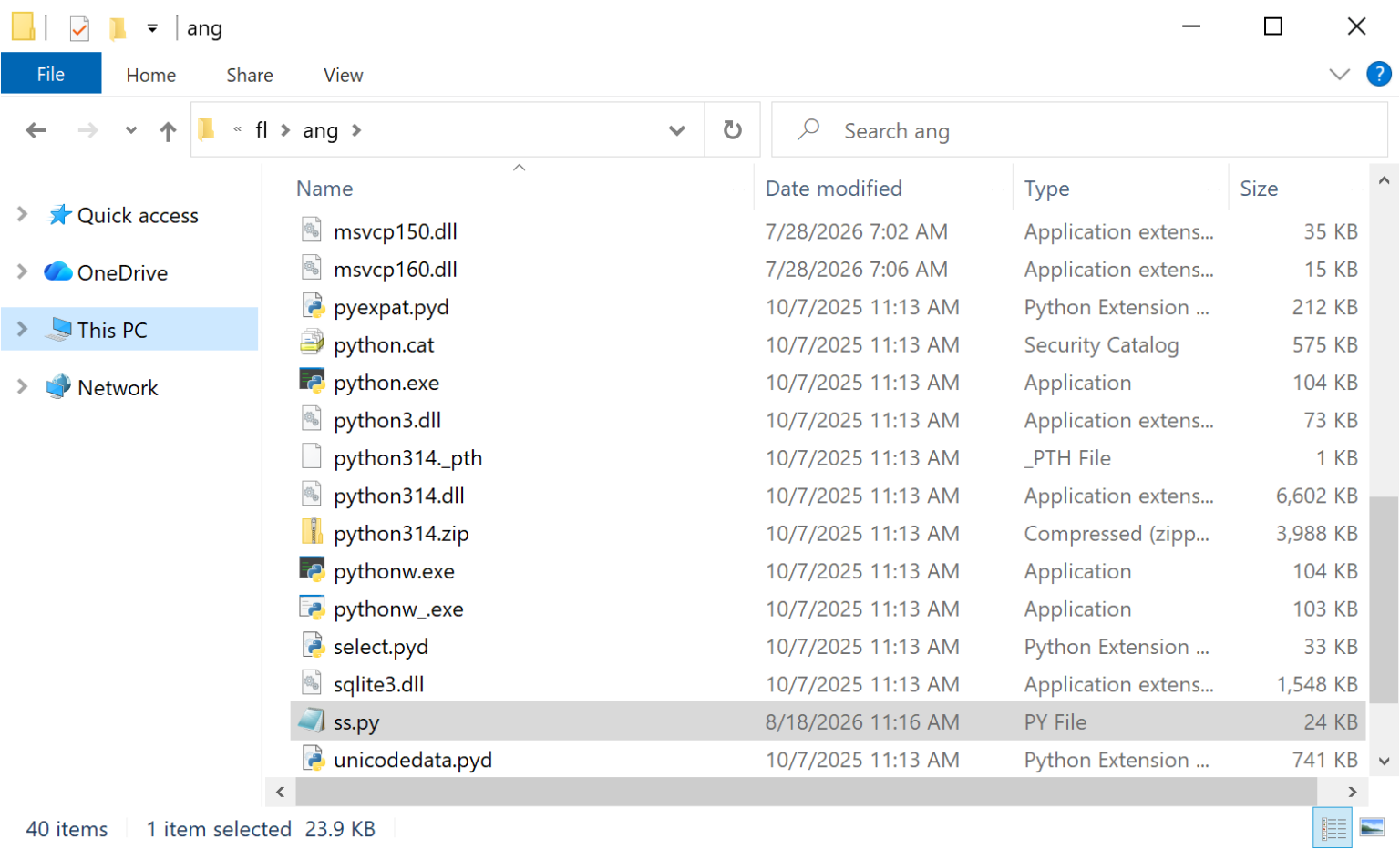
File timestamp analysis and compilation artifacts place the inception of this specific malware strain in late July of this year, suggesting a relatively fresh addition to the active threat landscape. Upon execution, the primary MSI installer unpacks a core PowerShell script designated as cleaner.ps1 alongside a heavily structured ZIP archive. This archive contains a complete embedded Python framework, custom-built malicious Python scripts, precompiled Python libraries, and a collection of deceptive Microsoft runtime dynamic-link libraries (DLLs). By bundling its own runtime dependencies, SynkLoader operates independently of the host machine’s installed software environment, ensuring consistent execution across disparate enterprise workstation builds.
Once the initial foothold is secured, the malware communicates with its designated command and control infrastructure. The threat actors utilize a modular delivery mechanism, dynamically selecting and deploying specific capabilities based on the unique environmental profile and strategic value of the compromised host. Honeypot deployments orchestrated by security investigators successfully engaged with the threat actor’s infrastructure, revealing a heavy emphasis on interactive, "hands-on-keyboard" operations rather than fully automated post-exploitation scripts. When investigators emulated a live enterprise workstation, human operators behind the command-and-control server immediately initiated manual profiling sequences, attempting to map the local network structure, check domain privileges, and assess the broader Active Directory landscape before realizing the environment was simulated and abruptly terminating the connection.
Perhaps the most ingenious and invasive aspect of the SynkLoader framework is its specialized credential-harvesting component, known internally as the PhishLocker module. Rather than deploying traditional browser-based keyloggers or standard credential pop-ups, this module crafts an exceptionally convincing, full-screen borderless graphical user interface that precisely mimics the authentic Windows 11 lock screen. For an unsuspecting corporate user stepping away from their desk or returning from a break, the sudden appearance of a lock screen requesting authentication credentials appears entirely routine and expected.
The strategic objective behind this sophisticated visual deception goes beyond simple password theft. By capturing the legitimate Windows account password of a privileged or standard user, the attackers unlock a powerful capability: the ability to bypass strict IP allow-list restrictions and perimeter access controls. Armed with valid corporate credentials, the adversary can leverage SynkLoader’s built-in tunneling modules to interface directly with internal corporate networks from the compromised device, blending seamlessly with legitimate administrative traffic.
Security researchers emphasize that while the PhishLocker interface is remarkably polished, subtle indicators can betray its artificial nature. For instance, executing a standard window-switching command such as Alt+Tab while the deceptive lock screen is active will frequently force underlying application windows to render on top of the fake GUI, immediately unmasking the intrusion. Similarly, executing native security shortcuts like Ctrl+Alt+Delete provides a reliable litmus test, as the genuine operating system kernel intercepts authentic security sequences that a user-space borderless application cannot legitimately replicate.
Industry implications of campaigns utilizing SynkLoader extend far beyond immediate endpoint remediation. Security telemetry across the broader enterprise security sector consistently demonstrates that once an adversary successfully acquires valid, high-privilege credentials, traditional defensive prevention mechanisms experience a steep drop in efficacy. Automated controls frequently struggle to differentiate between legitimate user behavior and malicious activity conducted using authentic authentication tokens and credentials. Consequently, initial access via trusted channels like Microsoft Teams, coupled with advanced credential harvesting and rapid environment profiling, serves as a classic precursor to catastrophic ransomware deployments and widespread corporate data exfiltration.
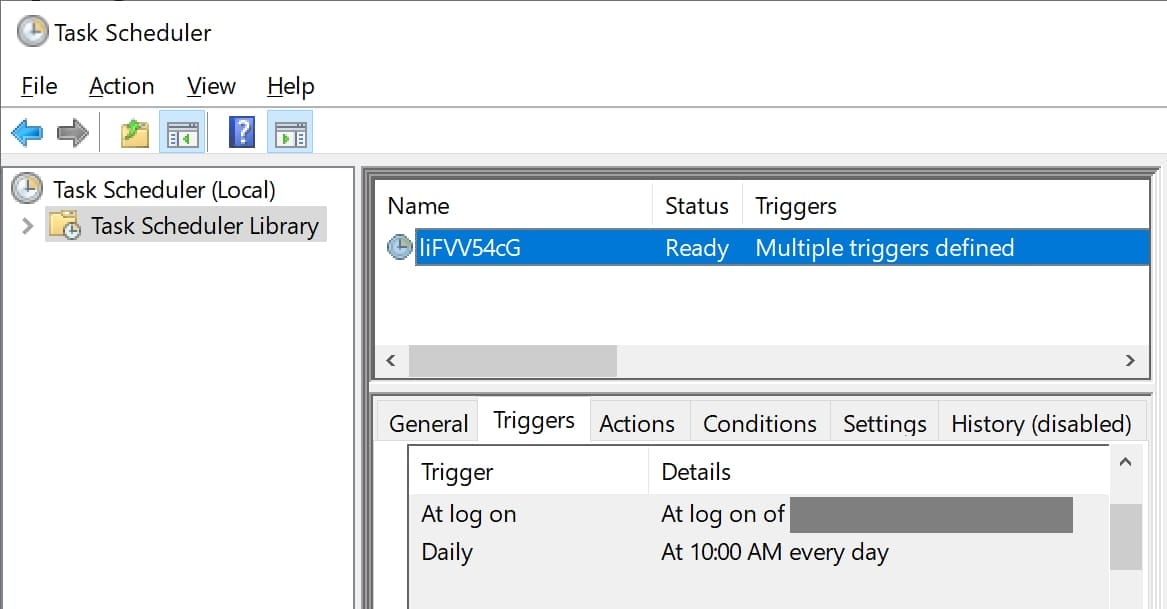
The discovery of SynkLoader underscores a vital evolution in how organizations must approach threat intelligence and endpoint protection. Traditional indicators of compromise, such as static file hashes, prove largely ineffective against frameworks where module builds and file hashes vary dynamically with every unique infection vector. Instead, modern defense strategies must pivot toward behavioral analysis, strict application control policies, and advanced anomaly detection centered around unexpected user interactions and unauthorized communication channels.
Defending the modern enterprise requires a dual-pronged approach combining technical hardening and human-centric security awareness. Organizations must enforce strict validation protocols for any IT support requests originating from digital communication channels, ensuring that employees verify administrative instructions through independent, out-of-band communication paths before executing unsolicited software packages. Furthermore, tightening restrictions on user-initiated software installations, monitoring outbound tunneling attempts, and implementing robust multi-factor authentication methods that resist sophisticated adversary-in-the-middle and screen-overlay techniques remain paramount. As threat actors continue to refine polyglot malware families and exploit the human element within collaborative enterprise software, proactive detection and continuous behavioral monitoring will remain the ultimate bulwark against sophisticated, multi-stage corporate intrusions.
