

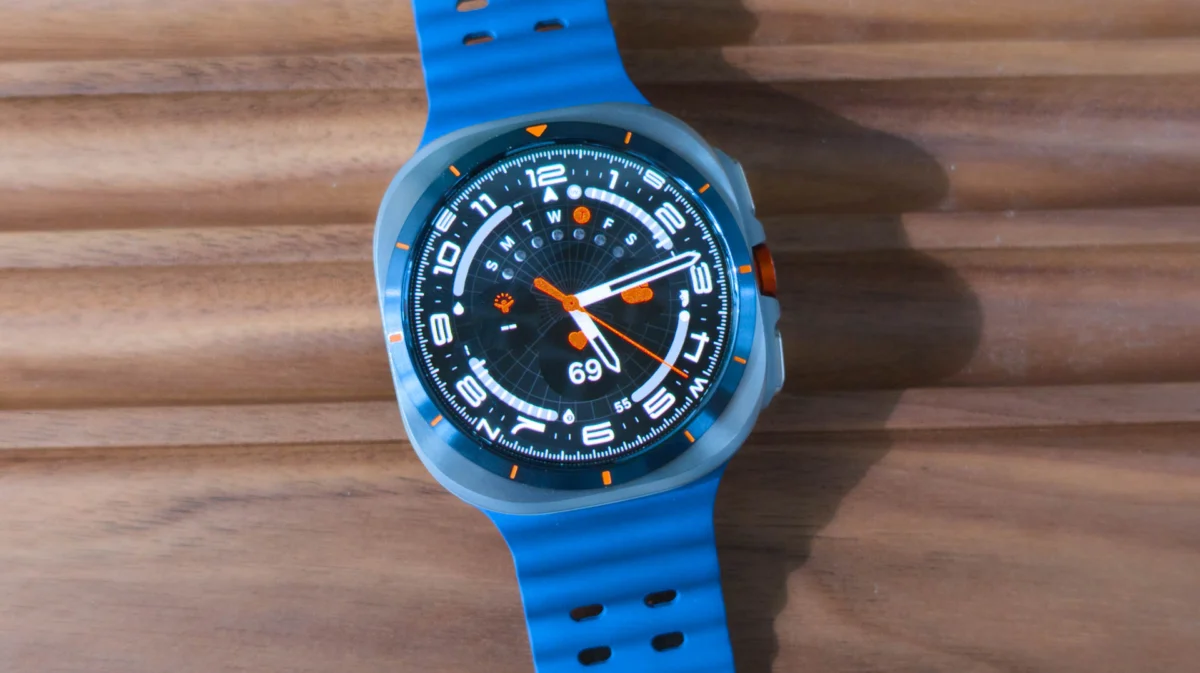
The meticulously guarded secrets of consumer electronics manufacturing rarely survive the final twenty-four hours before a global product debut. True to form, the entire hardware lineage, technical specifications, and European retail pricing for Samsung’s upcoming wearable portfolio have surfaced in a massive, unvarnished disclosure. As the technology industry braces for tomorrow’s official Unpacked showcase, industry insiders have mapped out virtually every architectural choice, performance metric, and design iteration slated for the brand-new Galaxy Watch 9 family and the ultra-rugged Galaxy Watch Ultra 2.
This latest wave of intelligence arrives on the heels of multiple coordinated leaks originating from premier industry analysts and promotional asset disclosures. While initial marketing materials hinted at sophisticated biometric additions and processing triumphs, the latest comprehensive data drop strips away the remaining veneer of mystery. For tech enthusiasts and market analysts alike, the timing offers a fascinating preview of how the South Korean conglomerate intends to shape the wearable landscape moving forward.
Architectural Precision: Inside the Qualcomm SDW6100 and Wear OS 7 Ecosystem
At the beating heart of both the Galaxy Watch 9 and the Galaxy Watch Ultra 2 lies a transformative silicon shift. Ditching previous internal architectures, Samsung has integrated a cutting-edge 3nm penta-core Qualcomm processor, designated as the SDW6100. This transition is expected to yield substantial efficiency gains, drastically reducing thermal throttling during intensive tasks while extending active-use endurance.
Paired with Wear OS 7 and Samsung’s deeply integrated One UI 9 Watch interface, the hardware orchestration promises a fluid user experience. The standard Galaxy Watch 9 is slated to ship with 2GB of RAM and 32GB of internal storage, striking a balanced profile for everyday application multitasking and offline media caching. Meanwhile, the heavy-duty Galaxy Watch Ultra 2 doubles the onboard storage to 64GB while retaining the same 2GB RAM threshold, ensuring ample space for expansive offline topographical mapping, high-resolution fitness logs, and extensive third-party application libraries.
Visual Brilliance and Engineering Tolerances
Display technology remains a primary battleground in the modern smartwatch arena, and Samsung’s latest iterations aim to push brightness thresholds to unprecedented heights. The flagship Galaxy Watch Ultra 2 boasts a sapphire crystal-protected 1.52-inch Super AMOLED display, capable of hitting a staggering peak brightness of 5,000 nits. This extreme luminance ensures absolute legibility under direct, harsh sunlight—a critical requirement for extreme outdoor adventurers, mountaineers, and endurance athletes.
The standard Galaxy Watch 9 adopts a more conventional yet refined approach, offered in two distinct casing formats. The larger 44mm variant features a 1.47-inch panel, while its compact 40mm sibling utilizes a 1.34-inch screen. Both configurations max out at a remarkably bright 3,000 nits, protected by durable sapphire crystal glass.
Beyond visual clarity, structural integrity separates the standard tier from the ruggedized flagship. The Galaxy Watch 9 maintains a sleek, slim profile with a thickness of just 8.6mm across its 44mm (34.0g) and 40mm (31.5g) models, backed by 5ATM and IP68 water and dust resistance, alongside MIL-STD-810H military-grade durability. Conversely, the 47mm Galaxy Watch Ultra 2 embraces a beefier build measuring 47.4 x 47.1 x 10.7mm and tipping the scales at 61.5g. This extra heft is justified by extreme environmental certifications, including 10ATM+ water resistance, IP69K high-pressure ingress protection, military-grade durability standards, and EN13319 certification for professional diving environments.
Power Reserves, Connectivity, and Advanced Biometrics
Battery anxiety has historically plagued the smartwatch market, prompting Samsung to bolster energy reserves across the entire upcoming lineup. The Galaxy Watch Ultra 2 houses an expansive 800 mAh battery cell, supported by high-frequency fast wireless charging utilizing the Wireless Power Consortium (WPC) standard. The Galaxy Watch 9 models also see meaningful capacity bumps, with the 44mm version packing a 445 mAh battery and the 40mm variant equipped with a 390 mAh cell, both supporting standard WPC-based fast charging.
Connectivity options are fully modernized, featuring Bluetooth 6.0, dual-band Wi-Fi (2.4GHz and 5GHz), NFC for contactless transactions, and precise L1+L5 dual-frequency GPS tracking. Notably, while the baseline Galaxy Watch 9 will be split into distinct Bluetooth-only and LTE-enabled SKUs, the Galaxy Watch Ultra 2 comes standard with cellular connectivity out of the box.
On the health and wellness front, the returning Samsung BioActive Sensor suite serves as the primary diagnostic engine. Combining an optical biosignal sensor, electrical heart signal monitor, and bioelectrical impedance analysis (BIA), the hardware is complemented by a skin temperature sensor, accelerometer, barometer, gyroscope, geomagnetic sensor, and ambient light sensor. Furthermore, specialized software enhancements target niche athletic communities. Leaked feature sets point toward a specialized trail-running mode, a perspiration-based Nutrition Alert system, and a dedicated deep-sea diving application slated for a rolling software update later in the year.
European Retail Pricing Realities and Market Positioning
As with any major tech hardware leak, pricing structures offer critical insight into positioning strategies. According to documentation circulating from European retail channels, the entry-level 40mm Galaxy Watch 9 will command a price point of €409 (approximately $466) for the Bluetooth configuration, climbing to €459 ($523) for the LTE variant. Stepping up to the 44mm model adjusts the figures to €439 ($500) for Bluetooth and €489 ($557) for cellular connectivity. At the absolute apex of the portfolio, the titanium-clad Galaxy Watch Ultra 2 is slated for a retail launch price of €749 ($854).
These projected European figures indicate a modest upward price adjustment compared to previous-generation hardware, driven largely by component cost inflation, advanced 3nm silicon integration, and premium material selection. However, regional pricing formulas rarely translate directly to North American or Asian markets due to localized taxation and promotional bundling strategies.
Industry Implications and the Road Ahead
The premature publication of these comprehensive specification sheets underscores the challenges manufacturers face in modern supply-chain leaks. Yet, beyond the initial wave of consumer curiosity, the technical profile of these upcoming devices signals a maturing product category. Rather than relying on superficial cosmetic alterations, Samsung is focusing its development capital on foundational hardware improvements: core processing efficiency, massive leaps in display brightness, rigorous environmental durability, and deeper integration with specialized athletic workflows.
As the industry prepares for the official Unpacked proceedings, attention will naturally pivot from what is launching to how these devices perform in real-world testing. With Qualcomm’s new silicon architecture powering Wear OS 7, Samsung’s ecosystem is positioning itself to challenge competitors aggressively across both the lifestyle and extreme sports smartwatch sectors. The official confirmation of these details tomorrow will establish the definitive baseline for high-end Android wearables for the foreseeable future.
