

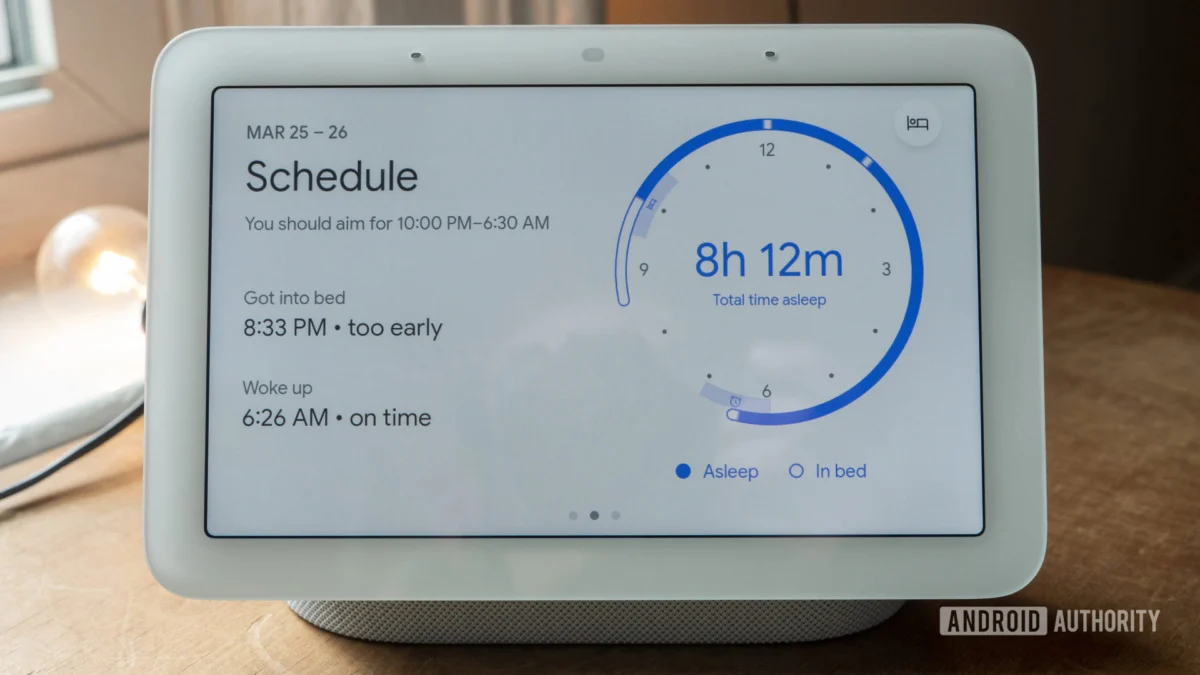
The architecture of digital wellness is undergoing a seismic restructuring within the walls of Silicon Valley. For years, major technology conglomerates have struggled with fragmented health software ecosystems, maintaining parallel applications, disparate backend infrastructure, and competing user interfaces for distinct hardware categories. Google is no exception to this trend, having spent a considerable portion of the current year consolidating its diverse fitness and wellness services under the unified umbrella of the newly introduced Google Health application. Yet, despite these aggressive consolidation efforts, a prominent legacy remains: the second-generation Nest Hub’s sophisticated Sleep Sensing feature has stubbornly remained tethered to the outgoing Google Fit platform.
Recent software discoveries indicate that this architectural anomaly is rapidly drawing to a close. Deep within the code of version 4.23 of the Google Home application, freshly updated text strings explicitly detail "how your Nest Hub works with Google Health." These evolving strings systematically replace long-standing references to Google Fit, signaling an imminent transition that will funnel the bedside smart display’s rich telemetry data directly into Google’s modern wellness hub. This shift is far more than a routine backend housekeeping chore; it marks a critical milestone in Google’s long-term strategy to harmonize ambient computing, smart home infrastructure, and personal health analytics into a cohesive, centralized user experience.
To fully understand the weight of this integration, one must examine the unique engineering footprint of the second-generation Nest Hub. Unlike wrist-worn wearables that rely on photoplethysmography (PPG) and tri-axial accelerometers to infer sleep metrics, the Nest Hub operates entirely untethered from the human body. By leveraging a low-power, high-precision Soli radar sensor embedded within its chassis, the device tracks micro-movements, respiration rates, and physical positioning without requiring the user to wear any hardware to bed.
Furthermore, the Nest Hub’s integrated microphone array acts as an environmental auditor, passively detecting acoustic anomalies such as coughing fits and heavy snoring. Ambient light and room temperature sensors concurrently record the physical conditions of the bedroom, offering contextual depth to the nightly data logs. Crucially, Google has consistently maintained a privacy-first posture regarding this data, asserting that the heavy computational lifting—such as processing radar signatures and audio patterns—occurs locally on the device’s specialized machine learning hardware rather than being continuously streamed to remote cloud servers.
The newly surfaced strings in the Google Home application shed light on how this local hardware capability will interface with the modern cloud-backed ecosystem. Once the Nest Hub’s algorithms determine that a user has settled into bed, the tracking session will initiate, subsequently routing the synthesized telemetry through the Google Health framework. Additionally, the updated documentation outlines data governance parameters, noting that other third-party or native services connected to Google Health may gain access to specific sound-event data, provided the user grants explicit permission through granular privacy controls.
This upcoming migration represents the latest chapter in Google’s sweeping overhaul of its health software portfolio. The corporate trajectory has already seen the historic Fitbit application effectively replaced by Google Health, establishing a singular brand identity and functional core for the company’s consumer wellness initiatives. Furthermore, official roadmaps indicate that legacy Google Fit users will be afforded migration pathways later this year, ensuring that historical records are not stranded on deprecated infrastructure. Bringing the Nest Hub into this unified ecosystem is a logical, albeit complex, engineering imperative that bridges the gap between the living room, the bedroom, and the personal smartphone.
The broader implications of this transition highlight a profound transformation in how the technology sector approaches digital health. For over a decade, consumer health tracking was predominantly defined by dedicated wearables—smartwatches and fitness bands that captured data exclusively when worn. While these devices revolutionized personal fitness metrics, they created persistent friction points: batteries required daily charging, users frequently forgot to wear devices to bed, and the data remained isolated from the broader domestic environment.
Ambient computing seeks to dissolve this friction by embedding sensing capabilities directly into the built environment. A smart display resting on a nightstand does not need to be charged, cannot be forgotten on a kitchen counter, and operates invisibly in the background. By channeling the outputs of this ambient sensor array into Google Health, Google is effectively elevating the smart home from a passive convenience layer into an active participant in preventive healthcare and personalized wellness coaching.
This convergence of smart home hardware and health intelligence also mirrors shifting consumer expectations. Modern users increasingly demand seamless interoperability across their device ecosystems. A person tracking their sleep via a Nest Hub expects to see those insights correlated immediately with the cardiovascular recovery metrics gathered by their smartwatch during morning workouts and the nutritional data logged via their mobile applications. When different devices report to siloed software platforms—such as a watch reporting to Google Health while a smart display feeds Google Fit—the resulting data fragmentation undermines the core value proposition of digital health platforms: a comprehensive, 360-degree view of personal well-being.
Industry analysts note that unifying these data streams under Google Health positions the company more competitively against rival health ecosystems, most notably Apple’s HealthKit and the robust integration between iOS and the Apple Watch. Apple has long championed a unified health repository where data from iPhones, Apple Watches, third-party applications, and connected home accessories converge into a single, encrypted dashboard. By streamlining its own ecosystem—migrating Fitbit, absorbing Google Fit, and now integrating Nest Hub sleep tracking into Google Health—Google is constructing a structurally equivalent foundation designed to scale across Android smartphones, Wear OS smartwatches, Pixel tablets, and Nest smart home products.
However, centralizing vast quantities of deeply personal health and domestic data introduces formidable challenges, particularly concerning privacy, regulatory compliance, and consumer trust. Sleep tracking, by its very nature, captures intimate details of a person’s daily routine, physical health vulnerabilities, and domestic environment. The inclusion of acoustic monitoring—such as recording coughing and snoring—compounds these sensitivities, as audio data captured within a bedroom setting carries inherent privacy risks if mishandled.
While Google’s local processing model—where radar and audio inputs are analyzed on the device to extract numerical metrics rather than raw audio streams—mitigates many traditional cloud-surveillance risks, the moment that data enters a centralized health application, the regulatory and ethical stakes escalate. The transition to Google Health must therefore be accompanied by absolute transparency regarding data handling, explicit user consent mechanisms, and robust encryption standards both in transit and at rest. Ensuring that users retain granular control over which services can access specific data points—such as whether sound-event logs are shared with external wellness integrations—will be essential to maintaining consumer confidence.
Looking ahead, the integration of Nest Hub sleep tracking into Google Health opens the door to advanced predictive health analytics and personalized automation routines. Once sleep metrics reside in the same analytical engine as daytime activity, heart rate variability, and nutritional logs, machine learning models can begin to identify complex, multi-variable correlations. For instance, the system might eventually correlate poor sleep scores captured by the Nest Hub’s radar with high-stress work schedules logged in calendar applications, or changes in bedroom temperature monitored by the display’s environmental sensors.
Furthermore, this integration could foster deeper automation synergies within the smart home. Imagine a future scenario where Google Health, having processed a restless night of sleep characterized by frequent tossing and turning detected by the Nest Hub, communicates with the broader Google Home ecosystem to optimize the bedroom environment for the upcoming night. Automated routines could gradually lower the smart thermostat, dim connected lighting earlier in the evening, and adjust white noise machines to foster deeper restorative sleep, all orchestrated seamlessly by a centralized health and ambient computing intelligence.
As Google prepares to roll out this software transition to the public, the broader technology landscape will be watching closely. The success of the migration will not be measured merely by clean lines of code in the Google Home application or the successful retirement of legacy branding, but by the reliability, security, and utility of the resulting user experience. By dissolving the artificial boundaries that have historically separated fitness trackers, smart home displays, and health software platforms, Google is laying the groundwork for a more integrated, ambient future of personal wellness—one where the home itself becomes an active partner in health management.
