


The cybersecurity landscape has reached a significant inflection point regarding automated threat discovery and complex web application vulnerabilities. Security researchers at Defiant’s Wordfence intelligence division have recently disclosed a severe vulnerability vector affecting the widely deployed Avada theme and its companion Fusion Builder plugin for WordPress. Tracked under the identifier CVE-2026-18431 and carrying a maximum Common Vulnerability Scoring System (CVSS) rating of 9.8, this critical flaw represents an intricate security breakdown. It enables unauthenticated malicious actors to execute arbitrary PHP code directly on underlying hosting servers without requiring any user interaction—a phenomenon commonly classified as a zero-click remote code execution (RCE) attack.
What sets this discovery apart from standard web application vulnerabilities is not merely its catastrophic severity score, but the structural complexity of the exploit chain itself. Rather than relying on a single, isolated logic error, the attack relies on a sophisticated sequence of six distinct security oversights. To achieve complete server compromise, an attacker must successfully chain exploits targeting authorization checks, input-validation routines, trust-boundary enforcement, and file-handling logic. These individual components must be triggered in an exact, methodical sequence, demonstrating a rare depth of architectural fragility within a commercial software package boasting over one million recorded sales.
The anatomy of CVE-2026-18431 underscores the inherent difficulties of securing complex, feature-rich ecosystems like WordPress themes and page builders. Modern commercial themes frequently function as mini-operating systems, bundling advanced layout engines, form handlers, dynamic asset managers, and custom APIs into a single package. This vast surface area inherently expands the risk profile. In the case of Avada, the vulnerabilities reside within the interplay between the core theme architecture and the Fusion Builder plugin. Researchers have noted that while the overall sales volume of Avada is immense, successful exploitation of this specific chain demands a precise environmental setup: both the vulnerable theme and the associated plugin must be actively running on the target deployment, a prerequisite that marginally curtails the immediate pool of exposed digital properties, though the absolute number of at-risk domains remains staggering.

The implications of a successful exploitation event are comprehensive and uncompromising. If an unauthenticated external actor manages to complete the six-step execution chain, the security posture of the targeted WordPress instance is entirely dismantled. Adversaries can transition from complete outsiders to absolute system administrators in moments. Common post-exploitation activities associated with this level of access include the persistent deployment of web shells, clandestine modifications to backend databases to exfiltrate sensitive user records or financial information, the silent redirection of organic web traffic to fraudulent or malicious domains, and the creation of rogue administrator accounts designed to ensure long-term persistence even if primary vulnerabilities are patched superficially.
Behind the technical discovery of CVE-2026-18431 lies a compelling narrative about the evolution of vulnerability research itself. Wordfence researchers identified, validated, and successfully reproduced the entire six-step vulnerability chain in roughly two hours, leveraging an internal agentic framework known as Argus. This autonomous system not only mapped the logical flaws across the disparate codebase components but also autonomously generated functional proof-of-concept exploit code. The speed and precision with which Argus operated highlight a broader, industry-wide paradigm shift: offensive and defensive security operations are increasingly mediated by artificial intelligence and advanced automation. While human expertise remains vital for triage and remediation, the velocity of discovery has accelerated dramatically, forcing software vendors to compress their patch-management timelines significantly.
The timeline of responsible disclosure surrounding this incident reflects standard industry protocols executed under pressure. Following the automated discovery by the Argus framework on July 30, the research team conducted rigorous manual verification to ensure accuracy before compiling a comprehensive advisory. Full technical disclosures were transmitted to ThemeFusion, the commercial entity responsible for developing Avada and Fusion Builder, on August 5. Demonstrating responsiveness, the vendor acknowledged receipt of the critical findings by August 10 and formally released security patches—designated as Avada version 7.16.1 and Fusion Builder version 3.16.1—shortly thereafter.
Despite the rapid turnaround by the developer, the discovery serves as a cautionary tale for enterprise security architects, digital agencies, and independent web administrators alike. Traditional vulnerability management often prioritizes known software versions or signature-based scanning, yet complex logical chains like CVE-2026-18431 frequently bypass conventional perimeter defenses such as standard web application firewalls (WAFs). Because the attack leverages legitimate application pathways executed out of order or under false trust assumptions, basic pattern-matching rules often fail to intercept the multi-stage payload before it reaches the core application logic.
Furthermore, the incident sheds light on the broader systemic risks associated with third-party software dependencies in content management systems. WordPress powers a dominant share of the global web, making its ecosystem an enduringly lucrative target for financially motivated cybercriminal syndicates and nation-state actors alike. When vulnerabilities emerge within foundational design frameworks that dictate the rendering, routing, and processing of web pages, the blast radius extends far beyond simple defacement. It transforms a company’s primary digital storefront into an active vector for malware distribution, potentially compromising customer data and destroying brand equity overnight.
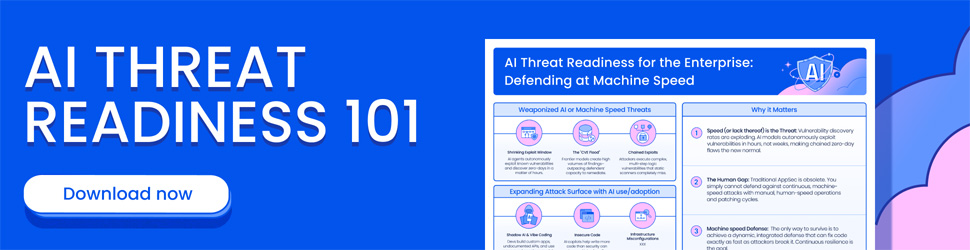
As threat actors increasingly adopt automated tooling to scan the global perimeter for complex logic flaws, the window between vulnerability disclosure and active weaponization continues to shrink. The successful identification of CVE-2026-18431 via an agentic framework signals that future cyber threats will likely involve highly customized, rapidly generated exploit chains tailored to specific application footprints. For website operators, relying solely on post-incident remediation or reactive updates is no longer an adequate defense strategy. Security best practices now dictate rigorous asset inventory management, the immediate application of patches for core themes and plugins, strict adherence to the principle of least privilege regarding server file permissions, and the deployment of behavioral monitoring solutions capable of detecting anomalies deep within application-layer interactions.
Ultimately, the resolution of CVE-2026-18431 through the prompt deployment of Avada 7.16.1 and Fusion Builder 3.16.1 closes a dangerous chapter for millions of site owners, but it also underscores the perpetual tension between software feature velocity and architectural security. As commercial themes grow more sophisticated to meet consumer demands for dynamic design capabilities, the underlying codebase complexity will continue to challenge developers and security analysts alike. Safeguarding the modern web will require not only faster patching mechanisms by theme and plugin authors, but also a fundamental re-engineering of how disparate components within modular web frameworks establish trust, validate inputs, and enforce authorization boundaries across the entire digital ecosystem.
