

The modern corporate traveler relies heavily on the ambient connectivity provided by hotels, conference centers, and transit hubs. However, this foundational convenience has been weaponized on an unprecedented scale. Recent intelligence disclosures have exposed a sophisticated cyber espionage campaign that systematically subverts the infrastructure of public wireless networks. Known in the cybersecurity community under the moniker "CaptiveCrunch," this operation utilizes deep-seated network manipulation to target enterprise users, specifically focusing on the compromise of cloud productivity suites and the deployment of bespoke malware strains.
Security researchers and technology analysts have officially tied this expansive threat activity to Midnight Blizzard, a notorious state-sponsored cyber espionage group commonly tracked as APT29 or Cozy Bear. The collective, widely recognized for its high-profile intelligence-gathering initiatives targeting governmental, diplomatic, and corporate entities, has expanded its tactical playbook. By shifting focus toward the transient environments frequented by corporate executives, researchers, and engineers, the threat actors have unlocked a reliable vector for initial access that bypasses traditional perimeter defenses.
The anatomy of the CaptiveCrunch campaign underscores a worrying evolution in how adversaries exploit ambient trust. While early indicators of this activity surfaced through independent investigations by enterprise defense firms detailing DNS manipulation within hospitality router architectures, subsequent deep-dives by major technology conglomerates have illuminated the full scope of the operation. Active since at least early spring, the campaign integrates infrastructural hijacking with advanced software payloads, demonstrating a high degree of operational maturity and tactical flexibility.
At the core of the attack chain is the exploitation of captive portals—the web pages users must interact with before gaining full access to a public Wi-Fi network. Rather than attacking individual endpoint devices directly during the initial phase, the threat actors—specifically operating via a sub-cluster designated as Storm-2945—target the shared routing and gateway hardware servicing hotels and convention venues. By subverting the Domain Name System (DNS) and manipulating HTTP traffic passing through these administrative choke points, the attackers can effectively control the browsing experience of anyone connecting to the local area network.
Once a traveler connects to a compromised hospitality network, their web traffic is subject to redirection. This manipulation allows the operators to construct hyper-targeted credential harvesting flows. Victims attempting to check their corporate email or access cloud resources are seamlessly rerouted to meticulously crafted phishing portals that mirror authentic authentication screens for enterprise identity providers. Beyond standard credential harvesting, the campaign heavily leverages device code phishing techniques, exploiting authentication workflows designed to simplify sign-ins across smart devices and browsers.

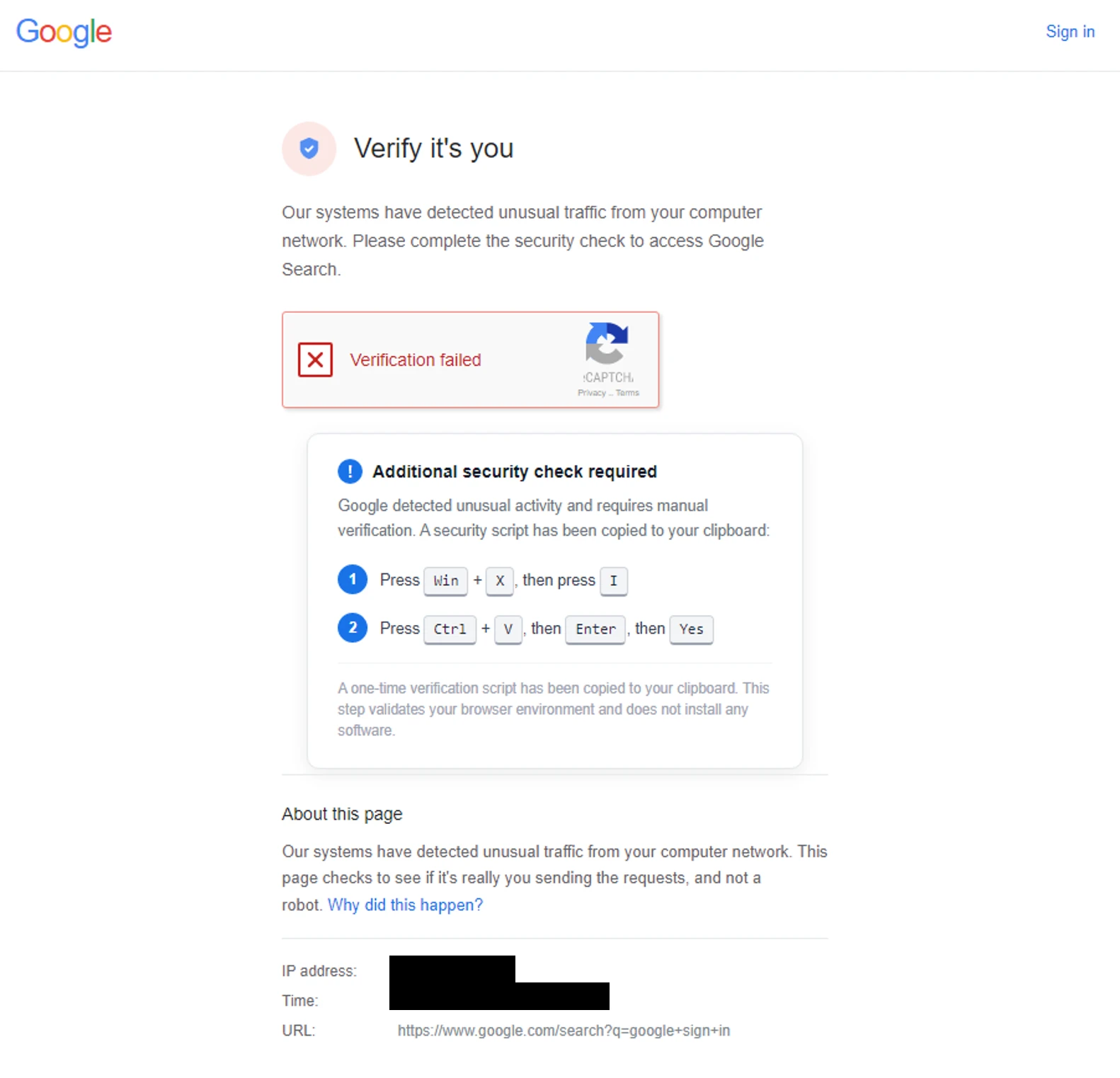
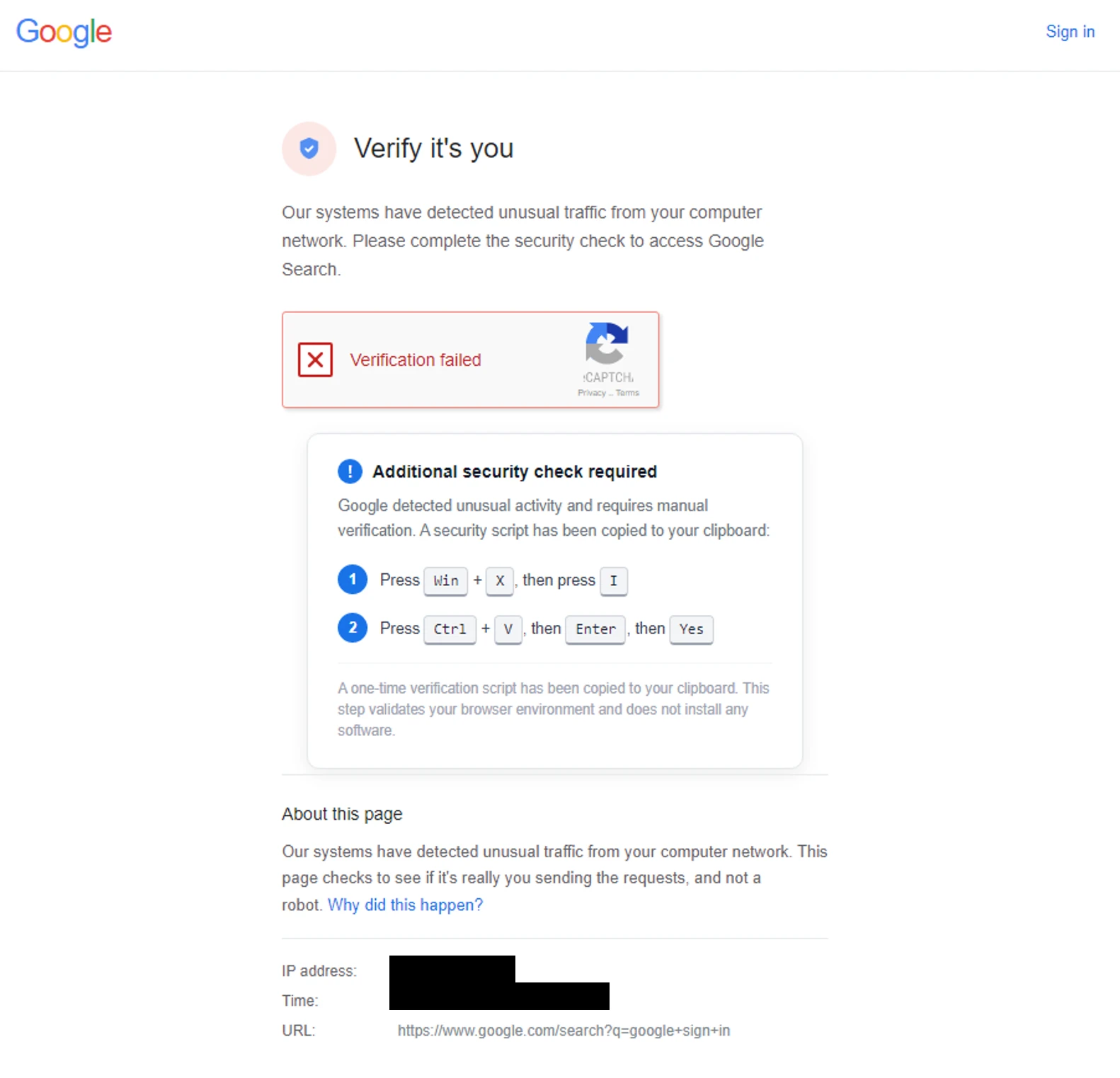
However, the CaptiveCrunch operation extends far beyond simple credential theft. When targets navigate specific pathways within the hijacked network infrastructure, they are often greeted with urgent notifications disguised as critical browser or operating system updates. These prompts utilize social engineering tactics known as "ClickFix," compelling users to execute manual verification steps that inadvertently trigger malicious script execution on Windows machines. Furthermore, telemetric evidence indicates that this multi-platform approach incorporates tailored payloads for mobile ecosystems, specifically distributing malicious Android Package (APK) files designed to compromise handheld devices operating within the hospitality zone.
To maintain a stronghold within targeted environments, the operators deploy custom-built toolsets that highlight advanced software engineering capabilities. Chief among these are two distinct malware families: a Go-based Remote Access Trojan (RAT) identified as CornFlake, and an in-memory PowerShell credential harvester designated as ChocoShell.
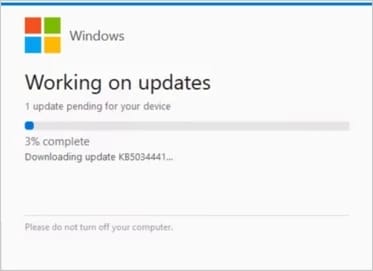
CornFlake acts as the primary persistent foothold on Windows endpoints. Upon execution, the malware initiates a calculated distraction technique by spawning a fake graphical user interface. This deceptive window mimics standard system operations—ranging from routine operating system updates and antivirus scans to disk optimization utilities and network diagnostics tools—while the core binary quietly copies itself into the system’s application data directories to secure persistence.
To blend in with legitimate background processes, CornFlake routinely adopts innocuous monikers such as "Cloud Sync Service." It fortifies its presence through an array of system-level persistence mechanisms, including Windows service registrations, registry run keys, scheduled tasks, and an embedded watchdog routine designed to automatically self-heal or restore any component should system defenses attempt to purge it.
Complementing the RAT is ChocoShell, a streamlined, fileless utility engineered to extract sensitive data directly from the host’s memory. This payload systematically targets browser cookies, cached login credentials, Wi-Fi configuration profiles, and active session tokens associated with major cloud productivity environments like Microsoft 365 and Azure Active Directory. By harvesting these active tokens, the threat actors can bypass multi-factor authentication entirely, impersonating the legitimate user without needing to prompt them for credentials again.
An intriguing dimension of the CaptiveCrunch investigation involves the genesis of these malware strains. Code analysis performed by threat intelligence analysts revealed extensive structural commenting and syntax patterns strongly indicative of artificial intelligence assistance during the development phase. This observation highlights a broader industry trend where advanced persistent threat groups increasingly integrate generative AI models to accelerate software development, refine evasion techniques, and scale their operational tooling.
Command and control infrastructure supporting this campaign relies on an unprotected web-based management panel tracked as FruitStone. This centralized interface grants the operators comprehensive oversight of compromised hosts, enabling them to browse victim file systems, execute arbitrary PowerShell commands, and capture real-time surveillance data, including screenshots and keystrokes.
The implications of the CaptiveCrunch campaign extend far beyond immediate data theft, posing severe challenges for modern enterprise security architectures. Traditional corporate security models assume a clear boundary between trusted corporate networks and untrusted external environments. However, as the workforce becomes increasingly mobile, the boundaries dissolve. When employees travel for business, they routinely step outside the protective umbrella of corporate Virtual Private Networks (VPNs) and secure endpoint detection systems, relying instead on third-party infrastructure that corporations cannot patch, monitor, or control.
This operational reality exposes a fundamental vulnerability in how organizations approach endpoint hygiene during travel. The ability of a threat actor to weaponize hotel Wi-Fi routers suggests that traditional perimeter security must now account for compromised transport layers. If the underlying network infrastructure itself is untrustworthy, end-user vigilance alone becomes an inadequate defense mechanism, particularly when confronted with convincing spoofed update prompts and device code authentication lures.
.jpg)
Industry analysts emphasize that mitigating threats of this magnitude requires a multi-layered defensive posture. Security operations centers must pivot toward zero-trust architectures that treat every network connection as inherently hostile. For remote workers, this means mandating the continuous use of enterprise-managed VPNs or encrypted private cellular connections, entirely avoiding the convenience of unsecured public Wi-Fi networks whenever feasible. Furthermore, organizations should proactively disable or tightly restrict features like device code authentication where business needs do not explicitly require them, reducing the attack surface exposed by OAuth workflows.
Adopting phishing-resistant authentication methods, such as hardware-backed security keys and passwordless FIDO2 credentials, remains one of the most effective countermeasures against session hijacking and credential harvesting campaigns. Because passkeys bind authentication to the specific origin and device, intercepted credentials or manipulated DNS resolutions fail to provide attackers with actionable access to cloud environments.
As state-sponsored threat groups continue to refine their methodologies and leverage emerging technologies to optimize their operations, the hospitality sector will likely remain a high-value hunting ground. Addressing this persistent risk requires a concerted effort across the cybersecurity ecosystem—combining rigorous network telemetry, automated threat intelligence sharing, and a cultural shift in how remote employees interact with public digital infrastructure.
