


The digital asset security landscape has been severely shaken following the discovery of a critical cryptographic vulnerability embedded within the firmware of widely utilized COLDCARD hardware wallets. Independent security audits and digital forensics teams have linked this latent software defect to a coordinated series of automated blockchain heists that ultimately drained approximately $88.6 million in Bitcoin from thousands of individual accounts. The incident highlights the persistent dangers of supply-chain and firmware-level vulnerabilities in self-custody infrastructure, serving as a stark reminder that even air-gapped storage solutions remain susceptible to foundational engineering oversights.
Anatomy of the Attack: Precision and Scale
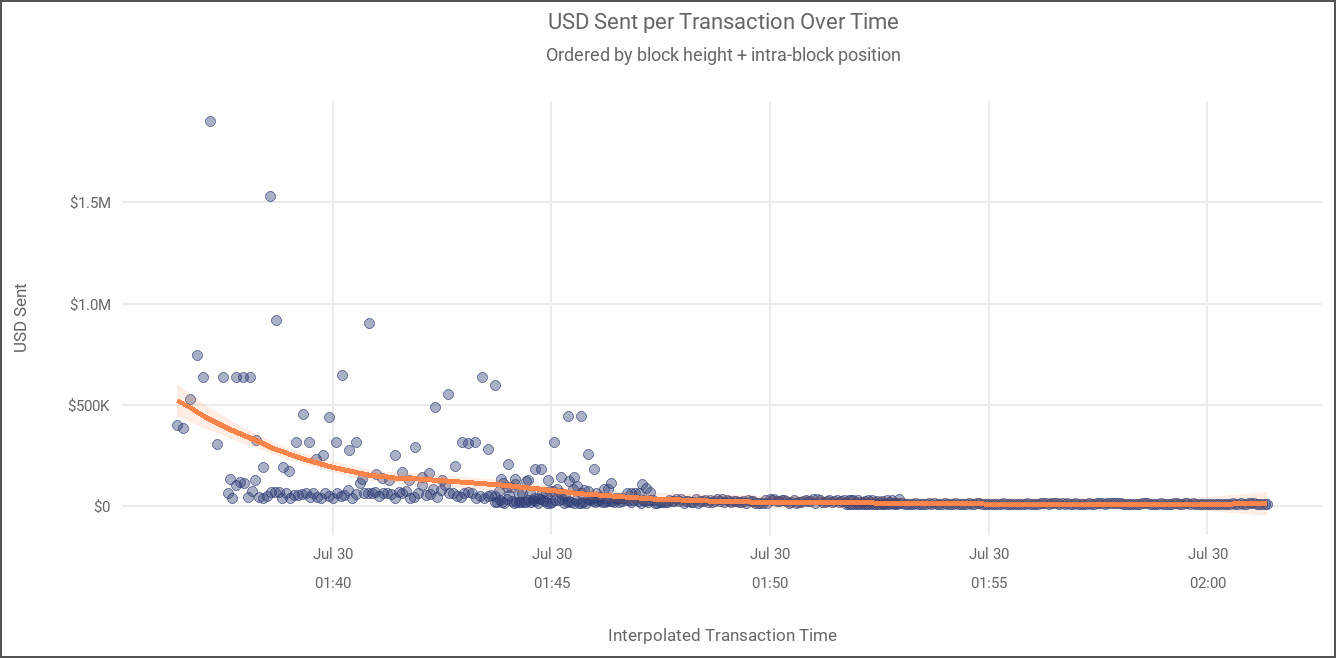
The exploitation phase unfolded with chilling precision, catching both end-users and device manufacturers off-guard. According to comprehensive transaction analyses published by leading digital asset intelligence firms, the primary wave of theft materialized on July 30, operating in a tightly constrained window of just 41 minutes. During this brief period, an automated script methodically swept approximately 1,083 BTC—valued at roughly $70.2 million at the time—across 1,196 distinct addresses. Crucially, this blitz occurred approximately 30 hours before the hardware manufacturer, Coinkite, formally published its public security advisory acknowledging the underlying firmware defect.
Blockchain analytics subsequently revealed subsequent waves of automated extraction on August 1, expanding the aggregate scope of the breach to 1,367 Bitcoin, valued at an estimated $88.6 million spanning 4,585 targeted addresses. Forensic investigators examining the mempool dynamics noted distinctive operational signatures left behind by the threat actors. Every single sweep transaction utilized a rigid, hardcoded transaction fee rate of exactly 30 satoshis per virtual byte (sat/vB). This metric represented a staggering 30-fold to 75-fold overpayment compared to the prevailing network median fee rate of 0.4 to 1.0 sat/vB observed during that specific week. Furthermore, the transactions intentionally omitted any change outputs, consolidating funds directly into attacker-controlled vaults.

Chainalysis researchers deep-diving into the movement of funds uncovered strategic targeting patterns. The malicious actor intentionally prioritized high-net-worth balances during the initial ten minutes of execution, successfully extracting nearly $30 million in the blink of an eye, with a single victim losing a staggering $1.8 million in a single sweep. This hyper-targeted behavior strongly indicates that the perpetrators had thoroughly mapped, profiled, and analyzed vulnerable wallet addresses well in advance, staging their infrastructure to maximize yield before the vulnerability became public knowledge.
Uncovering the Root Cause: The Flawed Random Number Generator
Following initial disclosures and emergency reports from panicked users experiencing unauthorized withdrawals, engineering and security divisions from Block joined forces with independent vulnerability researchers to dissect the proprietary firmware binaries. Their investigative efforts quickly pinpointed the vector of compromise: a critical integration error within the random number generation (RNG) codebase governing specific iterations of the hardware wallet’s firmware lifecycle.
At the heart of the architecture, COLDCARD devices feature dedicated physical hardware RNG chips designed to capture high-entropy physical noise for secure seed generation. However, an insidious logic flaw and incorrect conditional check within the firmware caused the ngu.random function to bypass the robust STM32 hardware random number generator entirely. Instead, the system fell back on MicroPython’s deterministic Yasmarang pseudo-random number generator.
Crucially, this software-based fallback mechanism relied exclusively on predictable parameters, including the device’s specific microcontroller identifier and local system timing states. Security engineers emphasize that these telemetry points completely lack cryptographic-grade entropy and can be easily reconstructed, guessed, or modeled by an external adversary. By reverse-engineering the deterministic fallback space, sophisticated attackers were capable of independently recreating the exact sequence of random numbers generated by affected devices offline.

Armed with this capability, bad actors could exhaustively compute potential wallet seed phrases, derive their associated public addresses, and cross-reference them against historical or real-time blockchain ledgers. Finding a cryptographic match immediately confirmed a valid seed phrase, granting the attacker full derivation rights to the corresponding private keys and enabling the unauthorized draining of user assets without ever needing physical access to the target hardware device.
Firmware Scope and Immediate Remediation Challenges
The manufacturer’s official disclosures outlined a broad spectrum of vulnerable firmware versions across multiple hardware iterations. Impacted configurations include seed phrases generated on Mk2 and Mk3 models running firmware versions 4.0.1 through 4.1.9, standard Mk4 and Mk5 editions operating on builds prior to version 5.6.0 (or Edge version 6.6.0X), as well as Q-series units utilizing software older than standard version 1.5.0Q (or Edge version 6.6.0QX).
Coinkite swiftly pushed out patched firmware binaries—designated as version 4.2.0 or later for Mk2 and Mk3, version 5.6.0 for standard Mk4 and Mk5, version 1.5.0Q for standard Q devices, and corresponding Edge builds—to neutralize the active threat vector. Nevertheless, industry cybersecurity experts stress a vital distinction: applying a software patch or updating firmware does not retroactively secure or repair a seed phrase that was previously generated while the flawed RNG was active.
Consequently, affected users face a mandatory migration protocol. Security guidelines dictate that users must carefully verify existing backups, install the latest patched firmware, generate a brand-new cryptographically sound seed phrase on the updated system, and meticulously verify the new destination addresses directly on the hardware device’s trusted screen. Best practices mandate executing a small test transaction to confirm operational integrity before transferring the bulk of their capital. Old backups must be securely archived until the asset migration is fully finalized and verified on the blockchain.
Interestingly, Coinkite noted that seed phrases supplemented with a minimum of 50 fair, independent, and physically private dice rolls—a popular cryptographic hardening technique among advanced self-custody advocates—were insulated from the flaw, as the external entropy successfully overwhelmed the predictable fallback mechanism. Similarly, users employing strong, unique BIP-39 passphrases enjoyed a layer of defense, though migration remains imperative because the underlying seed entropy remains mathematically compromised. Other product lines, including TAPSIGNER, OPENDIME, and SATSCARD, remained completely unaffected due to their distinct and isolated codebases. In response to the crisis, Coinkite management confirmed that all un-shipped hardware inventory containing the vulnerable firmware was immediately destroyed, while direct email alerts and step-by-step remediation instructions were dispatched to customers whose vulnerable devices had already entered the logistics pipeline.
Industry Implications and the Future of Hardware Security
This multi-million-dollar security breach serves as a watershed moment for the cryptocurrency hardware wallet industry, carrying profound implications for institutional and retail self-custody alike. For years, hardware wallets have been marketed as the gold standard of digital asset protection—an impenetrable fortress insulating private keys from internet-connected malware and online exchange collapses. However, this incident forcefully demonstrates that the software layer underpinning these devices represents a massive, high-stakes attack surface.
The fallout is expected to accelerate regulatory scrutiny and push hardware wallet developers toward more rigorous, transparent security practices. Industry observers predict a widespread shift toward formal verification methods, mandatory open-source firmware auditing, and decentralized code reviews before new builds are pushed to production hardware. Furthermore, the incident underscores the growing sophistication of automated blockchain exploitation tools. The speed at which the attacker deployed automated scripts to sweep funds highlights how quickly modern cybercriminals can operationalize zero-day vulnerabilities in financial networks.
As the cryptocurrency ecosystem matures, the burden of security continues to shift precariously between user diligence and engineering excellence. Incidents of this magnitude reinforce the reality that hardware autonomy requires eternal vigilance. Moving forward, the developer community must embrace redundant entropy sources and rigorous defensive programming to prevent deterministic failures from undermining the foundational trust upon which modern digital sovereignty relies.
