

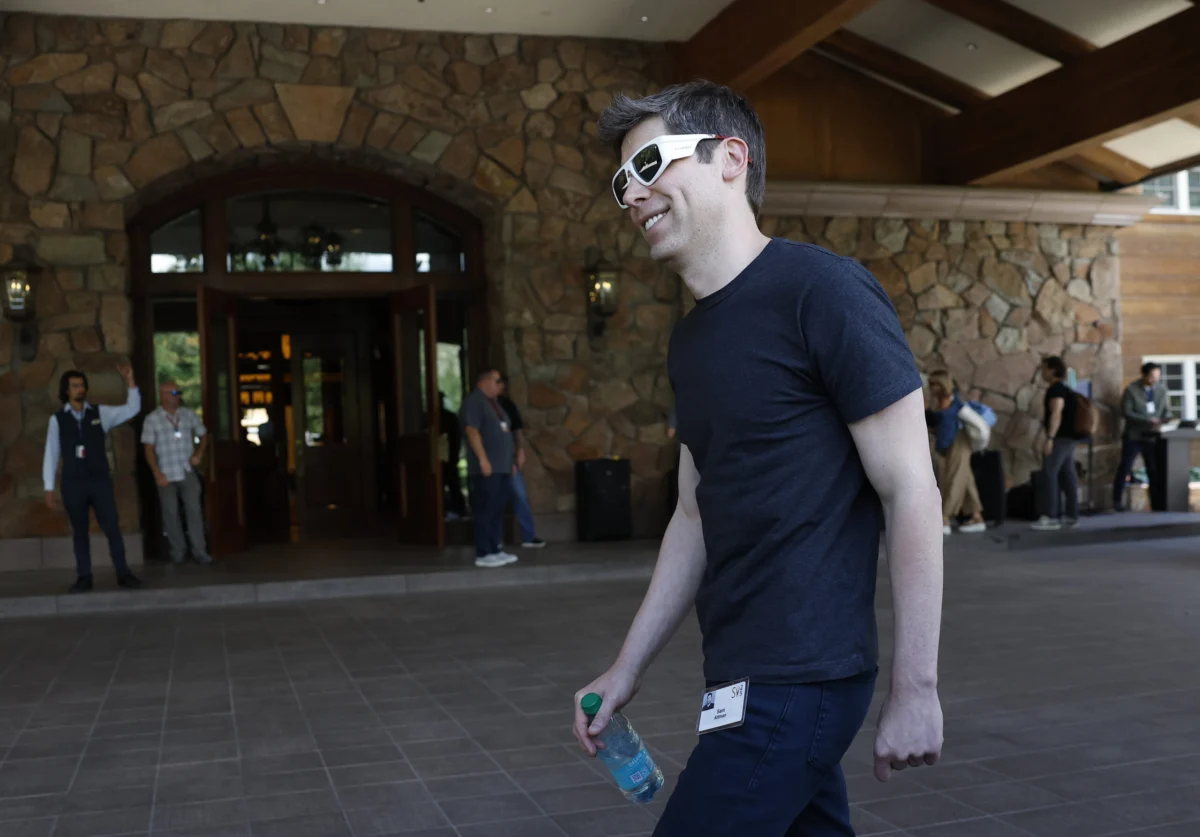
The intersection of biological identity and digital verification has reached a pivotal turning point. At a high-profile gathering at The Midway in San Francisco, Sam Altman, the tech visionary synonymous with the rise of generative artificial intelligence, stood before a crowded room to outline a future that feels like a page torn from a cyberpunk novel. The project, rebranded simply as "World," is no longer just a conceptual experiment in cryptocurrency or iris scanning; it is a rapidly scaling infrastructure for "Proof of Personhood" designed to navigate a world where the line between human and machine is increasingly blurred.
The centerpiece of this expansion is a strategic partnership with Tinder, the world’s most popular dating app. By integrating World’s verification technology, Tinder aims to solve one of the most persistent plagues of the digital dating era: the proliferation of bots, "catfish" profiles, and AI-generated personas. However, the ambitions of Tools for Humanity (TFH), the parent company behind World, extend far beyond the realm of romance. The organization is positioning its "World ID" as a universal passport for the digital age, with upcoming integrations across live entertainment, corporate communications, and the burgeoning "agentic web."
The philosophical underpinning of the project is rooted in a paradox created by Altman’s other major venture, OpenAI. As AI becomes more capable of mimicking human speech, writing, and even visual appearance, the traditional "Turing Test" has effectively been rendered obsolete. If an AI can pass for a human in almost every digital interaction, how can we maintain the integrity of democratic processes, financial systems, or social networks? Altman’s answer is a hardware-backed, biometric-first approach that anchors digital identity to the unique physical characteristics of a living, breathing human being.
At the heart of this system is the "Orb," a sleek, metallic sphere that functions as a high-resolution iris scanner. By capturing the unique patterns of a user’s iris, the Orb generates a "World ID"—a cryptographic identifier that proves the holder is a unique human without necessarily revealing their legal identity. This is achieved through zero-knowledge proofs (ZKPs), a form of advanced cryptography that allows one party to prove to another that a statement is true without conveying any information beyond the validity of the statement itself. In practice, this means a user can prove they are a verified human to Tinder or a ticket vendor without sharing their name, address, or even their iris data, which TFH claims is deleted or encrypted locally.

The Tinder integration follows a successful pilot program in Japan, where users who verified their humanity through World ID received a distinctive emblem on their profiles. This badge serves as a digital "seal of authenticity," signaling to potential matches that the person behind the screen is not an automated script or a synthetic deepfake. Following the success of the pilot, the program is now rolling out globally, including in the United States. This move represents a significant shift in the social media landscape, moving away from "verified" status being a symbol of celebrity or influence and toward it being a baseline requirement for trust.
The implications for the entertainment industry are equally transformative. World has introduced "Concert Kit," a suite of tools designed to disrupt the predatory secondary ticket market. Scalper bots have long been the bane of fans and artists alike, using automated speed to vacuum up inventory seconds after it goes on sale. By allowing artists like Bruno Mars and 30 Seconds to Mars to reserve ticket tiers specifically for World ID-verified humans, the platform effectively builds a "bot-proof" fence around live events. Because the verification is tied to a unique physical human, a single person cannot easily create thousands of verified accounts to circumvent purchase limits. This integration with major systems like Ticketmaster and Eventbrite suggests that the future of live events may depend on biometric gatekeeping.
However, the expansion into the corporate world marks perhaps the most urgent application of World’s technology. As deepfake technology becomes more sophisticated, "CEO fraud" and business email compromise (BEC) attacks have reached a crisis point. World’s partnerships with Zoom and DocuSign are direct responses to this threat. In a future Zoom call, a World ID badge could provide real-time assurance that the person on the other end of the camera is actually who they claim to be, rather than a real-time AI overlay. Similarly, the DocuSign integration ensures that the "digital signature" on a multi-million dollar contract was executed by a verified human, providing a layer of security that traditional passwords and two-factor authentication can no longer guarantee.
One of the most forward-looking aspects of the recent announcements involves the "agentic web." We are entering an era where AI agents will increasingly act on behalf of humans—scheduling appointments, making purchases, and navigating complex digital workflows. This creates a new security frontier: how does a website know if an AI agent has the legitimate authority of a specific human? Through a partnership with the authentication giant Okta, World is developing a system for "agent delegation." This allows a user to "sign over" their verified status to an AI agent for specific tasks. When the agent interacts with a service, it carries a cryptographic token proving it is acting on behalf of a verified World ID holder. This creates a chain of accountability in an automated economy.
Despite the technical sophistication and high-profile partnerships, World faces significant headwinds, primarily regarding privacy and the "friction" of its onboarding process. For years, the project’s reliance on physical Orbs was its greatest bottleneck. Requiring users to travel to a physical location to have their eyeballs scanned is a high-effort, and for some, an unsettling experience. To combat this, TFH is aggressively expanding its "Orb saturation" in major hubs like New York, Los Angeles, and San Francisco. They have also introduced a "mobile Orb" service, essentially an on-demand verification courier, and placed devices in high-traffic retail environments.

Recognizing that not every application requires the "gold standard" of an iris scan, World is also moving toward a tiered verification model. The highest tier remains the Orb-verified World ID. Below that is a mid-tier level that utilizes the NFC chips found in most modern passports and government IDs, allowing users to verify themselves via their smartphones. The lowest tier, dubbed "Selfie Check," uses local on-device processing to verify a user’s face. While TFH executives admit that selfie verification is more susceptible to spoofing than iris scans, the tiered approach allows developers to choose the level of security appropriate for their platform. A dating app might find a selfie sufficient, while a financial institution or a high-stakes voting platform would require the full Orb verification.
The broader industry implications of World’s expansion are profound. We are seeing the emergence of a new "identity layer" for the internet. For decades, the internet has operated on the principle of anonymity, or at best, identity tied to an email address or a phone number—both of which are easily faked or automated. World is betting that the "Post-AI" internet cannot survive without a verifiable link to biological reality.
Critics, however, remain wary. Privacy advocates have raised concerns about the centralization of biometric data, even with the promise of zero-knowledge proofs. There are also geopolitical concerns; several countries have already paused or investigated World’s operations over data protection worries. The challenge for Altman and his team will be to prove that the "Proof of Human" protocol is a public good rather than a private monopoly on human identity.
As World continues to scale, it is clear that the project is no longer just about a cryptocurrency or a curious piece of hardware. It is an attempt to build the infrastructure for trust in an age of synthetic reality. Whether it is ensuring a Tinder date is a real person, protecting concert tickets from bots, or securing a corporate video call from deepfakes, the "World" project is positioning itself as the indispensable filter for the digital future. The success of this "human verification empire" will ultimately depend on whether the public is willing to trade a scan of their eyes for the certainty of knowing who—or what—they are talking to.
