

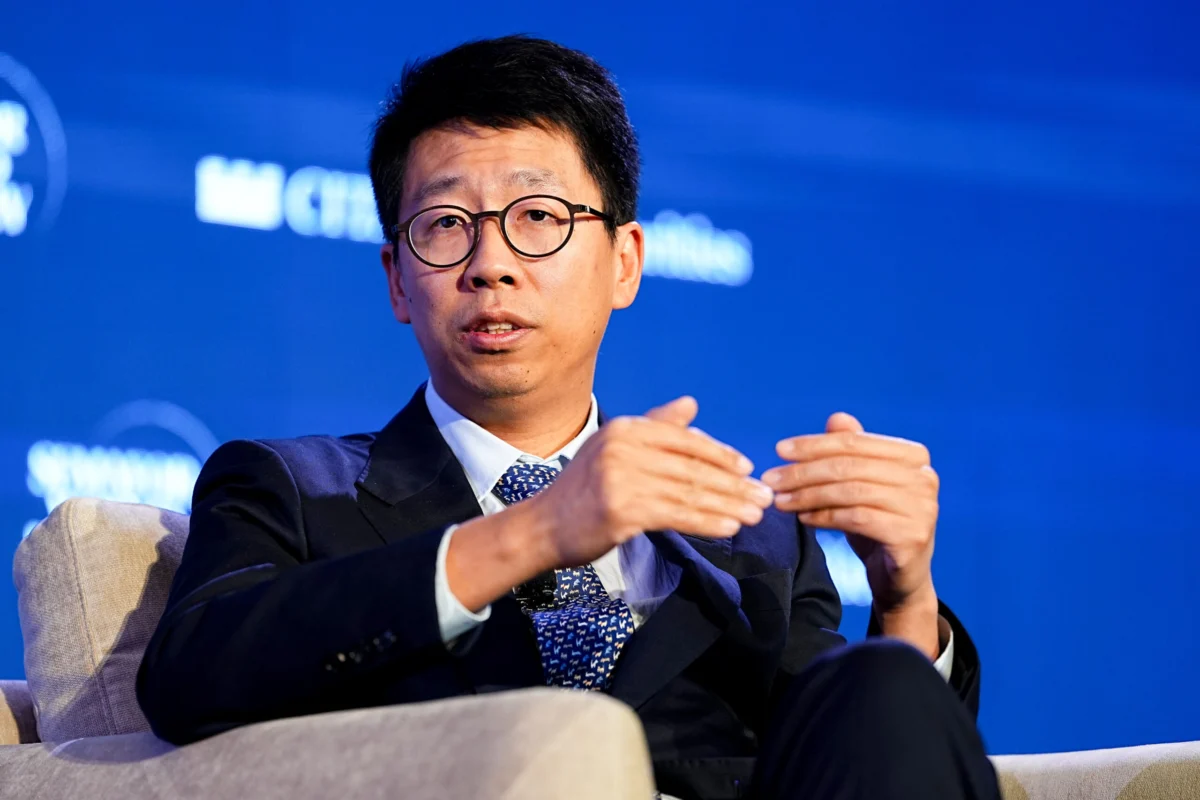
In the rarefied air of San Francisco’s high-finance circles, the 2018 meeting between Jack Zhang and Michael Moritz has achieved a sort of mythic status. Zhang, then the 34-year-old CEO of a burgeoning Australian startup called Airwallex, found himself at the home of the Sequoia Capital legend, overlooking the Golden Gate Bridge. The proposition on the table was staggering: Stripe, the undisputed king of Silicon Valley fintech, wanted to acquire Airwallex for $1.2 billion. At the time, Airwallex was generating a mere $2 million in annualized revenue. The offer represented a 600x revenue multiple—a figure that, even by the exuberant standards of the pre-2022 tech bubble, was almost unheard of.
Moritz’s pitch was centered on the "generational" talent of Stripe co-founder Patrick Collison and the promise that merging would "compound" into a global monopoly. For two weeks, Zhang paced the streets of San Francisco, grappling with the weight of the decision. He eventually said yes, only to rescind the agreement after returning to Melbourne and consulting with his co-founders. Today, that decision stands as one of the most consequential "no’s" in the history of financial technology. Airwallex is no longer a potential subsidiary; it is a primary antagonist to Stripe’s global ambitions, armed with a $1.3 billion revenue run rate and a strategy built on what Zhang calls the "path of maximum resistance."
To understand the current friction between these two giants, one must look at the divergent philosophies of their founders. While the Collison brothers built Stripe on the premise of elegant code and developer-first simplicity—the famous "seven lines of code" to start accepting payments—Zhang’s worldview was forged in the grueling trenches of immigrant labor and failed ventures. Growing up in the port city of Qingdao, China, and moving to Australia at 15, Zhang worked four jobs simultaneously to fund his education, including a stint picking lemons that he describes as his most difficult professional experience. Before Airwallex, he launched nearly a dozen businesses, ranging from real estate to a burger chain.
The catalyst for Airwallex was a coffee shop in Melbourne. When Zhang and co-founder Max Li tried to pay suppliers in South America and Southeast Asia, they encountered the opaque, sluggish reality of the correspondent banking system. Funds would vanish into intermediary "black holes," frozen by American banks for compliance checks, only to reappear weeks later with hefty fees deducted. This friction led Zhang to a realization: the world didn’t just need better payment APIs; it needed a completely new global money movement network that bypassed the antiquated SWIFT architecture.
This realization birthed the "path of maximum resistance" strategy. While many fintechs "vibe-code" their way into new markets—relying on third-party sponsors and existing banking rails to launch quickly—Airwallex spent years pursuing the hardest route: obtaining its own financial licenses. Today, the company holds nearly 90 licenses across 50 markets, including a hard-won Fund Transfer Operator license in Japan that took seven years to secure. In some jurisdictions, the process is so rigorous that it requires biometric access to secure rooms just to integrate with a central bank’s infrastructure.
The strategic advantage of this "hard road" is now becoming clear. Most payment processors, including Stripe and Square in certain international markets, are regulatory "pass-throughs." They can process a payment, but they are often required to immediately sweep those funds out to a merchant’s external bank account. Because Airwallex owns the underlying licenses, it can hold those funds within its own ecosystem. This allows a business to receive Australian dollars, hold them in a digital wallet, and use those same funds to pay a vendor in Singapore or run payroll in London without ever converting back to a home currency.
The economic implications are profound. A typical U.S. merchant using a standard processor might lose 2% to 3% on every cross-border transaction due to forced currency conversions. By operating like a local entity in dozens of markets simultaneously, Airwallex customers bypass these fees entirely, accessing interbank rates and local payment rails. As Zhang puts it, the goal is to allow a company to operate globally while appearing local everywhere, without the overhead of physical international entities.
As Airwallex pushes aggressively into the United States and Stripe expands its footprint in the Asia-Pacific region, the two companies are increasingly competing for the same dollar. However, their points of entry remain distinct. Stripe’s empire was built from the bottom up, winning over developers who chose the platform for its ease of integration. Airwallex has historically moved from the top down, targeting the Chief Financial Officer’s (CFO) office. Its primary products—multi-currency business accounts and treasury management—are designed for finance teams looking to optimize global cash flow rather than just engineers looking for a checkout button.
This "CFO-first" motion has allowed Airwallex to achieve massive scale with a smaller public profile. The company currently processes nearly $300 billion in annualized transaction volume and is growing at 85% year-over-year. While its $8 billion valuation is a fraction of Stripe’s recent $159 billion mark, Zhang points out that the gap in payment volume is much narrower—Stripe’s volume is roughly six times larger, not twenty. As Airwallex nears a projected $2 billion in revenue, the market is beginning to recognize that the "regulatory moat" Zhang spent a decade digging is deeper than many anticipated.
The rivalry is also being fueled by the shifting landscape of venture capital. Both companies share high-profile investors, including Greenoaks Capital and Sequoia (though the latter’s stake originated in its now-independent Chinese arm, Hongshan). These overlapping cap tables create a unique tension in the boardroom, as investors bet on which philosophy will ultimately dominate the next decade of finance.
Looking forward, the battlefield is shifting toward "autonomous finance." Zhang is currently rolling out a suite of AI-powered products designed to handle the entire corporate finance stack. These aren’t just chatbots that answer questions; they are agents designed to execute transactions, manage treasury hedges, and reconcile expenses across thousands of accounts. Zhang argues that Airwallex’s decade of proprietary financial data provides a training set that is fundamentally different from that of a pure payment processor. By seeing the entire lifecycle of a dollar—from the moment it is earned as revenue to the moment it is spent on a vendor—Airwallex claims it can automate the CFO’s office in a way that "layer-on-top" software companies cannot.
Despite its rapid growth, Airwallex faces a significant hurdle: the "brand gap." In the tech world, Stripe is more than a service; it is a cultural touchstone that has minted thousands of millionaires and defined the aesthetic of modern fintech. For Airwallex to truly challenge Stripe’s hegemony, it must move beyond the treasury department and capture the imagination of the next generation of founders and developers. Zhang acknowledges this, noting that winning the brand war is a "harder competition" than winning the infrastructure war.
The personal stakes of this rivalry were on full display last year at an industry gathering hosted by Greenoaks Capital. Zhang and Patrick Collison, once potential partners in a billion-dollar deal, found themselves in the same room. They did not speak. The silence was a testament to the fact that the era of cooperation in global payments is over.
As Airwallex eyes an initial public offering (IPO) in the next three to five years, its success will serve as a litmus test for a specific thesis: that in the world of global finance, owning the "pipes" is more valuable than owning the "interface." Stripe proved that you could win by making the complex simple for the user. Airwallex is betting that you win by embracing the complexity of the world’s fragmented regulatory landscape and building a fortress that no one else has the patience to replicate.
The $1.2 billion rejection in 2018 was not just a gamble on a higher valuation; it was a gamble on the idea that the "path of maximum resistance" would eventually lead to the top of the mountain. With a million customers targeted by 2030 and a revenue goal of $20 billion, Zhang is no longer just dreaming of being an entrepreneur. He is attempting to rewrite the rules of how money moves across borders, one license at a time. The lemon-picking days are long gone, but the work of building a global financial network remains, in Zhang’s eyes, the hardest—and most fulfilling—job he has ever had.
