

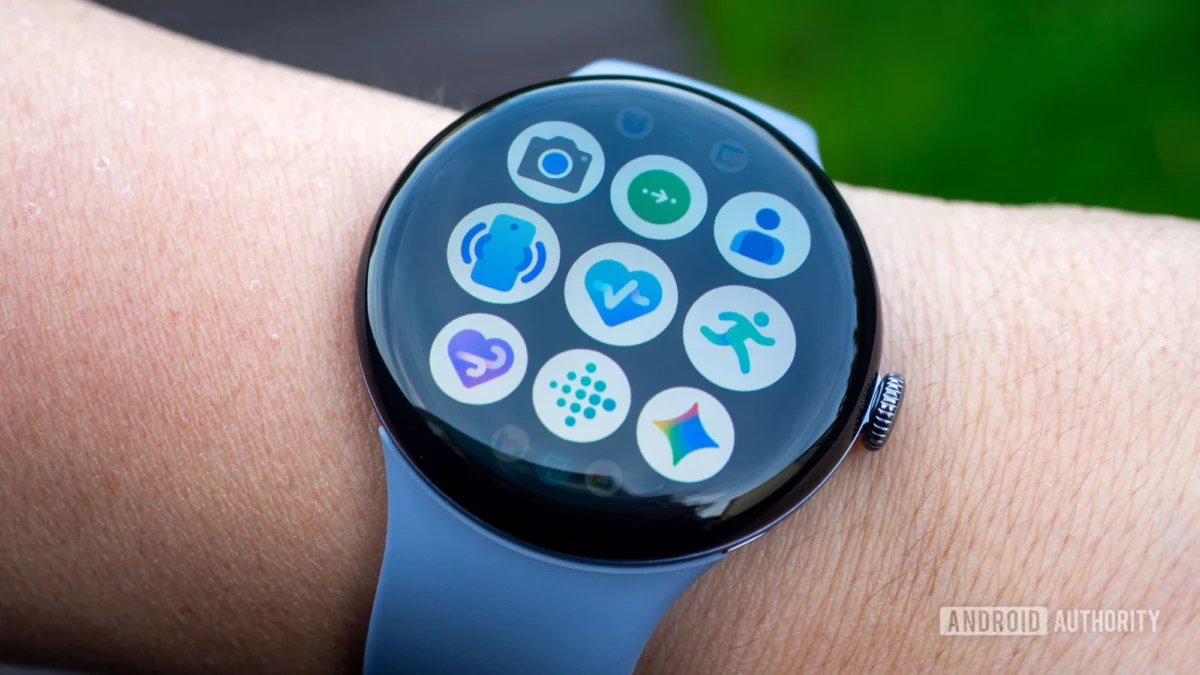
The digital health ecosystem, anchored by sophisticated wearables like the Google Pixel Watch series, relies fundamentally on the accuracy of its core metrics. When the foundational data—specifically, the step count—becomes unreliable, the entire value proposition of the device is jeopardized. Following a recent software deployment, reportedly tied to the March 2026 maintenance cycle for Wear OS, Pixel Watch owners are grappling with a chaotic oscillation in their activity tracking: first, a severe undercounting of steps, and now, a perplexing overcompensation leading to fantastical step totals. This volatile behavior underscores the delicate and often brittle nature of firmware integration between on-device sensors, proprietary algorithms, and cloud-based synchronization services like Fitbit.
The Context: A Tale of Two Errors
To fully appreciate the current predicament, one must contextualize the recent sequence of failures. Health tracking on the Pixel Watch is a multi-layered process. Accelerometers and gyroscopes capture raw movement data on the wrist. This data is processed locally by the Wear OS operating system, often utilizing specialized Google Health Services, before being interpreted, aggregated, and finally synced with the Fitbit application ecosystem for long-term analysis, trend visualization, and integration with broader wellness goals.
The initial reported issue involved a significant deflation of recorded steps. Users documented discrepancies where daily activity logs showed substantially fewer steps than what was demonstrably performed. This suggests a regression in the pedestrian gait detection algorithm or a filtering threshold that became overly aggressive post-update, mistakenly discarding valid movement as noise or erroneous input. For fitness enthusiasts or individuals managing specific health mandates, this undercounting erodes motivation and compromises data integrity necessary for clinical feedback.
The current, arguably more bewildering, problem is the direct inverse: massive overcounting. Reports flooding community forums indicate users accumulating thousands of phantom steps while stationary or engaging in minimal activity, such as light desk work or brief household movements. This suggests a severe calibration error, potentially causing the system to misinterpret subtle wrist movements or perhaps even introducing data corruption during the synchronization handshake between the watch and the paired smartphone application. The chaos is compounded when this erroneous step count cascades into downstream metrics; total distance walked, active minutes, and, critically, estimated calorie expenditure—a metric derived heavily from activity volume—become wildly inflated and unusable for nutritional planning or energy expenditure monitoring.
Furthermore, this instability appears not to be isolated solely to pedometry. Anecdotal evidence from users specifically referencing the Pixel Watch 4 hardware points to secondary failures, including the reported cessation of accurate readings for skin temperature monitoring and blood oxygen saturation (SpO2). While step counting is software-centric, temperature and SpO2 rely heavily on optical sensors (PPG). A systemic software failure affecting data interpretation pathways could plausibly impact multiple sensor outputs simultaneously, suggesting a deeper architectural flaw introduced by the recent patch.
Expert Analysis: Synchronization and State Management in Wearables
From an engineering standpoint, this dual failure mode—under-reporting followed by over-reporting—is highly indicative of a state management issue within the data pipeline, likely exacerbated by server-side reconciliation logic.
When a software update is deployed, especially one touching core sensor interpretation, there is a risk of temporal synchronization errors. One hypothesis centers on the way the system handles delta calculations versus absolute state reporting. If the March update inadvertently reset the local step counter epoch or introduced a bug where the watch reports the change in steps since the last successful sync, rather than the total cumulative steps since midnight, the system could compound the error. For example, if the watch believes it is reporting a delta of 1,000 steps when the server expects an absolute total, the server logic might add those 1,000 steps to the previous day’s final count, leading to an immediate, dramatic inflation upon the next synchronization event.
The distinction noted by some users—where the watch face displays plausible data, but the companion Fitbit app reflects the inflated figures—strongly implicates the data transmission and reconciliation layer resident on the smartphone application or the cloud service itself. The watch acts as the primary data collector; the phone application acts as the intermediary and translator. If the translator receives corrupted packets or misinterprets the header information from the updated watch firmware, it can write erroneous data to the long-term database.
This situation presents a significant challenge for Google’s integrated health strategy. Unlike simpler notification-based wearables, the Pixel Watch ecosystem is deeply interwoven with Fitbit’s established, robust health metrics platform. Any disruption to this core synchronization mechanism undermines user trust in the entire Google health suite, not just the watch hardware itself. Users invest significant time curating their long-term health data; having that history corrupted by transient software bugs is a major breach of expectation.
Industry Implications and The Reliability Mandate
The performance volatility observed in the Pixel Watch has broader ramifications for the competitive wearable technology market. As smartwatches evolve from simple notification mirrors into serious health monitoring tools—tracking sleep stages, stress levels, and even ECGs—the required standard for data accuracy elevates exponentially.
Competitors, particularly Apple with the WatchOS platform and Garmin with its proprietary fitness-focused OS, operate under intense scrutiny regarding biometric precision. When a major player like Google experiences such public and fundamental failures in basic metrics like step counting, it opens the door for skepticism regarding their more complex, potentially FDA-cleared health features (if applicable to future iterations).
The industry is rapidly moving toward medical-grade monitoring at the consumer level. Flailing on step counts, while seemingly trivial compared to, say, atrial fibrillation detection, reveals underlying systemic weaknesses in software validation and regression testing before major firmware releases. For manufacturers, the lesson is clear: health data integrity must be treated with the same rigor as security protocols. A bug that inflates steps is not just an inconvenience; it’s a failure of the core promise of digital wellness technology. It suggests that the integration testing pipeline between Wear OS updates and the proprietary Fitbit backend may have insufficient checks for data boundary conditions.
Furthermore, the community-driven discovery of a fix—clearing the application cache—highlights a crucial dynamic in modern tech support. Users are often faster and more resourceful than official channels in diagnosing and remediating software glitches stemming from corrupted local storage states. While this self-service resolution is fortunate for the affected users, it underscores the necessity for manufacturers to provide transparent diagnostic tools or, at minimum, rapidly acknowledge widespread issues that are being solved organically by the user base.
The Simple Solution and Its Underlying Significance
The reported fix—clearing the application cache for the Fitbit application on both the paired smartphone and the Pixel Watch, followed by a system restart—is indeed "ridiculously simple" in execution, yet revealing in its implication.
Clearing the cache effectively forces the application to discard temporary, potentially corrupted data files that were likely written during the faulty synchronization attempts following the update. By wiping this local buffer, the next time the watch and phone communicate, they are compelled to perform a fresh, clean handshake, likely pulling the most recent valid state from the primary server source or recalculating the necessary differential based on clean local sensor readings.
This points strongly toward the hypothesis that the issue resided in temporary local storage rather than a permanent corruption of the core algorithm running on the watch hardware. The cache, acting as a staging area for data transfer, became polluted, leading the synchronization logic to read garbage data as gospel.
Other suggested remedies—updating the Health Services app or downgrading the Fitbit application—further support the software-centric nature of the problem. Health Services is a critical underlying component for all biometric data access on Wear OS; an incompatibility between a new version of this service and the existing Fitbit application framework could easily cause parsing errors. Downgrading the phone application suggests that the issue might have been introduced or exacerbated by a very recent update to the mobile client itself, which was perhaps not perfectly aligned with the Wear OS update rolled out to the watch.
Looking Ahead: Fortifying the Digital Health Pipeline
The incident serves as a potent reminder of the fragility inherent in complex, interconnected software environments, especially those dealing with personalized, continuous data streams. For Google and the broader Wear OS consortium, future development must prioritize resilience in the data synchronization layer.
Future Trends and Mitigation Strategies:
- Atomic Transactions for Health Data: Future updates should implement transaction-based synchronization protocols. If a data batch cannot be validated against checksums or expected parameters upon receipt, the entire transaction should be rolled back, and the system should revert to the last known good state, flagging the corrupted batch for manual review or re-polling, rather than blindly accepting and compounding the error.
- Enhanced Diagnostic Logging: Google needs to provide users with accessible, detailed diagnostic logs that distinguish clearly between sensor input, local processing, transmission, and server-side writing. This empowers users and speeds up official troubleshooting.
- Staggered Rollouts with Canary Groups: Software updates, particularly those affecting core sensor processing, should utilize more extensive canary testing groups that run parallel to established user bases for extended periods to catch these paradoxical failure modes (under-counting followed by over-counting) before a wide release.
- Decoupling Core Metrics: While Fitbit integration is beneficial, critical base metrics like step count should ideally be validated through multiple, redundant local checks before being packaged for transmission. If the accelerometer data streams yield results that are an order of magnitude outside established personal baselines, the system should flag the reading as suspicious rather than immediately logging it.
In conclusion, the temporary chaos inflicted upon Pixel Watch users by inconsistent step tracking—from severe underreporting to phantom inflation—is more than a mere nuisance. It is a significant software quality control lapse that highlights the challenges of maintaining data fidelity across complex, integrated wearable platforms. While the community-sourced cache-clearing remedy offers immediate relief, the incident necessitates a deeper architectural review within Google to ensure that future software iterations enhance, rather than undermine, the reliability of crucial health monitoring features. The trust users place in their wearables to accurately reflect their physical reality is a commodity that, once broken by erratic software, requires substantial effort and demonstrable commitment to restore.
