

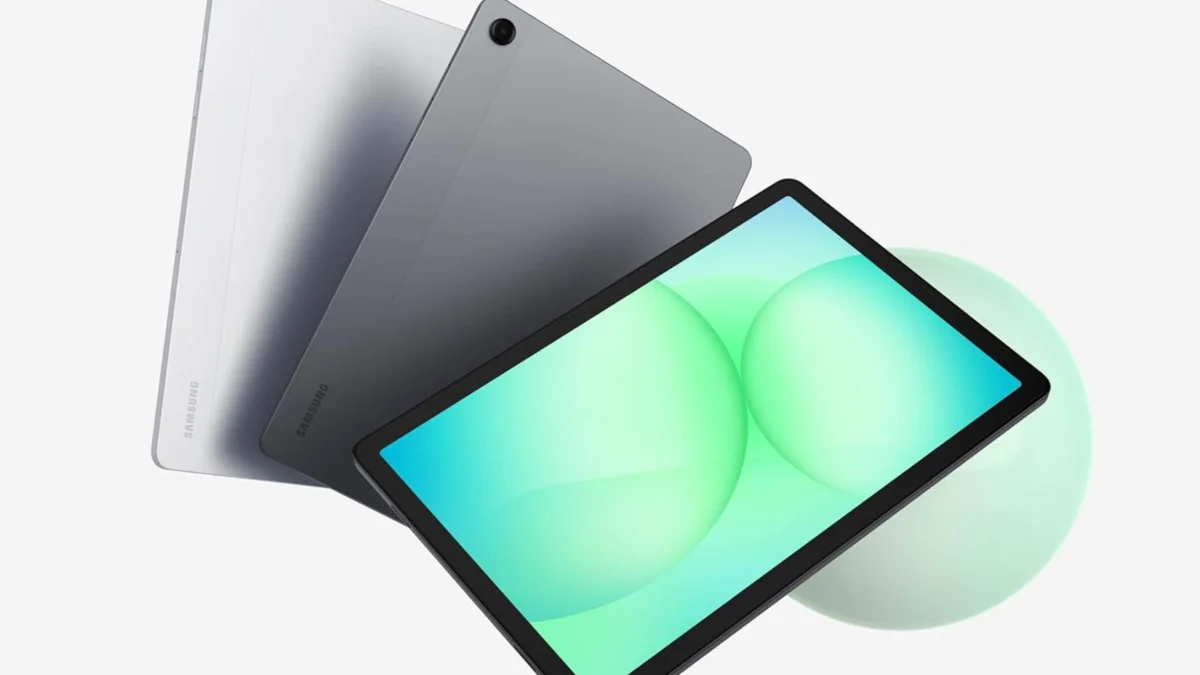
The recent, significant price erosion observed for the Samsung Galaxy Tab A11 Plus signals a crucial strategic pivot in the competitive landscape of budget-to-midrange Android tablets. Launched earlier this year, this device was positioned to capture the value-conscious consumer base, offering a compelling blend of core multimedia capabilities and modern software enhancements. The current promotional pricing, representing the lowest point since its initial market debut, suggests an aggressive push by Samsung to rapidly scale adoption and solidify its dominance in the entry-level segment before competitors can effectively counter.
Historically, the tablet market has bifurcated sharply: premium devices demanding flagship prices for productivity and high-end gaming, and a vast, often fragmented budget sector where longevity and feature parity are frequently compromised. Samsung’s Galaxy Tab A-series has traditionally occupied the sweet spot—offering brand recognition and a respectable user experience without the prohibitive cost of the Galaxy Tab S line. The Tab A11 Plus appears to be an evolution of this philosophy, emphasizing media consumption features over raw processing power.
At the core of the A11 Plus offering is its 11-inch display, a generous canvas for digital interaction. Crucially, this panel incorporates a 90Hz refresh rate. In the budget category, 60Hz remains the standard, meaning the inclusion of 90Hz provides a tangible, immediately noticeable improvement in fluidity for scrolling, browsing web pages, and watching high-frame-rate video content. While this refresh rate is less demanding on the chipset than the 120Hz found in premium devices, it elevates the perceived quality of the user interface significantly—a key factor for consumers transitioning from older hardware or seeking a dedicated device for content viewing. The underlying chipset, while not geared towards cutting-edge performance benchmarks, is optimized to manage this smoother display experience alongside common productivity tasks, ensuring that standard use cases—email, social media feeds, and general navigation—remain responsive and frustration-free.
Analyzing the configuration options reveals Samsung’s understanding of varied user demands within the budget bracket. The base model provides sufficient resources for a casual user whose primary interaction involves streaming services and basic web access. However, the availability of an 8GB RAM/256GB storage variant addresses the growing consumer expectation for greater multitasking headroom and local media storage. In an era where digital libraries—from downloaded movies to extensive photo collections—are the norm, especially for portable devices intended for travel or shared family use, the expanded memory configuration is a powerful differentiator. Furthermore, the inclusion of microSD card expandability remains a vital, often overlooked feature in budget devices, offering an economically sound method for users to significantly augment their storage capacity without incurring the immediate cost of a higher-tier SKU.
The manufacturer’s focus on media consumption is explicitly evident in the audio hardware. The implementation of quad speakers, augmented by Dolby Atmos support, positions the Tab A11 Plus as a dedicated entertainment hub. While digital audio processing cannot entirely compensate for the physical limitations of tablet speakers, the quad-speaker setup provides superior spatial separation and volume compared to typical dual-speaker configurations. For consumers utilizing the tablet primarily for in-bed viewing or shared living room entertainment, this feature set significantly enhances immersion, justifying its place as a media companion rather than merely a functional computing tool.
Battery life, the perennial Achilles’ heel of portable electronics, has been addressed with a large-capacity cell engineered to support extended usage sessions—a necessity given the 90Hz screen and media focus. The integration of fast charging technology mitigates downtime, a critical factor in maintaining user satisfaction in modern consumer electronics. No matter how large the battery, the speed at which a device can return to operation is often more important than raw longevity for many users.
Perhaps the most intriguing aspect of the Tab A11 Plus’s current offering is the software infusion. The inclusion of recent advancements like Google’s Gemini AI capabilities and the native Circle to Search functionality bridges the gap between this accessible tablet and Samsung’s flagship Galaxy S series. These features are not merely cosmetic; they represent a democratization of cutting-edge interface intelligence. Circle to Search transforms passive viewing into active inquiry, while Gemini integration hints at more capable on-device assistance and workflow automation. By porting these high-value software features down to the A-series, Samsung achieves several strategic objectives: it enhances the perceived value proposition of the budget device, encourages platform loyalty, and creates a smoother user transition path for customers considering an eventual upgrade to a premium Samsung device.
From an industry perspective, the aggressive pricing of the Tab A11 Plus puts considerable pressure on competing Android manufacturers like Lenovo, Xiaomi, and Amazon’s Fire tablet division. In the sub-$300 space, margins are thin, and aggressive discounting signals a willingness to sacrifice short-term profit for long-term market share accumulation. This tactic is often employed when a company believes its overall ecosystem lock-in (through services, accessories, and software updates) provides a sustainable advantage that offsets lower initial hardware profits. It forces competitors to either match the price point, eroding their own margins, or to differentiate on features where the A11 Plus might be weak, though the current feature set appears robust for the price tier.
The future impact of such maneuvers extends beyond immediate sales figures. Consistent software support for budget lines is becoming an expectation, not a bonus. Samsung’s commitment to pushing contemporary software features onto the A11 Plus sets a higher baseline standard for the entire budget tablet category. If users become accustomed to having AI features and smooth displays on their affordable hardware, manufacturers lagging in software updates or feature parity will face increasing consumer resistance.
The role of this device in the broader personal technology ecosystem must also be contextualized. The Tab A11 Plus is explicitly positioned as a complementary device. It is not designed to replace a high-performance laptop running a full desktop OS, nor is it intended to substitute for a flagship smartphone for professional power users. Instead, it is engineered to excel in the "second screen" domain: dedicated reading, kitchen recipe display, in-flight entertainment, or a shared family device for casual gaming and video calls. Its success hinges on flawless execution of these specific roles at a price point that minimizes purchasing friction. For many households, purchasing a competent secondary media tablet is a more palatable proposition than upgrading an aging primary laptop or smartphone.
The inclusion of productivity elements, though secondary, should not be dismissed. While not focused on intensive multitasking like its S-series counterpart often enhanced by DeX, the A11 Plus still benefits from Samsung’s refined One UI layer, which offers superior window management and app continuity compared to many stock Android implementations on budget hardware. This provides a low-stakes environment for users to explore Android’s capabilities beyond the confines of a smartphone screen.
Looking ahead, the tablet market continues to mature. Consumers are holding onto devices longer, and the upgrade cycle has lengthened significantly. Therefore, capturing a new user—or securing a consumer’s first tablet purchase—is paramount. Deep, early discounts on a relatively new model like the Tab A11 Plus are a classic strategy to stimulate demand that might otherwise stagnate due to market saturation or economic headwinds. It essentially acts as a market stimulant, drawing in consumers who were previously on the fence, waiting for the "right time" or the "right price."
This specific pricing action underscores a key trend in the current tech environment: the premiumization of budget hardware features. Consumers now expect features like high refresh rates, advanced AI integration, and robust audio systems across all price tiers. Samsung is leveraging its scale and supply chain efficiencies to deliver these expectations, effectively compressing the time it takes for cutting-edge features to trickle down from the flagship tier. This forces a technological arms race at the entry level, which ultimately benefits the end-user by accelerating hardware evolution across the board.
In conclusion, the current promotional window for the Samsung Galaxy Tab A11 Plus is more than just a fleeting sale; it represents a deliberate strategic deployment of market leverage. By combining a solid multimedia foundation—11-inch 90Hz display, quad speakers, large battery—with modern software perks derived from their flagship ecosystem, Samsung is aggressively defining the upper limits of what consumers should expect from an affordable Android tablet. For those seeking a dedicated, large-screen device for content consumption and light interaction, this price point offers an undeniably compelling value proposition, positioning the Tab A11 Plus as a benchmark against which all upcoming budget competitors will inevitably be measured. The question remains how long this aggressive stance will be maintained as Samsung seeks to maximize unit volume in the current fiscal cycle.
