

The landscape of modern technology is undergoing a double-edged transformation. On one side, the democratization of medical information has birthed a highly commercialized, often unregulated market for women’s midlife health, fueled by digital platforms and social media algorithms. On the other, the global artificial intelligence race is experiencing a massive geopolitical shift as Chinese developers bypass Western hardware sanctions through open-source innovations. These parallel developments highlight a broader trend: as technology becomes more accessible, the mechanisms governing its safety, accuracy, and geopolitical influence are being severely tested.
The Commercialization of Menopause and the Rise of Digital Health Misinformation
For decades, reproductive transitions like perimenopause—the transitional phase leading up to menopause—were treated with silence and clinical neglect. Today, that taboo has been decisively shattered. Driven by telehealth platforms, celebrity influencers, and digital health startups, conversations about hormonal health have entered the mainstream. However, this newfound openness has also cleared the path for a lucrative and highly predatory market driven by clinical misinformation.
A primary driver of this trend is the misconception that perimenopause can be easily diagnosed through standard hormone tests. In reality, medical experts emphasize that there is no definitive diagnostic test for perimenopause. During this transitional phase, which can last anywhere from four to ten years, a woman’s estrogen and progesterone levels fluctuate wildly from day to day, and even from hour to hour. A single blood test capturing a snapshot of these hormones is clinically meaningless. Despite this physiological reality, numerous wellness brands aggressively market expensive at-home hormone testing kits, promising personalized insights that current science simply cannot support.
The consequences of this commercialization go beyond useless diagnostic kits. The market is saturated with unproven supplements, customized herbal blends, and bioidentical hormone therapies that lack rigorous clinical backing. While hormone replacement therapy (HRT) remains a highly effective, evidence-based treatment for specific symptoms like hot flashes and night sweats, it is increasingly prescribed as a blanket cure-all for every midlife ailment, from brain fog and fatigue to weight gain and joint pain.
This environment of unregulated health claims is further complicated by severe data privacy vulnerabilities. As millions of women turn to mobile applications to track their menstrual cycles and perimenopausal symptoms, their highly sensitive biological data is increasingly harvested. Recent investigations reveal that many prominent period-tracking and femtech applications routinely share detailed user health metrics with third-party data brokers and advertisers. In a post-regulatory environment where health data can be weaponized or used for hyper-targeted predatory advertising, the intersection of health misinformation and digital surveillance poses a double threat to women’s autonomy.
Geopolitical AI Realignments: China’s Open-Source Offensive
While Western regulators struggle to police the digital health frontier, a high-stakes technological chess match is unfolding in the field of artificial intelligence. For the past several years, United States policymakers have leveraged strict export controls on advanced semiconductors—specifically Nvidia’s high-end graphics processing units (GPUs)—to slow China’s progress in frontier AI development. However, a major new open-source model release from a prominent Chinese AI startup suggests that this technological gap is narrowing far faster than Washington anticipated.
The release of the world’s largest open-source AI model by a Chinese developer has sent shockwaves through the global tech sector, triggering notable slides in Western semiconductor and AI stocks. This model, which matches or exceeds the capabilities of closed-source models from leading American labs like OpenAI and Anthropic in key benchmarks, represents a strategic pivot by China’s tech ecosystem. Blocked from acquiring the massive compute clusters needed to train closed-source proprietary systems at scale, Chinese firms are betting heavily on the open-source movement.
By releasing high-performing open-source models, Chinese companies can crowdsource optimization. Developers worldwide can refine, compress, and adapt these models, effectively outsourcing the massive engineering labor required to make AI systems run efficiently on less powerful hardware. Furthermore, this strategy allows China to establish its software frameworks as the default standard across the developing world. During recent international summits, Chinese leadership pitched the nation as a key AI partner for the Global South, offering advanced, open-source alternatives to Western technology without the political strings or high licensing fees associated with American platforms.
Simultaneously, China’s domestic hardware ecosystem is rapidly adapting. Deprived of Nvidia’s flagship chips, Chinese tech giants and semiconductor startups are accelerating the development of domestic alternatives. Companies like Huawei are projecting massive sales surges for their proprietary AI chips, which are increasingly being adopted by domestic tech firms as viable alternatives to Western silicon. The convergence of highly optimized open-source software and rapidly improving domestic hardware suggest that export controls may have inadvertently accelerated China’s drive for technological self-reliance.

Neural Bypasses and Exoplanet Atmospheres: Frontiers in Applied Science
Beyond software and geopolitical posturing, the boundaries of physical science and medical engineering are expanding in equally dramatic ways. In neurotechnology, researchers have achieved a landmark breakthrough by using a brain-computer interface (BCI) to restore physical sensation and motor control to a paralyzed individual.
By implanting a microelectrode array into the motor and sensory cortices of a patient with severe spinal cord injuries, scientists established a "neural bypass." This system decodes the patient’s intentions and translates them into electrical stimulation sent directly to the muscles and sensory nerves of the hand. For the first time, the recipient was able to perform complex daily tasks, such as feeding himself and drinking from a cup, while feeling the physical contact of the objects. Crucially, researchers observed that some degree of natural movement and sensation persisted even when the electronic stimulation was turned off, pointing to the potential for long-term neuroplasticity and neural rehabilitation.
This medical milestone coincides with a parallel race in the regulatory approval of brain chips. China recently approved its first clinical trials for a state-backed brain-computer interface, highlighting that the battle for neural supremacy will be fought between Western startups like Neuralink and heavily subsidized state programs in Asia.
Meanwhile, humanity’s search for life beyond Earth has taken a monumental leap forward. Using advanced space observatories, astronomers have confirmed the presence of a distinct atmosphere on a nearby, Earth-sized exoplanet. Located within the habitable zone of its host star—the region where liquid water could theoretically exist on a planet’s surface—this world is now a prime target for biosignature detection. By analyzing the light filtering through the planet’s atmosphere, scientists hope to identify chemical markers like carbon dioxide, methane, or oxygen, which could indicate active biological processes.
Regulatory Crackdowns and the Limits of Autonomy
As these technologies mature, they are forcing a fundamental reassessment of corporate power and user safety. In Europe, the European Union is continuing its aggressive regulatory campaign against American big tech. European regulators have ordered Google to open its Android ecosystem to competitor AI models and share its vast search data index with rival search providers. This antitrust intervention aims to prevent Google from leveraging its search monopoly to dominate the next generation of conversational AI assistants, setting a global precedent for how mobile operating systems must accommodate open competition.
Simultaneously, the limits of automated safety are being tested on our roads. A federal investigation into a recent fatal Tesla crash in Texas revealed that while the vehicle was equipped with Full Self-Driving (FSD) software, the driver overrode the system by depressing the accelerator pedal to 100% just before the collision. The incident underscores a persistent challenge in autonomous transportation: the dangerous handoff between machine automation and human intervention. It highlights the urgent need for robust driver-monitoring systems that can detect when a human operator is actively overriding safety protocols.
This struggle against pervasive technology has even influenced modern fashion. The rise of "adversarial clothing"—garments printed with specific, high-contrast patterns designed to confuse object-detection algorithms and facial recognition systems—has moved from niche counter-culture into mainstream design. These garments exploit the vulnerabilities of computer vision models, presenting a physical counter-measure to the expanding dragnet of public surveillance.
Circular Engineering: The Next Frontier of Climate Tech
Finally, the push for technological solutions to global crises is extending to basic sanitation and agriculture. In suburban Seattle, a pioneering industrial facility is demonstrating how human and agricultural biowaste can be transformed into a vital resource.
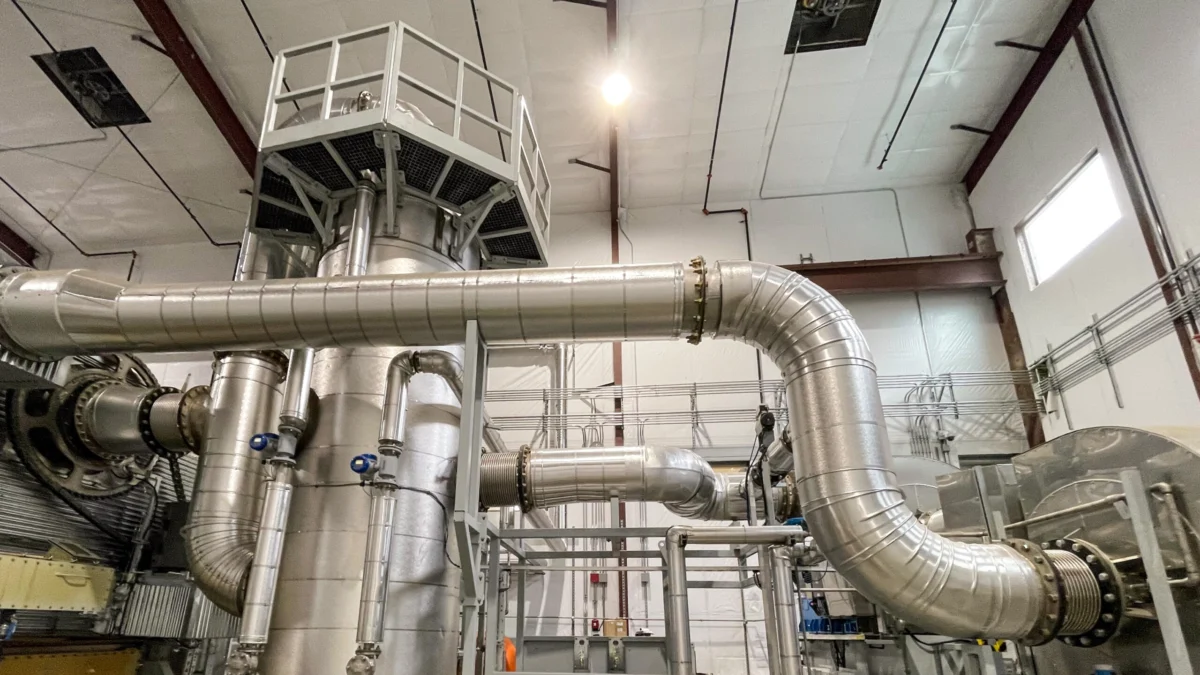
Using energy-efficient thermal and chemical processing technologies, the facility safely treats fecal waste, neutralizing pathogens while reclaiming critical agricultural nutrients like phosphorus and nitrogen. With global fertilizer supplies threatened by geopolitical instability and ecological degradation, treating waste as a valuable circular asset rather than an environmental hazard represents a major shift in sustainable infrastructure. It proves that some of the most critical technological breakthroughs of the next decade will not occur in virtual worlds or silicon labs, but in the physical, messy realities of ecological preservation.
