

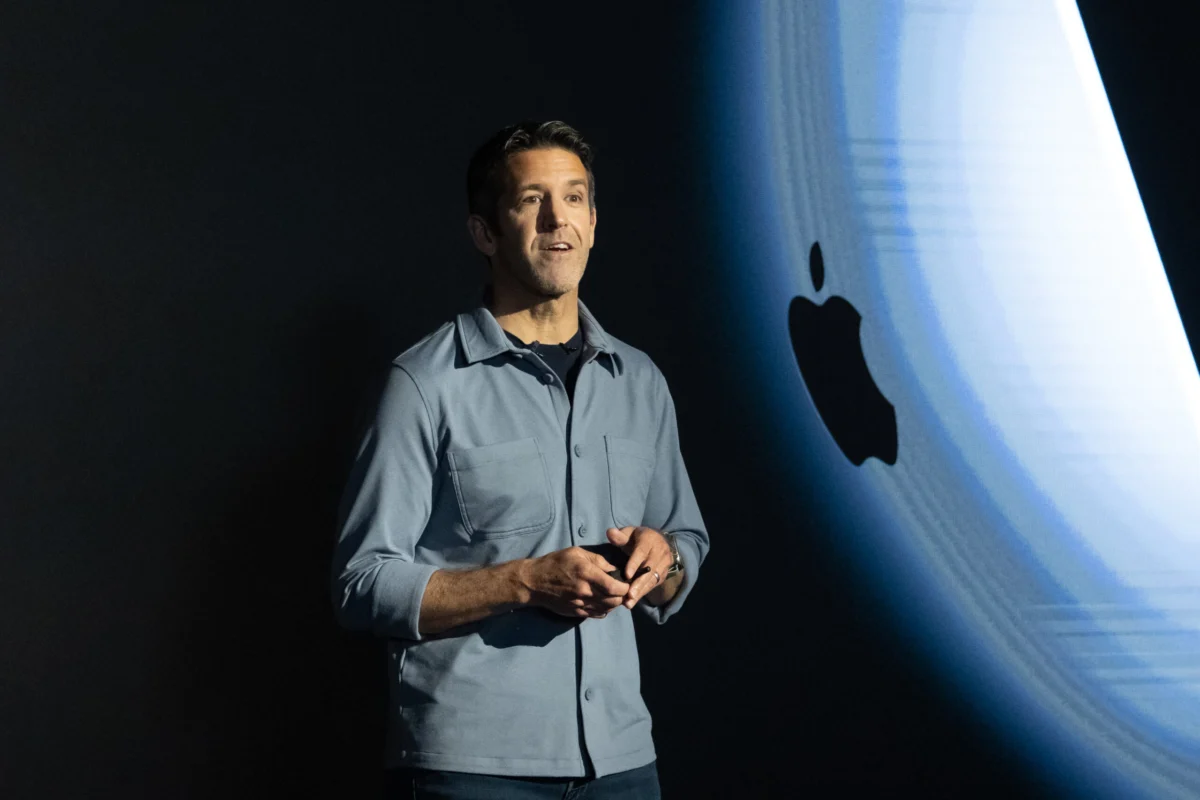
When John Ternus stepped onto the stage for his inaugural keynote as Apple’s chief executive officer, the technology sector was bracing for a radical pivot. For years, industry analysts, venture capitalists, and competitive hardware makers had traded in a singular, seductive prophecy: that the generative artificial intelligence boom would finally displace the handheld glass slab. After nearly two decades of smartphone dominance, the narrative went, ambient voice pendants, augmented-reality visors, and screenless lapel pins would inevitably reduce the smartphone to a legacy utility.
Instead, Ternus executed an ideological counter-revolution. Rather than apologizing for the company’s flagship product or treating it as a mature cash cow to be milked while chasing speculative post-smartphone form factors, Ternus placed the iPhone squarely at the epicenter of Apple’s long-term artificial intelligence roadmap. Declaring that no device on Earth is better suited to operate as humanity’s primary “intelligent personal hub,” the newly installed chief executive signaled a major strategic recalibration.
This positioning is more than just executive bravado; it represents a sharp, calculated departure from the narrative cultivated during the late Tim Cook era. Under Cook, Apple spent a decade carefully training Wall Street to view the enterprise as an expansive, diversified ecosystem. Quarterly earnings calls routinely emphasized the high-margin growth of the Services division—encompassing Apple Music, iCloud, Apple Pay, and the App Store—alongside Wearables, Home, and Accessories. The unspoken subtext of that era was clear: Apple was actively insulating its valuation from an eventual saturation of the global smartphone market.
Ternus, whose pedigree is rooted deep within hardware engineering, has reversed that defensive posture. By re-centering the company’s strategic narrative around the iPhone, he is leaning into an undeniable operational truth that modern AI competitors have learned the hard way: consumer computing does not easily abandon established physical habits, especially when those habits are reinforced by unprecedented computational density. In doing so, Ternus is dusting off an ancient playbook first authored by Steve Jobs a quarter-century ago, demonstrating that in moments of profound technological transition, consolidation is often far more potent than fragmentation.
The current atmosphere across Silicon Valley bears an uncanny resemblance to the anxiety that permeated Cupertino in early 2001. In the wake of the dot-com collapse, the personal computer was widely declared dead. Industry luminaries, market research firms, and financial commentators insisted that the desktop machine had hit an insurmountable plateau. Competitors like Gateway and Compaq were slashing margins, and prominent columnists argued that the PC had been reduced to a mundane, commoditized appliance for word processing and basic internet access.
Steve Jobs used his Macworld stage that year to directly mock that consensus. Projecting an image of a tombstone labeled "The PC" onto the screen behind him, Jobs rejected the notion that personal computers were sliding into obsolescence. Instead, he argued that the Mac was on the verge of its “third great age.” Far from being sidelined, the computer would serve as the ultimate "Digital Hub." In Jobs’s architecture, the Mac was the singular, powerful brain capable of synchronizing, organizing, and breathing utility into a chaotic explosion of nascent consumer peripherals: digital camcorders, MP3 players, digital still cameras, and personal organizers.
Jobs recognized that none of those emerging point-solution devices had the processing power, storage architecture, or interface sophistication to stand alone. The Mac provided the anchor. Less than ten months after laying down that philosophical marker, Jobs introduced the original iPod. The portable music player did not diminish the computer; it vindicated the digital hub doctrine. It required a FireWire connection and iTunes on a Mac to function, driving desktop sales, fortifying user lock-in, and establishing the foundational engineering that would ultimately birth the iPhone six years later.
Today, Ternus faces an almost identical chorus of skepticism. Over the past two years, early-stage hardware startups and legacy tech giants alike have rushed to declare the twilight of the smartphone. Devices promising ambient, screenless interactions have sought to circumvent the app-based mobile ecosystem, arguing that large language models render the traditional operating system obsolete.
Yet, virtually every attempt to build a post-smartphone AI device has crashed against the unforgiving laws of consumer physics. Standalone AI pins, specialized handheld voice gadgets, and smart pendants have suffered from debilitating thermal throttling, abysmal battery endurance, sluggish latency, and the absence of a reliable visual interface. Consumers routinely discovered that delegating complex tasks through pure voice interfaces created friction rather than reducing it. Crucially, these single-purpose gadgets attempted to replicate computing power that already lived, quietly and far more efficiently, inside their pockets.
Ternus’s counter-argument exposes this industry miscalculation. During his address, he framed the problem as a basic systems-architecture question: If one were tasked with engineering the ultimate personal artificial intelligence interface from the ground up, what components would be non-negotiable? The checklist is self-evident: an enterprise-grade neural processor, a zero-latency thermal envelope, continuous high-bandwidth wireless connectivity, an ultra-dense battery system, studio-grade microphones, world-class optical sensors for environmental perception, and an ultra-secure local enclave for private biometric and contextual data.
Every single one of those primitives already exists within modern iPhone silicon. Through Apple’s multi-generational lead in system-on-chip (SoC) architecture, current-generation A-series processors integrate high-performance Neural Engines that boast dozens of trillions of operations per second, supported by unified memory architectures that allow complex models to execute directly on-device. This technical foundation affords Apple an immense structural advantage in the era of edge computing.
While pure cloud-based artificial intelligence providers face astronomical data center energy costs, severe server bottlenecks, and contentious privacy liability, the modern smartphone performs the bulk of contextual reasoning, image synthesis, and semantic indexing locally. The iPhone is no longer just an app delivery mechanism; it has become the physical and algorithmic perimeter of the user’s digital existence.
This technical reality undermines the conventional Wall Street narrative that smartphones are merely an exhausted commodity. While upgrade cycles have undoubtedly lengthened as hardware quality has matured, the smartphone remains the only computing device that billions of human beings carry continuously throughout their waking lives. Consumers routinely leave their homes without their tablets, laptops, or smartwatches; they almost never leave without their phones.
By declaring the iPhone as the irreducible intelligent hub, Apple is positioning all downstream hardware—from the Apple Watch and AirPods to the Vision Pro headset and future smart home robotics—as peripherals whose primary task is to feed sensory data back into the central device. Just as the camcorders and digital cameras of 2001 derived their real value from being plugged into a Mac running iMovie and iPhoto, today’s smart glasses, bio-monitoring wearables, and ambient home microphones will likely find their highest utility not as standalone computing nodes, but as remote sensory extensions of the neural hardware housed inside an iPhone.
This shift in messaging also illuminates Apple’s internal corporate transformation as it approaches the twentieth anniversary of the iPhone’s 2007 debut. Tim Cook’s stewardship was marked by operational excellence, supply-chain mastery, and the institutionalization of recurring revenue streams. Yet, that hyper-focus on operational optimization often left the company vulnerable to critiques that it had lost its core product audacity, relying too heavily on incremental hardware updates while waiting to see how nascent categories developed.
Ternus, by contrast, appears intent on unifying the company’s engineering, design, and software pipelines around an aggressive, hardware-centric thesis. His challenge will not be convincing consumers that their iPhones are useful—that battle is already won. The true test of this revived digital hub strategy will be Apple’s ability to ship a breakthrough software-and-services experience that matches the transformative impact of the original iPod.
If Apple’s localized artificial intelligence agents remain primitive, rigid, or unable to navigate the complexities of daily human workflows, the hub becomes a bottleneck. But if the company succeeds in executing autonomous, multi-app agentic workflows while maintaining its ironclad privacy guarantees, the iPhone’s gravitational pull will become nearly impossible for competitors to escape.
The history of consumer technology is not a clean, linear procession of devices replacing one another every decade. It is a cyclical process of expansion and reconsolidation. Silicon Valley’s fixation on finding the “next big thing” routinely mistakes the maturation of an existing form factor for its demise. In 2001, Steve Jobs understood that the personal computer was not an obstacle to the future, but the indispensable bridge to it. Twenty-five years later, Apple’s new leadership is making the exact same wager on the iPhone—and the rest of the technology industry may once again find itself forced to play along.
