

The architecture of European metropolitan centers was never conceived for the modern automobile. Across historic districts from Madrid to Milan, narrow thoroughfares and restricted parking infrastructure are increasingly at odds with the modern automotive industry’s persistent shift toward larger, heavier electric sport utility vehicles. While urban congestion and stringent low-emission zones demand radical downsizing, the traditional microcar segment—once epitomized by quirky European runabouts and pioneer platforms like the original Smart Fortwo—has undergone a structural transformation. Much of the manufacturing capacity in this entry-level footprint has migrated eastward, leaving legacy European automakers struggling to deliver compact, price-competitive electrified platforms under their domestic supply chains.
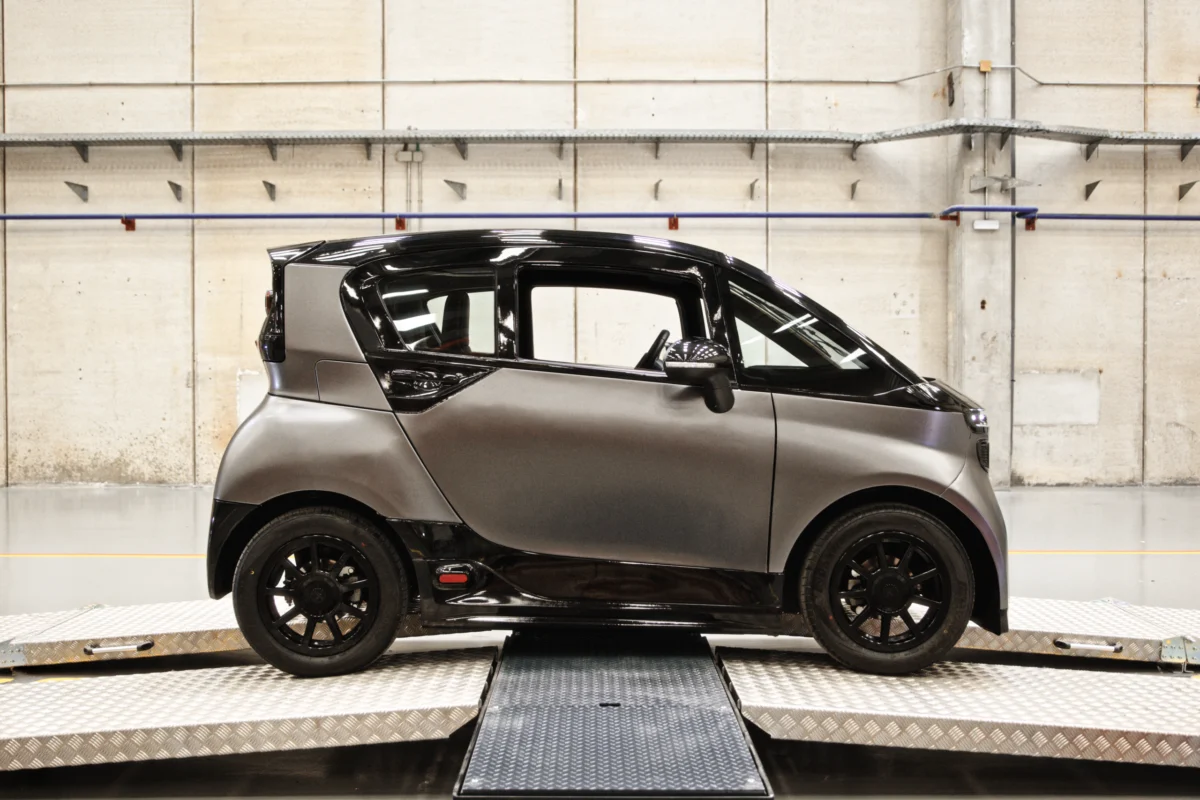
In response to this shifting industrial landscape, a new generation of boutique European manufacturers is attempting to reclaim the urban mobility narrative. Among them is Liux, an emerging Spanish automotive venture seeking to carve out a defensible niche in the ultracompact sector. By eschewing conventional steel stampings in favor of plant-based biocomposites, and combining localized modular assembly with pragmatic global sourcing, the startup is positioning its debut production model—the Liux Big—as an environmentally rigorous alternative to both imported budget electric vehicles and established European quadricycles.
The Microcar Dilemma and the L-Category Strategy
The microcar resurgence in Europe is governed by regulatory nuances that sit between full-scale passenger cars and two-wheeled transport. The European Union’s L-category vehicle framework categorizes light four-wheelers into L6e (light quadricycles, limited to 45 km/h and strictly capped weights) and L7e (heavy quadricycles, permitted higher power outputs and highway-capable urban speeds). For emerging automakers, targeting the L7e category represents a deliberate capital-allocation strategy. Securing full M1 passenger vehicle homologation routinely requires hundreds of millions of euros in capital expenditure, exhaustive active safety validation, and complex crash-test certifications. In contrast, the L7e classification allows nimble engineering teams to bring urban vehicles to market faster and with significantly lower tooling overhead.
Liux’s journey illustrates this regulatory reality. The company originally surfaced on the automotive scene in 2022 with the "Animal," a concept for a full-sized, five-passenger electric shooting brake constructed extensively from bio-resins and renewable fibers. While the Animal served as a high-visibility proof of concept, the founders quickly recognized the prohibitive capital requirements and prolonged regulatory timeline required to bring a conventional M1 vehicle into mass production. Pivoting resources toward an L7e heavy quadricycle platform allowed the engineering team to accelerate their path toward commercial homologation while retaining their core structural philosophies.
Having now secured Europe-wide homologation for the Big, the startup is preparing to transition from low-volume validation to full-scale commercialization. The vehicle’s nomenclature is a self-aware paradox: measuring compact enough to be parked perpendicular to traditional curb lines, the two-seater is designed specifically to navigate the acute spatial constraints of dense historic city centers.

Material Innovation: Beyond Conventional Composites
The defining technological differentiator of the Liux Big lies in its outer skin and structural bodywork. Rather than relying on traditional stamped sheet metal, virgin plastics, or energy-intensive carbon fiber, the company utilizes a proprietary composite material derived from natural flax fiber.
Natural fiber composites have long garnered interest in experimental aerospace and motorsport applications due to their high specific stiffness, vibration-damping characteristics, and low embodied energy compared to glass fiber or carbon composites. However, their translation to consumer automotive production has historically been hindered by cycle times, moisture absorption, and difficulties in post-consumer material recovery.
Liux has addressed the circularity challenge by engineering the biocomposite with a focus on non-destructive disassembly. Conventional automotive composites are typically bound with thermoset resins that permanently lock the structural fibers, rendering the material effectively non-recyclable and destined for downcycling or incineration. The biocomposite utilized in the Big is engineered to allow the separation and recovery of structural materials at the end of the vehicle’s lifecycle, preserving component integrity for subsequent industrial use cycles.
This material philosophy reflects the pedigree of the company’s executive leadership. Co-founder Antonio Espinosa de los Monteros previously established Auara, a certified social enterprise focused on closed-loop circular packaging in the beverage sector. Partnering with veteran automotive engineer David Sancho—who previously developed high-performance platforms including the Bóreas hybrid supercar—the leadership team has fused high-end chassis engineering with rigorous lifecycle-assessment principles.
Supply Chain Realism in the European Battery Race
While domestic political rhetoric across the European Union has heavily emphasized industrial sovereignty in clean technologies, the realities of EV component manufacturing tell a more complex story. The extraction, refining, and manufacturing ecosystems for lithium-ion battery cells remain heavily concentrated in Asia, with European gigafactory capacity still scaling and primarily dedicated to high-volume Tier 1 contracts.
Liux has adopted an explicitly pragmatic posture toward its supply architecture, rejecting the premise that a modern electric vehicle can be entirely insular to a single continent. The battery modules powering the Big are procured through established global supply channels, acknowledging that early-stage startups cannot bear the capital cost of fully sovereign cell production.

To offset the environmental impact of battery sourcing, the powertrain architecture is optimized for longevity and grid integration. The vehicle will be offered in two modular battery configurations—a standard 15 kWh pack and an extended 20 kWh variant—both engineered for domestic alternating current charging, including seamless compatibility with residential solar-photovoltaic installations. By focusing on battery efficiency, low curb weight, and modular repairability, the vehicle minimizes overall lifetime kilowatt-hour consumption per urban kilometer traveled.
Scalable Lean Assembly: The Azuqueca Model
Manufacturing strategy represents another critical pillar of the company’s operating model. Automotive manufacturing in Spain is globally significant—the nation ranks as Europe’s second-largest vehicle producer—yet new assembly facilities have been historically rare in recent decades. Liux has established an operational footprint spanning three regional facilities, anchored by a pilot manufacturing facility in Azuqueca de Henares, located in the industrial corridor northeast of Madrid.
The Azuqueca facility deviates sharply from the sprawling, multi-kilometer layouts of traditional legacy plants. Supervised by manufacturing lead Beatriz Belda González, an engineer with prior experience at premium German automotive marques, the plant operates on lean, pull-based production principles. The facility focuses strictly on final sub-assembly, quality verification, and low-waste integration of pre-formed sub-components. This micro-factory methodology significantly lowers fixed capital costs, enabling the company to scale manufacturing incrementally. The firm projects an annual production capability of up to 20,000 units by 2030 as its facility network matures.
Dynamics and Structural Integrity in the Urban Sector
Historically, the quadricycle class has suffered from consumer perception challenges, frequently dismissed as underpowered or lacking the dynamic stability of conventional passenger cars. Because L7e vehicles are exempt from the stringent structural crash-testing mandates imposed on M1 vehicles, dynamic safety often varies dramatically across the market.
To counteract these consumer reservations, Liux’s engineering division has prioritized vehicle dynamics, low-center-of-gravity packaging, and torsional rigidity. The structural frame is engineered to withstand dynamic loads well beyond typical urban transit demands, featuring sophisticated suspension geometries designed to eliminate the instability and body roll common in tall, narrow city cars. During dynamic track validation—including high-speed slalom and threshold braking maneuvers—the platform has demonstrated handling characteristics comparable to traditional passenger vehicles rather than lightweight neighborhood electric vehicles.
Practical urban utility has also guided interior packaging. Despite its diminutive footprint, the Big incorporates a 260-liter rear cargo volume, providing sufficient capacity for daily utility, commercial delivery runs, or multi-day urban commuting.

Market Positioning and Commercial Landscape
Priced in the sub-€18,000 bracket before localized municipal or national zero-emission incentives, the Liux Big occupies the upper boundary of the microcar spectrum, placing it in direct competition with premium quadricycles such as the Swiss-designed Microlino, as well as mainstream commercial offerings like the Mobilize Duo and imported urban micro-EVs.
Market intelligence derived from the company’s early waitlist—which has surpassed 7,500 non-binding reservations—reveals a clear demographic profile: urban residents aged 50 to 65 seeking a reliable, easily maneuverable secondary household vehicle for intra-city transit. However, long-term commercialization strategies extend beyond private consumer sales. The company is actively structuring fleet-management partnerships for commercial urban logistics, corporate campuses, and last-mile delivery providers. A dedicated light-commercial cargo configuration is currently under development to target municipal services and zero-emission delivery operations.
Supported by €16 million in combined equity financing and European innovation grants, Liux plans to distribute its initial production runs through established multi-brand dealership networks across key European markets. Showroom aesthetics will mirror the vehicle’s design philosophy, incorporating natural flax textiles and linoleum finishes to communicate material transparency directly to the consumer.
The Trajectory of the Post-Industrial City Car
The trajectory of Liux reflects a broader structural evolution within the global automotive industry. As metropolitan areas worldwide implement stricter weight-based parking tariffs, expand pedestrian zones, and phase out internal combustion access entirely, the viability of oversized passenger vehicles in dense urban environments will continue to decline.
While massive legacy conglomerates continue to pour billions into high-output, heavyweight passenger EV platforms, the real-world operational challenges of municipal transit require fundamentally lighter, more resource-efficient solutions. By balancing sustainable material science, dynamic engineering, and realistic supply-chain pragmatism, the Spanish venture is testing whether European innovation can successfully redefine the modern microcar, demonstrating that the future of sustainable urban transport lies not in scaling up, but in thoughtfully engineering down.
