

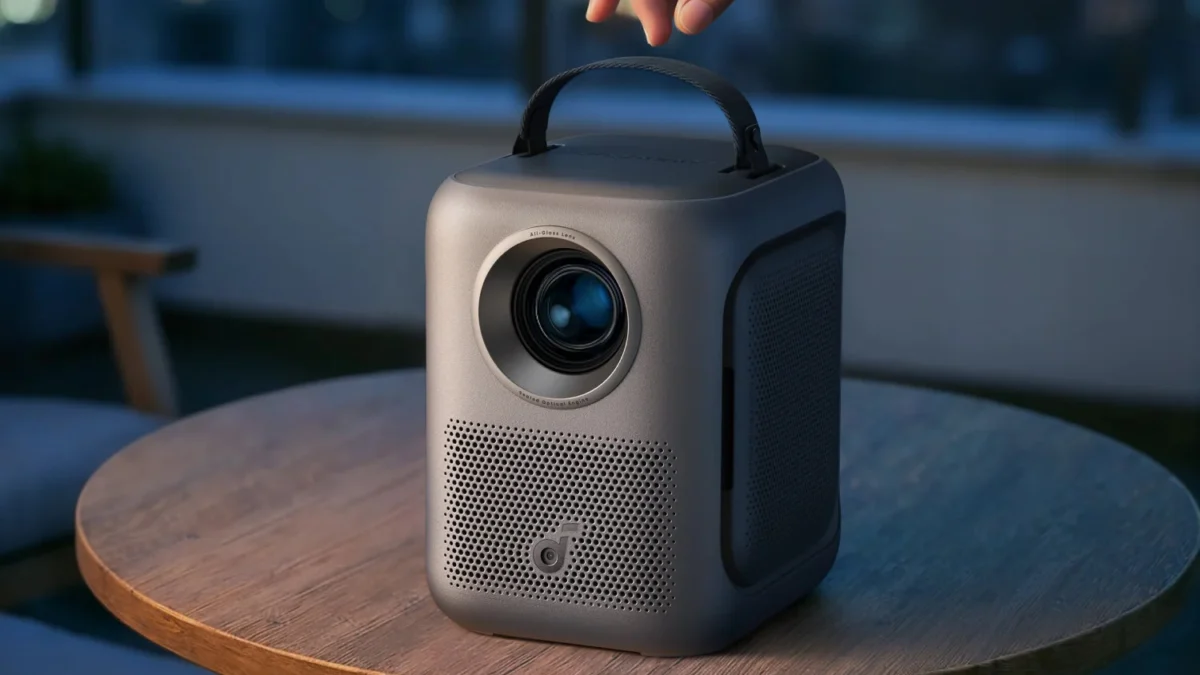
The evolution of personal projection technology has witnessed a dramatic democratization over the past decade. Where once high-fidelity image projection was the exclusive domain of high-end home theater installations or specialized corporate environments, the market is now saturated with compact, feature-rich devices capable of transforming any flat surface into a cinematic canvas. This shift is not merely about affordability; it represents a fundamental change in consumer expectations regarding media consumption flexibility. At the forefront of this accessibility wave is the Soundcore Nebula P1i Smart Projector, which has recently entered a temporary but significant new price trough, signaling aggressive positioning within the competitive sub-$350 segment.
Currently, the Nebula P1i is being offered at a compelling 20% reduction, establishing its lowest recorded retail price to date. This specific promotional window, coinciding with the broader Amazon Big Spring Deal event concluding on March 31st, presents a pivotal moment for consumers seeking premium features without the associated premium cost. The discount translates to a purchase price of $295, reflecting a substantial saving of $74 off the standard MSRP. Analyzing this aggressive pricing strategy requires a deeper look into the competitive landscape and the inherent value proposition of the P1i’s unique hardware configuration.
The Context: Portability Meets Performance in the Modern Media Era
The contemporary consumer environment prizes modularity and portability. Traditional fixed-screen television setups, while dominant in many households, lack the adaptability required for modern, multi-location entertainment—whether that involves moving movie night to the backyard, setting up a temporary presentation in a remote office, or simply relocating a large screen experience within a smaller apartment. This demand fuels the growth of the "smart projector" category.
The Nebula P1i, a product from Anker’s audio-centric Soundcore brand, leverages this market dynamic by addressing a perennial weakness in the portable projector sector: integrated audio quality. Many comparable units offer acceptable, if underwhelming, integrated sound, forcing users to immediately pair them with external Bluetooth speakers or soundbars, thus negating some of the portability advantage.
Physically, the P1i adheres to modern aesthetic standards for compact electronics. Its dimensions—approximately 7.20 x 8.04 x 8.99 inches—position it firmly in the mid-range for "portable" devices, meaning it is easily storable and transportable within standard backpacks or larger carry bags, facilitating genuine on-the-go deployment.
Technical Specifications and the Integrated Audio Differentiator
When operational, the P1i delivers a capable visual experience. It projects a native Full HD (1080p) resolution image, a baseline expectation for quality streaming experiences today, capable of scaling up to an impressive 150-inch diagonal display. The luminance rating of 380 ANSI lumens places it within the functional range for dedicated dark-room viewing, though it may struggle somewhat in moderately lit environments compared to higher-lumen, permanently installed units.
However, the standout feature, which justifies much of the device’s inherent value, lies in its acoustic engineering. The P1i incorporates dual 10W speakers, a substantial power output for a device of this form factor. Crucially, these speakers are not simply housed internally; they are designed to physically articulate. The visual design explicitly features outward-flipping speaker modules that allow for angular rotation. This mechanical flexibility enables users to direct the sound field precisely toward the viewing audience, optimizing stereo separation and volume projection without requiring the projector unit itself to be perfectly centered or aimed.
This focus on integrated, high-quality audio is a deliberate strategic maneuver. It speaks to an understanding that for casual viewing—the primary use case for these devices—the friction introduced by setting up external peripherals detracts significantly from the experience. By delivering robust, directional sound natively, the P1i reduces setup time and complexity, enhancing its utility as a true plug-and-play entertainment hub.
Ecosystem Integration and Operating System Intelligence
Beyond hardware prowess, the software ecosystem determines the long-term usability of any smart projector. The Nebula P1i runs on the Google TV platform. This is a significant advantage over proprietary operating systems or older Android TV implementations. Google TV provides a highly curated, content-forward interface, offering direct access to the vast majority of major streaming applications (Netflix, Disney+, Hulu, etc.) without needing external streaming sticks or dongles.
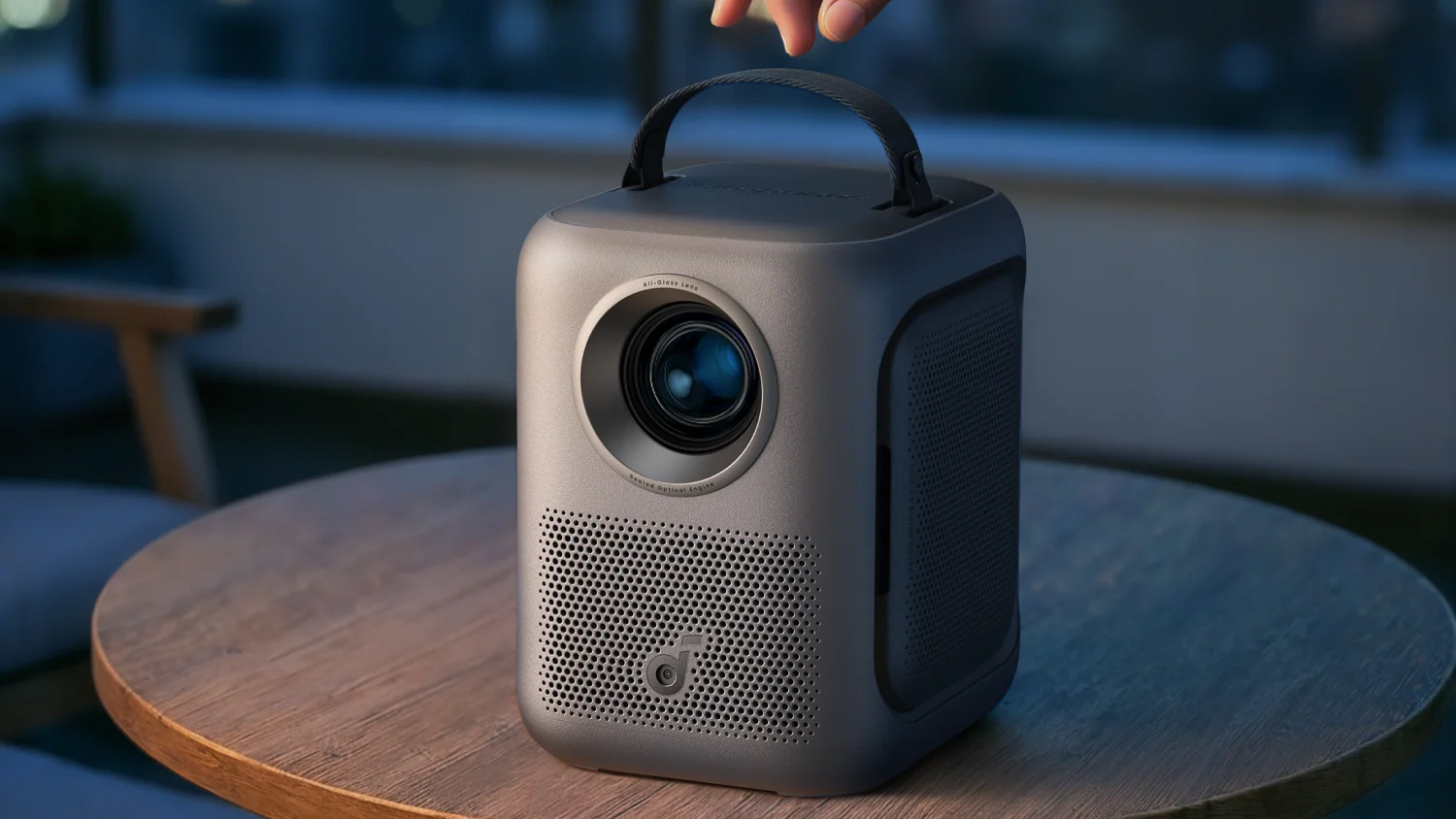
Furthermore, native support for Google Cast (Chromecast built-in) ensures seamless mirroring and casting capabilities from Android phones, tablets, and Chrome browsers. This is complemented by the proprietary NEBULA Cast functionality, likely offering specific controls or mirroring features tailored to Anker’s broader hardware ecosystem. For users requiring traditional connectivity, a physical HDMI input remains available, ensuring compatibility with legacy consoles, Blu-ray players, or dedicated media servers.
The only notable constraint, which requires acknowledgement for comprehensive evaluation, is the absence of an integrated battery. Unlike some ultra-portable pico projectors designed for maximum off-grid flexibility, the P1i requires continuous AC power. This anchors its primary use case to environments with readily accessible power outlets, such as living rooms, bedrooms, or outdoor patios with power access, rather than true wilderness camping scenarios.
Industry Implications: The Battle for the Living Room Perimeter
The aggressive pricing of the Nebula P1i, set against its feature set, has broader implications for the home entertainment industry. It forces a re-evaluation of the price-to-performance ratio in the portable projection space. When a device combining 1080p resolution, smart OS integration, and significant onboard audio power drops below the $300 threshold, it places considerable pressure on entry-level television sales and cheaper, less capable projectors.
This trend accelerates the blurring lines between dedicated home theater equipment and versatile, multi-use display devices. Manufacturers are recognizing that consumers are willing to trade the ultimate black levels and perfect color accuracy of high-end dedicated DLP or LCoS projectors for the sheer flexibility and ease of deployment offered by these smart LED units.
The inclusion of high-fidelity, directional audio within the chassis represents a key competitive vector. As display technology in projectors becomes increasingly standardized (LED light sources, 1080p/4K resolution targets), differentiation must occur elsewhere. Soundcore, leveraging its core expertise, has successfully carved out an audio-centric niche. This signals a future where projector purchases will be increasingly influenced by the "all-in-one" package, minimizing cable clutter and peripheral dependence.
Expert Analysis: Value Proposition Under Scrutiny
From a technical standpoint, the combination of 380 lumens and 1080p resolution places the P1i in a specific value quadrant. While higher-end competitors might offer 800+ lumens for superior daylight viewing or true 4K resolution, these often command prices well above $600 or $700. For the average consumer aiming for an immersive, large-screen experience after sunset, 380 lumens is often perfectly adequate for a 100-inch image, especially when contrasted with the significant advantage of the 20W combined speaker output.
The decision to utilize Google TV, rather than a heavily customized or outdated Android fork, indicates a commitment to security updates and app compatibility—factors often neglected in budget-oriented hardware. This longevity factor is crucial in assessing the long-term value of the purchase, even when discounted.
The temporary nature of the Big Spring Deal pricing should not be underestimated. Record-low prices are often tactical maneuvers designed to clear inventory before the next generation of hardware refreshes or to capture market share during a specific retail window. Consumers should view this as an opportunity to acquire a device whose feature set typically resides at a higher price point, capitalizing on seasonal sales strategies.
Future Impact and Technological Trajectories
The trajectory suggested by devices like the Nebula P1i points toward further integration and refinement in the portable display market. Future advancements are likely to focus on several key areas:
- Brightness Scaling without Heat: The primary challenge for LED projectors remains increasing lumen output significantly while maintaining thermal efficiency and battery life (though the P1i lacks a battery, this remains a general industry goal). Expect continued incremental gains in light source efficiency.
- Auto-Calibration Sophistication: While the P1i likely includes basic auto-focus and keystone correction, future models will emphasize instantaneous, AI-driven environmental adaptation. This includes automatic adjustment for ambient light color temperature and surface texture compensation, making setup genuinely instantaneous regardless of the projection material (a painted wall, a textured sheet, etc.).
- Audio Immersion Beyond 2.0: While the P1i’s 20W dual speakers are excellent for their class, the next frontier might involve integrating spatial audio processing or even upward-firing drivers to simulate Dolby Atmos height channels within a single chassis, further cementing the projector as the sole required entertainment device.
- Battery Density: For those who value complete portability, breakthroughs in battery technology that allow for multiple hours of bright, 1080p projection without significantly increasing the physical footprint will be the next major disruptive force.
In summary, the current deep discount on the Soundcore Nebula P1i Smart Projector is more than just a fleeting bargain; it represents the accessibility of sophisticated, integrated home entertainment. It underscores a market trend where robust audio engineering and modern operating systems are becoming non-negotiable features, even in highly portable, aggressively priced devices. Prospective buyers have a narrow window to acquire a versatile multimedia tool that effectively bridges the gap between casual streaming and genuine cinematic presentation.
