

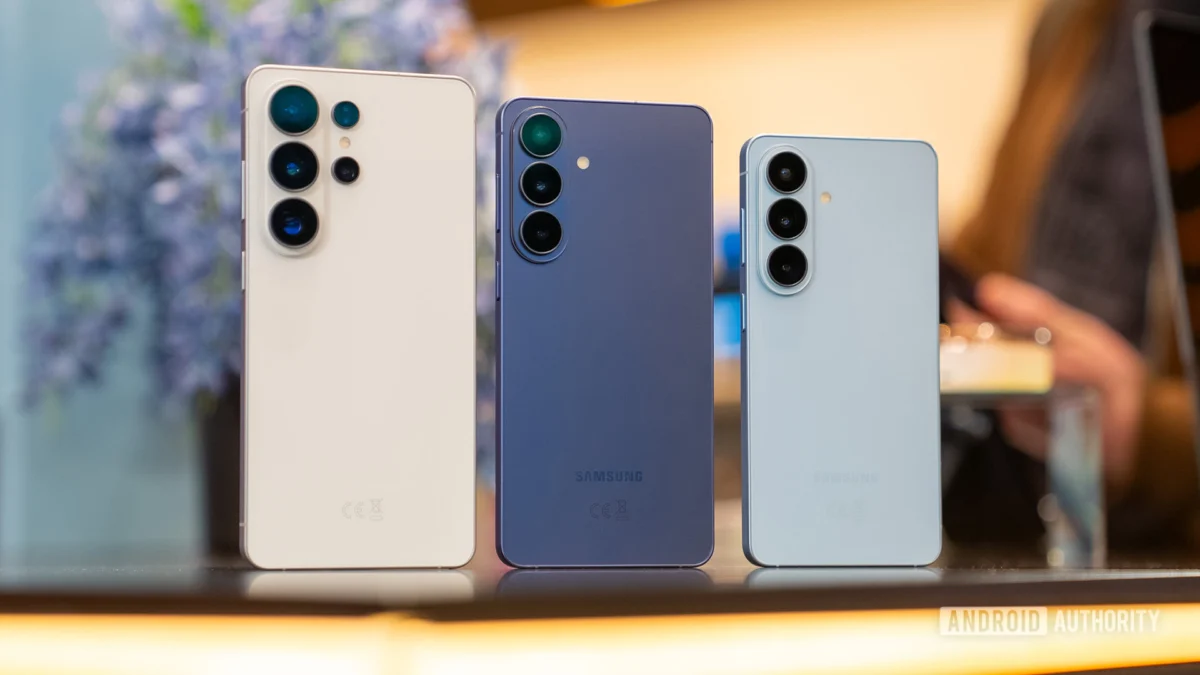
The digital ecosystem has long been characterized by walled gardens, perhaps nowhere more stubbornly than in the realm of local device-to-device file sharing. For years, Apple’s AirDrop has represented the gold standard for seamless, near-instantaneous content transfer between iPhones, iPads, and Macs—a feature that Android users could only envy, relying instead on the often slower or more convoluted processes of third-party apps or standardized but less intuitive protocols. Samsung, the behemoth of the Android world, is now executing a pivotal move that signals a significant détente in this long-standing platform friction: integrating AirDrop compatibility directly into its proprietary Quick Share service, debuting initially on the flagship Galaxy S26 series.
This development is not an isolated software patch; it represents a calculated strategic pivot by Samsung, one that echoes earlier commitments from Google regarding the standardization of fast file transfer across the fragmented Android landscape. Following recent indications from Samsung’s Mobile Division COO, Won-Joon Choi, that such interoperability was imminent, the company has now formalized the rollout schedule. The initial wave of the update, which enables Quick Share devices to communicate directly with Apple’s AirDrop ecosystem, is slated to begin deployment tomorrow in South Korea, with a broader rollout encompassing US Galaxy S26 units expected before the close of the current week.
This immediate focus on the newly launched Galaxy S26 line—including the S26, S26 Plus, and S26 Ultra—suggests a premium feature intended to immediately differentiate the latest hardware. However, the implications extend far beyond early adopters of the newest flagship. Samsung has explicitly confirmed that this crucial AirDrop compatibility for Quick Share will eventually cascade down to older, still-supported Galaxy devices. While a precise timeline for this broader deployment remains elusive, the commitment itself transforms the utility of the Quick Share standard across the entire Samsung user base.
The Context: Breaking Down the Digital Barricades
To fully appreciate the magnitude of this announcement, one must understand the history of wireless sharing protocols. AirDrop, launched in 2011, succeeded largely due to its simplicity and tight integration within Apple’s vertically integrated hardware and software stack. It leveraged Bluetooth for device discovery and Wi-Fi Direct for rapid data transfer, all managed transparently to the user. Android’s response, Quick Share, which was officially introduced in 2020, aimed to achieve similar functionality but struggled with cross-manufacturer consistency initially.
Google’s initial efforts to unify this space culminated in the adoption of the Fast Pair protocol extensions, leading to the official standardization of Quick Share across compatible Android devices, irrespective of the OEM. However, the critical missing piece has always been bridging the gap to Apple’s ecosystem. The lack of seamless interaction between Android’s native sharing tool and AirDrop has forced users into awkward workarounds—emailing large files to oneself, using cloud storage as an intermediary, or resorting to less secure, third-party apps.
Samsung’s integration isn’t just a convenience feature; it’s an acknowledgment of market reality. As the largest global smartphone vendor, Samsung’s willingness to implement the necessary protocols to communicate with Apple’s proprietary system validates the need for universal sharing standards. This move is a direct result of the groundwork laid by Google, which has been championing the concept of an open, cross-platform transfer protocol, often termed "Nearby Share" (which has since been merged into the Quick Share framework). By adopting the shared protocol standards that allow Quick Share to "speak" AirDrop, Samsung is effectively validating the industry’s push toward interoperability.
Industry Implications: A Shift Towards Open Standards
The move by Samsung carries substantial weight for the broader mobile industry and hints at evolving competitive dynamics. For years, the ability to easily share content between an Android phone and an iPhone has been a significant, if often unstated, advantage for Apple in retaining users or attracting those who live in mixed-ecosystem households or workplaces. By neutralizing this friction point, Samsung significantly lowers one of the key switching costs associated with choosing an Android device over an iPhone.
For Android OEMs: This sets a new baseline expectation. If Samsung, the market leader, implements this interoperability, other major Android manufacturers—like Xiaomi, Oppo, and Vivo—will face increasing pressure to follow suit. The ability for a user to reliably transfer large video files or photo albums instantly, regardless of whether their friend has a Galaxy S26 or an iPhone 15 Pro, becomes a necessary feature, not a premium differentiator. This rapid adoption suggests that the underlying technical specifications required for this cross-platform handshake are mature and relatively easy to implement, likely built upon standardized underlying wireless protocols.
For Apple: This presents a complex challenge. While Apple has historically been resistant to opening up core features like AirDrop, the pressure from the sheer volume of Samsung/Android users who now possess the ability to connect directly cannot be ignored. If Quick Share can initiate a connection with AirDrop, it suggests that Apple’s protocol is not entirely closed. The next logical step, though perhaps a distant one, would be for Apple to officially acknowledge and potentially streamline the receiving end on iOS devices for non-Apple originating transfers, perhaps via an official "Nearby Share from Android" prompt, rather than relying solely on the current, somewhat asymmetric interoperability.
Expert Analysis: The Technology Under the Hood
The successful implementation of AirDrop support within Quick Share hinges on mastering the nuances of proximity-based sharing protocols. Both AirDrop and Quick Share utilize a combination of Bluetooth Low Energy (BLE) for initial device discovery and secure pairing, followed by high-throughput Wi-Fi Direct for the actual data transmission.
The key hurdle overcome here is the handshake—the secure negotiation between two disparate operating environments regarding authentication and encryption. Apple’s AirDrop relies on a proprietary certificate exchange. For Quick Share to integrate successfully, Samsung has likely implemented support for the standardized protocol layer that Google has been developing, which allows non-Apple devices to emulate the necessary cryptographic prompts recognized by the iOS device’s AirDrop listener.
This integration requires robust security vetting. File transfers between platforms must maintain end-to-end encryption and ensure that the receiving device has explicit, authenticated consent before data begins streaming. Any perceived security vulnerability in this cross-platform link could quickly erode user trust, particularly given the sensitive nature of the data often shared locally. Samsung’s validation by mobile division leadership suggests confidence in the security architecture of the implemented solution, likely leveraging the latest iterations of the Wi-Fi Alliance specifications for secure direct communication.
The phased rollout—starting with the S26 in Korea, then the US—is standard operating procedure for large-scale software deployments. It allows Samsung engineers to monitor server load, bug reports, and regional network variations before committing to a global update. The anticipation surrounding One UI 8.5, the likely software vessel for this feature on older devices, underscores how deeply embedded sharing functionality is within the modern smartphone experience. Users are not just waiting for a feature; they are waiting for a fundamental quality-of-life improvement to their daily digital interactions.
Future Trajectories: Convergence and the Ambient Computing Era
This cross-platform sharing breakthrough is a critical step toward the vision of ambient computing, where the physical location of a device dictates its utility, and seamless interaction between devices—regardless of brand—is the norm.
Ecosystem Fluidity: When file transfer barriers drop, ecosystem loyalty erodes. Consumers are becoming increasingly pragmatic, prioritizing functionality over rigid brand adherence. If Samsung can match or exceed the ease of use of AirDrop for interoperability, the perceived necessity of owning multiple Apple products simply to facilitate quick data sharing diminishes substantially. This benefits the entire Android market by making the platform more attractive to users who interact frequently with Apple-using friends, family, or colleagues.
The IoT Link: The principles established in making Quick Share and AirDrop communicate will inevitably influence broader Internet of Things (IoT) connectivity. If two smartphones can negotiate a secure, high-speed transfer using established protocols, those same underlying frameworks can be adapted for rapid provisioning, data synchronization, or content casting to smart home devices, AR/VR headsets, and automotive infotainment systems. This move by Samsung is less about phones talking to iPhones and more about solidifying a universal, proximity-based data exchange language for the next generation of personal technology.
For current Galaxy S26 owners, the immediate benefit is clear: enhanced utility and immediate parity with a long-envied feature. For the wider tech landscape, this marks a significant, if incremental, victory for open standards over proprietary lock-in, forcing a re-evaluation of what constitutes a ‘seamless’ user experience in a multi-platform world. The expectation now shifts to when this convenience will become universally available across the aging fleet of Samsung hardware, transforming Quick Share from a proprietary tool into a truly ubiquitous connector. The coming weeks will reveal the true scope of this commitment as the One UI 8.5 rollout begins to take shape for legacy devices.
