

The modern evolution of domestic automation has introduced a quiet paradox into millions of households. As smart living ecosystems become progressively more intuitive, feature-rich, and proactive, they simultaneously demand an unprecedented level of data surrender. Mainstream automation platforms rely heavily on cloud-based artificial intelligence to function. Every voice command whispered across a living room, every routine captured by security cameras, and every automated preference is continually beamed off-site to remote server farms. This deep dependence on cloud computing has generated mounting anxiety among consumers regarding data privacy, continuous surveillance, and the recurring subscription fatigue tied to cloud-dependent video storage and advanced analytical capabilities.
Enterprises and tech conglomerates have long championed cloud infrastructure for its sheer processing scale, but the consumer sentiment is shifting toward digital sovereignty. People increasingly want the benefits of advanced intelligence without handing over the keys to their private lives. Recognizing this cultural and technological friction point, UGREEN has introduced a radical hardware lineup designed to shift the paradigm entirely. By embedding powerful artificial intelligence hardware and localized network-attached storage directly into the home, the company aims to move computational workloads off the cloud and straight into domestic spaces.
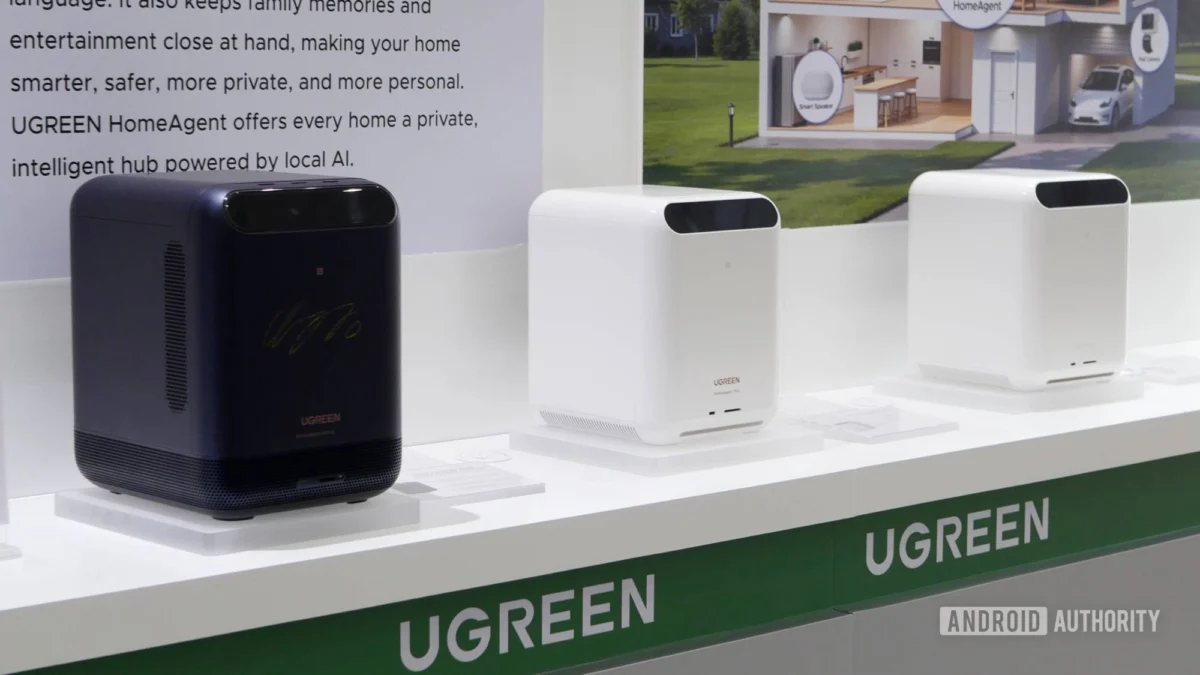
UGREEN’s new trio of devices—comprising the HomeAgent HA100, the HomeAgent HA100 Pro, and the ultra-high-end MasterAgent MA100—represents a bold gamble on edge computing. Rather than delegating voice recognition, natural language processing, and computer vision to distant data centers, these hubs process everything locally. This architecture ensures that sensitive video feeds and personal voice transcripts never leave the physical boundaries of the residence.
At their core, all three models share a unified design philosophy: robust device management anchored by comprehensive Matter protocol support, combined with integrated 2-bay SATA Network-Attached Storage (NAS) capabilities and dedicated drive bays explicitly allocated for high-throughput video surveillance archiving. This convergence of smart home orchestration and local storage infrastructure creates an all-in-one localized server, effectively serving as a private mini data center for residential environments.
Despite sharing a foundational blueprint, the three iterations diverge dramatically in computational muscle, networking architecture, and ultimately, target pricing tiers. The entry-level HomeAgent HA100 is engineered for standard residential setups, equipped with 16GB of system RAM and a Neural Processing Unit (NPU) capable of delivering a respectable 26 Tera Operations Per Second (TOPS) of AI performance. This configuration is more than adequate for local voice command parsing, basic automation routines, and straightforward security camera analysis.
Stepping up to the HomeAgent HA100 Pro introduces a significant performance uplift. Designed for more demanding households, the Pro variant doubles the memory allocation to 32GB of RAM while drastically expanding the GPU and NPU resources. This hardware enhancement yields a massive leap in computational output, pushing the AI processing ceiling to 205 TOPS—an order of magnitude higher than its sibling. This additional horsepower allows the hub to run heavier, more complex local large language models and multi-camera object detection algorithms simultaneously without bottlenecking local network traffic.
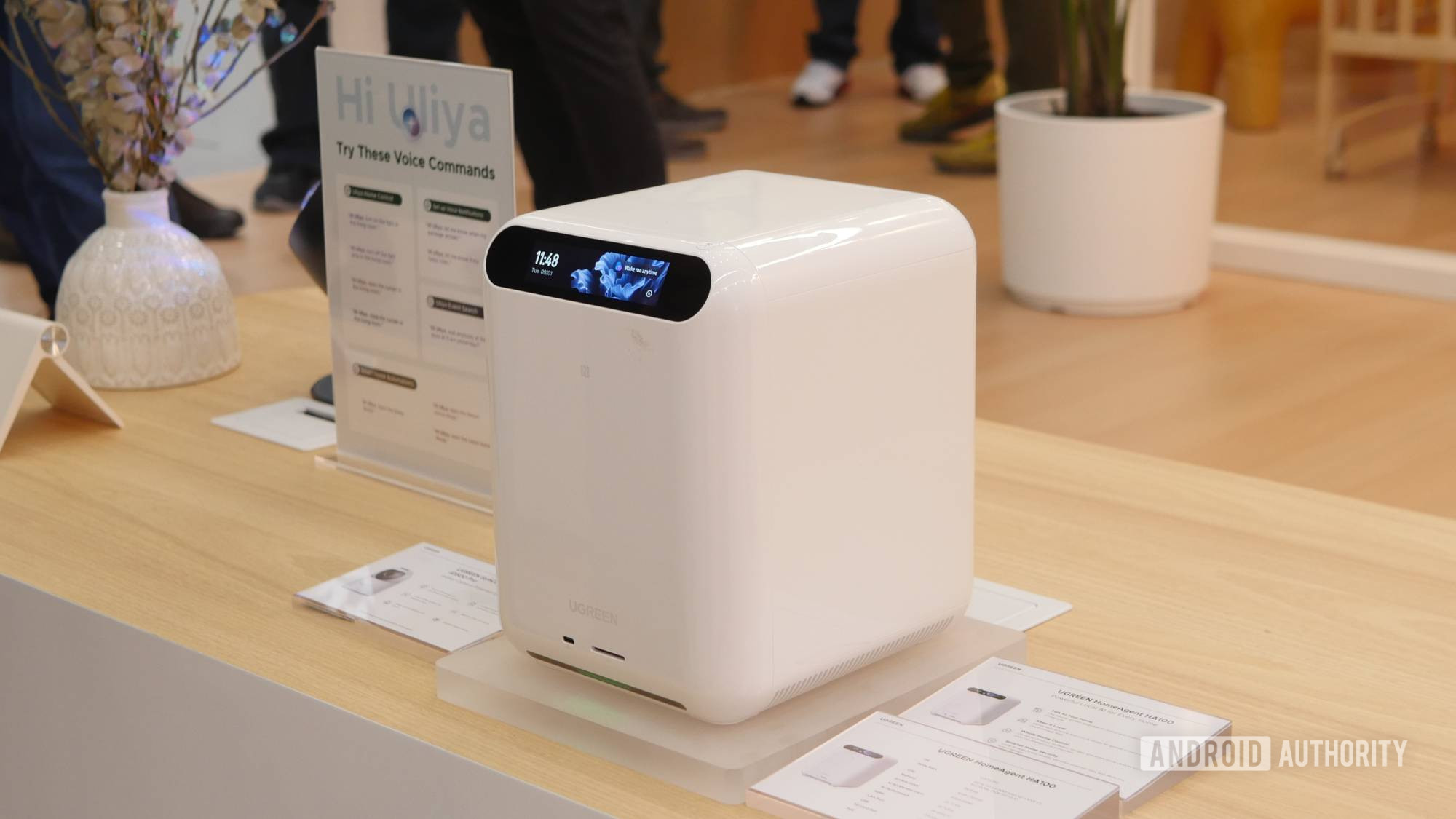
However, the financial barrier of entry begins to stretch traditional consumer expectations at these upper tiers. UGREEN has slated the base HomeAgent at approximately $900, while the Pro variant climbs steeply to roughly $3,000. For the vast majority of consumers accustomed to spending under a hundred dollars for a basic voice assistant speaker or a simple Zigbee bridge, these figures represent a paradigm shift in how home automation hardware is valued. These prices position UGREEN’s offerings less as consumer gadgets and more as professional-grade server equipment adapted for residential use.
The pinnacle of this new product line, the MasterAgent MA100, shatters traditional expectations regarding domestic technology budgets entirely. Disregarding conventional consumer hardware limitations, UGREEN has integrated cutting-edge NVIDIA Jetson Thor T5000 silicon into the MasterAgent. Backed by a staggering 128GB of RAM and enterprise-tier networking enhancements—including a high-speed 100Gbps Power over Ethernet (PoE) switch—this machine is engineered to compete with professional workstation environments.
The retail price for this ultimate edge-computing hub sits at a staggering $20,000.
To put that figure into perspective, twenty thousand dollars rivals the cost of a reliable pre-owned automobile or an extended international vacation. It is an astronomical sum for a domestic automation appliance, instantly alienating the casual consumer market. Yet, industry analysts point out that the MasterAgent is not intended for the average homeowner turning on smart lights. Instead, it targets tech enthusiasts, software developers, and luxury smart home integrators who wish to experiment with frontier-level AI models, run bespoke automation scripts, and manage enterprise-grade security protocols locally without third-party API restrictions or cloud latency.
This pricing strategy places UGREEN in a delicate market position. On one hand, the hardware potential is undeniably revolutionary. By providing raw NVIDIA-powered infrastructure inside a consumer-styled chassis, UGREEN empowers users to deploy custom machine learning models, explore advanced automation capabilities, and achieve absolute data privacy. On the other hand, convincing mainstream shoppers to invest a significant fraction of an annual salary into a kitchen-bound AI server will be a monumental uphill battle.
To soften the blow of these exorbitant figures, the manufacturer has structured promotional launch strategies, including aggressive early-bird discounts that slash significant percentages off the initial retail costs. For prospective buyers willing to commit early, these promotions reduce the financial friction, though securing a unit still requires a dedicated investment, beginning with a nominal pre-order deposit.
The introduction of UGREEN’s smart hubs signals a broader, highly anticipated shift in the consumer technology landscape: the decentralization of artificial intelligence. As privacy regulations tighten, cybersecurity threats escalate, and cloud subscription models grow increasingly costly and restrictive, the demand for local edge computing is bound to expand. Whether everyday consumers are ready to house enterprise-grade data infrastructure in their utility rooms remains to be seen. Regardless of mainstream adoption rates, UGREEN has cast a definitive vote for a future where personal privacy is maintained not through empty corporate promises, but through physical, localized ownership of computational power.
