

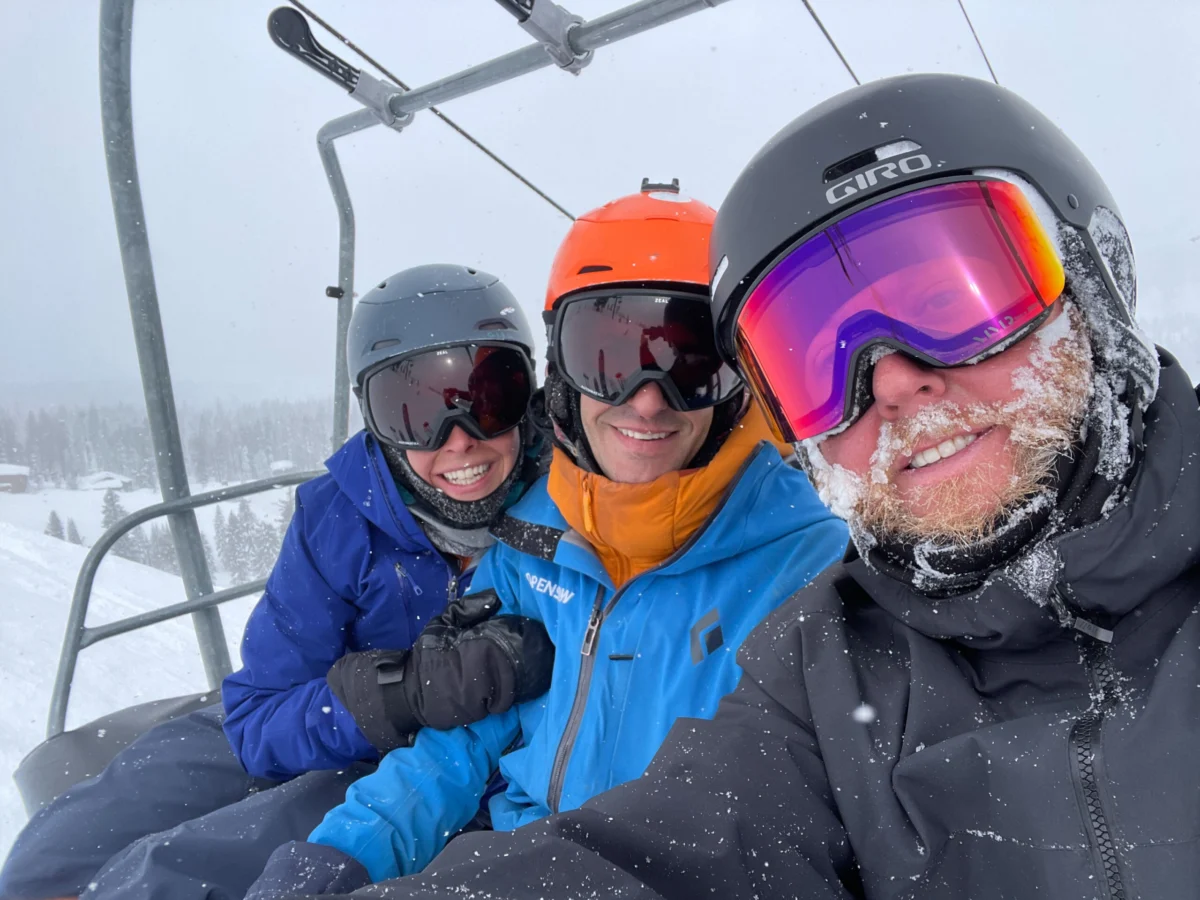
The inherent unpredictability of mountain weather has long been the bane of the winter sports industry. For decades, skiers and snowboarders relied on a patchwork of generalized government data and local television broadcasts that often failed to account for the complex micro-climates created by high-altitude terrain. In this information vacuum, a specialized niche emerged, led not by a multi-billion-dollar tech conglomerate, but by a small collective of meteorologists who prioritized local accuracy over broad-market appeal. Today, OpenSnow has transitioned from a grassroots email list into the definitive authority for alpine forecasting, leveraging a sophisticated blend of human expertise and proprietary machine-learning models to outperform federally funded agencies.
The genesis of this disruption lies in the limitations of standard meteorological modeling. Traditional systems, such as the Global Forecasting System (GFS) or the European Centre for Medium-Range Weather Forecasts (ECMWF), operate on relatively coarse grid resolutions. In a typical government model, a single data point might represent an area of 25 square kilometers. While sufficient for predicting a rainy afternoon in a flat coastal city, this "blobby" data is virtually useless in the mountains, where a difference of a few hundred feet in elevation or a slight shift in wind direction can mean the difference between a dusting of snow and a three-foot powder dump.
Bryan Allegretto, a founding partner at OpenSnow known to the community simply as "BA," recognized this gap while living in Lake Tahoe in the mid-2000s. Allegretto’s journey was atypical for a tech founder. Raised in a "broken home" in New Jersey, he found solace in the raw power of Nor’easters and severe weather. After pursuing a meteorology degree at Kean University and later studying business at Rowan, he eschewed the traditional career path of the "green screen" television weatherman. He sought a way to merge his obsession with snow and his desire for a fulfilling, independent life.
When Allegretto moved to Tahoe in 2006, he found a culture of deep skepticism toward weather reports. Local forecasters in nearby metropolitan hubs like Sacramento or Reno often treated the ski resorts as an afterthought, providing generalized "mountain weather" updates that ignored the specific needs of the outdoor community. Allegretto began waking up at 4:00 a.m. to analyze government models, correcting their inherent errors based on his lived experience of how storms interacted with specific Tahoe peaks. His initial email list of 37 recipients grew rapidly as word spread of his "Daily Snow" reports—forecasts that were as much about the "soul" of skiing as they were about atmospheric pressure.
The business truly began to scale when Allegretto joined forces with Joel Gratz, a Colorado-based meteorologist who had been running a similar operation called Colorado Powder Forecast. In 2010, Gratz proposed a merger, inviting Allegretto and later Evan Thayer in Utah to build a unified platform. The early years were defined by a "bootstrap" ethos; the team worked multiple jobs while hand-keying snowfall data into spreadsheets for hours each morning. They avoided the siren call of venture capital, choosing instead to grow organically and maintain total editorial and technical control.
The turning point for OpenSnow came with a shift in its revenue model. For years, the site relied on advertising, but as Google and social media platforms began to monopolize the digital ad market, the founders realized that journalism-style weather reporting was not a sustainable long-term strategy. In 2021, they implemented a subscription paywall. While the team feared a 90% loss in traffic, the result was the opposite: a surge in loyalty. Subscribers recognized that the utility of a hyper-accurate forecast—one that could save a five-hour drive to a rain-soaked mountain—was worth the annual fee.
This financial independence allowed OpenSnow to invest heavily in its technical infrastructure. The company moved beyond simply interpreting government data to building its own proprietary models. Their first major iteration, METEOS, automated the process of "downscaling"—taking low-resolution global data and applying custom formulas to predict conditions at specific GPS points. However, the true leap forward occurred this past season with the launch of PEAKS, a machine-learning model that represents the cutting edge of AI in meteorology.

PEAKS is trained on decades of "ground truth" data, including estimated weather conditions across the United States from 1979 to 2021. By analyzing how past storms actually behaved in specific terrains, the AI has learned to correct the systemic biases of larger models. While a standard model might see a mountain range as a single splotch of color, PEAKS views it as a high-definition grid. It can distinguish between the expected snowfall in a resort’s parking lot and the accumulation at its summit three miles away. This transition from "blobby" data to "rigid, defined" dots has increased forecast accuracy by an estimated 50%.
Despite the integration of AI, the human element remains the core of the OpenSnow brand. Allegretto and his colleagues have become "micro-celebrities" within the ski world, often recognized in lift lines or ski shops. This celebrity status is a byproduct of the trust they have cultivated. In an era where AI-generated content is flooding the internet, OpenSnow’s users value the personal connection of a "Daily Snow" report written by a human who is actually out in the elements.
This trust has profound implications for mountain safety. OpenSnow has become an essential tool for search-and-rescue operations and avalanche centers. During a historic storm cycle in Tahoe that saw 111 inches of snow in five days—one of the largest in four decades—Allegretto’s forecasts were used by rescuers to time their windows of operation. The language used in these reports is critical; by avoiding "hype" and providing sober, accurate assessments of risk, the forecasters influence the behavior of thousands of backcountry travelers. A subscriber who sees a "BA" report warning of high-density snow and rapid accumulation is more likely to stay home, potentially avoiding a life-threatening situation.
The industry at large has taken note. OpenSnow is now the official lead forecast provider for major organizations including Ski California, Ski Utah, and the National Ski Patrol. Their data is integrated into the operational planning of dozens of resorts, helping management decide when to trigger avalanche mitigation or when to close lifts due to high winds.
However, the future of snow forecasting is inextricably linked to the broader challenges of climate change. The current era is characterized by "wild swings"—extreme variability that defies historical averages. While seasonal totals may remain somewhat consistent, the frequency of "rain-on-snow" events and record-breaking warm spells is increasing. March of last year was the second-warmest in nearly half a century, followed by a melt-off so rapid it forced early closures at several major California resorts.
To adapt to this volatility, OpenSnow is expanding its reach. The company recently acquired StormNet, a platform specialized in tracking severe weather like lightning, hail, and tornadoes. This move signals a transition from a winter-only service to a year-round "severe weather" authority. Additionally, the team is developing AI-driven avalanche prediction features. While not intended to replace human-led avalanche centers, these tools will analyze slope angles, historical weather layers, and current conditions to provide location-specific warnings further in advance than currently possible.
The success of OpenSnow serves as a case study for the modern technology landscape. It demonstrates that a small, independent team can disrupt an industry dominated by government agencies and massive corporations by focusing on a hyper-specialized problem. By prioritizing accuracy over "clicks" and building a direct, subscription-based relationship with its audience, OpenSnow has created a resilient business model that thrives even in "bad" snow years.
Ultimately, the company’s founders remain driven by the same "soul-searching" motivation that led them to the mountains in the first place. For Allegretto and Gratz, the goal was never to build a tech empire; it was to create a tool that allowed them to chase the perfect storm. In doing so, they have transformed the way the world interacts with the mountains, turning the "crystal ball" of weather forecasting into a high-precision instrument of science and safety. As the climate continues to shift and the tech industry moves toward total automation, the "snow gods" of OpenSnow prove that there is still no substitute for the marriage of advanced machine learning and decades of human experience in the field.
