

The messaging landscape is undergoing a profound transformation, driven by the integration of sophisticated artificial intelligence and a relentless pursuit of user convenience. Meta Platforms is accelerating this evolution within its flagship messaging service, WhatsApp, by rolling out a significant package of updates. These enhancements span from productivity boosts powered by generative AI to critical infrastructure improvements addressing user mobility and security across different operating systems. The core of this rollout centers on embedding Meta AI directly into conversational workflows, alongside leveling the feature parity between iOS and Android ecosystems—a long-standing point of friction for many users.
The introduction of AI-powered writing assistance marks a clear strategic pivot for WhatsApp. This "Writing Help" feature is designed to function as an integrated co-pilot within chats, capable of generating draft responses contextually relevant to the ongoing dialogue. This moves beyond simple auto-complete; it aims to adjust tone, refine phrasing, and expedite communication, particularly for users managing high volumes of messages or those who require assistance with linguistic nuance. Crucially, Meta is emphasizing the privacy architecture underpinning this functionality, utilizing what they term "Private Processing." This technical assurance suggests that the large language model (LLM) inference required for generating suggestions occurs in a manner that prevents Meta or WhatsApp personnel from accessing the plaintext of the user’s message or the resulting suggested revisions. In the current climate of heightened data scrutiny, this emphasis on localized or zero-knowledge processing is not merely a feature but a necessary competitive differentiator, aiming to build trust in the deployment of generative AI within end-to-end encrypted environments.
Complementing the text-based AI features is the integration of Meta AI for visual content manipulation. Users can now leverage the AI to perform on-the-fly retouching and enhancement of images before they are disseminated across chats or community channels. While basic photo editing has been standard for years, leveraging generative AI for touch-ups introduces capabilities that can subtly alter image characteristics—perhaps optimizing lighting, removing minor distractions, or applying stylistic filters—all within the secure confines of the chat interface. The success of this feature will depend on its seamlessness and the perceived quality of the AI output versus established external editing tools.
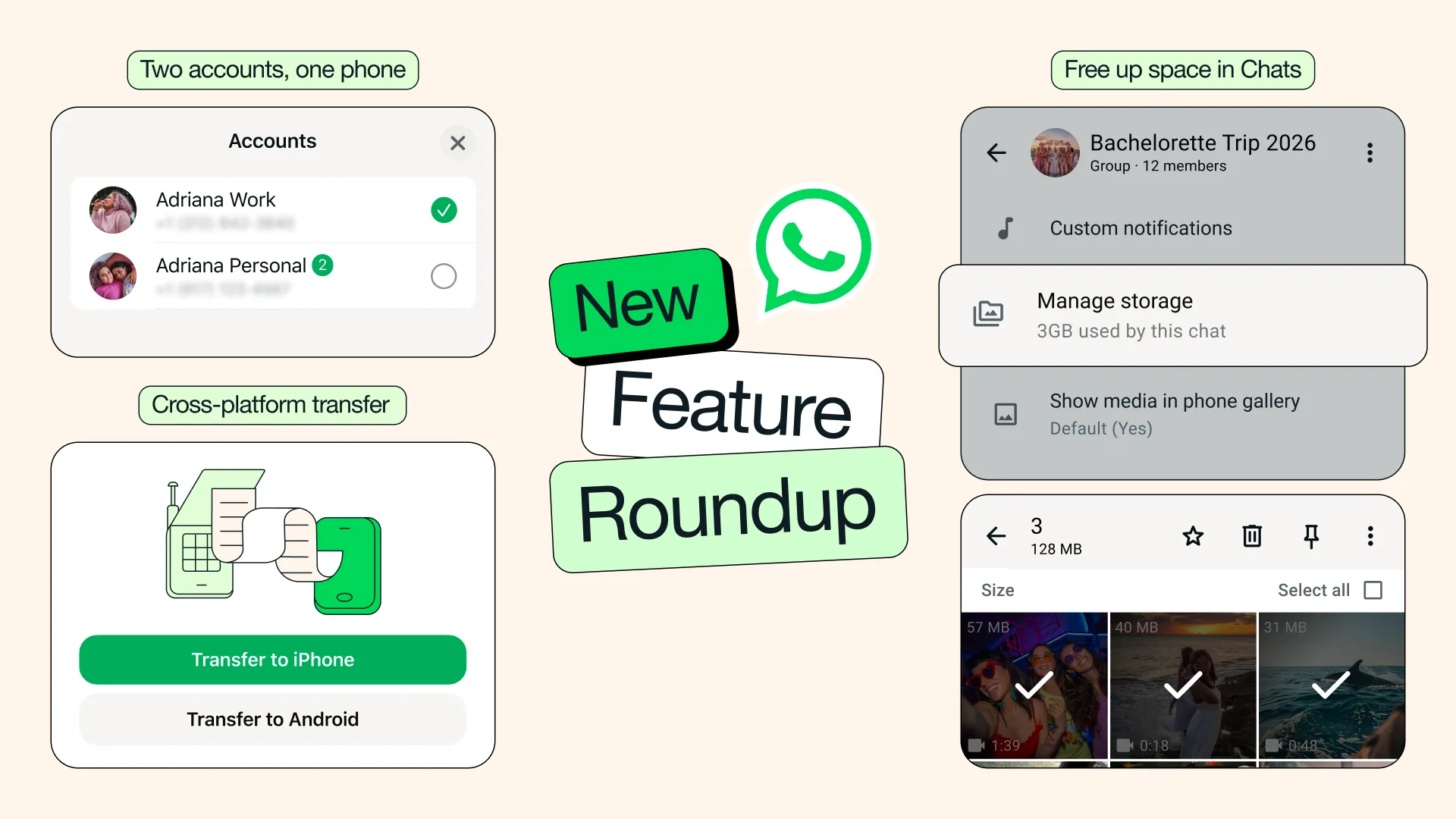
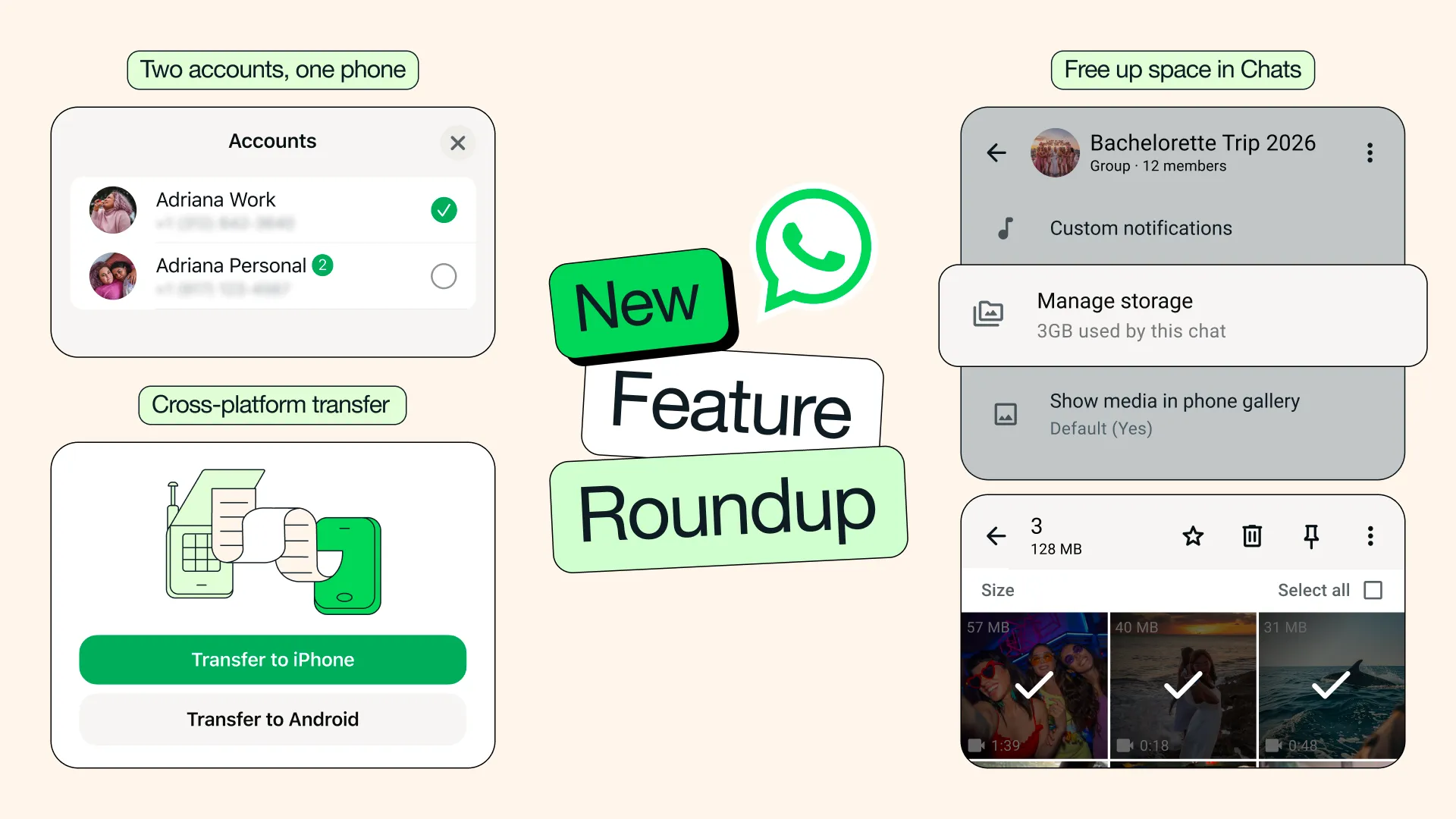
On the infrastructure front, the updates directly address two major pain points for power users and those transitioning between devices. First, iOS users are finally gaining support for running two distinct WhatsApp accounts concurrently on a single device. This feature parity with the Android platform is significant. In an era where individuals often maintain separate personal and professional identities, or utilize different numbers for various services, the ability to toggle between accounts without needing a secondary device or a separate application instance dramatically streamlines workflow management. This is an acknowledgment that the modern smartphone user often requires segmented digital identities on their primary device.
The second major infrastructural update concerns cross-platform migration. The enhanced chat transfer utility now facilitates the seamless migration of complete message history—including text, media, group structures, call logs, and community participation data—from an iOS environment to an Android device. Historically, the transfer of conversation history between these two dominant mobile operating systems has been notoriously difficult, often resulting in users having to sacrifice years of conversational context when switching ecosystems. Meta’s commitment to solving this transfer headache signals a strategic effort to reduce the "switching cost" associated with platform loyalty, potentially making the choice of a new phone less contingent on data retention concerns. As Meta stated, ensuring conversations "easily come with you no matter what device you’re using" directly attacks a major barrier to platform flexibility.
Beyond these core feature updates, WhatsApp continues its aggressive expansion into adjacent areas, particularly around platform governance and security hardening. The introduction of parent-managed accounts for pre-teens demonstrates a proactive approach to addressing regulatory and societal demands for greater parental oversight in digital spaces. This functionality grants guardians granular control over who can initiate contact with the younger user and which group environments they can join, positioning WhatsApp as a more responsible platform for early digital engagement.
Furthermore, the platform is sharpening its defensive posture against social engineering and account takeover attempts. New anti-scam protections are being deployed that rely on analyzing behavioral signals associated with device-linking requests. This implies machine learning models monitoring patterns indicative of account hijacking, such as unusual timing or location data associated with a login attempt or a request to link a new device. The urgency behind these enhanced defenses is underscored by recent intelligence warnings—such as those emanating from Dutch agencies regarding state-sponsored phishing campaigns targeting high-value users on encrypted platforms—which highlight the persistent threat landscape facing even well-secured messaging services.
The rollout of the "Lockdown Mode," initially introduced earlier this year for high-risk individuals like journalists and activists, further exemplifies this security-first mandate. This feature is designed to create a significant barrier against zero-click exploits and advanced spyware, effectively hardening the application against nation-state-level adversaries by restricting certain functionalities known to be exploited in sophisticated attacks.
Industry Implications and Expert Analysis
These simultaneous updates reveal a multi-pronged strategy by Meta aimed at solidifying WhatsApp’s dominance against competitors like Signal and Telegram, and simultaneously increasing user reliance on its proprietary AI ecosystem.
From a competitive standpoint, feature parity is crucial. By finally enabling dual accounts on iOS and perfecting the iOS-to-Android migration, WhatsApp eliminates long-standing technical handicaps on Apple’s platform, which often lagged behind Android in terms of flexibility. This move directly targets user friction, a primary driver of platform churn. For enterprise and power users who often juggle multiple identities, this flexibility is a significant quality-of-life improvement that rivals the flexibility offered by Telegram’s cloud-native structure.
The integration of generative AI into the messaging core represents the most significant long-term industry implication. While competitors are experimenting with AI chatbots, WhatsApp is embedding AI directly into the mechanics of communication itself. This creates a network effect where the utility of the platform increases exponentially with AI assistance. However, this introduces complex security trade-offs. The commitment to "Private Processing" must be rigorously validated. In the realm of end-to-end encryption (E2EE), any feature that requires server-side processing of message content—even for suggestion generation—creates a potential weak point or at least a trust deficit. Experts in cryptography and security will be scrutinizing Meta’s implementation details to ensure that the AI mechanisms genuinely operate within the bounds of E2EE integrity, differentiating themselves from competitors whose AI operations might rely on more traditional, less private cloud processing. If Meta can credibly deliver powerful generative AI features without compromising the E2EE guarantee, they establish a new benchmark for "private productivity."
The storage management tool—the ability to easily locate and clear large media files across all chats—is a necessary, albeit less glamorous, utility update. For a platform where billions of images and videos are shared daily, storage bloat is a universal problem, particularly for users on lower-tier devices or with limited local storage. Automating this cleanup process improves app performance and reduces user frustration, subtly reinforcing the platform’s reliability.
Future Impact and Technological Trajectory
Looking ahead, the trajectory set by these releases points toward an increasingly intelligent, personalized, and unified messaging environment.
The evolution of Writing Help suggests a future where WhatsApp transitions from being a passive conduit for communication to an active participant in message formulation. Future iterations are likely to incorporate deeper contextual understanding, perhaps summarizing long threads, drafting official communications, or even translating complex technical jargon in real-time within a chat window. This pushes the platform closer to becoming a true personal assistant integrated into daily digital life, increasing dependence on Meta’s underlying infrastructure.
The cross-platform migration tool is a foundational element for Meta’s broader metaverse strategy. As users become more comfortable migrating their entire digital history—their relationships, memories, and communications—between disparate hardware ecosystems (iOS to Android), the perceived lock-in shifts from the operating system to the application layer. If WhatsApp can guarantee persistent data integrity across device swaps, it strengthens Meta’s position as the central nexus of personal digital interaction, irrespective of whether the user prefers Apple or Google hardware.
Furthermore, the continuous layering of security features—from Lockdown Mode to anti-scam heuristics—indicates that platform integrity is now inextricably linked to feature adoption. In a world where digital identity theft and account hijacking are increasingly sophisticated, the perceived security of a messaging app is as vital as its speed. By addressing both cutting-edge state-sponsored threats (Lockdown Mode) and common social engineering vectors (anti-scam warnings), WhatsApp aims to project an image of comprehensive digital guardianship.
In conclusion, this latest wave of updates signifies WhatsApp’s maturation from a simple, secure messenger to a comprehensive digital utility platform. By strategically deploying generative AI for enhanced communication, eliminating long-standing cross-platform barriers, and continuously elevating security protocols, Meta is actively shaping the expectations for what a dominant global messaging application must deliver in the coming decade: intelligence, fluidity, and unwavering trust.
