

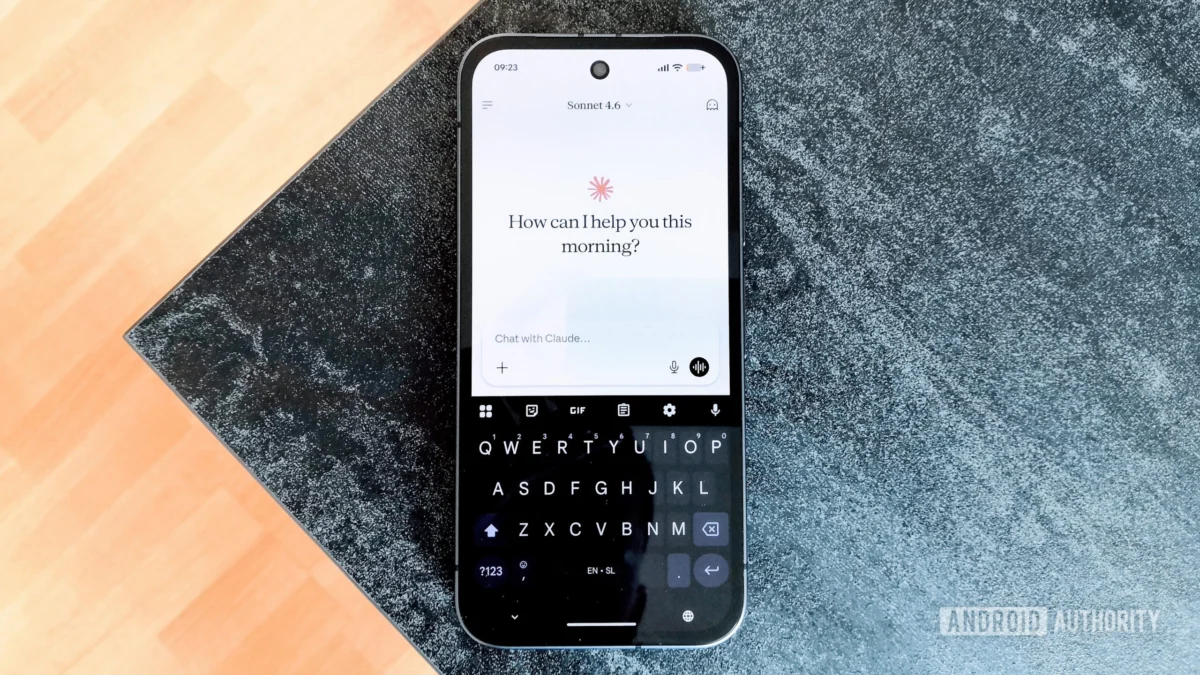
The modern application marketplace is saturated with productivity software, yet finding a digital tool that aligns with the nuances of daily domestic life remains remarkably difficult. Most commercial household management platforms are designed for a generalized median user, forcing families to compromise on feature sets, privacy terms, or recurring subscription fees. Driven by a desire to consolidate shared calendars, granular chore schedules, and dynamic household inventory systems into a singular, cohesive dashboard, I set out to explore the viability of generative artificial intelligence as a software development partner. By leveraging Anthropic’s Claude, this personal frustration transformed into an iterative coding experiment, illuminating the current boundaries and extraordinary potential of AI-assisted engineering for non-professional developers.
The Ecosystem Deficit: Why Off-the-Shelf Tools Fall Short
Evaluating existing household organizers reveals a fragmented landscape. Applications like Sweepy excel at room-by-room chore allocation and maintenance cycles, yet entirely omit inventory management capabilities. Conversely, platforms such as Cozi Family Organizer offer robust shopping lists and family calendar coordination, but rely heavily on manual data entry rather than intelligent, pre-populated defaults. Furthermore, premium paywalls frequently gate critical features behind expensive recurring subscriptions, transforming what should be simple utilities into continuous financial drains.
This functional fragmentation exposes a broader design flaw in consumer software. Developers typically silo features to maximize market segments, preventing users from creating a unified command center for pets, physical rooms, family objectives, and financial tracking. Refusing to settle for an ecosystem of disparate applications, I realized that modern large language models have lowered the barrier to entry for bespoke software creation, enabling individuals to bypass traditional development constraints entirely.
The Architectural Evolution: From Native Ambitions to Progressive Web Simplicity
The initial conceptualization aimed for a native Android application engineered from scratch using advanced AI coding environments. Organizing requirements into a comprehensive spreadsheet reference document, the project commenced within developer suites like Android Studio. However, relying on an assistant to generate functional code without foundational programming expertise quickly exposed bottlenecks. While it is possible to construct rudimentary alpha builds through iterative prompting, the workflow proved excessively cumbersome for rapid experimentation and real-time interface refinement.
Recognizing that native development demanded a steeper learning curve than necessary for a personal utility, the strategy shifted toward web-based prototyping. Utilizing conversational programming—colloquially known as "vibe coding"—allowed for instantaneous design iterations and rapid feature implementation. To bridge the gap between a browser-bound interface and a seamless mobile experience, the project evolved into a Progressive Web App (PWA). By prompting Claude to generate auxiliary architecture files, specifically the manifest.json for metadata control and the service-worker.js for offline asset caching, the browser-based prototype transformed into a desktop- and mobile-installable application. Hosting these assets via GitHub provided a stable environment for Chrome to recognize the PWA criteria without requiring complex local server configurations.
Overcoming Technical Hurdles and Scaling the Feature Set
Building a comprehensive household management system introduced complex technical challenges, particularly regarding multi-device synchronization and persistent data storage. Early iterations relied on manual JSON export and import routines, functioning as a temporary workaround before graduating to automated database synchronization via Firebase and direct Google Calendar application programming interfaces.
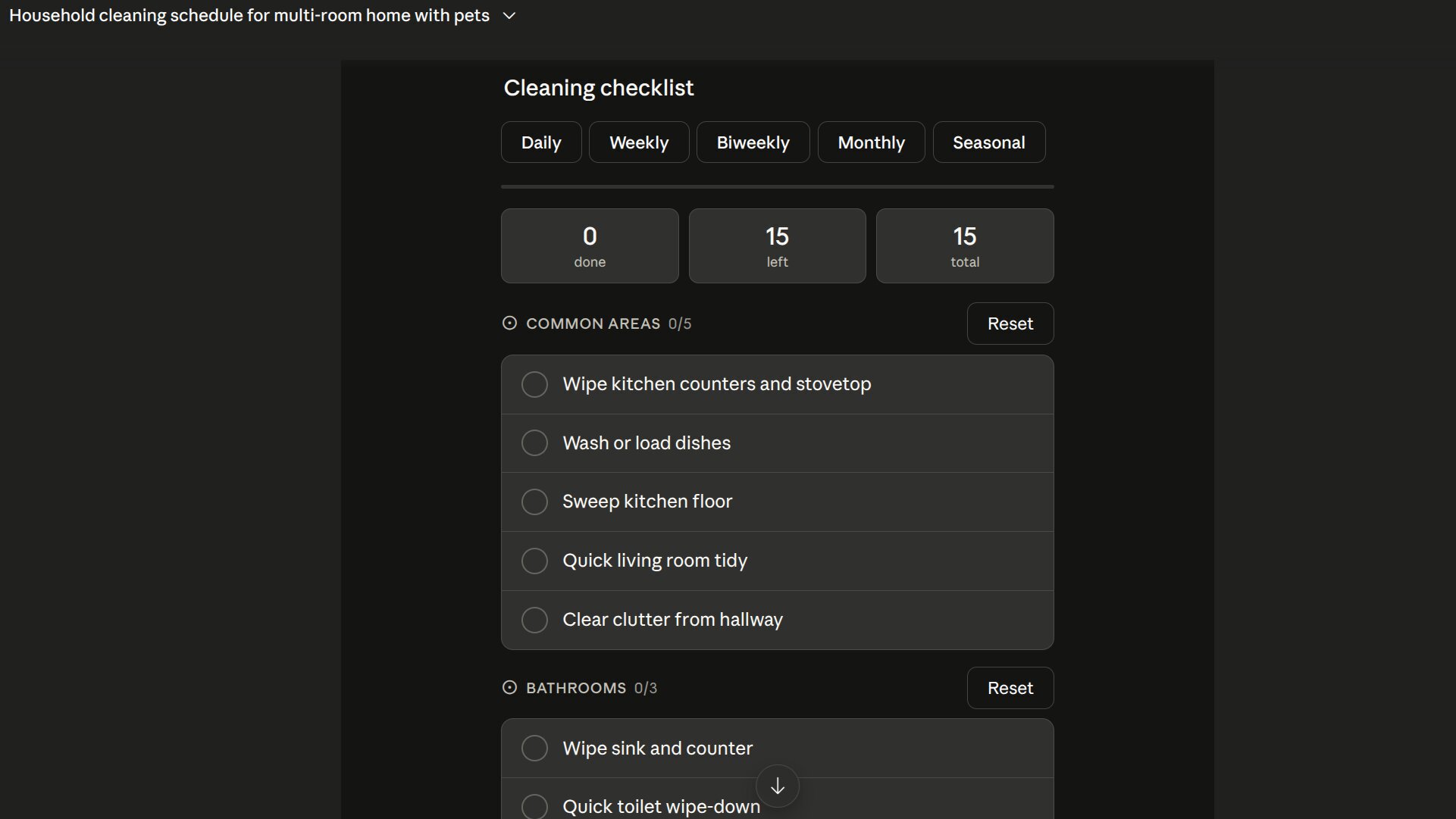
Within weeks, the bespoke utility successfully tracked shared expenses, automated maintenance logs for specific rooms, generated customized cleaning assignments for individual household members, and integrated pet care protocols. Yet, this approach revealed distinct technical ceilings. Extensive conversational debugging quickly exhausts daily usage limits on frontier AI models like Claude’s Opus variants. Moreover, user interfaces generated purely through rapid web prototyping often retain a generic aesthetic, lacking the polished micro-interactions and hardware-accelerated animations native to dedicated platform software. Packaging these web applications for official distribution channels similarly requires additional compilation layers, such as Capacitor or Cordova shells.
Industry Implications and the Democratization of Software Development
This DIY software experiment reflects a broader paradigm shift in the technology sector. As generative AI transitions from a novelty text processor to an active coding collaborator, the traditional divide between consumer and creator is rapidly dissolving. Industry analysts note that non-technical domain experts can now prototype enterprise-grade tools tailored precisely to their operational workflows, bypassing the lengthy product roadmaps of commercial software vendors.
This democratization carries profound implications for consumer software markets. As custom utility generation becomes frictionless, companies may face increasing pressure to offer highly modular, API-friendly architectures rather than rigid, closed-garden ecosystems. Consumers no longer need to tolerate bloated subscription tiers when they possess the tools to construct lightweight, purpose-built alternatives in a matter of weeks.
Future Horizons: The Convergence of AI and Personal Computing
Looking forward, the integration of generative intelligence into personal computing workflows will likely redefine how households manage daily operations. Future iterations of AI-assisted development platforms will likely feature automated cross-device syncing, native database generation, and intelligent context-aware UI design without requiring manual intervention in traditional integrated development environments.
Having spent months refining the progressive web iteration, the project has now graduated to a hybrid development phase utilizing advanced command-line tools and native Android frameworks. While traditional native engineering ultimately delivers superior performance, animation fidelity, and hardware integration, bypassing the prototyping phase would have short-circuited the learning process. For technology enthusiasts and productivity seekers facing similar software gaps, leveraging conversational AI to build a progressive web application serves as an invaluable pedagogical gateway. It demystifies the software development lifecycle, proves that custom solutions are entirely attainable, and fundamentally alters how users interact with the digital tools governing their daily lives.
