

For decades, the field of transplant medicine has been constrained by a relentless biological clock. The moment an organ is vascularly disconnected from a donor, cellular hypoxia triggers a cascade of metabolic decay. Starved of oxygen, tissues rapidly deplete their adenosine triphosphate (ATP) reserves, disrupting ionic gradients and initiating irreversible ischemic injury. To slow down this destructive cascade, surgeons have relied on static cold storage—submerging organs in specialized preservation solutions and packing them on ice at roughly 4°C (39°F). While this hypothermic state depresses metabolic demand by roughly 90 percent, it provides only a brief reprieve. For kidneys, the viable preservation window closes within 18 to 24 hours. Pushing beyond this threshold exponentially increases the risk of delayed graft function or outright organ failure.
Lowering the storage temperature further would theoretically depress metabolic rates even more dramatically, granting clinicians critical additional time. However, dropping temperatures below the freezing point of biological tissue (0°C) presents a catastrophic thermodynamic hurdle: the formation of intracellular and extracellular ice crystals. As water freezes, crystalline structures act as microscopic daggers, rupturing cell membranes, altering osmotic balances, and destroying delicate vascular networks. Attempting to freeze intact mammalian organs has thus remained one of biotechnology’s most stubborn barriers.
Now, a team of researchers led by Matthew Powell Palm, a thermodynamicist at Texas A&M University, has demonstrated a paradigm-shifting approach that circumvents ice formation entirely. By harnessing precise thermodynamic control, the team successfully supercooled porcine kidneys to -4°C (25°F) without generating a single crystal of ice, preserving the organs outside the body for up to three days. Upon rewarming and transplantation, the supercooled kidneys rapidly resumed physiological function, outperforming organs kept under current clinical cold-storage standards. The achievement marks a major milestone in organ preservation science, opening the door to an era where donor organs can be stored, transported, and matched with unprecedented precision.
The Physics of Ice-Free Sub-Zero Preservation
Traditional efforts to push organ preservation into sub-zero territory have largely depended on cryopreservation—a process that utilizes high concentrations of cryoprotective agents (CPAs) such as dimethyl sulfoxide (DMSO), glycerol, or ethylene glycol. These chemical compounds function essentially as biological antifreeze, altering the freezing point of water and enabling tissue to undergo vitrification, a state in which liquid transitions into an amorphous, glass-like solid without forming crystalline structures. While cryopreservation has proven wildly successful for isolated cellular systems—such as sperm, oocytes, and early-stage embryos—it faces severe limitations when applied to complex, whole-organ vascular systems. CPAs are notoriously toxic at high concentrations, inducing severe osmotic shock, biochemical strain, and microvascular damage during perfusive loading and unloading phases. Removing these chemicals prior to transplantation requires complex, time-consuming washing protocols that often cause additional tissue injury.
Powell Palm and his collaborators approached the dilemma not through chemical modification, but through pure thermodynamics. Rather than altering the chemical composition of the organ’s fluid with toxic additives, the team leveraged the physical dynamics of supercooling—a physical state where a liquid remains in its fluid phase even when brought below its standard freezing temperature.
The team’s solution centers on a specialized, hermetically sealed pressure chamber designed to maintain an organ under constant volume and controlled pressure conditions, a field known as isochoric thermodynamics. In a conventional open-air container (an isobaric system operating at constant atmospheric pressure), liquid water readily undergoes heterogenous ice nucleation whenever exposed to thermal fluctuations or physical disturbances. By contrast, an isochoric or pressure-regulated system suppresses the thermodynamic drive for ice crystals to nucleate and expand.
The physical apparatus itself embodies what Powell Palm describes as "low-tech high science." The primary unit consists of a robust, sealed chamber equipped with an optical or physical detection interface at its base to continuously monitor internal thermal stability and guard against spontaneous ice nucleation. Inside, the organ is submerged in a conventional, clinically approved preservation medium—such as University of Wisconsin (UW) solution—without the addition of synthetic cryoprotectants. By maintaining precise thermodynamic control, the device safely holds the organ in a stable supercooled liquid state at -4°C, lowering the tissue’s metabolic activity far beyond what standard 4°C ice storage can achieve, all while preserving delicate vascular and cellular architecture.
Rigorous Porcine Testing and Unprecedented Functional Recovery
To validate the safety and efficacy of their device, the research team conducted comprehensive preclinical trials using swine models. Pigs serve as the gold standard for translational renal research due to their anatomical, physiological, and hemodynamical similarities to human nephrology.
The experimental protocol involved surgically harvesting single kidneys from donor pigs and flushing them with standard cold preservation solution to remove residual blood cells, precisely mirroring human organ procurement procedures. The harvested kidneys were then assigned to various preservation arms: control groups held under traditional static cold storage on ice for either two hours or 24 hours, and experimental groups placed into the supercooling chamber at -4°C for duration windows of 24, 48, or 72 hours.
Following the designated storage period, the organs were rewarmed and autotransplanted back into the original animals. During the same surgical operation, the pigs’ remaining healthy native kidney was removed. This crucial step ensured that the animals relied entirely on the preserved, transplanted organ for survival, providing an unambiguous readout of renal performance.
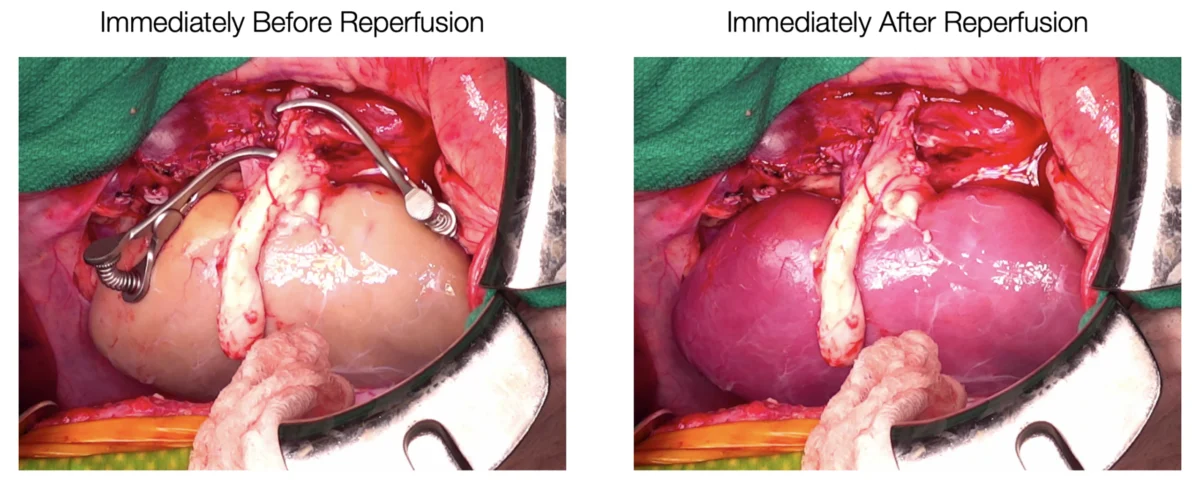
The clinical outcomes were stark. Organs supercooled for 24 hours exhibited immediate primary graft function upon vascular reperfusion, instantly producing urine on the operating table. Physiological tracking over the subsequent days revealed that renal biomarkers—including serum creatinine and blood urea nitrogen (BUN) levels—normalized within approximately ten days post-surgery. Notably, while this recovery trajectory was slightly slower than that of control kidneys stored on ice for just two hours (a duration rarely achievable in real-world human organ allocation), it was significantly faster and more robust than the recovery seen in kidneys stored under standard ice preservation for 24 hours.
Even more striking was the performance of organs preserved in the supercooling system for 48 and 72 hours—durations that far exceed the safe limits of current clinical practice. Swine receiving kidneys stored at -4°C for three full days demonstrated rapid physiological recovery, regaining baseline renal function within a timeframe superior to historical outcomes for 24-hour ice-stored grafts. Independent transplant experts noted that in previous literature, kidneys subjected to 48 hours of traditional cold storage often suffered from severe ischemic injury, requiring weeks of recovery or failing entirely due to extensive tubular necrosis.
Long-term monitoring underscored the durability of the preservation protocol. Over a 30-day post-transplant observational period, the recipient swine exhibited robust physical development, expanding their overall body mass by roughly 30 percent. Correspondingly, the transplanted supercooled kidneys underwent compensatory renal hypertrophy, expanding nearly twofold in volume to manage the physiological load previously handled by two functional kidneys. In one extended subject tracked for 200 days post-transplantation, subsequent tissue analysis revealed healthy, fully integrated renal parenchyma with no evidence of late-stage fibrotic degradation or vascular decay.
The researchers presented their landmark findings at the American Transplant Congress in Boston, highlighting that while other international research groups have recently achieved sub-zero pig kidney transplants using chemical cryoprotectants for up to 48 hours, those protocols yielded limited post-operative animal survival. Powell Palm’s chemical-free, 72-hour supercooling protocol represents the longest successful sub-zero preservation and long-term functional survival reported in medical history.
Solving the Global Organ Supply and Logistics Bottleneck
The translational implications of extending kidney shelf life from 24 hours to 72 hours—or potentially longer—are profound. Globally, end-stage renal disease (ESRD) poses a monumental public health and economic burden. In the United States alone, more than 104,000 individuals are currently registered on the national organ transplant waitlist, with the vast majority awaiting a viable kidney. On average, 17 patients die each day while waiting for a compatible donor organ.

Tragically, this mortality rate is not driven solely by an absolute scarcity of donors. A major contributing factor is the high rate of organ discard resulting from time-sensitive logistical failures. Under current operational constraints, up to one-third of donated human kidneys in the United States are discarded each year. Many of these organs deteriorate past the point of clinical utility while organ procurement organizations (OPOs) struggle to navigate complex logistics, including tissue matching, crossmatching, surgical team scheduling, and cross-country air transit.
When an organ is retrieved, transplant teams engage in a frantic race against cold ischemic time. If a potential recipient suffers an acute health complication, if weather grounds a flight, or if tissue typing reveals an unexpected immunological mismatch, the precious hours slip away. Once an organ approaches the 18-to-24-hour mark on ice, surgeons face a difficult calculus: transplant a marginal organ with a high risk of delayed graft function (which frequently requires expensive post-operative hemodialysis and intensive care stay) or discard it entirely.
Tripling the preservation window to 72 hours fundamentally reshapes this operational landscape. Kevin Myer, President and CEO of LifeGift, a leading Texas-based organ procurement organization, emphasizes that extending cold ischemic tolerance to three days would eliminate the crisis-driven nature of organ logistics.
With 72 hours of stable shelf life, OPOs could transition from costly, ad-hoc charter flights to routine commercial transport networks, dramatically reducing the financial barrier of organ retrieval. Furthermore, extended preservation permits thorough, unhurried histopathological and molecular evaluations of donor tissue, ensuring optimal HLA (human leukocyte antigen) matching and lowering the incidence of acute rejection. It also makes true international organ sharing logistically feasible, enabling rare tissue matches from donor networks in North America to be safely flown to compatible recipients in Europe or Asia.
Preliminary assays suggest the technology’s boundaries may extend even further. Un-transplanted porcine organs held in Powell Palm’s supercooled setup for up to 120 hours (five days) maintained structural cell integrity and baseline metabolic viability upon tissue analysis, suggesting that future iterations of the protocol could stretch preservation limits even further.
Technology Landscape: Supercooling vs. Perfusion Systems
To fully understand the market and clinical positioning of this thermodynamic breakthrough, it must be evaluated alongside alternative next-generation organ preservation technologies currently entering the clinical market.
Over the past decade, the transplant industry has seen significant commercial investment in Hypothermic Machine Perfusion (HMP) and Normothermic Machine Perfusion (NMP) platforms. Companies such as TransMedics and Organox have developed sophisticated portable systems that continuously circulate oxygenated, nutrient-rich fluids or warm blood through the organ during transit. NMP systems, in particular, keep the organ in a metabolically active state at 37°C, allowing clinicians to assess real-time physiological metrics—such as lactate clearance and vascular resistance—before implantation.
While machine perfusion represents a major advancement over simple ice coolers, it carries substantial drawbacks:
- High Complexity and Risk of Mechanical Failure: Continuous perfusion systems rely on complex pulsatile pumps, oxygenators, sensors, and power supplies. A mechanical malfunction, air embolus, or tubing occlusion during transit can catastrophic ruin the organ.
- Exorbitant Cost: NMP equipment and single-use disposable perfusion cassettes can add tens of thousands of dollars ($30,000 to $50,000+) to the cost of a single transplant procedure, straining hospital budgets and health insurance systems.
- Limited Storage Duration Extension: While machine perfusion improves organ quality and reduces delayed graft function, most clinical NMP protocols still only extend preservation by several hours, far short of the multiday window achieved by sub-zero supercooling.
By contrast, Powell Palm’s thermodynamic chamber operates on a principle he terms "low-tech high science." The hardware contains no hyper-complex active pumping circuits or vulnerable metabolic monitors during travel. Its static, pressure-controlled environment is structurally compact, self-contained, and highly durable. During field stress tests, researchers transported supercooled kidneys across state lines in the cargo trunk of a standard mid-size SUV (a Kia Sorento), subjecting the chamber to real-world mechanical vibration and temperature swings without triggering ice nucleation or compromising tissue viability. This physical resilience demonstrates that the system is ready for rugged, real-world transport conditions, including regional ground transit and commercial air freight.
| Feature / Metric | Traditional Static Cold Storage (SCS) | Normothermic Machine Perfusion (NMP) | Isochoric Supercooling (-4°C) |
|---|---|---|---|
| Preservation Temperature | ~4°C (39°F) | ~37°C (98.6°F) | -4°C (25°F) |
| Safe Preservation Window | 12 – 24 Hours | 12 – 24 Hours | 72 – 120 Hours |
| Additive / Chemical Needs | Standard UW Solution | Whole Blood / Oxygen Carriers | Standard UW Solution (Chemical-Free) |
| Mechanical Complexity | Minimal (Passive) | Very High (Pumps, Sensors, Oxygenators) | Low (Static Sealed Pressure Unit) |
| Estimated System Cost | Very Low | Extremely High ($30k–$50k per run) | Moderate to Low |
| Primary Clinical Benefit | Low cost, widespread use | Functional assessment before transplant | Extended shelf life, global logistics |
Regulatory Acceleration and Commercial Horizons
A major advantage of Powell Palm’s method lies in its streamlined regulatory approval pathway. Because the technique relies entirely on established physical principles and standard, FDA-cleared preservation fluids (such as University of Wisconsin solution) without requiring novel synthetic chemical cryoprotectants or toxic additives, the technology avoids the prolonged safety, toxicity, and pharmacokinetic evaluations that stall drug-device combination products.
The research team is actively preparing documentation for the U.S. Food and Drug Administration (FDA) to secure investigational clearances for human clinical trials. Given the absence of novel chemical entities, the device could potentially qualify for expedited regulatory review pathways, accelerating its transition from large-animal preclinical trials to human pilot studies.
To translate this research into a scalable commercial product, Powell Palm has partnered with biotechnology entrepreneur and cryobiology advocate Sebastian Giwa. Together, they are launching a specialized venture aimed at commercializing the supercooling chamber alongside broader platforms designed to temporarily suspend biological time.
While initial clinical efforts are strictly focused on renal transplantation—the largest segment of the transplant waitlist—the underlying thermodynamic principles of pressure-regulated supercooling are universally applicable across mammalian tissue types. Future experimental phases will target cardiac, hepatic, pulmonary, and pancreatic tissue architectures. Hearts and lungs, which currently suffer from hyper-fragile cold ischemic limits of just four to six hours, stand to benefit exponentially from even a modest extension to 24 or 48 hours. Extending the viable shelf life of donor hearts would instantly transform heart transplantation from an unpredictable, emergency-room sprint into a scheduled, highly optimized surgical procedure.
A Turning Point for Transplant Medicine
The successful demonstration of 72-hour sub-zero organ preservation without ice formation represents a major technical triumph in modern biotechnology. By bridge-building between thermodynamic physics and clinical surgery, Powell Palm and his team have cracked an age-old medical dilemma: how to drastically slow cellular metabolism without inflicting destructive ice crystal injury or chemical toxicity.
If human clinical trials mirror the striking outcomes observed in porcine models, the impact on global healthcare will be immediate and far-reaching. The widespread adoption of supercooled organ preservation promises to drastically diminish the tragedy of donor organ waste, flatten the astronomical costs of emergency transplant logistics, and ensure that thousands of patients currently languishing on transplant waitlists receive life-saving organs before time runs out. The ability to reliably pause biological time is no longer a theoretical goal—it is rapidly becoming an operational reality.
