

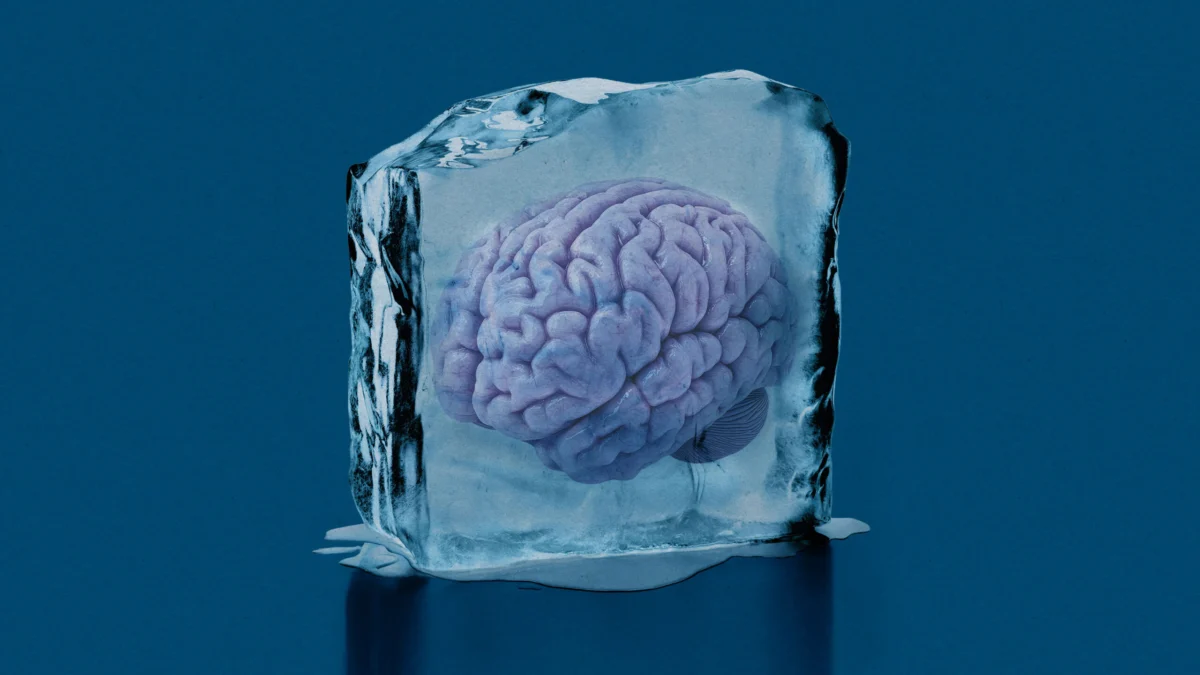
In a high-tech storage facility in the arid landscape of Arizona, the biological remains of L. Stephen Coles reside in a state of suspended animation. For more than ten years, Coles’s brain has been submerged in a specialized vat, maintained at a staggering -146 degrees Celsius. This silent vigil was briefly interrupted just over a year ago when a team of researchers carefully extracted the specimen to document its condition. This act was the fulfillment of a final request made by Coles, a prominent gerontologist and researcher of human aging, who dedicated the twilight of his career to the study of longevity and the radical potential of cryonics.
Coles was a man who viewed death not as a finality, but as a medical condition that future technology might one day treat. Before his passing from pancreatic cancer in 2014, he struck a pact with his colleague and friend, cryobiologist Greg Fahy. He wanted his own brain to serve as a test case for the efficacy of current preservation methods. Specifically, Coles was haunted by a technical fear common in the cryonics community: the "cracking" phenomenon. When biological tissues are subjected to extreme cryogenic temperatures, the resulting thermal stress can cause the organ to shatter like glass. Fahy, now the chief scientific officer at 21st Century Medicine and Intervene Immune, finally moved to analyze the biopsies of his friend’s brain, yielding results that have sparked both intrigue and intense debate within the scientific community.
The preliminary findings, recently shared on the preprint server bioRxiv, suggest a level of structural integrity that Fahy describes as "astonishing." Using advanced imaging to examine the biopsies—tiny fragments of tissue removed shortly after Coles’s death and stored separately—Fahy reported that the cellular architecture appeared to be remarkably intact. The significance of this observation lies in the fundamental challenge of cryopreservation: the prevention of ice crystal formation. When water freezes, it expands, creating jagged crystals that pierce cell membranes and obliterate the delicate internal machinery of the brain. To bypass this, cryobiologists use a process called vitrification, where water is replaced with "cryoprotective" chemicals (CPAs). These chemicals, while toxic in high concentrations, allow the tissue to harden into a glass-like state without the lethal formation of ice.
Fahy’s analysis focused on how these tissues reacted to the rewarming process. Historically, the introduction of CPAs has been known to distort cellular shapes, essentially crushing the internal structure under the weight of the chemicals. However, Fahy observed that upon rewarming and rehydration, the cells in Coles’s brain samples appeared to "bounce back." During a recent demonstration, Fahy illustrated this elasticity with his hands, showing how the compressed cells regained their original, more complex shapes once the cryoprotectants were removed. To Fahy, this structural recovery is a vital prerequisite for any future attempt at reanimation. If the hardware of the brain—the neurons, synapses, and glial cells—remains intact, the "software" of the mind might theoretically be preserved.
However, the scientific community remains deeply divided over what "intact" truly means in a biological context. While the structural scaffolding may be present, the functional viability of the tissue is a separate and far more daunting hurdle. John Bischof, a specialist in organ cryopreservation at the University of Minnesota, remains a vocal skeptic regarding the prospects of revival. His stance is grounded in the reality that Coles’s brain is, by all current medical definitions, dead. The process of rewarming the biopsies involved the use of "fixing" chemicals—substances used to halt decay—which effectively ensures the tissue remains biologically inert.
The divide between structural preservation and functional reanimation is where the field of cryobiology splits into two distinct paths. The first is the highly speculative world of cryonics, which focuses on "medical time travel"—the hope that individuals can be stored until a future era possesses the nanotechnology or molecular biology required to repair the damage of both the original cause of death and the preservation process itself. The second path is the pragmatic, high-stakes world of organ transplantation. While reanimating a human brain remains the stuff of science fiction, the ability to cryopreserve hearts, livers, and kidneys is a looming medical revolution.
Currently, the organ transplant system is plagued by a "race against the clock." Once an organ is harvested from a donor, it begins a rapid process of ischemia—cellular death due to lack of oxygen. A heart must typically be transplanted within four to six hours; a kidney might last 24 to 36 hours. This narrow window limits the geographical range of donor-recipient matches and prevents surgeons from properly preparing a patient’s immune system to accept the new tissue. If the techniques used on Coles’s brain could be perfected for whole organs, the medical industry could move toward "organ banking." This would allow for a global registry where organs are stored indefinitely, ensuring a perfect immunological match and virtually eliminating the waitlist deaths that claim thousands of lives annually.
Progress in this arena is accelerating. Researchers have already successfully cryopreserved and transplanted functional kidneys in rats and rabbits, a feat that seemed impossible just a few decades ago. Shannon Tessier, a cryobiologist at Massachusetts General Hospital, emphasizes that using human brains from deceased individuals like Coles provides a unique "research toolkit" for understanding how massive, dense biological structures respond to vitrification. Matthew Powell-Palm, a cryobiologist at Texas A&M University, notes that Fahy’s research provides a "strong indication" that large-scale tissues can be vitrified through perfusion—pumping CPAs through the vascular system—without the catastrophic formation of internal ice.
Despite these optimistic strides in organ banking, the specific goal of brain reanimation faces "unfathomable" technological barriers, according to Nick Llewellyn of Alcor. The brain is not merely a collection of cells; it is a hyper-complex electrochemical network. Even if every neuron is in its right place, the metabolic processes that define life—the firing of synapses and the flow of neurotransmitters—are extinguished during the cooling process. A recent breakthrough in Germany, where researchers revived electrical activity in mouse brain slices after storage at -196 degrees Celsius, offers a glimmer of hope, but scaling that success to a three-pound human brain is a challenge of a different order of magnitude.
Furthermore, the "cracking" issue that worried Coles remains an unresolved mystery. While Fahy’s biopsies showed no signs of fracturing, the full brain remains encased in a layer of frost within its Arizona vat. To remove that frost for a visual inspection would risk damaging the specimen, leaving the team in a state of clinical uncertainty. If the brain has indeed cracked due to thermal tension, the prospect of reassembling the trillions of neural connections becomes nearly impossible, even with futuristic technology. As Powell-Palm bluntly suggests, there are countless ways in which the delicate neurons could be "toast" long before a scientist ever attempts to flip the switch on reanimation.
The legacy of L. Stephen Coles, therefore, sits at the intersection of faith and empirical science. For the cryonics community, his brain is a beacon of hope—a "gateway to suspended animation" that might one day allow humanity to endure the long journeys required for interstellar travel or to escape the clutches of terminal illness. For the broader scientific community, it is a valuable data point in the quest to master the physics of extreme cold for the sake of modern medicine.
As the field of cryobiology moves toward human-scale trials for organ preservation, the ethical and philosophical questions will only intensify. What does it mean to be "preserved"? If a brain’s structure is 100% intact but its function is zero, is the person still there? The answer likely lies decades, if not centuries, in the future. For now, Coles remains in his silent, frozen vigil, his cellular architecture standing as a testament to a man who gambled everything on the hope that science would eventually catch up to his vision of immortality. Whether he is a pioneer of a new era of "medical time travel" or a relic of an ambitious dream, his contribution has undeniably pushed the boundaries of what we understand about the resilience of the human brain against the ultimate cold.
