

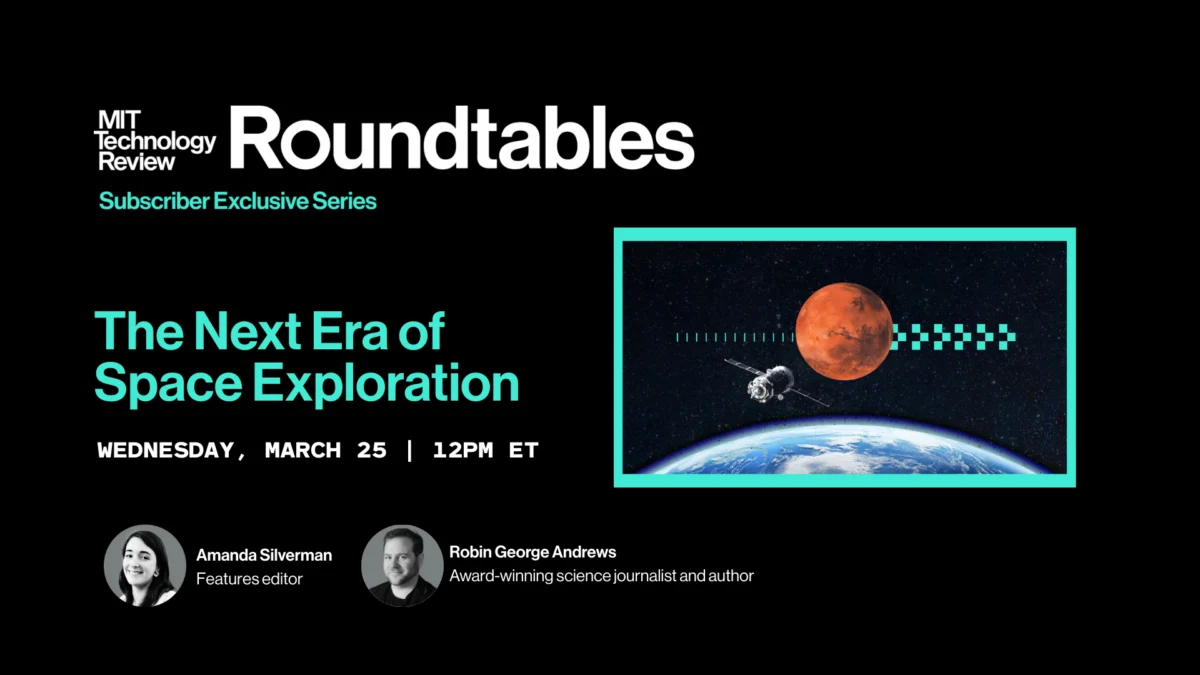
The transition from a period of state-sponsored "flags and footprints" to a multifaceted, commercialized, and geopolitically complex space ecosystem marks one of the most significant technological shifts of the 21st century. For decades, the narrative of space exploration was defined by the rivalry between two superpowers, fueled by the Cold War and characterized by massive, government-funded programs. Today, that paradigm has dissolved, replaced by a "New Space" era where private capital, reusable launch architecture, and a globalized race for lunar resources are redefining the boundaries of the possible. This evolution is not merely a change in who builds the rockets, but a fundamental transformation in how humanity perceives, utilizes, and governs the final frontier.
The primary catalyst for this shift has been the radical reduction in the cost of reaching Low Earth Orbit (LEO). Historically, the barrier to entry was the astronomical price per kilogram of payload, a figure that remained stubbornly high during the era of the Space Shuttle. The advent of reusable launch vehicles, pioneered by private entities, has shattered this economic ceiling. By successfully landing and refurbishing first-stage boosters, the industry has transitioned from "disposable" aviation to a model that more closely resembles traditional logistics. This downward pressure on pricing has democratized access to space, allowing not only smaller nations but also academic institutions and startups to deploy constellations of small satellites—CubeSats—that provide unprecedented data on everything from climate change to global supply chains.
However, the "New Space" era extends far beyond the deployment of telecommunications hardware. We are currently witnessing the birth of an orbital economy that seeks to leverage the unique environment of microgravity for industrial purposes. In the absence of gravity-induced convection and sedimentation, certain biological and chemical processes behave differently. This has profound implications for pharmaceutical research, particularly in the growth of high-quality protein crystals and the development of new drug delivery systems. Furthermore, the manufacturing of ZBLAN optical fibers and specialized semiconductors in orbit promises products with fewer defects than those produced on Earth. As the International Space Station (ISS) nears its scheduled decommissioning at the end of the decade, the focus is shifting toward commercial orbital platforms. These modular, private stations will serve as the factories, laboratories, and perhaps even the hotels of the next decade, signaling a move toward a permanent human presence in LEO that is economically self-sustaining.
Beyond Earth’s immediate orbit, the Moon has re-emerged as the strategic centerpiece of global space policy. Unlike the Apollo missions, which were primarily symbolic, the upcoming Artemis missions and their international counterparts are designed for "sustained presence." The discovery of water ice in the permanently shadowed regions of the lunar South Pole has transformed the Moon from a barren satellite into a vital refueling station. Through In-Situ Resource Utilization (ISRU), this ice can be harvested and processed into liquid oxygen and hydrogen, providing the propellant necessary for deep-space missions to Mars and beyond. This "lunar-to-Mars" strategy positions the Moon as a proving ground for the technologies required for long-duration human survival, including autonomous mining, 3D-printed habitats using lunar regolith, and advanced life-support systems.
The return to the Moon, however, is fraught with geopolitical tension. The race is no longer a solo run but a competition between two distinct blocs: the U.S.-led Artemis Accords and the China-Russia International Lunar Research Station (ILRS) initiative. This bifurcation of space exploration reflects broader terrestrial rivalries and raises urgent questions regarding galactic governance. While the 1967 Outer Space Treaty established that no nation can claim sovereignty over celestial bodies, it remains vague on the issue of resource extraction. The Artemis Accords attempt to bridge this gap by establishing "safety zones" and guidelines for the extraction of lunar minerals, but these frameworks are not universally accepted. The potential for conflict over "prime real estate" on the lunar surface—areas with high concentrations of water ice or consistent sunlight for solar power—necessitates a new era of space diplomacy that can prevent the militarization of the lunar frontier.
As we venture further, the role of artificial intelligence and robotics becomes the true force multiplier. The sheer distance of Mars means that real-time communication with Earth is impossible, with delays ranging from four to twenty-four minutes. This "latency gap" demands a level of mission autonomy previously unseen. Future rovers and habitats will need to utilize AI for real-time decision-making, from diagnosing mechanical failures to identifying high-value geological samples. We are moving toward a future where "human-machine teaming" is the standard; where autonomous systems perform the high-risk construction and maintenance tasks, allowing human explorers to focus on high-level scientific inquiry.
Furthermore, the sustainability of this expansion is a growing concern among industry experts. The proliferation of satellite "mega-constellations" has led to an increasingly crowded LEO, raising the specter of the Kessler Syndrome—a theoretical scenario where a single collision creates a cascade of debris that renders certain orbits unusable for generations. Addressing "space junk" is no longer an academic exercise but a commercial necessity. Technologies for active debris removal, such as harpoons, nets, and robotic arms, are currently in the testing phase. Moreover, the industry is seeing a push toward "circularity" in space, where defunct satellites are refueled or cannibalized for parts in orbit rather than being allowed to deorbit or clutter the vacuum.
The financial architecture of space exploration is also undergoing a metamorphosis. The influx of venture capital and the emergence of "space-focused" investment funds indicate that the private sector sees space not as a high-risk gamble, but as a long-term infrastructure play. The potential for asteroid mining, while still decades away from commercial viability, remains the "holy grail" of celestial commerce. A single metallic asteroid can contain more platinum-group metals than have ever been mined in human history. While the technical hurdles are immense, the long-term trend suggests that the scarcity-based economies of Earth may eventually be replaced by the resource abundance of the solar system.
In analyzing the future impact of these trends, one must consider the societal and ethical dimensions of becoming a multi-planetary species. The commercialization of space raises questions about equity and access. Will the benefits of space-based technologies—such as global high-speed internet and advanced medical treatments—be distributed equitably, or will they widen the gap between space-faring nations and the rest of the world? Additionally, the environmental impact of increased launch cadences cannot be ignored. The accumulation of black carbon and other propellants in the upper atmosphere requires rigorous study to ensure that our quest to explore other worlds does not inadvertently damage our own.
Looking ahead, the next twenty years will likely be defined by the transition from exploration to settlement. This will require breakthroughs in nuclear thermal propulsion to shorten transit times to Mars, as well as advancements in synthetic biology to create crops capable of growing in extraterrestrial soil. The psychological challenges of isolation and the physiological effects of prolonged exposure to cosmic radiation remain significant hurdles that will require a multidisciplinary approach, blending medicine, engineering, and sociology.
Ultimately, the next era of space exploration is characterized by a shift from the extraordinary to the infrastructural. Space is becoming an extension of our global economy, a theater for geopolitical maneuvering, and a laboratory for the survival of the human race. As the boundaries between government mandates and private enterprise continue to blur, the success of this new era will depend on our ability to balance competitive drive with collaborative governance. The rockets of the future are being built today, but the frameworks for how we use them—and how we coexist in the vastness of the cosmos—are still being written. The journey upward is no longer just about reaching the stars; it is about building a sustainable, legal, and economic foundation that allows humanity to thrive among them.
