

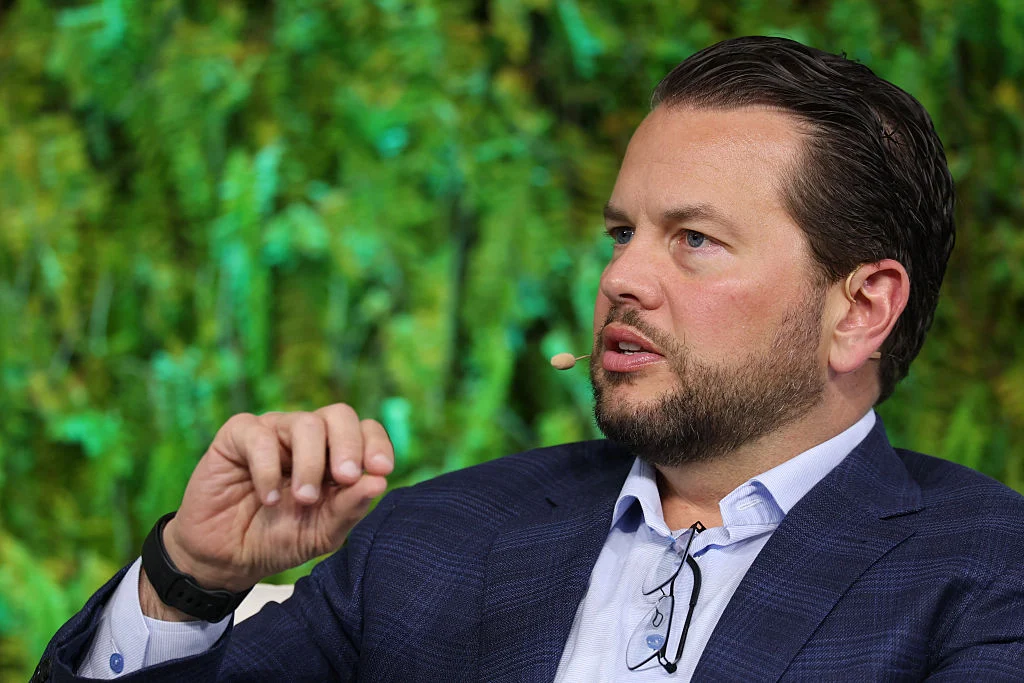
The long-standing consensus among Silicon Valley’s elite—that the internet should remain a largely self-regulated frontier—is beginning to fracture. In a move that signals a profound departure from the industry’s typical resistance to government intervention, Pinterest CEO Bill Ready has formally called upon global legislators to implement a statutory ban on social media for users under the age of 16. This endorsement of strict age-gating marks a pivotal moment in the ongoing debate over digital safety, as one of the web’s most prominent leaders aligns himself with a growing international movement to treat social media access as a regulated public health matter rather than a universal right.
Ready’s advocacy, articulated through a high-profile call for reform, positions him as a rare defector from the standard "hands-off" corporate narrative. By framing the current state of the internet as the "largest social experiment in history," Ready has tapped into a burgeoning anxiety shared by parents, educators, and mental health professionals. The core of his argument rests on the premise that children have been granted unfiltered access to digital environments that were never designed for the complexities of adolescent brain development. This lack of "forethought" regarding the psychological consequences of algorithmic engagement, he argues, has created a crisis that the tech industry is either unwilling or unable to solve through voluntary measures alone.
The Public Health Parallel: From Nicotine to Networks
One of the most striking elements of this shift in rhetoric is the explicit comparison between the tech industry and the tobacco giants of the 20th century. For decades, the comparison of social media "likes" to dopamine-inducing substances was largely the domain of academic critics and grassroots activists. However, when a sitting CEO of a major platform suggests that tech executives risk sounding like tobacco leaders who had to be "shamed and sued into submission," the industry’s internal defense mechanisms are clearly under internal strain.
The analogy is potent. Just as the tobacco and alcohol industries are governed by strict age requirements and advertising restrictions based on the known risks of their products, Ready suggests that the "unfiltered" nature of modern social platforms carries a similar level of societal risk. By invoking this comparison, the conversation moves away from "innovation" and "connectivity" and toward "harm mitigation" and "duty of care." The implication is clear: if the industry cannot or will not prioritize the safety of its most vulnerable users, then the state must exercise its power to do so.
A Global Domino Effect: The End of the Open Web for Minors?
The call for a ban is not happening in a vacuum. It arrives as a wave of legislative action sweeps across the globe, indicating that the era of the "unrestricted internet" for minors may be coming to an end. Australia has emerged as the vanguard of this movement, proposing and implementing some of the world’s most stringent social media age limits. The "Australian model" is being closely watched by policymakers worldwide as a potential blueprint for how to balance digital freedom with childhood protection.
The momentum is not limited to the Southern Hemisphere. In Europe, France has recently approved measures to restrict social media for those under 15, while Germany’s ruling coalition has signaled strong support for similar curbs. In Southeast Asia, Malaysia and Indonesia have joined the fray, announcing their own intentions to implement bans for users under 16. Even in the United States, where the First Amendment often complicates such restrictions, a growing number of states are exploring ways to mandate age verification and parental consent, reflecting a rare moment of bipartisan agreement on the need for digital guardrails.
The Pinterest Paradox: Business Interests vs. Ethical Mandates
Ready’s stance is particularly notable because it appears to run counter to the traditional growth-at-all-costs model of social media. Most platforms view the "youth demographic" as their most vital asset—a pipeline of lifelong users and a primary driver of cultural relevance. To advocate for their removal is, on the surface, an act of commercial self-sabotage.
However, Pinterest’s unique positioning within the digital ecosystem offers a window into why Ready might feel emboldened to take this stand. Unlike TikTok or Instagram, which thrive on high-frequency social interaction, peer comparison, and "influencer" culture, Pinterest has increasingly marketed itself as a utility for "inspiration" rather than a social network. The company has already taken proactive steps, such as disabling social features for users under 16 on its own platform.
According to Ready, this move has not alienated the younger generation. On the contrary, he asserts that Pinterest has remained successful with Gen Z even with these restrictions in place. This suggests a potential "third way" for the industry: a future where platforms for minors are strictly utilitarian or creative, stripped of the addictive social feedback loops that research has linked to increased rates of depression, anxiety, and diminished concentration skills.

The Technical and Ethical Hurdle: The Age Verification Dilemma
While the political will for a ban is surging, the technical implementation remains a significant challenge. The question of "how" to verify age without compromising the privacy of all users is the primary obstacle facing legislators. Traditional methods, such as self-reporting birthdates, are notoriously easy to circumvent. More robust methods, such as requiring government-issued IDs or using AI-driven facial analysis to estimate age, raise significant concerns regarding data privacy and surveillance.
Civil liberties groups have argued that a universal age-verification mandate could effectively end online anonymity, forcing every user to hand over sensitive biometric or identifying data to private corporations or government-monitored databases. There is also the "cat and mouse" game of VPNs and secondary markets for accounts, which could render any ban toothless if not accompanied by unprecedented levels of digital enforcement.
Ready’s call for government intervention acknowledges these complexities. By asking for a ban, he is essentially shifting the burden of solving the verification problem from individual companies to the state. If a government mandates a ban, it must also provide the framework for how that ban is enforced, potentially through a centralized digital identity system or third-party verification hubs that act as intermediaries between users and platforms.
The Psychological Context: Why 16?
The choice of 16 as the proposed "digital age of consent" is not arbitrary. It aligns with a growing body of neuroscientific research suggesting that the mid-teen years are a period of heightened sensitivity to social evaluation and peer feedback. During this developmental window, the brain’s prefrontal cortex—responsible for impulse control and long-term thinking—is still maturing, while the reward centers are highly active.
Social media platforms, with their endless streams of quantified social approval (likes, views, follows), are effectively designed to exploit this biological vulnerability. By removing children under 16 from these environments, proponents of the ban argue we are giving the adolescent brain time to develop the necessary resilience to navigate the complexities of the digital world. The goal is to move the "coming of age" online to a point where the user is more psychologically equipped to handle the algorithmic pressures of the modern web.
Future Implications and the Industry’s Response
The reaction from the rest of the tech industry to Ready’s proposal has been a mix of silence and cautious skepticism. Giants like Meta, ByteDance, and Snap have invested heavily in "safety centers" and parental control tools, arguing that the solution lies in empowering parents rather than implementing blanket bans. They contend that a total ban could isolate marginalized youth who find community online or prevent teenagers from accessing educational resources.
However, the tide of public opinion appears to be shifting toward the "Ready doctrine." As more data emerges linking heavy social media use to a decline in youth well-being, the "empowerment" narrative is increasingly seen as a way for companies to offload responsibility onto overwhelmed parents.
In the coming years, we are likely to see a tiered internet. We may move toward a reality where the web is divided into "child-safe" zones—highly regulated, non-social, and utility-focused—and the "adult" web, which remains the high-speed, high-interaction environment we know today. The transition to this model will be messy, litigious, and technically fraught, but Ready’s intervention suggests that the industry’s internal resistance is no longer a monolith.
Conclusion: A New Social Contract for the Digital Age
Bill Ready’s call for a social media ban for those under 16 is more than just a policy suggestion; it is a request for a new social contract between technology companies, governments, and the public. It marks the end of the "innocence" of the social media era, where growth was assumed to be an inherent good and the consequences were a secondary concern.
As governments in Australia, Europe, and Asia move forward with their own versions of these restrictions, the pressure on the United States and other holdouts will become immense. The debate is no longer about whether social media affects children; that question has been answered by a decade of lived experience and clinical research. The debate is now about who has the authority to intervene and how much of our digital liberty we are willing to trade for the mental health of the next generation. By breaking ranks, the Pinterest CEO has ensured that this conversation can no longer be ignored by his peers in the C-suite or by the legislators who hold the power to change the rules of the game.
