

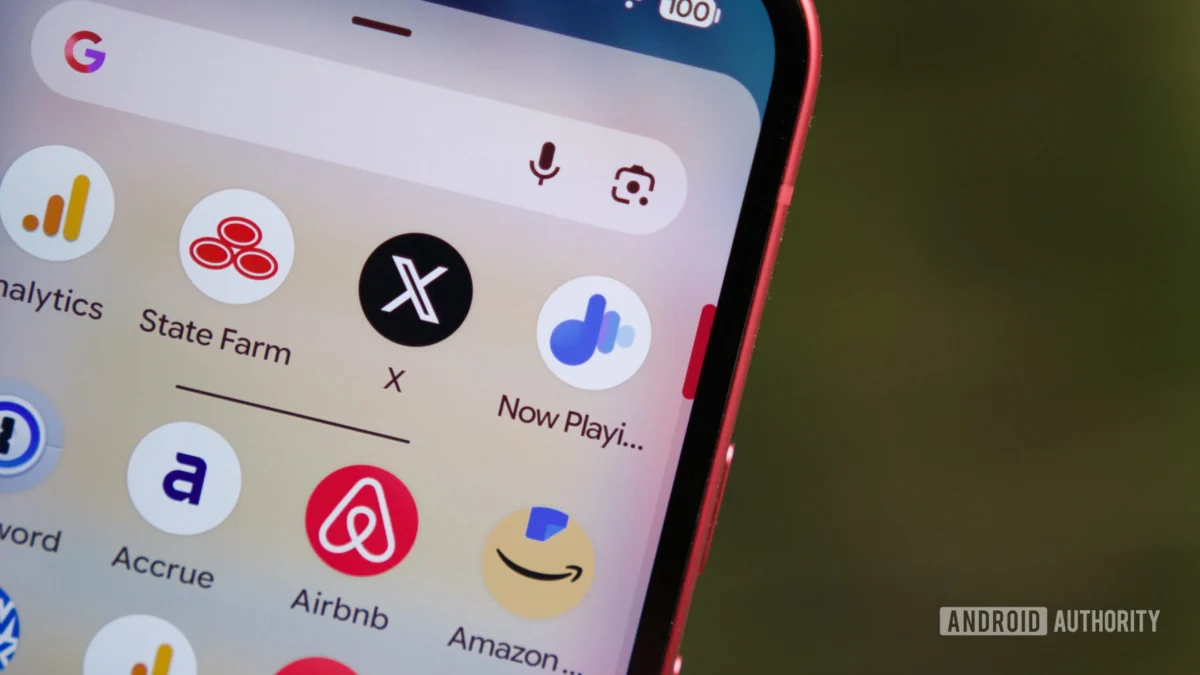
For years, Google’s "Now Playing" feature has stood out as one of the most practical, low-friction utilities embedded within the Pixel ecosystem. Operating entirely on-device to preserve user privacy, the background service passively listens to ambient audio in coffee shops, supermarkets, and city streets, discreetly projecting track titles and artist names directly onto the lock screen. Long before a user might think to launch a dedicated third-party tool like Shazam or SoundHound, the Pixel has already cataloged the sonic environment.
However, an unexpected shift earlier this year disrupted this seamless workflow. When Google transitioned the underlying framework of Now Playing into a standalone, modular application via the March Pixel Drop, the accompanying notification shade alerts were quietly retired. While songs continued to populate the lock screen and ambient display, the removal of the persistent notification drop-down introduced friction. Users could no longer glance at their active notification drawer to review recently heard tracks while their devices were unlocked, nor could they easily access history logs or bookmark favorites without digging into deeper menus.
Fortunately, recent community activity and user feedback indicate that Google is systematically reversing this unpopular modification, breathing new life into the notification-based music tracking workflow.
The Anatomy of the Rollout: What Users Are Seeing
Widespread chatter across online forums and enthusiast communities points to a silent server-side revival of Now Playing notifications. Pixel owners running contemporary software builds are once again discovering recognized tracks neatly indexed inside their notification shades.
When a song is successfully identified in the background, a clean, informative alert surfaces, detailing the track title and performing artist. Interacting with the notification via its drop-down arrow reveals expanded contextual shortcuts. These include direct options to favorite a track or access the broader Now Playing history log instantly.
This enhancement eliminates the tedious multi-step process previously required to verify a track’s identity if the lock screen was bypassed. Users no longer need to unlock their devices, hunt down the standalone app icon, or navigate to a Quick Settings toggle just to check a tune that played moments earlier. By restoring the notification shade integration, Google is effectively marrying the speed of passive ambient listening with the utility of active notification management.
Technical Origins: Piecing Together the Codebase
The return of this functionality does not come entirely out of left field. Industry analysts tracking mobile operating system developments previously flagged infrastructural hints pointing toward a reversal.
Code inspections embedded within deep system packages—specifically Android System Intelligence, the core engine responsible for handling predictive models and contextual features on Pixel hardware—offered early clues. Investigators uncovered dormant toggles and framework strings dedicated to music-recognition alerts. Although these switches were initially non-functional during early exploratory analyses, they provided definitive proof that engineers were actively iterating on the feature.
Subsequent application package analyses corroborated these findings by successfully forcing the activation of the notification logic ahead of an official public deployment. These deep-dive investigations also exposed parallel engineering efforts aimed at modernizing the platform, including preparations for multi-user profile synchronization and cloud-backed history management.
By decoupling features into modular applications via the Google Play Store, tech giants like Google aim to accelerate update cycles and patch vulnerabilities independently of major annual operating system upgrades. Yet, as this episode demonstrates, architectural refactoring sometimes carries unintended consequences, stripping away nuanced user-experience conveniences that consumers have grown to rely upon daily.
Ripple Effects Across the Broader Ecosystem
The elimination of Now Playing notifications earlier this year was more than a minor visual inconvenience for casual listeners; it actively broke specialized workflows for power users and data enthusiasts.
A variety of third-party automation tools and companion applications relied heavily on the text content broadcasted through the Android notification shade to harvest listening habits. Services like Last.fm scrobblers, custom Tasker profiles, and personal cataloging databases depended on the persistent notification to automatically log ambient musical discoveries. When Google yanked the notification channel, these integrations abruptly failed, severing the bridge between real-world audio environments and personal data archives.
The reinstatement of the feature promises to repair this severed pipeline. Developers of auxiliary utilities can once again tap into standard notification-listener APIs to ingest track metadata cleanly and reliably. This highlights a broader principle in mobile product design: power users often build complex, multi-layered workflows on top of seemingly minor operating system behaviors, making backwards compatibility and feature retention critical for ecosystem satisfaction.
How to Verify and Trigger the Restored Functionality
For Pixel owners eager to see whether the update has reached their devices, a few basic housekeeping steps are recommended. Because the rollout appears to be managed via gradual server-side updates and incremental component patches, availability may vary by region and device model.
First, users should verify that both the standalone Now Playing application and Android System Intelligence are updated to their latest respective versions through the Google Play Store. Furthermore, checking system settings to ensure that notification permissions for Android System Intelligence remain fully enabled is crucial, as restricted notification channels can suppress alerts even if the underlying code is active.
Official documentation from the platform holder confirms that when properly configured, these alerts are designed to surface fluidly regardless of whether the handset is actively unlocked or resting on a desk. If a recognized song fails to trigger an immediate alert, a simple device reboot or a brief wait for the server-side flag to propagate to the device is usually all that is required.
Looking Forward: The Balance Between Modernization and Consistency
The trajectory of Pixel’s ambient audio recognition tool offers a fascinating case study in modern software lifecycle management. As smartphones transition toward deeper ambient computing models—where artificial intelligence and on-device machine learning anticipate user needs before they are explicitly voiced—the boundaries between background services and foreground user interfaces become increasingly delicate.
Google’s willingness to listen to consumer pushback and restore a deprecated feature demonstrates a healthy responsiveness to community sentiment. It underscores the reality that subtle design choices—such as where and how a song title is displayed—matter immensely to a loyal hardware base that prizes efficiency and frictionless design.
As the tech industry marches toward an increasingly automated future, maintaining core ergonomic standards will remain paramount. For now, Pixel enthusiasts can rejoice in knowing that one of their favorite understated tools is returning to its fully realized state, ensuring that the soundtrack of everyday life is never more than a glance away.
