

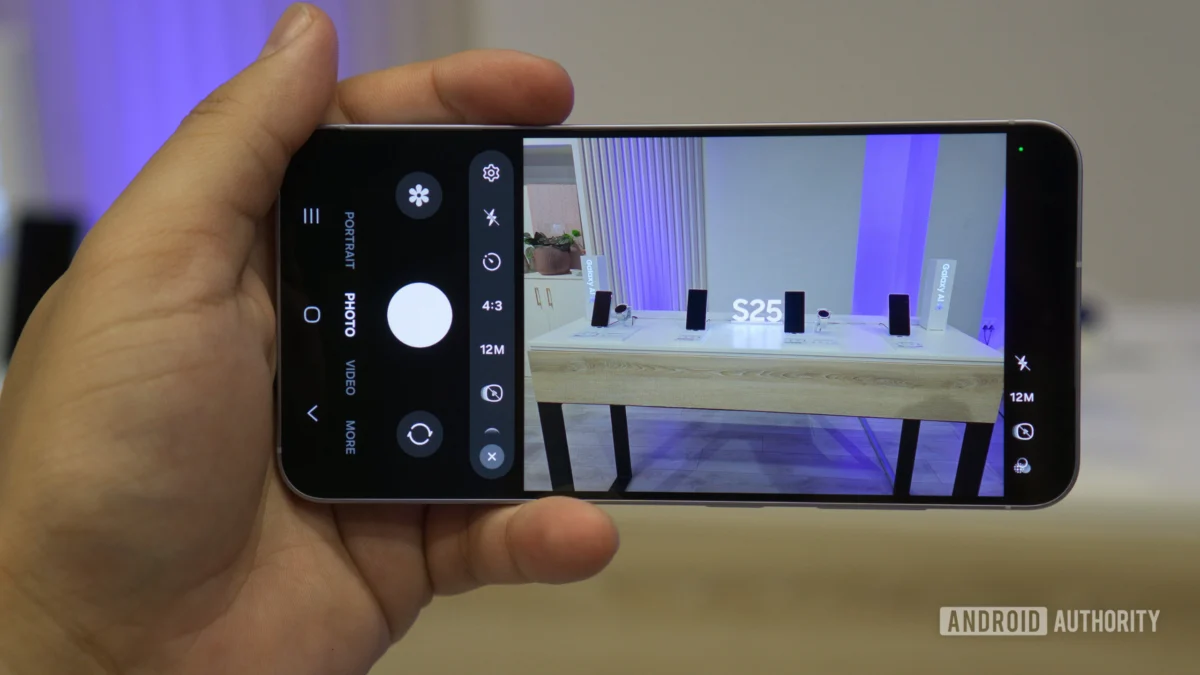
The rollout of major software iterations has traditionally served as a clear demarcation line between current-generation hardware and legacy devices. Manufacturers frequently gatekeep advanced computational photography tools and complex interface enhancements behind newer system-on-chip architectures, citing hardware constraints or processing limitations. However, recent developments within Samsung’s ecosystem signal a strategic evolution in how the South Korean electronics giant manages feature parity across sequential generations. With the debut of the One UI 9 Beta 1 program, early adopters evaluating the software on the Galaxy S25 have uncovered a sophisticated imaging capability previously thought to be exclusive to the subsequent Galaxy S26 hardware family.
This crossover of advanced functionality highlights a broader industry shift toward software-defined hardware differentiation. Rather than restricting cutting-edge capabilities strictly to new device sales cycles, ecosystem developers are increasingly leveraging algorithmic optimizations that can execute across multiple generations of mobile processors. As mobile technology matures, the bottleneck for innovation has shifted decisively from raw silicon horsepower to software ingenuity. The integration of advanced stabilization mechanics into an established device lineup demonstrates that modern flagship chipsets possess ample computational headroom to support features initially marketed as generational exclusives.
Unpacking the Mechanics of Horizontal Lock
The standout addition making its way into the One UI 9 beta ecosystem is Horizontal Lock, a stabilization modality that debuted alongside the Galaxy S26 portfolio. Traditional optical image stabilization (OIS) and electronic image stabilization (EIS) systems are designed primarily to mitigate high-frequency vibrations, hand tremors, and minor translational movements during capture. While effective at smoothing out walk-and-talk scenarios, conventional EIS systems struggle when a recording device undergoes radical rotational shifts or intentional tilts.
Horizontal Lock redefines stabilization by maintaining an absolute horizon relative to the ground, regardless of how the physical chassis of the smartphone is manipulated. Operating as an advanced extension of the overarching Super Steady video suite, the feature relies on a continuous, high-frequency feedback loop between the device’s multi-axis gyroscope, accelerometer, and central processing unit. When activated, the algorithm analyzes real-time rotational data and dynamically rotates, scales, and repositions the frame within the broader image sensor canvas to ensure the horizon remains perfectly level.
Achieving this level of fluid stabilization requires a significant crop factor. Because the software must digitally rotate the image frame by up to 360 degrees in extreme scenarios, the camera sensor captures a wider field of view than what is ultimately rendered in the final output file. The processor then crops into this high-resolution sensor buffer, utilizing the peripheral pixels to dynamically reframe the shot on the fly. Although this process involves a minor trade-off in native resolution utilization, the resultant footage achieves a cinematic, gimbal-like smoothness that was previously impossible to attain using handheld smartphone hardware alone.
The Ecosystem Implications of Retroactive Feature Distribution
The appearance of Horizontal Lock on the Galaxy S25 through a public beta build sheds light on Samsung’s evolving philosophy regarding software longevity and customer retention. Historically, flagship smartphone buyers anticipated a steady decline in major feature additions as their devices aged, with software updates primarily relegated to security patches and minor UI refreshments. By backporting sophisticated camera capabilities from newer hardware iterations, Samsung is effectively extending the active lifecycle and perceived value of its previous-generation investments.
This strategy carries profound implications for consumer purchasing behavior and brand loyalty. In a saturated smartphone market where annual hardware upgrades offer increasingly incremental improvements—such as minor boosts in peak display brightness or fractional increases in battery efficiency—software capability has emerged as the primary battleground for consumer retention. When users realize that purchasing an older flagship does not immediately lock them out of the latest computational photography advancements, the pressure to upgrade annually diminishes, compelling manufacturers to compete on the richness and longevity of their software support ecosystems.
Furthermore, this development underscores the growing importance of rapid iteration via public beta programs. Because Samsung’s official initial changelogs for the One UI 9 Beta 1 release omitted explicit references to the inclusion of Horizontal Lock, the discovery relied entirely on community-driven investigation and user-submitted demonstrations across social platforms. This collaborative verification process highlights how modern enthusiast communities act as crucial extensions of the software validation pipeline, uncovering hidden optimizations and undocumented feature migrations that escape corporate marketing summaries.
Technical Hurdles and Algorithmic Demands
Integrating a computationally intensive feature like Horizontal Lock into an established smartphone architecture is not without its engineering challenges. The feature demands sustained, high-bandwidth processing power, combining real-time sensor fusion with heavy image scaling algorithms. During extended recording sessions, this intensive workload places significant demands on both the ISP (Image Signal Processor) and the NPU (Neural Processing Unit), which must manage thermal dissipation and power consumption simultaneously.
That the Galaxy S25 handles these computational demands seamlessly within a beta build speaks to the architectural robustness of its underlying processor. It also reflects sophisticated code optimization on the part of Samsung’s engineering teams, who must ensure that backported features do not compromise system stability, battery efficiency, or thermal thresholds. The successful execution of Horizontal Lock on older silicon validates the design choices made during the initial development of the platform, proving that future-proofing is increasingly a matter of software foresight rather than purely reactive hardware iteration.
The Broader Trajectory of Mobile Videography
As artificial intelligence and advanced sensor fusion continue to converge, the boundary between professional cinema equipment and consumer mobile hardware grows increasingly porous. Features that once required dedicated mechanical gimbals, expensive post-production stabilization suites, or specialized broadcast gear are now democratized through software algorithms executed directly on pocket-sized devices.
The successful migration of advanced stabilization tools from newer flagship generations to legacy hardware sets a compelling precedent for the industry at large. It suggests a future where device lifespans are defined less by hardware obsolescence and more by the continuous evolution of software-driven capabilities. As consumers increasingly prioritize software longevity and feature continuity when evaluating mobile ecosystems, manufacturers will be forced to adopt similarly fluid distribution models. For users currently operating the previous-generation hardware, the arrival of these advanced stabilization capabilities serves as a timely reminder that the most impactful upgrade a smartphone can receive often arrives silently over the air, transforming the device they already own into a more powerful creative tool.
