

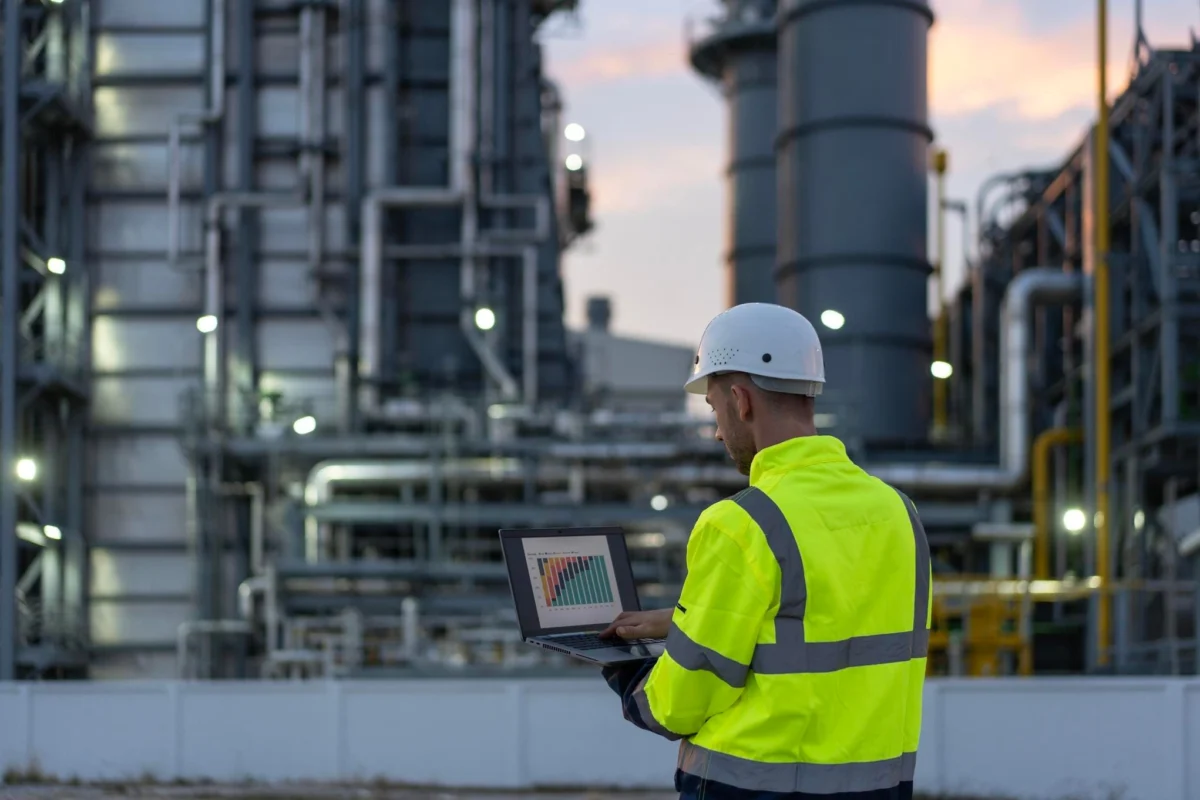
On a remote drilling rig along the Gulf Coast, the air is thick with humidity and the metallic scent of heavy machinery. In this high-stakes environment, a young field technician approaches a massive, high-pressure manifold—a critical piece of equipment where any error can lead to catastrophic failure. Just before securing a vital connection, he pauses, reaches for a custom-rigged spacer, and executes a rapid adjustment. The move is fluid, practiced, and precise. In twenty seconds, he has bypassed a notorious pinch-point hazard that typically causes twenty minutes of mechanical struggle. When asked if this ingenious workaround is documented in the official service manual, the technician’s response is telling: "If we followed the corporate manual word for word, we’d be three days behind schedule and I’d probably have lost a finger by now."
This exchange illuminates a profound and often ignored crisis in modern industrial operations. There exists a massive, dangerous gulf between "work-as-imagined" by engineers in climate-controlled corporate offices and "work-as-done" by the personnel operating in the field. This disconnect is not merely a matter of administrative friction; it represents a systemic failure that costs global enterprises billions in lost productivity, safety incidents, and equipment downtime. To remain competitive in an increasingly complex landscape, organizations must move beyond the rigid, top-down structures of the past and embrace a model where frontline workers are not just executors of instructions, but active co-authors of operational standards.
The Historical Context: The Failure of Scientific Management
The origins of this disconnect can be traced back to the era of "Scientific Management" popularized by Frederick Taylor in the early 20th century. The Taylorist model was built on the premise that work should be designed by "experts" and executed by "laborers." In this paradigm, the worker’s role is to follow a prescribed set of motions with mechanical precision. While this approach drove the efficiency of the assembly line during the Second Industrial Revolution, it is fundamentally ill-suited for the volatility and complexity of 21st-century field services.
In today’s industrial environments—ranging from offshore wind farms to advanced semiconductor fabrication plants—the variables are too numerous for any static manual to account for. Equipment ages in unpredictable ways, environmental conditions fluctuate, and supply chain disruptions often require "on-the-fly" substitutions. When corporate procedures fail to account for these realities, field technicians are forced to innovate in the shadows. These unwritten "workarounds" become the secret sauce that keeps the company running, yet because they are unofficial, they are never peer-reviewed, standardized, or integrated into the organizational knowledge base.
The Economic Toll of Institutional Silence
Manufacturing and energy executives often view deviations from standard operating procedures (SOPs) as a failure of discipline. The traditional response is to increase oversight, mandate more frequent audits, and implement stricter policing. However, this "compliance-first" mindset creates a culture of silence that masks deep-seated engineering vulnerabilities.
Consider the case of a $20 billion global energy services firm that experienced a catastrophic failure of a downhole tool on an offshore rig. The incident resulted in hundreds of thousands of dollars in non-productive time (NPT), expensive emergency repairs, and severe contractual penalties. A post-mortem investigation revealed a startling fact: the field crews had been aware of the tool’s engineering flaw for over six months. They had even developed local, unwritten protocols to prevent the failure.
The reason this intelligence never reached the engineering team was not a lack of effort, but a surplus of bureaucracy. To suggest a process change, a technician was required to download a complex PDF, provide exhaustive technical justifications, and secure physical signatures from multiple layers of regional management. In an environment where every minute of downtime costs thousands of dollars, the technicians simply could not afford to participate in such a cumbersome process. Their feedback disappeared into a "bureaucratic black hole," and eventually, they stopped trying to communicate. By making the feedback loop so difficult to navigate, the company effectively silenced its most valuable asset, paying a massive financial penalty for treating its operators as passive tools rather than active problem-solvers.
The Shift Toward Co-Authorship and Digital Integration
To build a truly resilient field service operation, organizations must transition from a culture of compliance to one of co-authorship. This requires a fundamental shift in how SOPs are perceived. Rather than being treated as static, "stone tablet" instructions handed down from headquarters, SOPs should be viewed as living documents that are continuously refined on the shop floor.
When technicians are empowered to contribute to the standards they use, the nature of compliance changes. It stops being an external pressure applied by management and becomes a self-enforcing community standard. A technician is far more likely to follow a procedure if they—or a respected peer—helped write it. This approach leverages the "Safety-II" philosophy, which suggests that instead of just trying to minimize what goes wrong, organizations should maximize what goes right by understanding how workers adapt to complex situations.

A Blueprint for High-Velocity Feedback
The most successful industrial organizations are those that have institutionalized frontline ownership. This was famously pioneered by Toyota through its "Andon" system, where any worker on the assembly line has the authority to stop production if they detect a quality or safety issue. In the modern digital era, this principle can be expanded into a high-velocity feedback loop through three specific practices.
1. Point-of-Use Feedback Loops
Technicians should never be expected to log into a separate "Continuous Improvement" portal at the end of a grueling shift. If feedback requires extra steps, it will not happen. Instead, feedback mechanisms must be embedded directly into the mobile workflows used to execute the job. If a technician identifies a safety risk or a more efficient way to calibrate a valve, they should be able to capture a photo or video, add a quick text annotation, and attach it to that specific step in the digital SOP in real-time. This ensures that the context of the insight is preserved and that the data is captured at the moment of discovery.
2. The 48-Hour Response SLA
Frontline engagement is fragile. It dies the moment a worker feels their input is being ignored. To maintain a culture of co-authorship, regional quality and engineering managers must operate under a strict Service Level Agreement (SLA) to triage and respond to field comments within 48 hours. Even if the response is that a change cannot be made due to regulatory constraints, the act of acknowledging the input keeps the feedback loop alive. It validates the technician’s role as an expert and encourages future contributions.
3. Global Knowledge Broadcasting
Industrial organizations often suffer from "siloed excellence," where a brilliant solution discovered in one district never makes it to another. Organizations need an operational "highway" that allows for the rapid validation and broadcasting of process updates. If a technician in the North Sea discovers a way to prevent a pump failure, that update should be reviewed, approved, and pushed to every other operating region globally within minutes, not weeks. This prevents the same mistake from being repeated across different geographies and accelerates the organization’s collective learning curve.
Industry Implications and the Great Crew Change
The urgency of capturing frontline intelligence is amplified by the "Great Crew Change"—the massive wave of retirements currently hitting the industrial sector. As seasoned veterans leave the workforce, they take decades of unwritten "tribal knowledge" with them. If this knowledge is not digitized and integrated into formal SOPs, companies face a significant "brain drain" that can lead to a spike in safety incidents and operational inefficiency.
Modern Connected Worker platforms serve as the bridge during this transition. By providing younger, less experienced workers with interactive, media-rich instructions that incorporate the "tricks of the trade" from their predecessors, companies can shorten the time-to-competency. Furthermore, by making it easy for these digital-native workers to contribute their own observations, companies ensure that the knowledge base continues to evolve.
Expert Analysis: The Future of AI and Frontline Data
Looking toward the future, the data captured through these frontline feedback loops will become the fuel for industrial Artificial Intelligence. While many companies are currently focused on "Predictive Maintenance" through IoT sensors, the most valuable data often comes from human observation.
Imagine a Generative AI model trained on 10,000 field comments regarding a specific turbine model. This AI could identify emerging patterns that sensors might miss—such as a specific sequence of manual adjustments that precedes a mechanical failure. By combining sensor data with human-captured "work-as-done" data, enterprises can move toward a more holistic form of "Prescriptive Operations," where the system doesn’t just predict a problem but suggests the most effective, field-proven solution.
Conclusion
The cost of bad field services data is not just found in the errors themselves, but in the lost opportunities for improvement. When a company ignores the insights of its frontline workers, it operates with a blind spot that grows larger as technology and environments become more complex.
The transition to a co-authorship model is not merely a technical upgrade; it is a cultural transformation. It requires leadership to admit that the "experts" in the office do not have all the answers and to trust that the people "sweating in the dirt" are the keys to long-term resilience. By empowering technicians with a voice and the digital tools to use it, organizations can collapse audit times, eliminate dangerous workarounds, and transform their frontline from a source of risk into their greatest competitive advantage. Give the workforce a voice in how the work is designed, and they will provide the blueprint for a flawless operation.
