

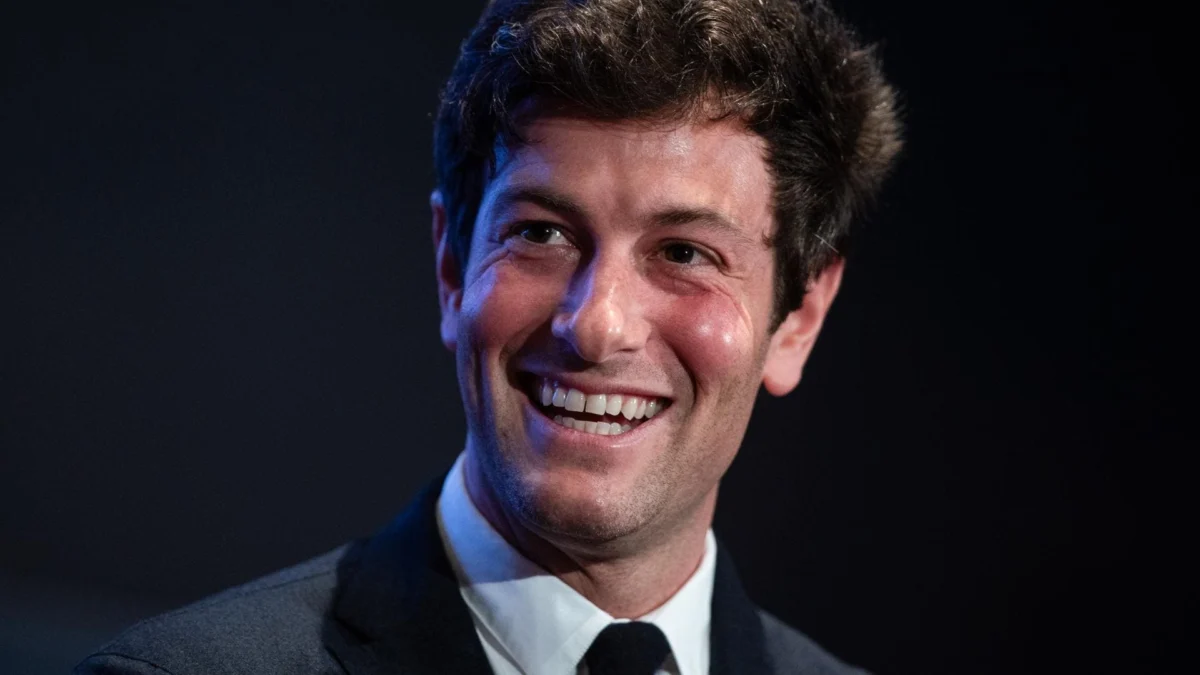
On August 12, the landscape of professional sports and high finance witnessed a simultaneous seismic shift, though the man at the center of the tremor seemed curiously preoccupied. While headlines across the globe announced that the Los Angeles Lakers—the crown jewel of the NBA—were being acquired by a consortium led by former Disney CEO Bob Iger and venture capitalist Josh Kushner for a staggering $12.5 billion, Kushner’s own digital footprint told a different story. On his X account, the 41-year-old billionaire was not posting highlights of LeBron James; instead, he was celebrating the $2 billion fundraise for Thrive Holdings, an ambitious vehicle designed to acquire traditional service firms and overhaul them using proprietary artificial intelligence.
This duality—the acquisition of a legacy sports empire alongside the aggressive engineering of the AI-driven future—defines the current trajectory of Joshua Kushner. In a single summer, the younger Kushner brother has transitioned from a successful, albeit press-shy, Silicon Valley investor into a top-tier global powerbroker. With a net worth now estimated at $16.7 billion, a more than threefold increase from just twelve months prior, Kushner has decoupled his public identity from the political controversies of his family name, replaced it with a portfolio of generational assets, and built a venture capital machine that is currently outperforming nearly every contemporary peer.
The Meteoric Rise of Thrive Capital
To understand the scale of Kushner’s $17 billion fortune, one must look at the mechanics of Thrive Capital. Founded in 2010 when Kushner was just 25 years old and a recent Harvard Business School graduate, the firm began with a modest $5 million fund. At the time, the venture capital industry was dominated by established Sand Hill Road titans. Kushner, operating out of New York, positioned Thrive as a bridge between the burgeoning tech scenes of both coasts, leveraging a keen eye for consumer behavior and platform scalability.
Thrive’s early success was marked by what many in the industry call "the Instagram miracle." In 2012, Thrive led a Series B round for the photo-sharing app at a $500 million valuation. Only days later, Mark Zuckerberg acquired the company for $1 billion. This wasn’t just a financial win; it was a reputational rocket ship. It established Kushner as a disciplined investor capable of identifying "exceptional companies" that create a disproportionate amount of value.
Fast forward to 2024, and the scale has shifted from millions to tens of billions. In a recent letter to investors, Kushner revealed that Thrive now manages over $65 billion in assets. This figure is nearly triple the $23 billion the firm held in late 2024. This growth is not merely a result of new capital inflows; Kushner noted that more than half of these assets are driven by sheer investment gains. With an average annual return of 33% after fees—dramatically outstripping the S&P 500 and the Nasdaq over the same period—Thrive has moved into the "decacorn" territory of the asset management world.
The AI Frontier: OpenAI and Beyond
The current surge in Kushner’s wealth is inextricably linked to the artificial intelligence revolution. Thrive Capital was an early and aggressive backer of OpenAI, the organization behind ChatGPT. As OpenAI’s valuation has climbed toward a projected $1 trillion ahead of a highly anticipated initial public offering (IPO), Thrive’s stake has become one of the most valuable private holdings in the history of venture capital.
However, Kushner’s AI strategy extends beyond mere equity stakes in foundational model builders. Through Thrive Holdings, he is executing a "roll-up" strategy, a classic private equity maneuver updated for the 2020s. By acquiring accounting, legal, and administrative service firms and integrating AI to automate labor-intensive processes, Kushner is attempting to manufacture margin expansion in industries that have historically been resistant to technological disruption. This vertical integration—owning the AI developers and the industries they disrupt—represents a sophisticated evolution of the venture capital model.
The portfolio is further bolstered by wins in the aerospace and coding sectors. When Elon Musk’s SpaceX went public in June, Thrive’s stake was valued at approximately $10 billion. Shortly thereafter, SpaceX’s acquisition of the AI coding startup Cursor—in which Thrive held a 7% stake—added another $4.2 billion to the firm’s ledger.
The Lakers Deal: A Masterclass in Tax and Diversification
While the tech world focuses on OpenAI, the acquisition of the Los Angeles Lakers represents a different kind of strategic genius. The $12.5 billion price tag for the team sets a new record for professional sports franchises, but for a billionaire facing massive capital gains liabilities, the deal offers more than just the prestige of a courtside seat.
Under current U.S. tax codes, sports team owners can utilize a specific accounting strategy involving the amortization of "intangible assets." When a team is purchased, a significant portion of the price—often up to 90%—can be attributed to intangibles like media rights and player contracts. Owners are permitted to amortize these costs over 15 years, creating a massive "paper loss" that can be used to offset personal income and capital gains from other ventures. For Kushner, whose Thrive investments are generating billions in liquidity, the Lakers acquisition could potentially generate a tax shield worth hundreds of millions of dollars annually.
However, the path to the championship parade is currently mired in legal complexity. Jeanie Buss, the controlling governor of the Lakers, has reportedly contested the attempts by her five siblings to sell their collective 17.8% stake. This internal family rift poses a significant hurdle for the Iger-Kushner group. Furthermore, NBA regulations will require Kushner to divest his minority stake in the Miami Heat before the Lakers deal can be finalized.
A Family Divided by Fortune and Philosophy
The narrative of Josh Kushner is frequently framed against the backdrop of his family. His brother, Jared Kushner, served as a senior advisor to his father-in-law, Donald Trump, and has built his own multi-billion-dollar private equity firm, Affinity Partners, largely through Middle Eastern sovereign wealth funds. Their father, Charles Kushner, a real estate mogul and convicted felon pardoned by Trump, currently serves as the U.S. Ambassador to France.
Despite these ties, Josh Kushner has maintained a distinct—and often contrasting—public profile. A lifelong Democrat, he has navigated the polarized political climate by maintaining a laser focus on the "innovation economy." This ideological separation has allowed him to maintain deep ties with Silicon Valley elites and Hollywood powerhouses like Iger, even as his family remains central to the MAGA movement.
The wealth disparity between the brothers is also widening. Josh is now estimated to be nearly 17 times richer than Jared and nearly three times as wealthy as Donald Trump himself. This financial dominance underscores a shift in the family’s power center: while the elder Kushner generation built its name on New York real estate and political maneuvering, the younger Josh has built a fortune on the intangible, scalable, and global nature of software and space exploration.
The Sun Valley Set and Cultural Capital
Kushner’s rise is also a story of cultural consolidation. His marriage to supermodel Karlie Kloss has placed him at the intersection of fashion, entertainment, and technology. This summer, he was seen at the "billionaire summer camp" in Sun Valley, Idaho, rubbing shoulders with OpenAI President Greg Brockman, and later at the high-profile wedding of Taylor Swift and Travis Kelce.
These social connections are not merely for the tabloids; they are essential components of modern deal-making. The partnership with Bob Iger, for instance, reportedly blossomed from the friendship between their wives, Willow Bay and Karlie Kloss. In an era where "cultural capital" is as valuable as liquid capital, Kushner’s ability to move seamlessly between the worlds of high-fashion, professional sports, and deep-tech engineering provides him with a unique competitive advantage.
Future Outlook: The Trillion-Dollar Horizon
As Thrive Capital looks toward the next decade, the focus remains on liquidity and compounding. Kushner’s recent investor letter suggested that the firm has generated over $1 billion in liquidity in the last year alone, with "billions more" expected in the coming quarters. Much of this hinges on the IPO market, specifically for companies like Stripe, Databricks, and Anduril—all of which carry valuations in the tens of billions.
The overarching theme of Kushner’s strategy is the belief that a small number of "exceptional companies" will continue to capture the vast majority of market value. By positioning Thrive at the center of the AI transition, the commercialization of space, and the premiumization of sports media, he is building a conglomerate that looks less like a traditional VC firm and more like a 21st-century Berkshire Hathaway.
The $17 billion fortune of Josh Kushner is more than a number; it is a testament to a shift in how wealth is generated in the modern age. It is no longer enough to just invest in the future; one must own the platforms, the tools, and the legacy institutions that define our culture. Whether he is watching a Lakers game or overseeing the next OpenAI board meeting, Josh Kushner has ensured that he is no longer "the other brother." He is the architect of a new era of American influence.
