

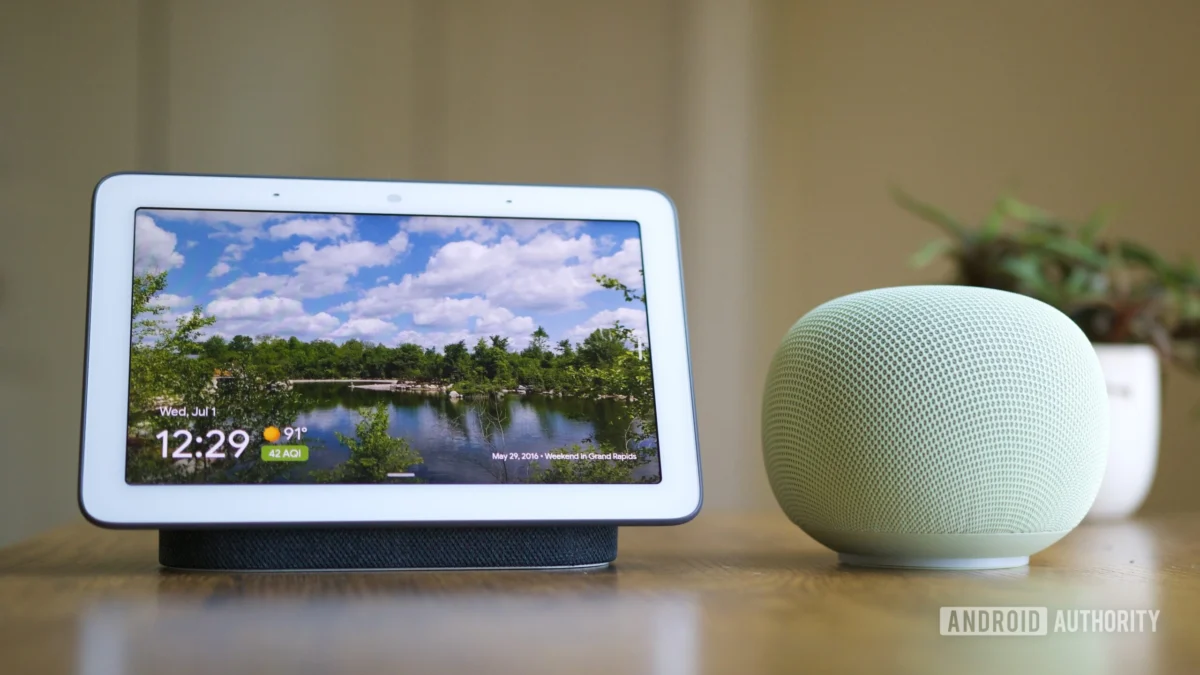
The landscape of smart home technology is undergoing a foundational paradigm shift. For years, voice assistants functioned primarily as rigid, command-line interfaces operating within strict syntactic boundaries. Users were forced to memorize exact phrasing, structure their requests in predictable ways, and accept the occasional frustrating misunderstanding as a baseline limitation of early consumer artificial intelligence. Today, that era of utilitarian, rule-bound automation is rapidly drawing to a close. Google’s aggressive rollout of generative AI capabilities across its hardware ecosystem marks a decisive turning point, transforming static smart speakers and displays into dynamic, highly responsive conversational partners capable of complex contextual reasoning.
This ongoing technological transition highlights an essential maturation within the consumer electronics sector. It is no longer enough for an ecosystem to merely execute localized tasks like turning on a light switch or playing a requested song. Modern households demand seamless integration, intuitive cross-device continuity, and deep contextual memory. By systematically weaving advanced generative models into the foundational framework of its domestic network, the technology giant is addressing long-standing consumer pain points while simultaneously redefining what households should expect from ambient computing.
Recent firmware distributions underscore this aggressive developmental momentum. Hot on the heels of a significant platform patch that expanded conversational memory horizons and allowed assistants to track multi-turn dialogues with unprecedented fidelity, a fresh wave of updates is arriving. This newest software iteration bridges the gap between high-level cognitive functionality and the mundane, day-to-day utility items that anchor household routines—specifically focusing on alarms, timekeeping devices, and interactive media consumption.
At the vanguard of these new features is an entirely reimagined approach to domestic storytelling. Traditional voice assistants could recite pre-programmed tales or fetch static audiobooks, but they lacked the computational dexterity to adapt on the fly. The latest platform update transforms the assistant into a real-time narrative collaborator. Parents and children can now co-create branching storylines on the fly, introducing custom characters, shifting plots mid-sentence, and seamlessly remixing classic folklore into modern adventures.
Industry analysts point out that this capability signifies a profound shift in how families interact with screen-free ambient technology. By allowing users to interrupt a narrative mid-scene—such as abruptly instructing the AI to fast-forward a space-travel narrative to the moment a spacecraft touches down on the Martian surface, or swapping out traditional antagonists for prehistoric creatures in classic fairy tales—the technology moves past passive consumption. It fosters active cognitive engagement, turning smart speakers into engines for creative play and collaborative imagination.
Yet, the true test of any domestic ecosystem lies not in its capacity for creative entertainment, but in its absolute reliability when handling routine, mission-critical domestic management. Timers and alarms form the invisible scaffolding of modern daily life, dictating everything from culinary timing to early morning wake-up calls. Historically, these features were prone to frustrating misinterpretations, particularly when users mixed natural language phrasing with precise temporal markers.
Addressing this core vulnerability, the latest system architecture introduces refined algorithmic logic designed to handle temporal requests with granular accuracy. The upgraded assistants now natively understand and adapt to regional time preferences, seamlessly parsing between 12-hour and 24-hour clock formats without requiring tedious manual profile adjustments. Furthermore, natural language queries regarding remaining countdowns or complex scheduling commands—such as setting precision alarms for specific morning hours—exhibit a vastly improved success rate. This heightened reliability eliminates the friction that previously plagued basic domestic interactions, ensuring that users can place absolute trust in their hardware environment.
Beyond functional improvements to scheduling and storytelling, the engineering teams have turned their attention to the subtle sensory details that govern user experience and hardware feedback. Sound design plays a crucial role in ambient computing; audio cues serve as confirmation signals that validate user intent without requiring visual verification.
In this latest release, Google has re-engineered the acoustic feedback loop associated with device manipulation. When users adjust environmental controls—such as dimming living room illumination down to twenty percent or powering down connected appliances—the traditional, static upward chime has been replaced. In its place is a carefully calibrated, descending acoustic tone that mirrors the physical action of reduction. This thoughtful implementation of auditory skeuomorphism provides immediate, intuitive confirmation, aligning the digital feedback directly with the physical reality of the command.
Concurrently, the update resolves several persistent hardware anomalies that have periodically frustrated power users. Chief among these is a recurring issue affecting the status ring lights on Google-branded smart speakers. Previously, certain complex multi-device routines would trigger an execution loop where the LED indicator ring remained indefinitely suspended in a pulsing state, even after the underlying routine had completed its intended tasks. By eliminating this software bug, the platform ensures cleaner hardware states, eradicating visual noise and restoring confidence in multi-step home automations.
Looking toward the broader trajectory of ambient intelligence, these incremental improvements collectively signal a much larger transformation. The smart home is rapidly evolving from a collection of isolated, voice-activated gadgets into an integrated, cognitively aware spatial network. As underlying models grow more sophisticated, the boundary between human intent and automated execution continues to blur.
In the near future, we can anticipate ecosystems that not only respond to explicit commands and engage in interactive storytelling, but proactively anticipate household needs based on historical patterns, contextual cues, and dynamic environmental monitoring. The refinement of basic timers and the introduction of reactive acoustic feedback may seem like minor footnotes in the grand timeline of artificial intelligence development, but they represent the essential foundational blocks upon which tomorrow’s truly autonomous living spaces will be built. By perfecting the mundane elements of daily interaction while expanding the boundaries of creative engagement, technology leaders are cementing a future where ambient computing is indistinguishable from magic, yet grounded in rock-solid domestic reliability.
