

In an era defined by the frantic pursuit of the "new," the concept of preservation has long been relegated to the shadows of the global tech narrative. For decades, Silicon Valley’s guiding light was the ethos of disruption—a "move fast and break things" mentality that prioritized rapid iteration and market capture over longevity and stability. However, as the digital and physical infrastructures of the 21st century begin to show signs of systemic fatigue, a counter-narrative is emerging. This shift is best exemplified by the recent intellectual pivot of Stewart Brand, a legendary figure whose career has bridged the gap between the 1960s counterculture and the rise of cyberculture. With his latest project, a multi-volume exploration into the civilizational necessity of upkeep, Brand is attempting to rebrand the act of repair as a radical, essential foundation of human progress.
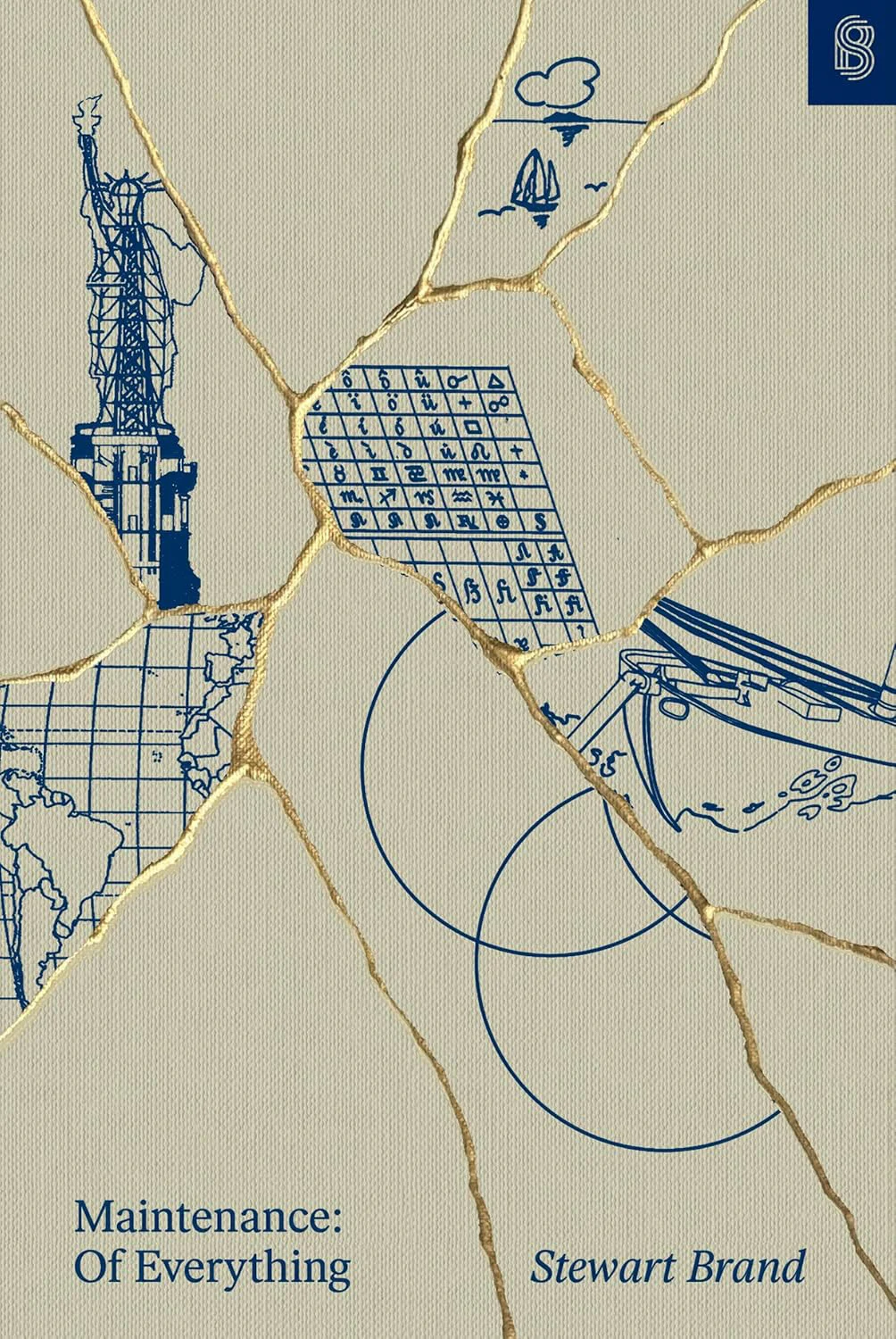
Stewart Brand’s influence on the trajectory of modern technology cannot be overstated. As the creator of the Whole Earth Catalog in 1968, he provided the "access to tools" that fueled both the back-to-the-land movement and the early stirrings of the personal computer revolution. Steve Jobs famously likened the Catalog to "Google in paperback form," a testament to its role as a decentralized repository of knowledge. Yet, as Brand enters his late eighties, his focus has shifted from the tools of creation to the labor of sustainment. His new work, Maintenance: Of Everything, Part One, marks a significant departure from the celebratory tone of innovation, suggesting instead that our ability to fix, oil, and update our world is what truly defines our success as a species.
The scholarly and social landscape surrounding maintenance has undergone a quiet revolution over the last decade. While the term "innovation" attracts venture capital and prestige, "maintenance" has historically been viewed as a low-status necessity—the invisible work of keeping the lights on. However, an interdisciplinary movement of historians, sociologists, and engineers, often grouped under the banner of "Maintenance Studies," has begun to challenge this hierarchy. They argue that the neglect of existing systems—from crumbling American bridges to bloated, unpatched software codebases—is a direct result of our cultural obsession with the novel. By elevating the "maintainer" to the same status as the "innovator," these thinkers seek to correct a fundamental imbalance in how we value labor and resources.
Brand’s foray into this field is both a continuation of his life’s work and a curious deviation from it. His 1994 book, How Buildings Learn, was a masterclass in understanding how physical structures evolve and adapt over time, favoring simple, modular designs that invited human intervention. In that work, he introduced the "Romance of Maintenance," a concept that resonated deeply with those who find beauty in the steady, rhythmic care of a machine or a home. Yet, in his current exploration, Brand’s approach remains rooted in a ruggedly individualistic, libertarian philosophy. For Brand, maintenance is often framed as a solitary triumph of the will—a man against the elements, a mechanic against the rust—rather than a collective social obligation.
This individualistic framing is most evident in Brand’s recounting of the 1968 Golden Globe race, a nonstop solo sailing voyage around the world. He uses the stories of three sailors to illustrate different "maintenance styles." One sailor, who neglected his vessel, perished; another, who prepared meticulously but lacked the winner’s spark, survived; the third, who won through "heroic acts of perseverance," becomes the archetype of the master maintainer. While the story is a compelling fable of self-reliance, it highlights a recurring critique of Brand’s worldview: it often prioritizes the "derring-do" of exceptional individuals over the systemic, often mundane cooperation required to maintain a functioning society.

The industry implications of this "maintenance mindset" are profound, particularly in the context of the burgeoning Right to Repair movement. For years, major technology firms have moved toward a model of "planned obsolescence," designing products that are difficult, if not impossible, to repair. From smartphones with glued-in batteries to tractors that require proprietary software to diagnose a simple mechanical failure, the barriers to maintenance have become a central point of economic and political contention. The push for Right to Repair legislation represents a demand for the very "access to tools" that Brand once championed. It is a rejection of the "black box" philosophy of modern consumer electronics, where the user is merely a temporary tenant of a device they supposedly own.
However, Brand’s analysis of the current tech titans reveals a complicated relationship with these ideals. He speaks of Elon Musk with a sense of "unique mastery," citing the success of Tesla and SpaceX as evidence of a superior understanding of maintenance and design. Brand argues that by reducing the number of moving parts in an electric vehicle, Musk has created a more maintainable machine. Yet, this perspective overlooks the reality of Tesla’s restrictive repair policies and the company’s history of legal battles with independent mechanics. To many in the maintenance community, Musk represents the opposite of Brand’s "Whole Earth" ideals—he is the architect of a closed ecosystem where maintenance is a corporate privilege rather than a user’s right.
Furthermore, the act of maintenance is not an unalloyed good. The field of maintenance studies has matured to recognize the "ironies of upkeep." In a world facing a climate crisis, maintaining a coal-fired power plant or a fleet of inefficient internal combustion vehicles is not a radical act of preservation; it is a regressive act that delays necessary transformation. There is also the question of who performs this labor. Historically, the most essential forms of maintenance—cleaning, caretaking, and domestic work—have fallen disproportionately on women and people of color, often with little pay or recognition. A philosophy of maintenance that ignores these power dynamics risks becoming a hollow celebration of hobbyism for the elite, rather than a blueprint for a more equitable world.
The digital realm offers perhaps the most pressing examples of the maintenance crisis. "Technical debt"—the cost of additional rework caused by choosing an easy, short-term solution instead of a better approach that would take longer—now plagues almost every major software system. As we build increasingly complex layers of Artificial Intelligence and automated infrastructure, the "maintainability" of our digital world becomes a matter of existential security. If the original creators of a system move on to the next "disruptive" project, who is left to understand the legacy code that keeps our financial systems or power grids running? The "honor" that Brand suggests we owe to maintainers is not just a matter of social etiquette; it is a prerequisite for civilizational stability.
Looking toward the future, the trend of "Maintenance-as-a-Service" and the "Circular Economy" suggests a potential shift in industrial design. If companies are held responsible for the entire lifecycle of their products, they are incentivized to design for durability and ease of repair. This would represent a return to the "triumph of cheapness and simplicity" that Brand admires in the Ford Model T or the Volkswagen Beetle—machines that invited the owner to pick up a wrench and participate in the life of the tool.
Ultimately, Stewart Brand’s late-career obsession with maintenance serves as a vital, if flawed, signal to the rest of the world. It marks the end of the "frontier" era of technology, where we could simply move on to the next territory once the old one became cluttered or broken. We are now in the era of the "settler," where the most important work is not the expansion of the map, but the care of the land we already inhabit. Whether Brand’s individualistic "romance" can evolve into a collective politics of care remains to be seen. However, his core premise is undeniable: the radical act of the future will not be to break things, but to fix them. In a world of fleeting "innovations," the true architects of progress are those who ensure that what we have built continues to stand.
