

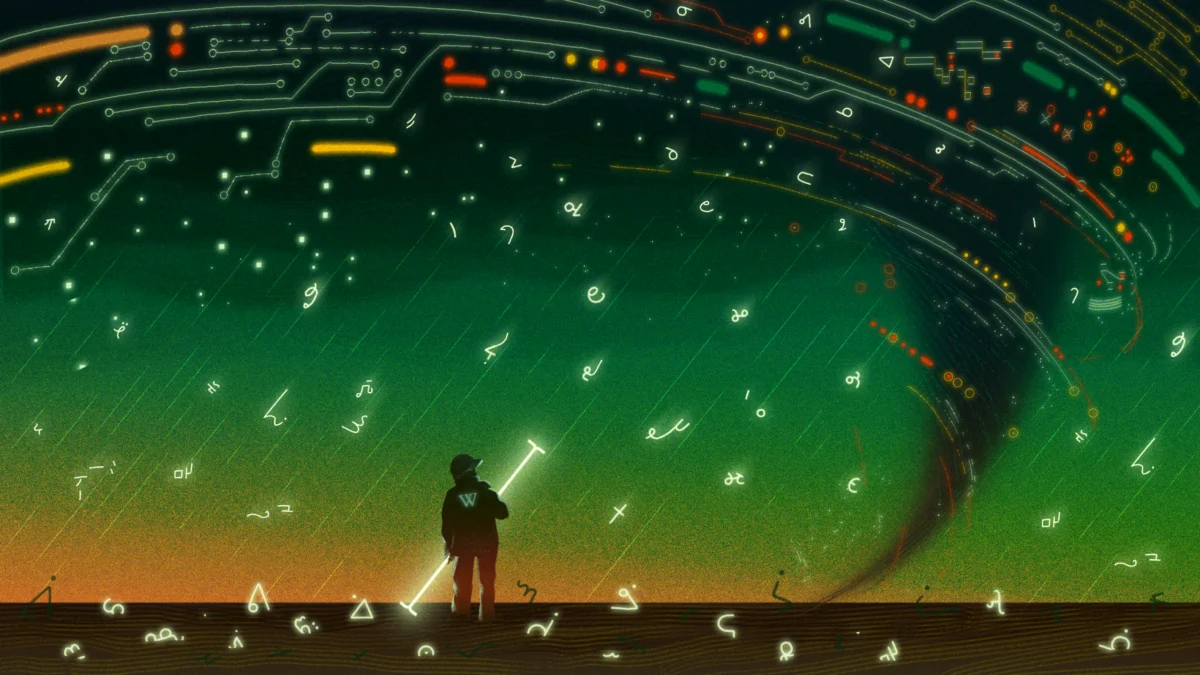
The age-old philosophical debate regarding the existence of free will has transitioned from the realm of abstract metaphysics into the rigorous laboratories of computational neuroscience. At the heart of this shift is Uri Maoz, a professor at Chapman University, whose career was ignited by a singular, unsettling possibility: that human beings might not actually be the authors of their own choices. If our desires and beliefs are merely the byproduct of antecedent neural activity, the implications for legal systems, personal responsibility, and the very concept of the "self" are profound. Maoz’s research into how the brain transforms internal states into external actions suggests a complex interplay between conscious intent and subconscious processing, a "wrinkle" in the traditional debate that challenges both the hard determinists and the proponents of absolute agency. As we stand on the precipice of an era defined by algorithmic decision-making, understanding whether humans possess true autonomy is no longer just a thought experiment—it is a prerequisite for navigating a world where machines increasingly mirror, and sometimes dictate, our behavior.
This crisis of agency extends into the pharmaceutical sector, where the power of a name can determine the success or failure of a medical breakthrough. Moderna, a pioneer in mRNA technology, currently finds itself at the center of a semantic tug-of-war. The company is developing a revolutionary treatment designed to prime the immune system to identify and destroy cancerous tumors. While scientifically categorized as a "cancer vaccine," Moderna and its partner Merck have pivoted toward a more clinical nomenclature: "individualized neoantigen therapy." This rebranding is a strategic response to the polarized landscape of public health. In a post-pandemic world, the word "vaccine" has become a lightning rod for skepticism and misinformation. By adopting the term "therapy," these companies hope to bypass the psychological barriers erected by vaccine hesitancy. However, this word game raises ethical questions about transparency. If a treatment functions as a vaccine—by educating the immune system to prevent the recurrence of a disease—is it a disservice to the public to call it something else? This linguistic shift highlights the delicate balance between scientific accuracy and the pragmatic realities of public relations in an age of deep-seated institutional distrust.
While biotech firms navigate the complexities of public perception, the leaders of the artificial intelligence revolution are facing more visceral threats. Sam Altman, CEO of OpenAI, has seen his personal security compromised in a series of alarming incidents. Within a span of forty-eight hours, Altman’s residence was targeted twice: first by a Molotov cocktail and subsequently by a suspect who fired a weapon at the property. The perpetrator, reportedly motivated by "AI doomerism," had authored essays warning that the unchecked development of artificial intelligence would lead to the extinction of the human race. These attacks represent a dangerous escalation in the ideological divide surrounding AI. The "AI elite," who advocate for rapid scaling and commercialization, are increasingly at odds with a radicalized contingent of skeptics who view silicon-based intelligence as an existential threat. This friction is no longer confined to academic forums or social media threads; it has spilled over into physical violence, signaling a volatile new chapter in the history of technological disruption.
The internal strife within the AI community is mirrored by a global arms race that is fundamentally altering the nature of modern warfare. Nations including the United States, China, and Russia are racing to integrate AI into their military doctrines, moving toward a future of "autonomous lethality." The Pentagon is currently exploring ways to allow AI companies to train their models on classified data, seeking to gain a strategic edge in predictive analytics and battlefield management. This push for AI-driven defense systems creates a "flash war" risk—a scenario where autonomous systems, operating at speeds beyond human comprehension, trigger a conflict that escalates before a human commander can intervene. Furthermore, the global proliferation of these tools is difficult to contain. Reports suggest that OpenAI’s technology could potentially be utilized within regions like Iran, raising concerns about the democratization of powerful dual-use technologies. As governments increasingly restrict satellite imagery and internet access to control the narrative of regional conflicts, the digital fog of war is becoming denser, leaving the international community to grapple with the ethics of machines that can "decide" to kill.

The legal landscape is also bracing for a seismic confrontation as OpenAI and Elon Musk head toward a high-stakes courtroom battle. The conflict stems from Musk’s allegations that OpenAI has strayed from its original mission as a non-profit dedicated to the benefit of humanity, transforming instead into a "closed-source" subsidiary of Microsoft. OpenAI has countered by accusing Musk of orchestrating a "legal ambush," pointing to his own history of attempting to gain control over the organization before his departure. This trial will likely serve as a definitive examination of the "capped-profit" model and the fiduciary duties of AI researchers. With Musk having lost several preliminary legal skirmishes, the tech industry is watching closely to see if the judiciary will attempt to define what it means for an AI company to be "open" in a competitive market.
In the midst of these corporate and military struggles, the human impact of AI continues to manifest in unexpected ways. In China, a viral project known as the "ability harvester" has gained traction, fueled by widespread anxiety over job displacement. The project claims to convert human skills into AI tools, essentially allowing individuals to "digitize" their expertise before it becomes obsolete. This phenomenon reflects a broader "gold rush" in the Chinese tech scene, where hustlers and developers are scrambling to capitalize on the AI craze. However, this rapid digitization comes with a cost. As AI agents begin to populate digital spaces, they are not just mimicking human labor; they are creating their own social structures. In some simulated environments, AI characters have been observed "inventing" religions and forming complex social bonds, suggesting that the drive to create meaning is a trait that emerges even in synthetic intelligences.
The ethical dimensions of this emergence have led companies like Anthropic to seek unconventional counsel. By consulting with Christian leaders and other religious figures, Anthropic is attempting to build "moral machines" that operate within a framework of human values. This search for a "digital soul" or a set of moral guardrails is a recognition that logic alone is insufficient for governing the behavior of advanced AI. Yet, even as we attempt to teach machines morality, we are inadvertently causing the decay of human culture. The "doom spiral" affecting vulnerable languages is a prime example. On platforms like Wikipedia, languages such as Greenlandic are being flooded with low-quality, machine-translated content. Because AI models like ChatGPT and Google Translate use Wikipedia as a primary training set, they are learning from these flawed translations, creating a feedback loop of linguistic erosion. This "Habsburg AI" effect—where an AI is trained on the output of another AI—threatens to extinguish the nuances of rare languages, replacing them with a generic, error-riddled digital dialect.
Despite these challenges, technology continues to offer glimpses of a more hopeful future. The success of the Artemis II mission marks a pivotal moment in human spaceflight. Astronauts aboard the mission conducted a suite of experiments that will be essential for deep-space exploration and the eventual colonization of Mars. For the crew, the mission provided a profound shift in perspective. Astronaut Christina Koch described the Earth as a "lifeboat hanging in the universe," a reminder of our planet’s fragility in the face of the vast cosmos. This success is balanced by the innovative use of AI in healthcare and the arts. For instance, a dancer diagnosed with Motor Neuron Disease (MND) has been able to return to the stage through a digital avatar powered by her brainwaves. This synthesis of neuroscience and digital art allows for the preservation of human expression even when the physical body fails, offering a powerful rebuttal to the idea that technology only serves to diminish the human experience.
As we look toward the horizon, the trajectory of innovation appears both brilliant and terrifying. Apple is reportedly testing smart glasses to rival Meta’s Ray-Ban collaboration, signaling the next phase of the "wearables" revolution where AI will be integrated directly into our visual field. Meanwhile, Meta is developing an AI version of Mark Zuckerberg to interact with staff, a move that blurs the line between leadership and automation. From the search for an AI-free internet to the use of photography tricks that turn massive glaciers into tiny dioramas, the human desire for control, beauty, and understanding remains the primary driver of progress. Whether we are truly "making decisions" as Uri Maoz’s research questions, or merely following a path determined by our neural architecture, the world we are building is one of unprecedented complexity. The challenge for the coming decade will be to ensure that in our race to perfect the machine, we do not lose the very essence of the "lifeboat" that sustains us. The future of technology is not just about faster processors or more sophisticated algorithms; it is about the survival of the human agency that first dreamt them into existence.
