

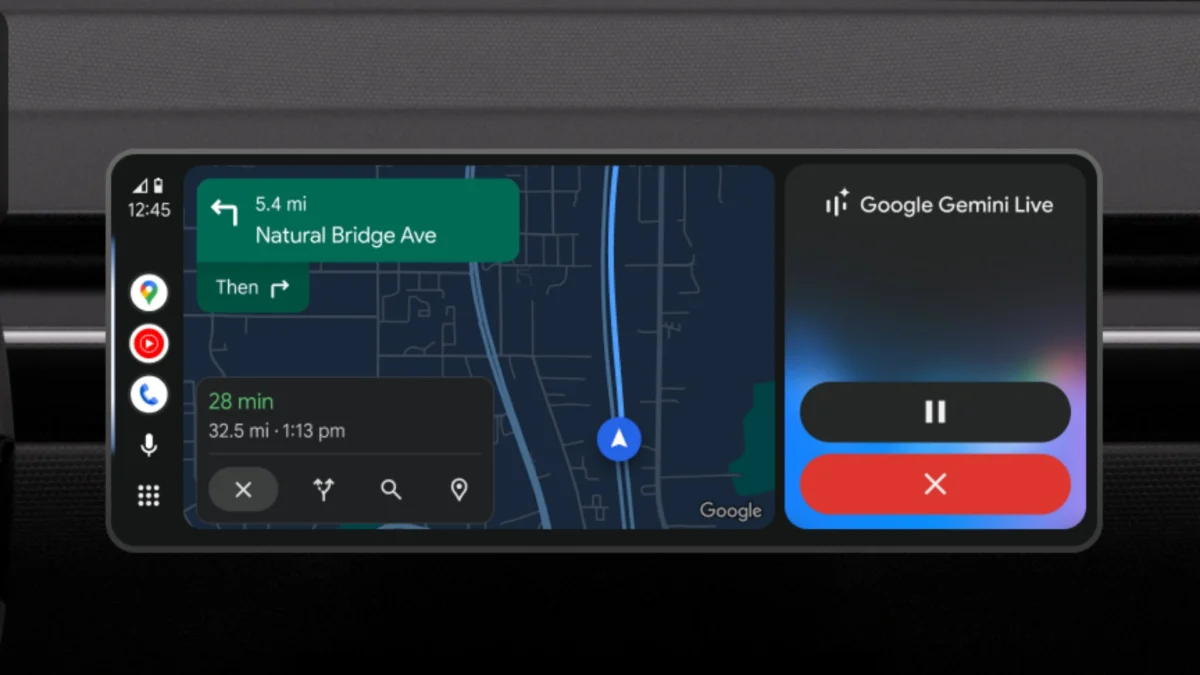
The landscape of automotive connectivity is undergoing a profound transformation as Google begins a broad, albeit staggered, deployment of its Gemini artificial intelligence model into the Android Auto ecosystem. After months of anticipation punctuated by intermittent delays and limited beta testing, the transition from traditional voice-command structures to generative AI-powered interaction is finally gaining significant momentum. This rollout marks a critical pivot for Google, signaling an intent to move beyond static, keyword-based assistant functions toward a more fluid, context-aware conversational interface designed to function safely within the high-stakes environment of the driver’s seat.
The Shift in Automotive Architecture
For years, the standard for in-car digital assistants has been defined by rigid command-and-control protocols. Users were required to memorize specific syntax—"navigate to," "play music by," or "send a text to"—to ensure the system accurately parsed the request. The integration of Gemini represents a move toward natural language processing (NLP) that understands intent rather than just syntax. By leveraging large language models (LLMs), Google aims to reduce the cognitive load on drivers, allowing them to communicate in a more human-like manner.
This transition has been far from seamless. The industry has grappled with the inherent tension between the capabilities of generative AI and the stringent safety requirements of automotive software. Unlike a smartphone, where a hallucinated response or a latency spike is a minor inconvenience, the in-car experience demands absolute reliability. Any distraction or system failure at highway speeds carries significant risks, which explains the prolonged development and cautious, tiered rollout of this feature.
Emerging User Sentiment and Early Feedback
Recent reports from the field indicate that the deployment is not universal, suggesting a server-side switch rather than a simple application update. Users running specific iterations of the Android Auto software—notably version 16.4.661034-release—have begun to notice the shift. However, the initial reception among the early adopter community is notably polarized.
On one side, proponents of the update appreciate the smarter contextual handling. Users are reporting that Gemini can parse multi-layered requests with greater success than its predecessor. Conversely, a vocal contingent of users has expressed frustration. Common critiques involve a perceived reduction in traditional functionality, where users feel that the system is "over-thinking" simple tasks. Furthermore, the inherent verbosity of LLMs has drawn ire from those who prefer concise, immediate confirmations while driving. In an automotive context, a concise "OK" is often preferred over a conversational, multi-sentence acknowledgment. This highlights a fundamental design challenge: how to balance the sophistication of generative AI with the utilitarian needs of a vehicle interface.
Industry Implications and the Competitive Landscape
The push to bring Gemini to Android Auto is not happening in a vacuum. It is a direct response to the increasingly fierce competition within the connected-vehicle market. Major automotive manufacturers, as well as competitors like Apple with its evolving CarPlay, are racing to integrate proprietary or licensed AI assistants into the dashboard.
For Google, this move is essential to maintaining its dominance in the infotainment sector. By embedding Gemini into the primary interface millions of drivers use daily, Google is effectively cementing its ecosystem advantage. This strategy provides a "sticky" user experience where the vehicle becomes an extension of the user’s digital life, tethered directly to the Google cloud.
From a technical perspective, this integration is also a massive data play. The insights gained from how drivers interact with an AI in various emotional states, traffic conditions, and geographic locations are invaluable. This data will likely inform future iterations of the model, allowing Google to refine its "automotive personality" to be more efficient, less intrusive, and better aligned with the nuances of driving.
The Path Forward: Beyond Initial Growing Pains
We are currently in what can be described as the "probationary period" of automotive AI. As with any significant software migration, the current reports of bugs, latency, or feature regression are expected. The true value of Gemini in Android Auto will not be measured by how it performs in its first week, but by how it scales over thousands of miles of varied driving conditions.
Future iterations are expected to move toward "multimodal" capabilities. Imagine a system that not only understands a voice request but also processes visual data from the vehicle’s cameras to provide context-aware navigation. For example, rather than just asking for the nearest gas station, a driver could theoretically ask, "Find me a place to eat that looks open and has easy parking," with the system analyzing live visual inputs to verify parking availability.
However, achieving this level of functionality requires overcoming the "uncanny valley" of voice interaction. If the system is too chatty, it risks becoming a distraction. If it is too robotic, it fails to deliver the promised "copilot" experience. The challenge for developers will be to tune the model’s "verbosity parameter"—a setting that determines how much the AI talks—specifically for the driving context.
Long-term Strategic Considerations
Looking further ahead, the integration of Gemini into Android Auto likely serves as a precursor to more advanced autonomous and semi-autonomous driving features. As vehicles gain more sensors and better onboard processing, the interface between the human and the machine will need to be increasingly sophisticated. A conversational AI that can explain why a car is braking, suggest alternative routes based on real-time traffic flow, or manage the cabin environment based on the driver’s vocal tone, represents the next frontier of vehicle design.
For now, the automotive community remains in a state of watchful waiting. The rollout of Gemini is a massive undertaking that touches on privacy, safety, and human-computer interaction (HCI) design. While the current, mixed feedback is a natural outcome of such a transition, the long-term trend is clear: the dashboard of the future will be defined by its ability to hold a conversation.
As more users gain access to these tools, the feedback loop between the community and the development team will be the primary engine for improvement. We expect to see rapid iterations of the Android Auto interface in the coming months, likely focusing on reducing response latency and refining the system’s ability to prioritize safety-critical tasks over conversational flair.
The promise of a truly intelligent copilot is compelling, but the road to achieving it is paved with technical hurdles. The current deployment is merely the first chapter in a broader story about how artificial intelligence will eventually reshape our relationship with the vehicles we drive. Whether this transition ultimately makes us safer and more productive, or merely introduces new layers of digital complexity, remains to be seen. What is certain is that the quiet, command-based dashboard of the past is rapidly becoming a relic of a bygone era, replaced by an active, generative digital companion.
