

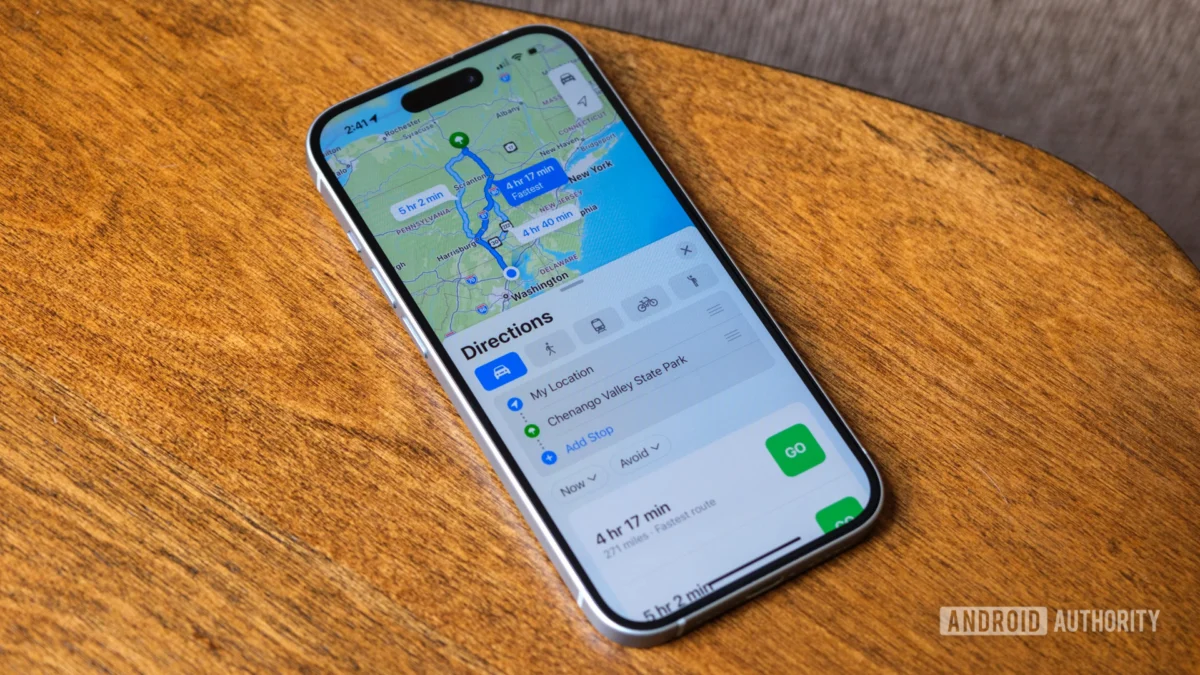
The digital mapping landscape, long dominated by the duopoly of Google Maps and Apple Maps, is poised for a significant shift in user experience as Apple accelerates its push into in-app advertising. Reports indicate that Apple is preparing to integrate search advertising directly into the Maps application, a move that draws a direct parallel to the highly lucrative, yet often criticized, monetization model employed by its primary competitor. This development signals a strategic pivot for Apple, prioritizing the expansion of its Services division revenue streams over maintaining the platform’s historically cleaner, ad-free user interface.
For years, one of Apple Maps’ key differentiators, particularly when compared against the ubiquity and maturity of Google Maps, was its perceived purity. While feature parity—in terms of turn-by-turn navigation, traffic data integration, and even features like immersive street-level views—has steadily narrowed the gap, the absence of intrusive commercial promotions remained a significant psychological advantage for Apple loyalists. Google Maps has long utilized a sophisticated, location-based advertising system where businesses bid on keywords and geographic areas, ensuring their listings appear prominently when users search for specific categories like restaurants, gas stations, or retail outlets. This system is a cornerstone of Google’s overall advertising empire.
Now, sources suggest that Apple’s implementation, potentially announced as soon as this month, could see these paid placements rolling out to users on iPhone, other iOS devices, and the web interface beginning this summer. The proposed mechanism closely follows the Google template: local businesses and retailers will engage in a bidding process for specific search queries. If a user searches for "best espresso near me" or "running shoe store," the highest bidder or a pre-selected advertiser will surface near the top of the results list. While earlier indications suggested Apple might aim for a visually superior or less disruptive interface compared to its rival, the fundamental commercial premise remains the same: leveraging high-intent user location data for direct advertising revenue.
The Strategic Imperative: Services Revenue Acceleration
This move is not an isolated tactical decision but rather a critical component of Apple’s broader corporate strategy. Following the deceleration in hardware sales growth—particularly for the iPhone—the company has increasingly emphasized its Services segment. This division, which encompasses the App Store commissions, Apple Music, iCloud storage, Apple TV+, and Apple Pay, has become a high-margin, indispensable engine for sustained financial growth. Advertising, as evidenced by the success of similar programs elsewhere in Apple’s ecosystem, represents one of the fastest pathways to increasing Services revenue without requiring fundamental shifts in hardware pricing or design.
The introduction of ads into Maps follows precedent set elsewhere. Apple has already successfully injected advertising units into the App Store search results, allowing developers to promote their applications. Furthermore, the News application has been steadily expanding its ad inventory. By bringing advertising to Maps, Apple is tapping into a uniquely valuable layer of user data: immediate, real-time intent tied directly to physical proximity. When a user is actively looking for a service or product while mobile, that moment of decision-making holds premium value for advertisers, far exceeding the value of passive engagement on a static platform.
Industry Implications and Competitive Dynamics
The convergence of Apple Maps and Google Maps in terms of monetization carries significant industry implications. For years, advertising technology analysts have pointed to Apple Maps as a potential disruptor in the local search advertising market due to its privileged position within the iOS operating system. The operating system offers unparalleled access to user context and permissions. However, Apple has historically been cautious about monetizing this access aggressively, often citing user privacy as a core tenet—a principle that is now facing practical scrutiny under the weight of revenue targets.
The primary competitive implication is the formal validation of location-based search advertising as a standard feature for major mapping platforms. Google benefits from its established dominance, but Apple’s entry adds substantial competitive pressure, potentially driving up the cost-per-impression (CPM) for local search ads as two tech behemoths bid for the same advertising dollars.
For small and medium-sized businesses (SMBs), this creates a bifurcated landscape. While the opportunity to capture high-intent customers increases, so does the barrier to entry. Businesses that previously relied on organic visibility within Apple Maps listings will now need to allocate marketing budgets toward bidding strategies, fundamentally altering the organic discovery process that many users have come to expect. The perception that Apple Maps was a more level playing field for organic discovery may erode as paid results become more prominent.
Expert Analysis: The Trade-off Between Utility and Commerce
From an expert perspective, this shift represents the inevitable maturation of a high-utility platform into a fully commercialized ecosystem. Mapping services are not merely tools for navigation; they are comprehensive gateways to local commerce.
Dr. Anya Sharma, a specialist in digital platform economics, notes that Apple’s execution will be crucial. "The perceived ‘worst way’ to emulate Google Maps is to introduce poorly integrated, disruptive advertisements," she posits. "Google’s system, while effective commercially, can often clutter the interface, forcing users to scroll past multiple sponsored listings before reaching genuinely relevant organic results. Apple’s challenge is to integrate these bidding mechanisms while upholding its premium brand experience. If the ads feel tacked on, users accustomed to Apple’s polished design language will react negatively."
The mechanism described—bidding on search queries—is a proven, high-yield model. It relies on the direct connection between a user’s search term and their location. This contrasts with broader display advertising; here, the user is signaling immediate transactional intent. Apple’s reported plan to potentially offer a "better interface" for these ads might involve visually distinct markers or grouping sponsored results discreetly, rather than simply inserting them between organic suggestions, which could mitigate some user backlash.
Furthermore, the technical integration poses interesting questions regarding data sovereignty. Will Apple leverage its existing privacy frameworks (like App Tracking Transparency) to shield Maps ad performance data from direct advertisers, offering aggregated metrics instead? Or will the need for granular feedback loops to justify ad spend force a relaxation of its privacy stance within this specific application environment? The latter scenario would be far more controversial.
Future Impact and Emerging Trends
The long-term impact of commercializing Apple Maps extends beyond immediate revenue figures. It sets a trajectory for how other high-utility, embedded platform features—such as Weather or even Calendar integration—might be monetized in the future. If Maps ads prove highly profitable, it creates a powerful internal precedent for expanding the advertising footprint across the entire iOS experience where user intent is high.
One significant future trend is the rise of hyper-local, augmented reality (AR) advertising. As Apple continues to invest heavily in AR capabilities, the ultimate evolution of Maps advertising is likely to move beyond 2D search results. Imagine navigating a busy city street and having sponsored pins or virtual overlays appear in the camera view, advertising a nearby coffee shop or a limited-time sale. If the initial search ads are successful, they provide the necessary data foundation and user acclimatization for these more immersive commercial experiences.
Moreover, the competitive pressure this places on third-party navigation apps cannot be ignored. Apps like Waze (owned by Google) and others already rely heavily on advertising and user-generated content. By offering a native, deeply integrated, and now commercially viable alternative, Apple further solidifies the ecosystem lock-in for iPhone users. Why install a third-party navigation app when the default option is nearly as capable, increasingly feature-rich, and now offers direct commercial interaction?
In conclusion, the integration of search advertising into Apple Maps marks a pivotal moment. It represents the company’s full commitment to monetizing its installed base through services, even if it means adopting the monetization methods that critics have long associated with its biggest rival. While the implementation details—specifically the user interface—will determine the severity of consumer pushback, the strategic imperative driving this decision is clear: Apple is optimizing its software stack for maximum financial yield in an increasingly service-oriented economy. The days of the purely utility-focused Apple Maps appear to be drawing to a close, replaced by a commercial entity mirroring the structure, if not yet the aesthetic, of its long-time competitor. This evolution signals a new era where the path to your destination might increasingly be sponsored.
