

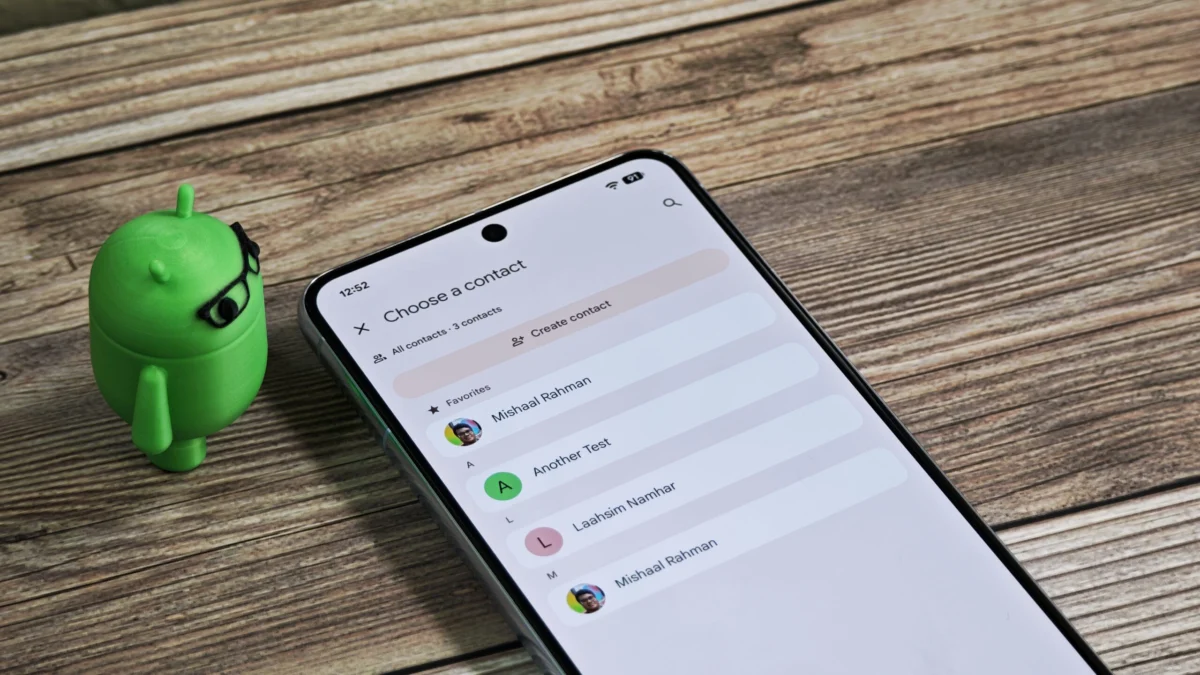
The humble Google Contacts application, often relegated to the background processes of the Android ecosystem, is quietly undergoing a significant user interface and information architecture refinement. While users frequently laud major application overhauls, incremental improvements in utility apps like Contacts often fly under the radar, despite their profound impact on daily digital organization. Recent deep dives into the application’s internal code—specifically within version 4.75.27.882333999—reveal a deliberate strategy by Google to restructure contact profiles. This initiative is not merely cosmetic; it represents a sophisticated attempt to manage the ever-increasing volume of data associated with modern contacts without sacrificing accessibility or overwhelming the end-user.
The fundamental challenge facing Google Contacts, and indeed many legacy address books, is the phenomenon of digital bloat. In the early days of mobile communication, a contact entry typically comprised a name, a phone number, and perhaps an email address. The display was straightforward, fitting neatly onto a small screen with ample whitespace. However, the contemporary digital identity is exponentially richer. We now routinely store multiple phone numbers (work, mobile, home, fax—though fax is increasingly rare), numerous email addresses, physical addresses often augmented with geolocation data, links to social media profiles, organizational affiliations, birthdays, anniversaries, and contextual notes. This proliferation of metadata, while valuable, has led to the current profile view feeling fragmented and dense, requiring excessive scrolling and cognitive load to locate a specific piece of information.
The existing layout, functional but increasingly unwieldy, attempts to list these disparate data points sequentially. This linear presentation often buries crucial, frequently accessed information beneath less urgent details. For example, organizational tags or user-defined labels—metadata that might be essential for filtering or quick identification—are often relegated to the bottom of the page, demanding users navigate past extensive blocks of phone numbers and secondary emails. This architectural oversight contributes directly to the perception of "bloat."
The emerging redesign, as evidenced through code analysis, suggests a move toward intelligent information clustering, prioritizing context and relationship over simple chronological listing. One of the most telling shifts involves the elevation of contact ‘Labels.’ In the current iteration, labels—which often serve as critical organizational anchors (e.g., "Client," "Family," "Vendor")—are slotted far down the page. The proposed structure shifts these labels to a highly prominent, top-level position, likely adjacent to or immediately below the primary name and contact method block. This elevation acknowledges the functional importance of categorization in information retrieval. By making labels instantly visible, Google is optimizing for users who manage hundreds or thousands of contacts, where rapid context-setting is paramount.
Furthermore, Google is demonstrating a keen understanding of contextual awareness in the revised profile. The integration of location data with immediate environmental feedback is a notable step forward. Currently, if a contact’s address is stored, accessing that address often requires an extra tap or scroll, and any associated utility, such as checking local time or weather, requires launching an entirely separate application. The impending layout appears to integrate the contact’s primary location directly alongside a live weather forecast widget. This is an expert-level UX decision. When contacting someone in a different time zone or climate, knowing the local conditions provides immediate conversational context, streamlining international or long-distance communication. It transforms the static address entry into a dynamic piece of actionable intelligence.
Perhaps the most significant structural revision targets the often-misnamed and poorly utilized "About" section. This section has historically served as a catch-all for miscellaneous data points, including birthdays and personal notes. The new approach signals a move toward de-siloing this information based on inherent data type. Birthdays, being a time-sensitive, recurring piece of personal information, are slated to be promoted directly into the main information block. This placement ensures that critical calendar events associated with a contact are not obscured by the clutter of ancillary details.
Conversely, the handling of unstructured ‘Notes’ is also being refined. Instead of being crammed into the general "About" container, notes are being segmented into their own distinct, collapsible area, likely positioned further down the page. This separation acknowledges that while notes are vital for personal memory aids (e.g., "Met at the 2022 Seattle conference; discussed Q3 projections"), they are functionally different from structured data fields like phone numbers or official job titles. By isolating unstructured text, the primary profile view remains clean and scannable, while deeper, idiosyncratic information is available with a single, intentional tap.
Industry Implications and UX Philosophy
This evolution in Google Contacts reflects broader trends across the software industry concerning data density management. As platforms become repositories for increasingly complex digital identities, the battle shifts from data collection to data presentation. Competitors in the CRM (Customer Relationship Management) and personal information management (PIM) spaces have long grappled with this scaling issue. The underlying philosophy Google seems to be adopting aligns with principles of progressive disclosure—only showing the necessary information upfront, while keeping the entirety of the data accessible upon deeper interaction.
For the mobile OS landscape, this is crucial. Android relies heavily on its native applications to provide a foundational layer of utility. If the core contact manager becomes cumbersome, users default to third-party solutions or, worse, rely solely on communication apps (like WhatsApp or Telegram), fragmenting their contact data across multiple silos. Google’s investment in streamlining Contacts aims to reinforce the centrality of the core address book, ensuring that the operating system remains the authoritative source for identity data.
From a design perspective, this restructuring mirrors a maturation in Google’s Material Design philosophy. Early versions prioritized bold visual elements, sometimes at the expense of information hierarchy. The current move suggests a refinement toward Information Hierarchy Sculpting, where the layout itself guides the user’s eye based on predicted usage patterns rather than purely aesthetic balance. Elevating Labels and integrating contextual data like weather speaks directly to anticipating user needs before they are explicitly articulated.
Expert Analysis: The Metadata Management Imperative
The reorganization of the contact profile is essentially a sophisticated act of metadata management. Modern data science understands that context is often more valuable than raw data volume. By grouping the weather with the address, Google is creating contextual metadata pairings that enhance the utility of the address itself. Similarly, separating notes from structured data recognizes that notes often contain subjective, unsearchable (in a database sense), and highly personalized information that pollutes the clean structure required for automated sorting or integration with other services.
The move away from a single monolithic "About" block is particularly insightful. It demonstrates an awareness that users interact with different facets of a contact’s identity at different times. A user selecting a phone number for a quick call needs immediate access to primary contact methods. A user preparing for a business trip needs the address and climate information. A user drafting a holiday card needs the birthday. By flattening the hierarchy and intelligently distributing these elements, Google is optimizing for task-specific efficiency across the board.
This kind of iterative refinement, often discovered through APK teardowns before official release, is characteristic of Google’s development cycle for core services. They often test architectural shifts internally, refining the interaction models before committing to a wide rollout, mitigating the risk of alienating a massive user base accustomed to a specific workflow. The fact that these changes are appearing now suggests that the development team has likely validated the new structure internally and is preparing for a public A/B testing phase or a staggered global release.
Future Impact and Emerging Trends in PIM
The direction Google is steering Contacts sets several potential trends for Personal Information Management applications moving forward:
-
Hyper-Contextual Integration: Expect to see more automatic pairing of data points. If a contact has a linked professional profile (like LinkedIn), future updates might automatically surface shared connections or recent activity alongside their organizational details, further enriching the profile without manual user input cluttering the main screen.
-
Dynamic Data Prioritization: The ultimate goal might be a fully adaptive profile. Using machine learning, the layout could dynamically reorder sections based on the user’s recent interactions with that contact. For instance, if a user has recently been texting a contact about an upcoming meeting at their office, the work address and relevant notes might temporarily float higher in the view, only to recede once the context fades.
-
Enhanced Relationship Mapping: As Google integrates more deeply with its own ecosystem (Calendar, Maps, Workspace), the Contacts app will increasingly serve as a nexus for relationship mapping. The profile layout needs to support this by clearly delineating professional versus personal spheres, perhaps through distinct visual cues or tabs that were previously absent or poorly implemented.
In conclusion, the subtle but significant restructuring underway in Google Contacts is far more than a visual refresh. It is a necessary recalibration of information architecture designed to address the complex reality of modern digital identities. By intelligently grouping related data, promoting high-utility elements like Labels, and integrating dynamic context like local weather, Google is striving to transform the utilitarian address book into an efficient, insightful, and genuinely smarter organizational hub, ensuring its longevity as the central repository for personal and professional connections on the Android platform. While the feature set is currently latent in the build, its conceptual framework promises a less bloated and more intuitive user experience upon public deployment.
