

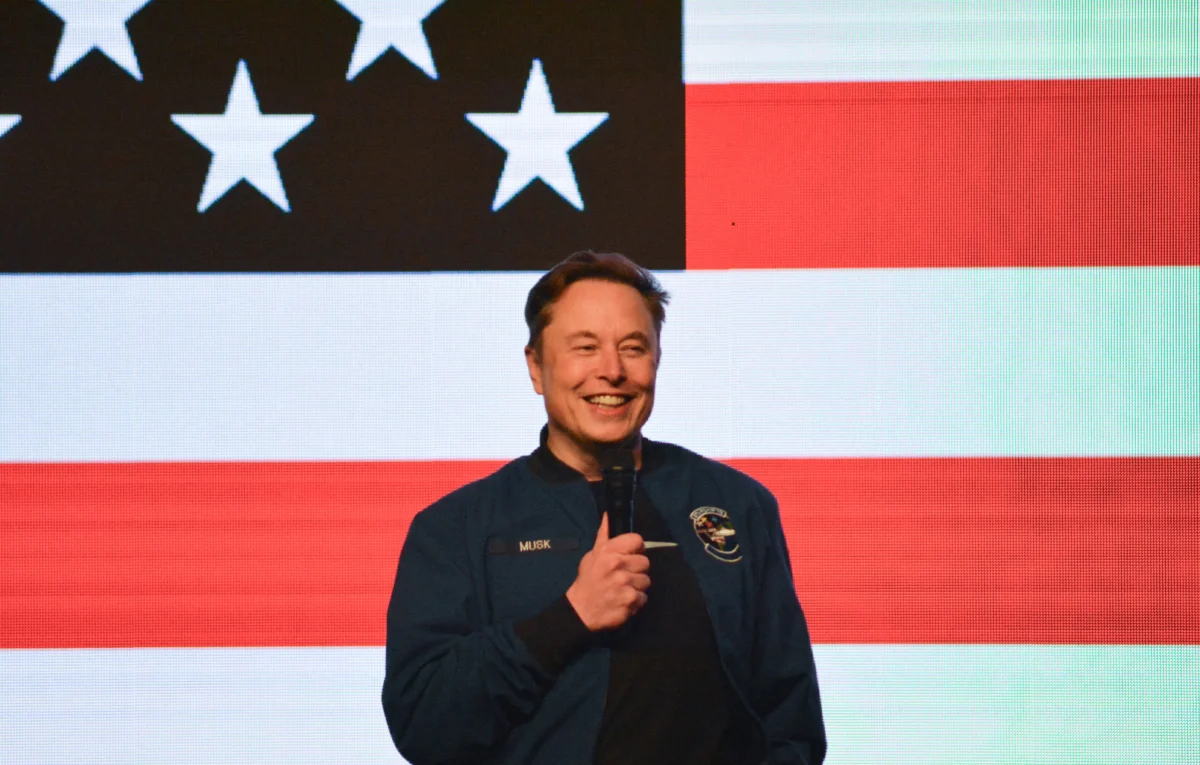
The landscape of global semiconductor manufacturing is facing a potential paradigm shift as Elon Musk signals a move toward total silicon independence. In a recent late-night address in downtown Austin, Texas, Musk unveiled a sprawling strategic roadmap that aims to bridge the operational needs of Tesla, SpaceX, and his latest artificial intelligence venture, xAI. At the heart of this vision lies the "Terafab"—a proposed manufacturing complex designed to produce proprietary high-performance computing hardware at a scale previously reserved for the world’s largest dedicated chip foundries.
The announcement, delivered near the operational nerve center of Tesla’s Austin headquarters and Gigafactory, marks a pivotal moment in Musk’s long-standing philosophy of vertical integration. For years, his companies have moved closer to the "metal," designing custom architectures like Tesla’s Full Self-Driving (FSD) chips and the Dojo supercomputer’s D1 processor. However, the Terafab represents an escalation from chip design to chip fabrication, a transition that places Musk’s conglomerate in direct conversation—and potential competition—with giants like TSMC, Samsung, and Intel.
The impetus for this massive undertaking is, according to Musk, a matter of existential necessity for his various enterprises. The current global semiconductor supply chain, while recovering from pandemic-era disruptions, is struggling to keep pace with the exponential demand for AI-optimized silicon. As Tesla pushes toward the mass production of the Optimus humanoid robot and the refinement of autonomous transport, and as xAI scales its large language models, the hunger for compute has outstripped the capacity of external vendors to deliver specialized hardware on Musk’s aggressive timelines.
"We either build the Terafab or we don’t have the chips," Musk stated, framing the project as a binary choice between self-reliance and technological stagnation. This sentiment reflects a broader trend among "Big Tech" firms—including Apple, Google, and Amazon—who have increasingly turned to in-house chip design. Yet, Musk’s plan goes a step further by eyeing the actual manufacturing process, a venture notoriously capital-intensive and fraught with technical complexity.
The scale of the Terafab is staggering in its ambition. Musk outlined goals for terrestrial compute support reaching 100 to 200 gigawatts annually. To put this in perspective, the total power consumption of all data centers globally is estimated to be in the range of several hundred terawatt-hours per year, but the specific deployment of 200 gigawatts of dedicated, specialized compute for a single ecosystem would represent a significant portion of the world’s high-end AI infrastructure.
Perhaps more provocative was the mention of a "terawatt in space." This suggests a future where SpaceX’s Starlink constellation or future orbital platforms serve as massive, decentralized data centers. By moving compute into orbit, Musk may be looking to solve the "heat and power" problem that plagues terrestrial data centers. In the vacuum of space, cooling and energy collection via solar arrays present different challenges and opportunities, potentially allowing for a level of scale that is environmentally or logistically impossible on Earth. This orbital compute strategy aligns with recent discussions regarding the deployment of "orbital data centers" to process the vast amounts of telemetry and imagery data generated by satellite constellations without the latency of a ground-link bottleneck.
However, the road to a functional Terafab is paved with immense hurdles. Semiconductor fabrication is widely considered the most complex manufacturing process on the planet. Building a modern fab requires billions of dollars in investment, specialized clean-room environments, and access to extreme ultraviolet (EUV) lithography machines—equipment currently monopolized by the Dutch firm ASML. Furthermore, the specialized labor force required to run a fab is in high demand and short supply globally.
Industry analysts have noted that while Musk has successfully disrupted the automotive and aerospace sectors, the semiconductor industry operates on a different set of physics and economic cycles. Musk’s history with the Dojo supercomputer serves as a cautionary tale. While Dojo was touted as a world-beating AI trainer, its development has faced delays, and Tesla has continued to rely heavily on NVIDIA’s H100 and Blackwell architectures to meet its immediate AI training needs. The transition from designing a chip to mass-producing it at a proprietary fab is a leap that even the most established tech firms have hesitated to take.
Despite these challenges, the geographical choice for the Terafab is strategic. Austin has rapidly evolved into a secondary "Silicon Valley," with Samsung investing heavily in a new $17 billion fab in nearby Taylor, Texas, and NXP Semiconductors maintaining a significant presence in the area. By situating the Terafab near the Tesla Gigafactory, Musk creates a localized "closed-loop" ecosystem where chip design, fabrication, and final product integration (into cars or robots) happen within a few miles of each other. This proximity could drastically reduce the "iteration cycle"—the time it takes to identify a hardware bottleneck and deploy a silicon-level fix.
The implications for the broader industry are profound. If Musk successfully stands up even a fraction of the Terafab’s proposed capacity, it could signal the end of the "fabless" era for mega-conglomerates. It also poses a challenge to the current geopolitical status quo of chip manufacturing. Currently, the vast majority of high-end chips are produced in Taiwan. By building a massive fabrication capacity in Texas, Musk is aligning his interests with the goals of the U.S. CHIPS and Science Act, which seeks to bring semiconductor manufacturing back to American soil to ensure national and economic security.
From a technical standpoint, the Terafab will likely focus on specialized architectures rather than general-purpose CPUs. The chips required for the Optimus robot, for instance, need to balance high-performance inference with extreme power efficiency to allow for long battery life in a mobile form factor. Similarly, the chips for SpaceX’s Starlink satellites must be radiation-hardened and capable of managing complex mesh-network routing in real-time. By controlling the fabrication process, Musk can optimize the silicon at the molecular level for these specific use cases, rather than trying to fit a "one-size-fits-all" chip from a third-party vendor into his machines.
The "terawatt in space" concept also hints at a future where SpaceX becomes not just a transport company, but a backbone of the global digital infrastructure. If SpaceX can provide the compute power necessary for AI processing in orbit, it could offer "AI-as-a-Service" to nations or companies that lack the terrestrial infrastructure to support massive data centers. This would further diversify Musk’s revenue streams and solidify his influence over the fundamental technologies of the 21st century.
Critics, however, point to "Elon Time"—the tendency for Musk’s projects to launch years after their initial target dates. The Full Self-Driving suite, the Cybertruck, and the Starship launch system all faced significant delays before reaching maturity. In the semiconductor world, where Moore’s Law (or its modern equivalent) dictates that hardware becomes obsolete every 18 to 24 months, a two-year delay in a fab’s construction can mean the difference between cutting-edge performance and a multi-billion dollar "white elephant."
Furthermore, the environmental impact of such a facility cannot be ignored. Semiconductor fabs are notorious for their high water consumption and chemical waste. A "Terafab" of the scale Musk describes would require a massive expansion of Texas’s power grid and water management systems. Given the recent history of grid instability in the state, the integration of a 200-gigawatt compute load would necessitate a radical rethinking of local energy infrastructure, likely involving the deployment of Tesla’s own Megapack battery storage systems and perhaps even modular nuclear reactors—a technology Musk has frequently championed.
As we look toward the end of the decade, the Terafab announcement may be remembered either as the moment the tech industry moved toward decentralized fabrication or as an overambitious footnote in the history of silicon. What is certain is that Musk’s move has forced a conversation about the limits of the current supply chain. By challenging the idea that only a handful of companies can manufacture high-end chips, he is once again betting that the principles of "first-principles thinking" can be applied to the most difficult manufacturing challenge in the world.
The synthesis of Tesla’s robotics, xAI’s intelligence, and SpaceX’s reach, all powered by Terafab-produced silicon, represents a vision of a vertically integrated future that spans from the silicon wafer to the stars. Whether this vision materializes in the timeframe Musk desires remains to be seen, but the intent is clear: the quest for artificial intelligence and multi-planetary life will not be held hostage by the production schedules of the traditional semiconductor industry. The era of the "Sovereign Silicon" has begun, and Austin, Texas, is positioned as its ground zero.
