

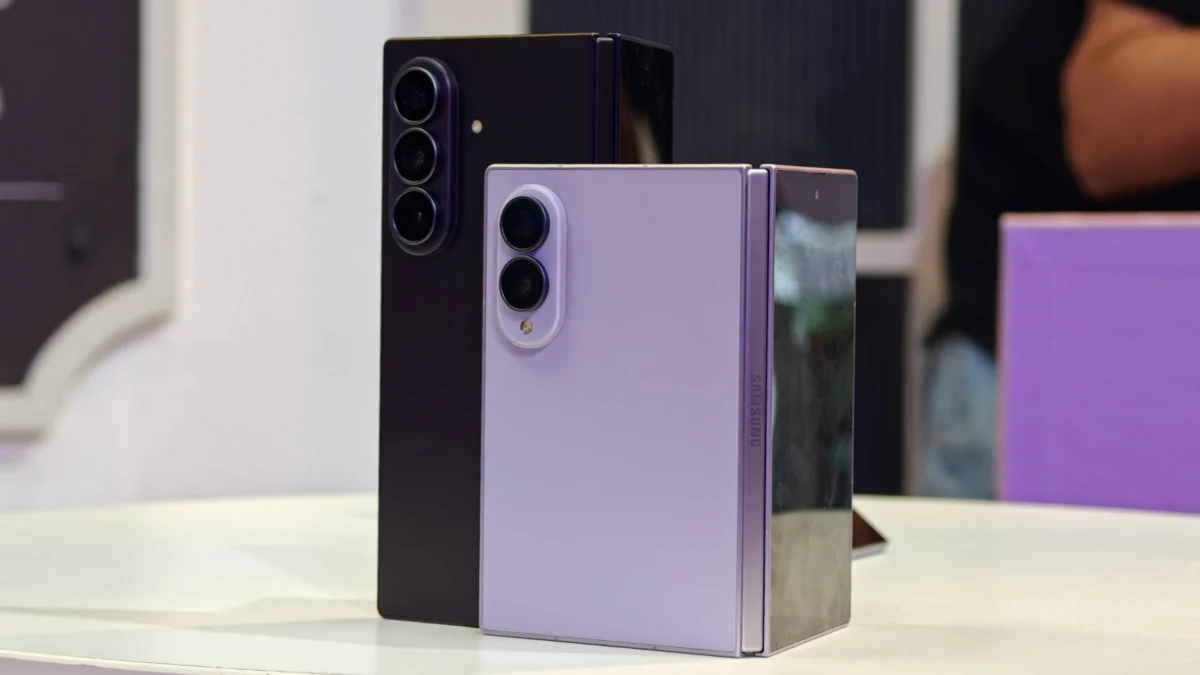
The official unveiling of Samsung’s latest generation of foldable smartphones has naturally turned the tech industry’s attention toward radical hardware shifts, notably the broader, more ergonomic form factor showcased by the flagship Galaxy Z Fold 8. Yet, beneath the physical redesigns and advanced metallurgical improvements lies a monumental software evolution driven by the stable release of One UI 9. While media outlets and consumer forums dissect the major architectural changes and AI enhancements packed into this fresh operating system update, a quieter, highly practical feature is making its long-awaited debut on the company’s book-style and clamshell foldables: native USB webcam functionality.
This capability, which allows users to tether their handset to a desktop or laptop via a standard USB cable and instantly utilize the high-grade mobile sensors as a superior computer webcam, first made waves when it rolled out to the conventional candy-bar flagships within the Galaxy S26 series. Although Google famously introduced native USB webcam support to its Pixel ecosystem during the Android 14 software cycle, ecosystem fragmentation meant that Samsung’s foldable division lagged behind, leaving devices like the previous-generation Z7 lineup devoid of the feature out of the box. Today, verification across the newly minted hardware portfolio confirms that the omission has been rectified. The mainstream Galaxy Z Fold 8, the ultra-premium Z Fold 8 Ultra, and the pocket-friendly Galaxy Z Flip 8 now fully support this seamless transition from pocket device to high-definition video conferencing peripheral.
The implementation itself remains refreshingly straightforward. Users simply need to connect the foldable handset to any compatible personal computer using a data-transfer-capable USB cable. By expanding the persistent charging notification shade on the mobile device, an interface emerges displaying available USB configurations. Selecting the dedicated webcam mode immediately bridges the operating system of the host computer with the sophisticated image-processing pipeline of the phone’s primary camera array, bypassing the notoriously grainy, low-resolution sensors historically built into most consumer and enterprise laptops.
What makes this development particularly compelling within the context of foldable architecture is the inherent versatility of the hardware itself. Traditional slab smartphones—including the Galaxy S26 series—often require supplementary desktop stands, magnetic mounts, or precarious leaning arrangements to achieve the correct eye-level angle during video calls. Foldable devices, by contrast, possess a distinct mechanical advantage. The engineered hinge mechanisms of the Z Fold 8 and Z Flip 8 allow the chassis to be propped open at various angles, transforming the lower half of the device into a stable, self-contained physical platform. This mechanical freedom allows the camera array to remain rigidly suspended at optimal heights and angles without requiring third-party accessories.
Industry analysts point out that this software synergy highlights a maturing approach to cross-device integration within the mobile ecosystem. For years, consumers relied on third-party software utilities, proprietary companion apps, or clunky virtual camera drivers to achieve high-quality video feeds from their mobile devices. These makeshift solutions frequently suffered from high latency, compression artifacts, and frustrating connection drops. By baking native USB webcam protocols directly into the One UI 9 framework, manufacturers are acknowledging a broader shift in remote work habits and digital communication standards. Professionals, content creators, and remote students increasingly demand superior video fidelity without investing heavily in dedicated, standalone mirrorless cameras or premium USB webcams.
The inclusion of this feature also signals a broader trend toward feature parity across disparate product tiers within major OEM lineups. Historically, experimental or utility-based software features debuted on traditional slab flagships and trickled down slowly—or sometimes not at all—to niche form factors like foldables, which historically ran distinct, heavily customized branches of software optimized primarily for dual-screen multitasking. The swift migration of the Galaxy S26 USB trick to the Z-series foldables demonstrates that Samsung’s software engineering teams are successfully unifying their codebase under One UI 9, ensuring that buyers investing top-tier sums in foldable technology are never penalized with missing utility features simply due to form factor constraints.
Looking ahead, this hardware-software convergence opens intriguing possibilities for future iterations of mobile productivity. As neural processing units (NPUs) on mobile system-on-chips continue to advance, utilizing a smartphone as a tethered PC camera unlocks sophisticated on-device processing capabilities in real-time. Imagine video calls enhanced natively by the phone’s onboard AI engine—providing real-time background portrait blurring, studio-grade lighting corrections, automated framing, and noise cancellation—offloaded directly from the host computer’s CPU. This capability drastically reduces the performance tax on older or resource-constrained laptops while leveraging the immense computational power sitting quietly inside the user’s pocket.
Furthermore, the mainstream adoption of this feature by industry giants like Google and Samsung establishes a predictable baseline for future Android development. Developers building communication software can now design applications assuming universal, standardized access to high-quality mobile camera streams over wired connections. This standardization removes technical friction and encourages a more cohesive desktop-to-mobile workflow.
As early adopters prepare to take delivery of their next-generation folding devices in the coming weeks, the ability to effortlessly repurpose high-end camera sensors for daily professional communication will likely transition from a neat novelty to an indispensable daily tool. Whether joining a high-stakes corporate board meeting, lecturing in a virtual university setting, or catching up with distant family members, users will no longer need to tolerate subpar laptop optics. Samsung’s strategic integration ensures that the immense financial investment poured into mobile camera R&D yields dividends far beyond traditional photography and videography, cementing the modern smartphone as the ultimate multi-role computing hub.
