

The contemporary home entertainment landscape is dominated by the sleek, large-format television—a device that commands a significant investment and is generally considered the undisputed centerpiece of the modern living room. However, the fragility and complexity of these high-end units can occasionally lead to catastrophic, inconvenient failures. This scenario played out recently when a premium 65-inch Samsung The Frame Pro, barely a year into its service and costing upwards of $2,200, suffered a terminal malfunction, plunging the household into temporary digital darkness. This unexpected hardware collapse provided an acute, real-world stress test for a device often relegated to secondary use: the affordable, feature-packed portable projector. Specifically, the XGIMI Vibe One, priced aggressively around $250, stepped in not just as a placeholder, but as a surprisingly capable primary display during the weeks-long repair vacuum created by slow customer service logistics.
The abrupt failure of the Samsung unit was characterized by frustrating instability leading up to its demise. Persistent Consumer Electronics Control (CEC) conflicts with connected streaming devices and an accompanying soundbar, coupled with arbitrary power-downs during critical viewing moments, signaled underlying hardware or firmware instability. When the TV finally succumbed—locking into a five-second boot cycle before immediately shutting off—the resulting void highlighted a growing dependency on home entertainment infrastructure. The initial support response from the manufacturer in Europe was notably protracted; a two-week delay before the unit was collected for diagnostics meant that an immediate, high-quality replacement was not forthcoming.
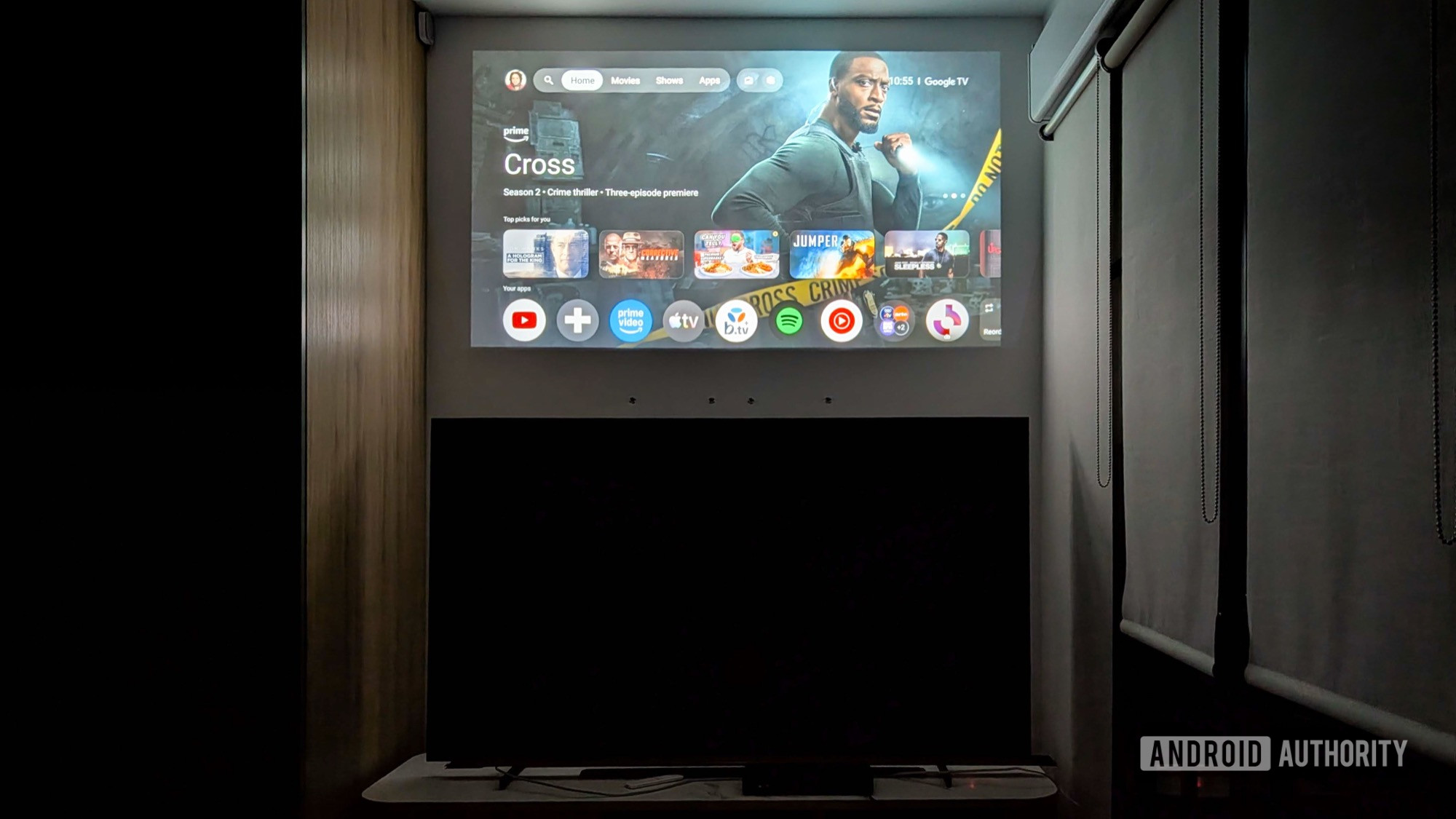
It was during a crucial UEFA Champions League match that the failure struck. In immediate need of a substitute display, the author retrieved the XGIMI Vibe One, a device previously utilized for casual viewing in a secondary space, and deployed it in the main living area. The swift setup provided an immediate, albeit lower-fidelity, visual experience, allowing the continuation of the broadcast with minimal interruption. This emergency transition underscores a significant trend in consumer electronics: the increasing value of versatile, multi-functional backup hardware. The Vibe One, running Google TV, transformed a blank wall into a functioning screen almost instantaneously, proving that portability and immediate functionality can outweigh raw display metrics in a crisis.
The Portable Powerhouse: Functionality Over Fidelity in a Pinch
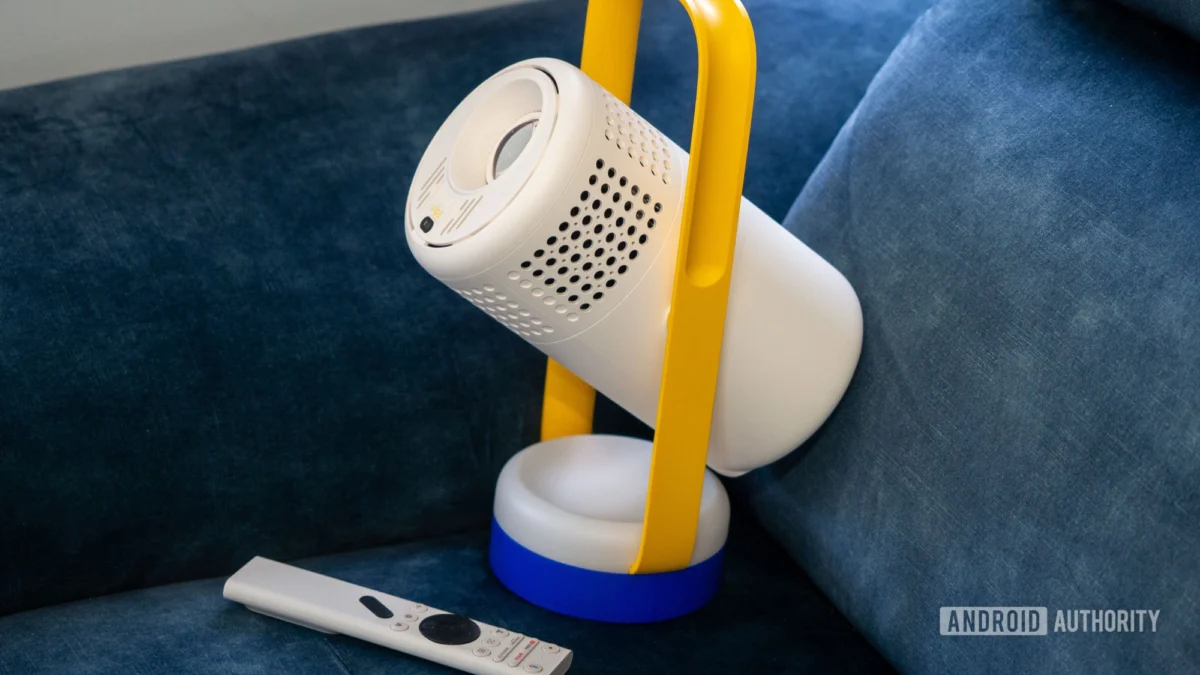
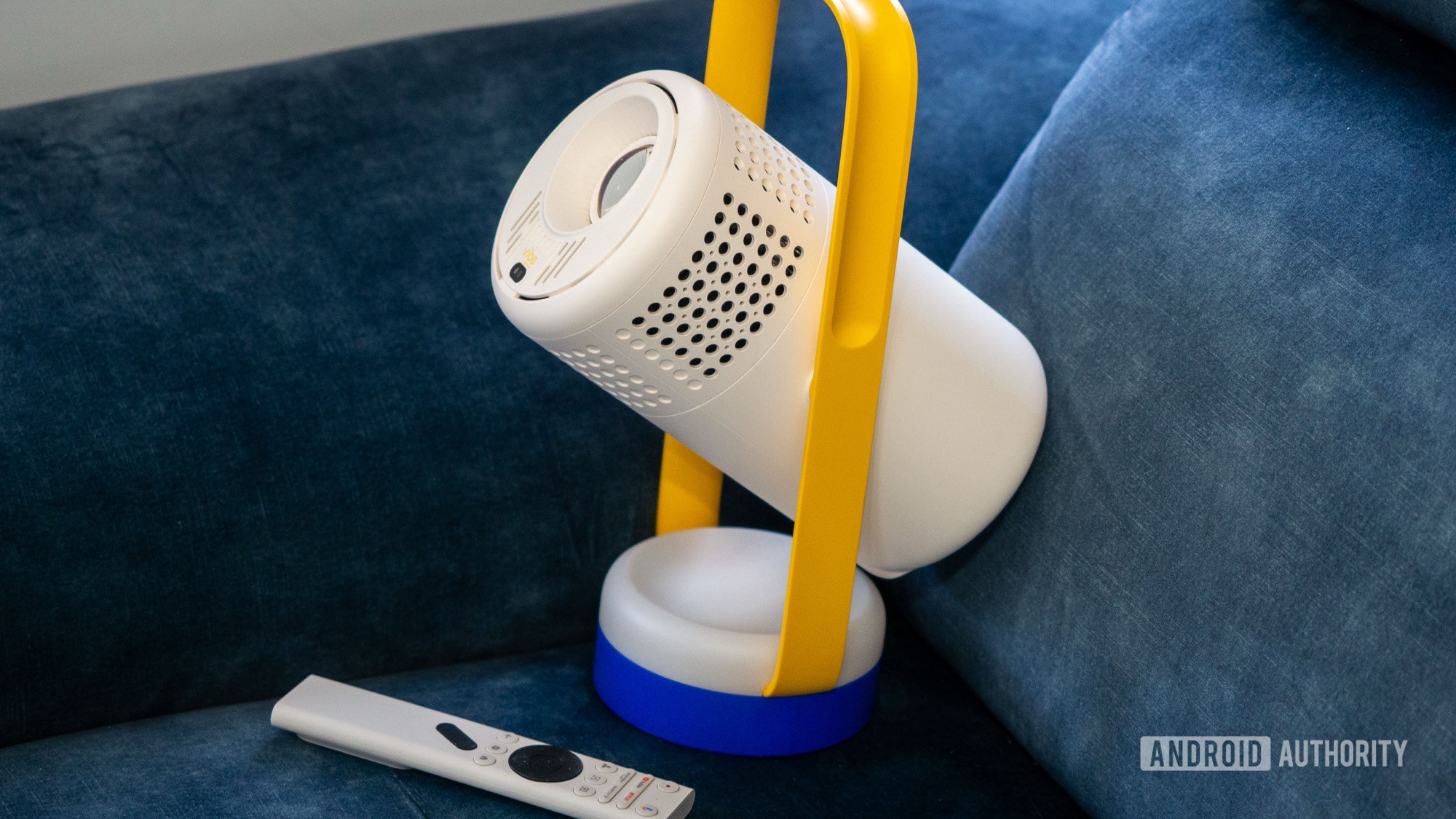
The XGIMI Vibe One, positioned as an accessible, all-in-one smart entertainment hub, integrates essential components—a Google TV operating system, integrated audio, an internal battery, and a highly adaptable stand—into a single, easily transportable chassis. Its immediate deployment capability is its primary competitive advantage against traditional fixed displays.
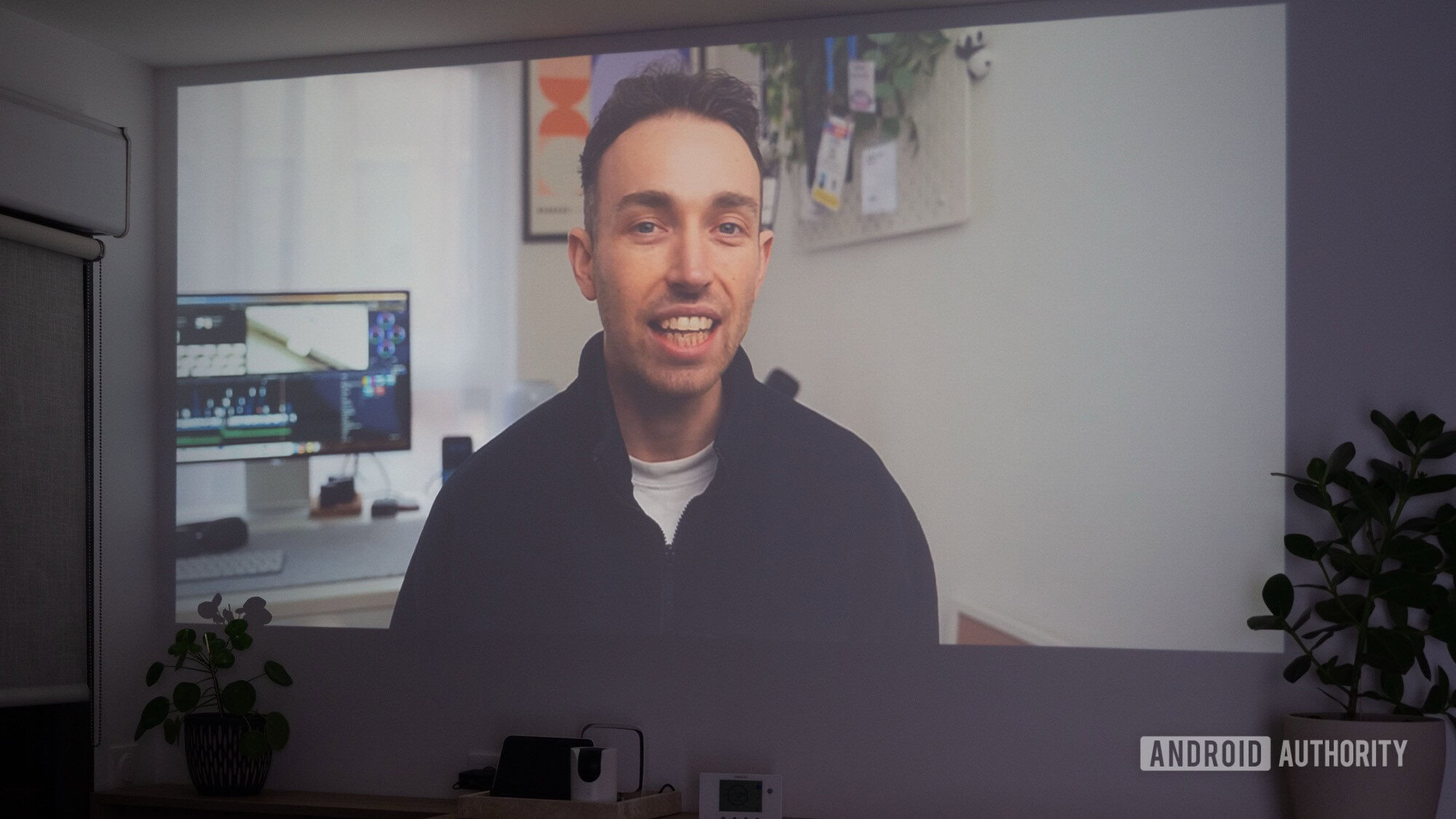
When compared directly to the specifications of the defunct Neo QLED 4K television, the compromises are evident. The Vibe One projects at 1080p resolution and utilizes 250 ISO Lumens. This optical output necessitates near-total environmental control; ambient light, even moderate daylight filtering through untreated windows, results in a visibly washed-out image, severely compromising contrast and perceived color depth. For optimal viewing, the room must be essentially darkened. In these controlled conditions, however, the projection quality is sufficient to mimic a standard television experience for casual viewing of sports, streaming content, or general media consumption.
Beyond the visual aspect, the integrated audio solution, featuring dual 3W JBL speakers tuned with Dolby Audio, performed commendably for non-critical listening environments. While it cannot replicate the immersive soundstage provided by a dedicated soundbar system, for background viewing, music streaming, or basic video playback, the internal sound profile proved more than adequate. This holistic integration—display, processing, and sound in one unit—is what makes the device so compelling for temporary or mobile use cases. The cost differential is staggering: $250 versus $2,200 for the primary unit, suggesting a significant democratization of basic home cinema functionality.
Architectural Flexibility: Adapting to the Modern Home
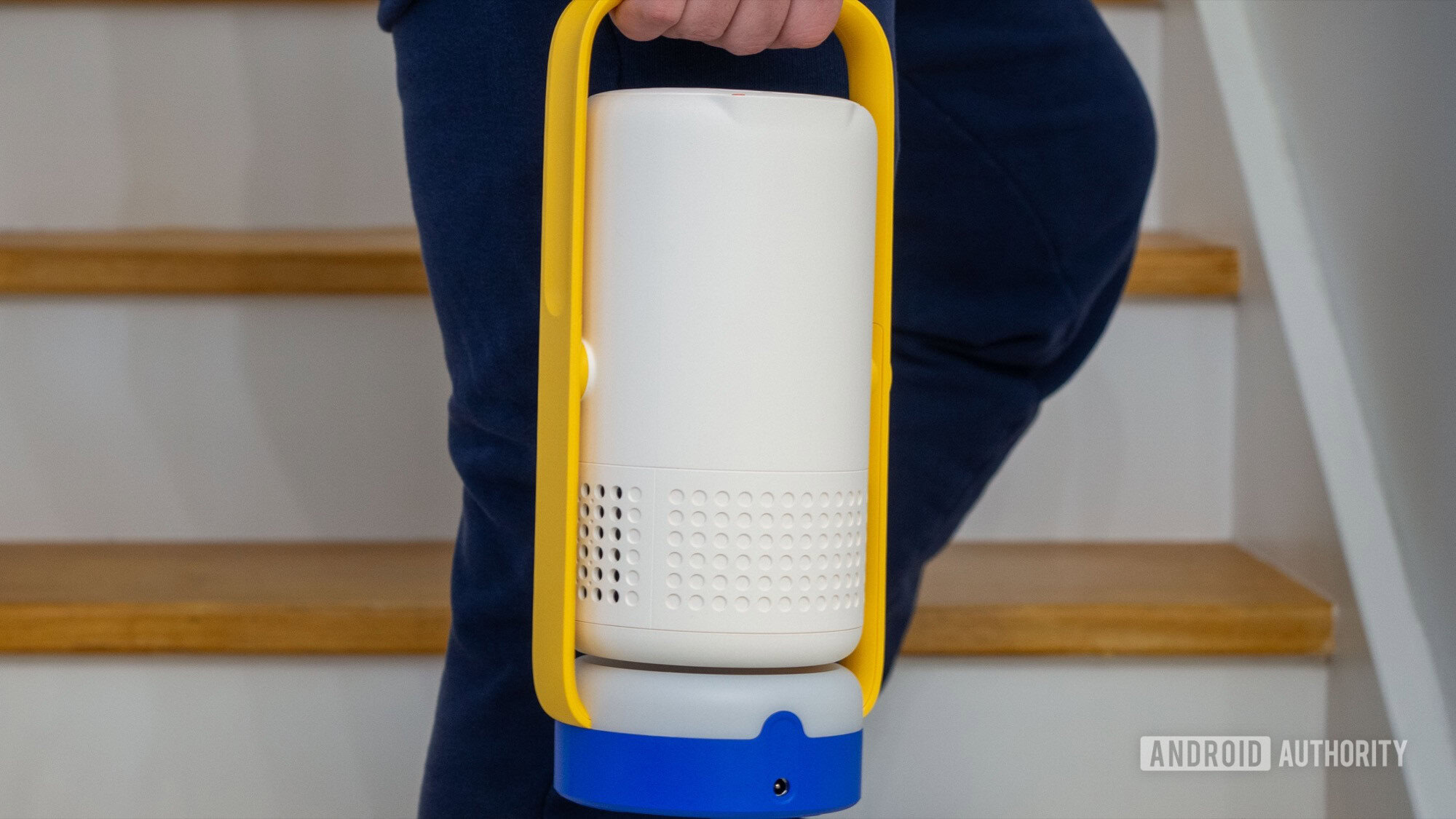
One of the most compelling aspects of the Vibe One, and portable projectors in general, is their ability to circumvent the physical constraints of traditional flat-panel televisions. The unit features an integrated handle and a unique pivoting stand mechanism, allowing for a 160-degree rotation around its vertical axis. This physical adaptability eliminates the frequent need for external mounting hardware or tripods that plagued earlier portable models.
This flexibility was demonstrated across various unconventional surfaces: a standard living room wall above the deactivated TV, a larger feature wall, and critically, the highly angled ceiling and walls of an attic bedroom. For spaces where mounting a fixed screen is impractical due to architectural idiosyncrasies—such as sloped roofs common in older or converted spaces—a projector offers the only practical path to a large-screen experience without permanently installing bulky equipment. The ability to simply store the Vibe One in a drawer when not in use addresses the aesthetic concern of large, dormant black rectangles dominating wall space.
Furthermore, the device’s image correction capabilities are noteworthy for this price bracket. The automatic keystone correction system successfully mitigated distortion even when projecting at extreme angles onto uneven surfaces. Paired with an auto-focus button on the remote, the unit achieves a sharp, rectangular image rapidly, minimizing user frustration during relocation. Specific software modes, such as the "ceiling projection type," further tailor the output geometry for these non-traditional setups.
Industry Implications: The Rise of the Entertainment Backup
The experience detailed here is more than an anecdote about a broken TV; it reflects broader industry dynamics. The proliferation of high-quality, low-cost projectors running established smart TV operating systems like Google TV signals a maturation of the budget projection market. Consumers are no longer forced to choose between expensive, high-lumen, dedicated home cinema projectors or low-fidelity, unsupported Linux-based alternatives.
The failure of the high-end Samsung unit, despite its price and feature set (like the ‘Art Mode’ aesthetic), highlights the Achilles’ heel of integrated, proprietary systems: failure points are numerous (CEC integration, internal power supplies, panel issues), and repair/support chains can be slow, leaving the consumer technologically stranded. Conversely, the Vibe One represents a decentralized, modular approach to entertainment. If one component fails (e.g., the primary TV), the backup system is ready, leveraging ubiquitous software ecosystems (Google TV) and existing power infrastructure (the workaround via a USB-C adapter).
This scenario implicitly challenges the perceived necessity of owning a single, monolithic, expensive television. For many use cases—especially in secondary rooms, rental properties, or as emergency redundancy—a sub-$300 portable projector provides 80% of the utility at 10% of the cost.
Performance Trade-offs and Ergonomic Frustrations
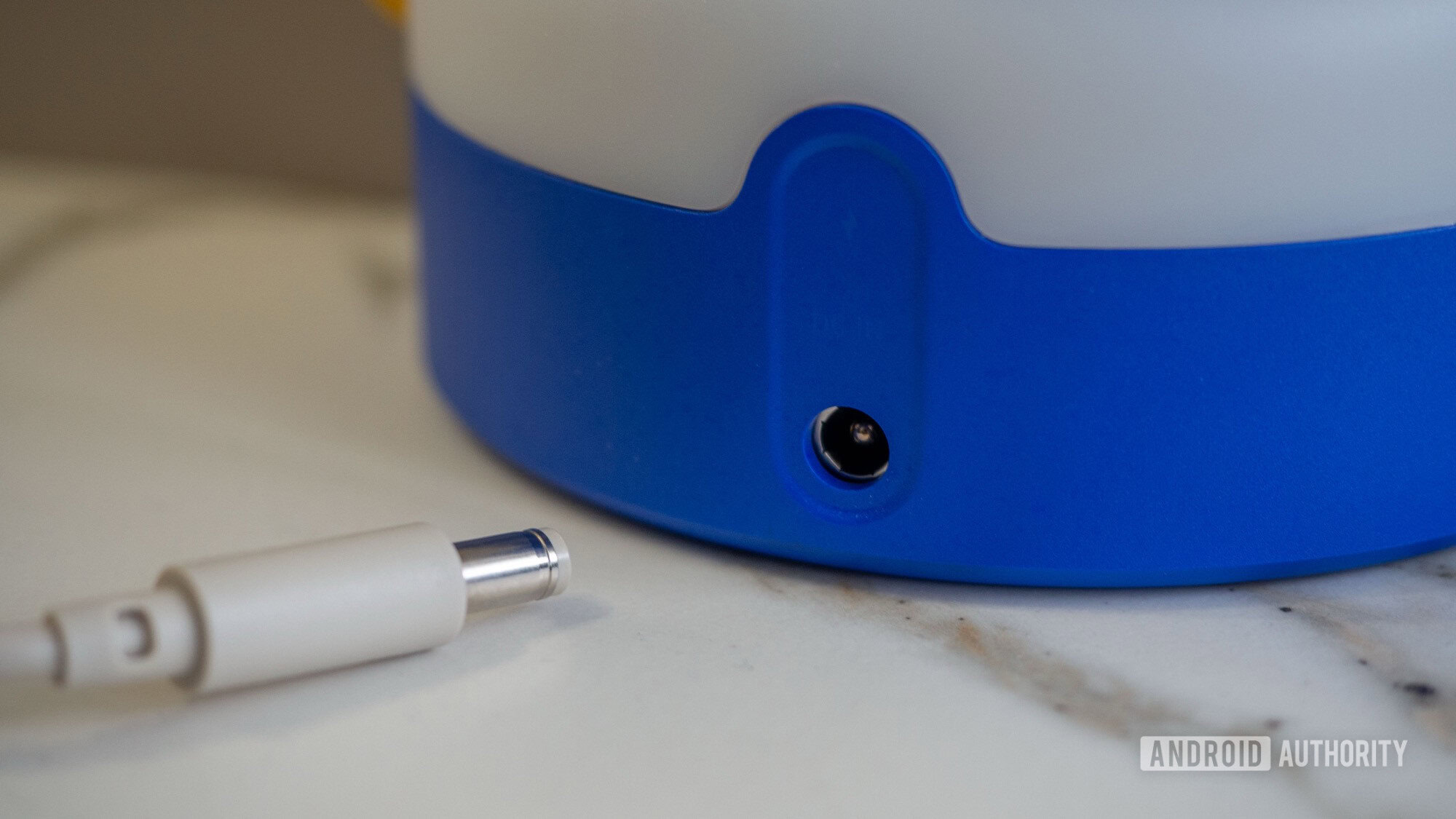
While the Vibe One excels in versatility, it exhibits performance limitations inherent to its class and price point. The most glaring ergonomic flaw revolves around power management and connectivity standards. The continued reliance on a proprietary DC barrel charging port, rather than the universal USB-C standard prevalent in 2026 electronics, is a significant oversight. While higher-tier models from the same manufacturer have adopted USB-C, retaining the legacy port on this model introduces unnecessary friction into a system designed for portability. The necessity of sourcing a specific adapter—a DC-to-USB-C converter—to integrate the device into a modern, standardized charging ecosystem is an impedance that undermines the "all-in-one" premise.
This frustration is compounded by the underwhelming battery life. Rated for approximately 96 minutes under optimized, lower-brightness settings, the internal cell is insufficient to reliably complete a standard feature film or a full sporting event without external power. This effectively relegates the battery function to short-term transitions or specific low-commitment viewing, meaning the Vibe One generally operates tethered to an outlet, negating some of its advertised mobility.
The company’s justification for the limited battery often points towards the Vibe One’s "casual, teen-oriented" positioning, underscored by a translucent base designed to emit ambient light shows when the unit functions in Bluetooth speaker mode. While this feature adds a layer of novelty, it represents a strategic misallocation of limited internal space and power capacity that could have been better dedicated to longevity. In the context of an emergency backup or a dedicated secondary display, battery endurance is a far more valuable feature than dynamic lighting effects.
System performance also reveals constraints. The initial boot-up sequence is characterized by noticeable sluggishness, taking roughly ten seconds to stabilize into smooth operation. This latency is attributable to the modest specifications: 2GB of RAM paired with a 1.5GHz MT9630 processor. However, once the operating system achieves full load, sustained performance appears stable, without significant mid-session stuttering or app crashes. The inclusion of 32GB of onboard storage is a positive differentiator in the budget segment, often afflicted by minimal storage allowances, permitting a reasonable selection of installed streaming applications.
Software Experience: The Unadulterated Brilliance of Stock Google TV
A key factor in the Vibe One’s successful transition to primary display status is XGIMI’s relatively restrained approach to software customization. The implementation of Google TV is clean, closely mirroring the familiar interface found on dedicated streaming sticks and modern smart TVs. This continuity is crucial for user familiarity and seamless adoption.
The hardware controls, however, elevate the user experience beyond stock Google TV devices. The remote control is exceptionally well-engineered, featuring dedicated buttons for profile switching—a feature highly beneficial in multi-user households—and a direct shortcut to the quick settings overlay. The latter allows users to immediately adjust projection settings, power modes, or brightness without navigating deep into the main menus, a functionality conspicuously absent from Google’s own streaming hardware remotes.
The operating system provides all expected modern connectivity features: voice input integration (leveraging Google Assistant/Gemini), robust casting protocols, and remote control compatibility via the Google Home application. The absence of heavy, proprietary skins ensures that the platform remains responsive and easily navigable, prioritizing core streaming functionality.
Strategic Considerations in the Portable Display Market
The decision to opt for a budget projector like the Vibe One, particularly in scenarios demanding high reliability or mobility, forces consumers to weigh performance compromises against cost and convenience. For users requiring a large-format display in irregular spaces, or those seeking a true emergency backup, the Vibe One proves that substantial value can be found below the traditional high-fidelity threshold.
When evaluating alternatives in the sub-$300 category, feature parity becomes the primary determinant of value. Devices running proprietary, closed operating systems like Linux (e.g., Dangbei N2 Mini, Yaber T2) present long-term risks regarding application support, security updates, and overall platform relevance. Conversely, alternatives using established platforms like Roku (e.g., Aurzen EAZZE D1R) offer a safer software environment, though often at the expense of integrated features like the Vibe One’s motorized stand.
A direct competitor comparison reveals critical strategic choices made by manufacturers. The TCL C1, for instance, offers a nearly identical Google TV hardware profile but omits the internal battery, making the marginal cost increase for the Vibe One’s power independence a worthwhile investment for true portability.
For consumers prioritizing brightness and superior built-in audio over battery life, the Aurzen BOOM Air presents a compelling case, often available at a discounted price point comparable to the Vibe One. Its higher ANSI lumen rating (300 ANSI vs. Vibe One’s 250 ISO) offers better ambient light performance, and its 10W speaker surpasses the Vibe One’s 6W total output. However, the BOOM Air lacks the Vibe One’s rotational flexibility and internal battery, demanding a separate stand purchase for optimal setup versatility.
As the market matures, more sophisticated, albeit pricier, options are emerging that address the Vibe One’s shortcomings. Devices such as the JMGO Play, featuring a larger battery, USB-C charging, a gimbal-style adjustable mount, and higher lumen output (400 ISO), represent the next evolutionary step in this category. Similarly, slightly more expensive Google TV staples like the XGIMI Mogo 3 Pro or the Nebula Capsule 3 GTV, often dipping into the $300-$350 range during promotional periods, offer superior optical performance and battery endurance.
Conclusion: A Testament to Practicality in Failure
The XGIMI Vibe One served an invaluable function: bridging the gap created by the sudden, inconvenient failure of a costly primary display. Its integrated design—portability, Google TV interface, and adaptable physical structure—makes it an ideal supplementary device or a viable, low-cost primary screen for environments where architectural constraints or temporary viewing needs supersede absolute picture quality.
While the archaic charging port and meager battery life necessitate concessions, the overall package delivers exceptional utility for its price segment. The device reinforces the growing market acceptance of projection technology not just for dedicated cinema rooms, but as a flexible, "TV-on-demand" solution capable of being deployed anywhere a suitable surface exists. For consumers seeking resilient, multi-location entertainment, the Vibe One stands as a compelling recommendation, validating the strategic value of having a fully functional, battery-backed smart display ready to deploy at a moment’s notice. Its ability to provide immediate relief in a consumer electronics crisis suggests that portable projectors are rapidly transitioning from niche gadgetry to essential home technology redundancy.
