

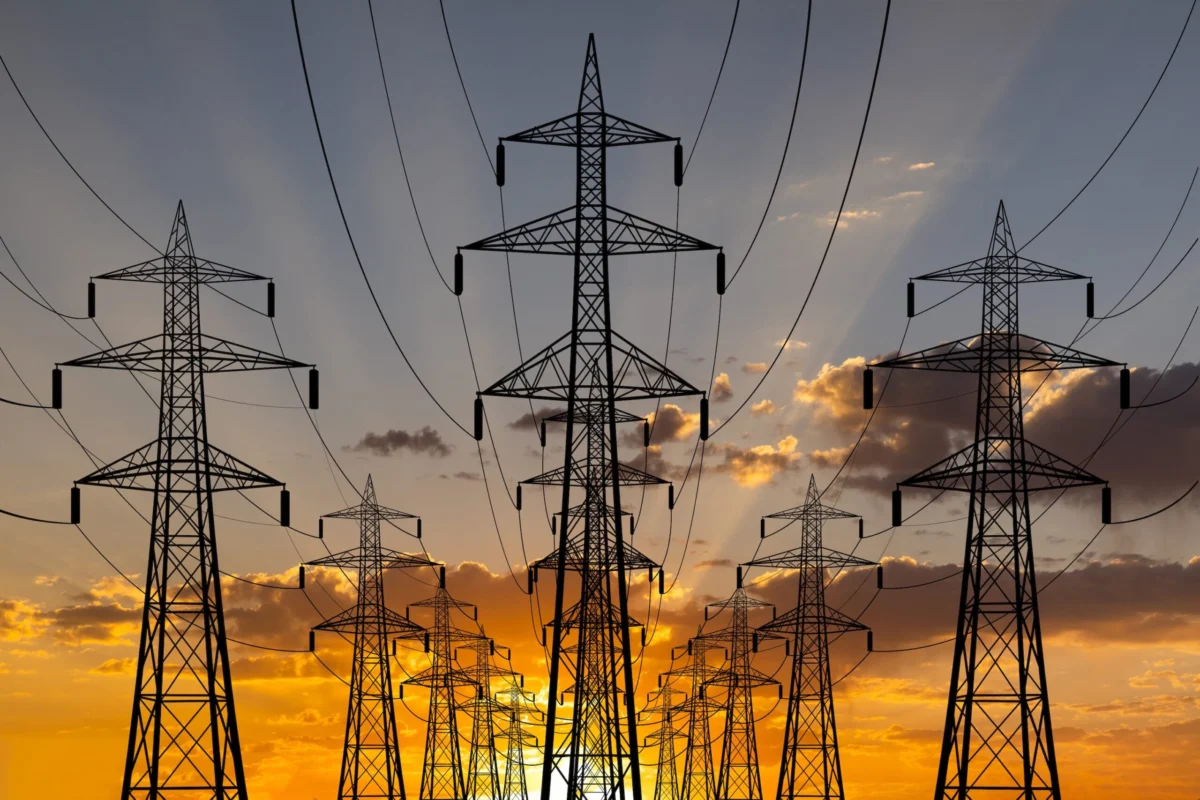
The venture capital ecosystem has long been defined by its pursuit of the intangible. Over the past five years, the fervor surrounding artificial intelligence has reached a fever pitch, with investors funneling more than half a trillion dollars into startups promising to revolutionize everything from drug discovery to cinematic production. Yet, as the digital architecture of the next century is being drawn up in boardrooms from Menlo Park to London, a physical reality is beginning to assert itself: you cannot run the world’s most advanced algorithms on an antiquated power grid.
While the primary focus of the AI boom has been on large language models and the chips that train them, the most critical bottleneck is no longer just silicon supply or talent acquisition. It is electricity. The realization that the AI revolution is fundamentally an energy revolution is shifting the investment landscape. As the "bits" of the digital world collide with the "atoms" of the physical world, the smartest capital is increasingly flowing toward the infrastructure that makes high-performance computing possible.
The Looming Infrastructure Logjam
The scale of the current disconnect between AI ambition and physical capacity is staggering. Recent industry analysis tracking the global data center pipeline reveals a profound "implementation gap." Of the roughly 190 gigawatts of data center capacity currently being tracked in development databases, only a tiny fraction—approximately 5 gigawatts—is actually under construction. In 2024, the industry saw only about 6 gigawatts of new capacity come online, a figure that is dwarfed by the volume of projects currently stuck in planning or permitting phases.
Perhaps more concerning for the broader tech economy is the rate of slippage. In 2025 alone, roughly 36% of announced data center projects saw their timelines pushed back. These are not mere administrative delays; they represent a fundamental inability to secure the necessary energy resources to flip the switch. When half of all announced data center projects are facing significant delays, the ripple effects extend far beyond the cloud providers themselves. Large enterprises, which have built their five-year roadmaps around the integration of generative AI, may soon find themselves competing for a finite amount of compute resources, driven by a shortage of power that few saw coming.
The Exponential Hunger of Generative AI
To understand why the grid is buckling, one must look at the specific energy requirements of modern AI hardware. Traditional data centers, designed for web hosting and cloud storage, are relatively low-density environments. Generative AI, however, requires massive clusters of GPUs—such as Nvidia’s H100 or Blackwell series—which consume several times the power of standard CPUs.
Goldman Sachs research suggests that AI will drive data center power consumption up by a staggering 175% by 2030. This isn’t just a gradual increase; it is a structural shock to a utility system that was, in many regions, designed for a world of declining or stagnant industrial energy demand. In the United States, electricity prices are already rising in major tech hubs as the grid struggles to keep pace with the localized demand spikes caused by massive "megascale" data center campuses.
This supply-demand squeeze has created an unprecedented urgency. The shortages are not merely a matter of building more solar panels or wind turbines; they are a matter of "grid firming"—ensuring that power is available 24/7, regardless of whether the sun is shining or the wind is blowing.
The Vertical Integration of Big Tech
In response to this crisis, the world’s largest technology firms are effectively transforming into energy companies. Google, Meta, Amazon, and Microsoft have moved beyond simply buying Renewable Energy Credits (RECs) to offset their carbon footprints. They are now directly funding and developing the next generation of energy technology.
We are seeing a massive shift toward "behind-the-meter" power generation. Companies are no longer content to wait 10 years for a utility to upgrade a substation. Instead, they are exploring on-site nuclear reactors, massive battery arrays, and proprietary microgrids. For example, Google’s recent collaboration with Xcel Energy in Minnesota involves a sophisticated blend of wind and solar assets coupled with long-duration storage.
The centerpiece of this strategy is the emergence of long-duration energy storage (LDES). Traditional lithium-ion batteries are excellent for short bursts of power, but they cannot sustain a data center through days of low renewable output. This has led to massive investments in startups like Form Energy, which is developing iron-air battery technology capable of discharging power for 100 hours or more. When a tech giant like Google invests $1 billion into a battery startup, it isn’t just a venture play—it is a strategic hedge against grid failure.
Solving the "Humble" Hardware Problem
While the source of power is one half of the equation, the management of that power is the other. Once electricity reaches a data center, it must be converted and distributed to individual server racks. This task has traditionally been handled by the transformer, a piece of equipment that has remained fundamentally unchanged for nearly 140 years.
The standard transformer—a massive, heavy block of iron wrapped in copper—is becoming a liability. As rack power density increases, the physical space required for traditional power conversion equipment is ballooning. Experts note that in high-density environments, the power hardware can eventually take up twice as much floor space as the servers themselves. This is an untenable use of expensive real estate.
This bottleneck has birthed a new sector of "solid-state" power electronics. Startups like Amperesand, DG Matrix, and Heron Power are working to replace iron and copper with silicon-based power electronics. These solid-state transformers are smaller, more efficient, and infinitely more flexible, allowing software to manage the flow of electrons with the same precision that it manages the flow of data. While these technologies are currently more expensive than their 19th-century counterparts, their ability to consolidate multiple pieces of equipment into a smaller footprint makes them increasingly cost-competitive for the AI era.
Software-Defined Grids
The final piece of the puzzle is the software layer required to orchestrate this complexity. The modern electrical grid is often described as the most complex machine ever built, yet much of it is still managed using analog systems or rudimentary digital controls.
A new cohort of companies, including Camus, GridBeyond, and Texture, is building the operating systems for the modern grid. By using AI to manage the AI-driven demand, these platforms can predict load spikes, manage the charging and discharging of batteries, and facilitate "demand response" programs where data centers throttle non-essential tasks when the grid is under stress. This software-centric approach allows for a more "elastic" grid, squeezing more capacity out of existing infrastructure while new plants are being built.
The Investment Thesis: Atoms over Bits
For investors, the current landscape offers a compelling alternative to the high-valuation, high-risk world of AI software. While an AI startup might see its moat evaporated by a new model release from OpenAI or Meta, the companies building the physical foundations of the energy transition are creating tangible, defensible value.
There are several reasons why energy tech is becoming the preferred AI play:
- Tractability: The capital requirements for energy startups, while significant, often come with more predictable milestones and clearer paths to revenue through utility contracts and corporate power purchase agreements.
- Universal Demand: Even if the AI market were to cool—the so-called "AI winter"—the global demand for electricity will continue to rise. The electrification of transportation (EVs) and the decarbonization of heavy industry ensure that investments in batteries, transformers, and grid software have a massive, non-AI-dependent upside.
- Political Alignment: Governments worldwide are sensing a crisis. In the United States, there is bipartisan pressure to maintain technological leadership in AI, which necessitates a massive expansion of domestic power capacity. Whether through subsidies, streamlined permitting, or direct government investment, the wind is at the back of the energy sector.
- The Margin Advantage: For a data center operator, energy is the single largest operating expense. Any technology that increases efficiency by even 2% or 3% translates into millions of dollars in annual savings, providing a clear value proposition for new hardware.
Conclusion: The Future is Infrastructure
The narrative of the last decade was that "software is eating the world." But in the 2020s, the world is biting back. The limitations of our physical reality—the availability of land, the scarcity of copper, the physics of heat dissipation, and the capacity of the electrical grid—are now the primary governors of technological progress.
The next phase of the AI boom will not be won by the company with the cleverest chatbot, but by the entities that can reliably and sustainably power the massive compute clusters required to run them. From the "humble" transformer to the 100-hour battery, the infrastructure of energy has become the most sophisticated and essential technology of our time. For those looking to capitalize on the intelligence revolution, the most lucrative move may be to look away from the screen and toward the grid. In the race to build the future, the ultimate currency isn’t data—it’s power.
